




You will visit the most beautiful points of interest in Antwerp



2-day itinerary in Antwerp: a focused and authentic stroll
Antwerp unfolds at a measured pace, unhurried: the city has that blend of heritage, cultural scene and urban energy that you savor in two well-filled days. This itinerary guides you from the morning of day one, starting at the Rubens statue, to the end of your escape at the Cabinet of Prints. We stay focused on the experience — strolls, tasty stops and places that give the city its character.
You'll alternate between monuments, green spaces, major shopping arteries and architectural surprises. The route is designed to minimize unnecessary travel and to truly let you feel Antwerp's rhythm: neighborhood vibes, façades that catch the eye, and little pauses in cafes that make all the difference. Some stops are must-sees while others are quiet spots to breathe between discoveries.
I'm proposing a relaxed tempo: mornings focused on major landmarks, afternoons lighter where you can improvise. The plan covers 17 points of interest over two days, enough to have a complete overview without rushing. As a bonus, practical tips on where to sleep, how to get around, what to pack and what to book in advance will help you plan a serene trip.
Whether you come for architecture, shopping, the theatre scene or simply to soak up the local vibe, this guide emphasizes the authenticity of the moment. Leave room in your schedule for unexpected discoveries: Antwerp often rewards detours. Happy planning, and enjoy the stroll!
Day-by-day summary
Day 1 — Morning: Start at the Rubens Statue and take your time to open your senses to the center's atmosphere. Walk toward the Notre-Dame Cathedral and then the Henri-Conscience Square before reaching the Saint Charles Borromeo Church and the Stock Exchange. Each stop is designed to be close to the previous and easy to cover on foot.
Day 1 — Afternoon: Reach the Antwerp Central Station, a place to see for its atmosphere, then spend a calmer afternoon at the Antwerp Zoo, ideal for relaxing and varying pleasures after the morning's walk.
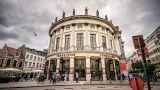
Day 2 — Morning: Dive into the cultural life: Bourla Theatre, Botanical Garden, Municipal Theatre, then the Rubens House and a pause at the Assembly Hall. The sequence fosters immersion in the cultural and heritage sector.
Day 2 — Afternoon: End with the famous Meir and the Meir Palace, head back to the Grand Place, push on to the Hansa Huis and conclude at the Cabinet of Prints. A beautiful finale between shopping, architecture and collections.
Day 1
10 stops
Morning
-
1
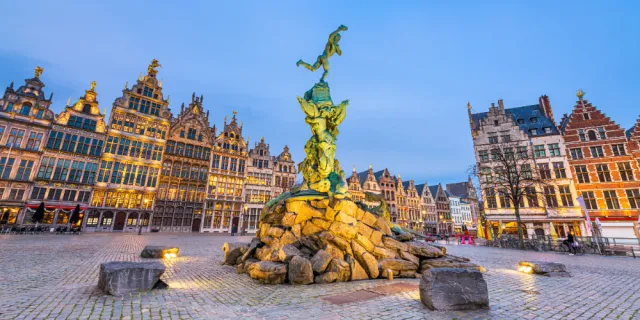
Brabo Fountain
Fountains · 15 min
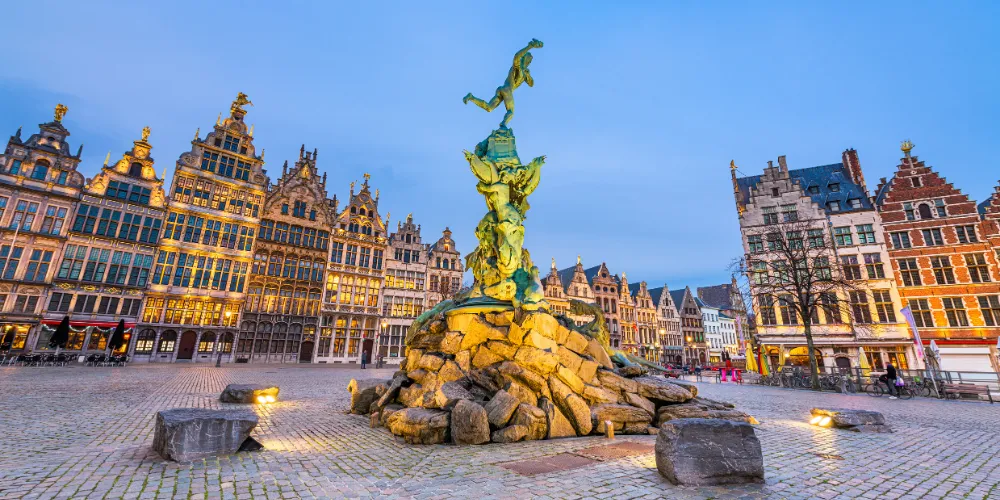
- Just opposite the Town Hall, on the Grote Markt, the Brabo Fountain tells the legend of the birth of Antwerp.
- The statue of the Roman soldier, Silvio Brabo, said to have killed the giant who terrorized sailors, Reus Druon Antigone.
- To get revenge on him, Brabo allegedly cut himself and threw his handsinto the Scheldt as Antigone had hitherto done to all those who refused to pay the right of way over the river.
- Thus would come the name of Antwerp, "Hand werpen", a legend told in a poemfrom the nineteenth century.
- Another legend says that Antwerp would come from "aan het werpen", which refers to the harbor quay.
© Wikimedia Commons
Coddy games passing through
-
2
Hendrik Conscience square
Landmark · 45 min
- The square's name, assigned since 1883, pays homage to 19th-century Flemish writer Hendrik Conscience, whose statue is erected here.
- Many consider him to be the one who "taught his people to read".
- The square is also home to the imposing Baroque Sint-Carolus Borromeuskerk, a former Jesuit church.
- The surrounding buildings date in part from the 17th century and are characterized by Baroque architecture, a style favored by the Jesuits to attract people to the church.
- The square is also home to the Hendrik Conscience Heritage Library.
© Wikimedia Commons
Coddy games passing through
-
3
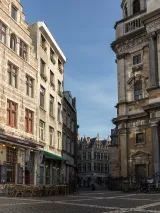
Grote Markt
Squares · 45 min
- The "Grote Markt" is a former forum grand place in the 16th century.
- Here you'll find the town hall, built in 1564 in the Renaissance style.
- Other notable buildings include the houses of the guilds (trades).
- There's also the Brabo fountain, a local legend.
- In 1994, a lime tree was planted as a tree of peace to commemorate the 50th anniversary of the liberation of Antwerp (1944).
- The square hosts various events throughout the year, such as the arrival of Sinterklaas (St.
- Nicholas), Flanders Day on July 11, Bollekesfeest, a flea market and Rubensmarkt.
© Wikimedia Commons
Coddy games passing through
-
4
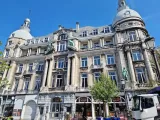
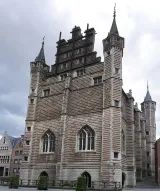
Hansa Huis
45 min
- The architectural complex was built in three phases between 1897 and 1903.
- The Hansahuis is one of the highlights of the career of architect Joseph Hertogs, who left a significant mark on Antwerp architecture in the early 20th century.
- Architectural details include natural stone facades, bronze sculptures, decorative elements, arched windows and elaborate detailing on portals and balconies.
- The iconographic program of the Hansahuis emphasizes the economic ties between Antwerp and Germany, with sculptures depicting trade, shipping and the rivers of both countries.
- In fact, it was Wilhelm Arnold von Mallinckrodt, a German businessman, who commissioned the building.
- He was an influential member of the German community in Antwerp at the beginning of the 20th century.
-
5
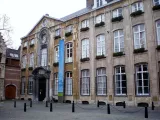
Print Cabinet
Museums · 1h30
- The Municipal Print Cabinet is both a museum and a print cabinet.
- It was founded in 1938, in collaboration with the Plantin-Moretus Museum.
- Its collection focuses on works by Antwerp artists from the sixteenth to the eighteenth centuries.
- A space is also reserved for graphic works by contemporary artists.
© Wikimedia Commons


Afternoon
-
6
Cathedral of Our Lady
Religion · 30 min
- Built between 1352 and 1521 (169 years), this cathedral is a masterpiece of Brabant Gothic architecture with a Baroque interior.
- It houses several remarkable works of art, including four paintings by Peter Paul Rubens.
- Its 123-meter-high north tower is the tallest tower of any church in the Benelux.
- The cathedral is also home to a large Schyven organ, which features 90 registers, and two carillons.
- Its bell tower is counted among the 56 belfries and bell towers in Belgium and France inscribed on UNESCO's World Heritage List.
- The cathedral has undergone several changes of style and function over the course of its history, notably during the periods of French and Napoleonic occupation.
© Wikimedia Commons
Coddy games passing through
-
7
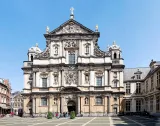
Carolus Borromeus church
Landmark · 45 min
- The church is baroque in style, its construction completed in 1621.
- Its principal painter and decorator was Pierre-Paul Rubens assisted by Antoine Van Dyck.
- The famous 39 caissons were destroyed by fire in 1718 and several paintings were stolen or confiscated.
- The beauty and wealth of this church served to present Antwerp as an influential and wealthy metropolis in the conflicted period between Protestantism and Catholicism.
© Wikimedia Commons
Coddy games passing through
-
8
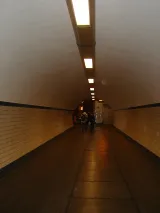
Sint-Anna Tunnel
Landmark · 45 min
- � The Saint-Anne Tunnel was inaugurated in 1933 and allows you to cross the Scheldt on foot or by bike.
- It extends over a length of 572m at a depth of 32m.⬇ On both the right and left banks, you can descend into the tunnel via the authentic wooden escalators which, at the time of opening, were absolutely unique.
- The tunnel and elevators were designed to transport an ambulance and/or police vehicle in the event of an emergency in the Waaslandtunnel.
© Wikimedia Commons
Coddy games passing through
-
9
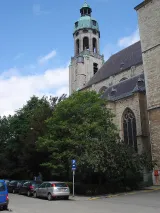
St. Andrew's Church
Landmark · 45 min
- Sint-Andrieskerk is also known as the "parish of misery".
- Its construction began in the early 16th century by Augustinian friars.
- Since 2007, part of the church has been fitted out and opened as a church museum.
- The church museum contains several important Antwerp works of art, including the Baroque high altar from 1729 and the pulpit of truth from 1821.⏳ The church museum is open from April to October.
© Wikimedia Commons
Coddy games passing through
-
10
Meat Hall
45 min
- Vleeshuis is the name of the building that in the Middle Ages housed the butchers' guild of Antwerp.
- The slope between Drie Hespenstraat and the Burchtgracht was known as Bloedberg (i.e.
- Today it's a museum dedicated to 600 years of musical life in the city of Antwerp and the Netherlands.
- It traces the history of bourgeois chamber concerts, singing balls and cafés, street musicians, criers and carillonneurs.
© Wikimedia Commons
Coddy games passing through


Day 2
10 stops
Morning
-
11
City Theatre
Theatres and entertainments · 45 min
- The theater was built following a fire in 1958 that led to the closure of several theaters and the introduction of stricter safety standards.
- The modernist building entered service from 1980.
- The venue was renovated in the 1990s, increasing its capacity from 800 to 2060 seats.
- The renovation led to a significant increase in annual visitors from 10,000 to 200,000.
- In 2022, it was officially announced that the theater would be demolished due to problems with rotting concrete, high maintenance costs and failure to meet modern safety standards.
- Popular musicals such as Mamma Mia!
- Les Miserables and The Sound of Music.
© Wikimedia Commons
Coddy games passing through
-
12
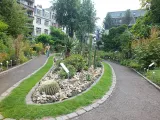
Botanical garden
Gardens and parks · 1h
- The Plantentuin, also known as Den Botaniek, was established in 1825 to support the external pathology courses of the Faculty of Medicine.
- A statue of Peeter van Coudenberghe, a 16th-century Antwerp pharmacist who foreshadowed this botanical garden with its herb garden, has been erected here.
- The garden houses a collection of 2.000 plants, including cacti and other exotic plants in the greenhouse.
- There is also a pond and a frog pond.
- The garden is accessible free of charge from 8 am to 8 pm in summer and from 8 am to 5:30 pm in winter.
- The garden is open to the public from 8 am to 8 pm in summer and from 8 am to 5:30 pm in winter.
© Wikimedia Commons
Coddy games passing through
-
13
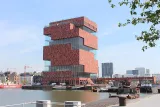
Museum aan de Stroom
45 min
- The museum was inaugurated on May 14, 2011 and boasts 8 exhibition halls and a collection of around 500,000 objects.
- Exhibitions highlight the links between Antwerp and the rest of the world, with a particular focus on the history, art and culture of the port city.
- MAS collections include works of art, cultural traditions and the history of the city and port of Antwerp, as well as maritime objects related to navigation and overseas trade.
- The panoramic roof terrace is accessible free of charge until late in the evening.
- The "Dead Skull", a large mosaic can be seen on the floor in front of MAS.
© Wikimedia Commons
-
14
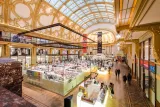
City Party Hall
45 min
- The famous Stadsfeestzaal, which today welcomes over 6.5 million people a year to its shops, has in fact had a very eventful history.
- After 8 years of construction in 1908, it served as banqueting and exhibition hall before experiencing a firethat destroyed virtually everything.
- During its restoration, whale boneswere even found in the cellar.
- This well-known Antwerp building was later used for countless exhibitions, fairs, balls, school parties and Sinterklaas tours.
Coddy games passing through
-
15
House of Rubens
45 min
- The Rubenshuis is the urban residence of artist Peter Paul Rubens (1577-1640).
- In addition to his home, Rubens also built a large studio here, where his pupils painted around 25,000 works.
- After restoration, the Rubenshuis was opened to the public as a museum in 1946.
- The museum exhibits a high-level collection including works by Rubens, his pupils and contemporaries.
- Behind the house-museum is a magnificent garden.
- In 2023, the Rubenshuis was closed for four years of restoration to improve the comfort of visitors and the works housed there.
© Wikimedia Commons
Coddy games passing through
Afternoon
-
16
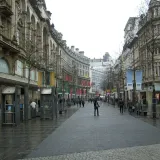
Meir
Landmark · 45 min
- Historically, the Meir was a stagnant body of water in the 13th century, called "Meere." Over time, it became an important aristocratic street with many prestigious buildings, including the Royal Palace.
- Today, it is one of the main shopping streets in Antwerp, where major chain stores are located.
© Wikimedia Commons
Coddy games passing through
-
17
Meir Palace
Landmark · 45 min
- The Royal Palace on the Meir was built in 1764.
- Over time, it was owned by Napoleon Bonaparte, William I of the Netherlands.
- After the Belgian Revolution of 1830, the palace passed into the hands of the Belgian authorities and was the center of festivities for the arrival of King Leopold I.
- After a long period as an imperial and royal residence, King Baudouin gave the palace "to the people" in 1969 for cultural use.
- The palace is currently used as a museum.
© Wikimedia Commons
Coddy games passing through
-
18
Bourla Theater
Theatres and entertainments · 45 min
- Bourla Theater (or Bourlaschouwburg) was built in neoclassical style by architect Pierre Bruno Bourla in 1834.
- It opened as Grand Théâtre or Théâtre Royal Français.
- In 1865, renovations increased the theater's capacity from 1300 to 2000 seats.
- Today, the theater is home to the Toneelhuis, a merger of 2 Antwerp companies.
- The theater features wooden stage machinery dating from 1834, unique in Belgium and rare in Europe.
© Wikimedia Commons
Coddy games passing through
-
19
Stock exchange
45 min
- The Handelsbeurs operated as a stock exchange from 1531 until 1997.
- The original building served as a model for similar exchanges in London, Rotterdam, Amsterdam and Lille.
- After a fire in 1583, it was immediately rebuilt following the same plans.
- After a second fire in 1858, it was rebuilt in 1872 in neo-Gothic style.
- The Antwerp Stock Exchange was abolished in 1997 and taken over by the Brussels Stock Exchange.
- Several attempts have since been made to renovate and reuse the building, including a project to convert it into a hotel.
- The building was finally reopened in 2019 as an event and exhibition hall after almost 20 years unoccupied and 3 years of restoration work.
- The building was finally reopened in 2019 as an event and exhibition hall after almost 20 years unoccupied and 3 years of restoration work.
Coddy games passing through
-
20
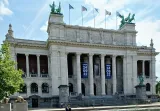
Royal Museum of Fine Arts
45 min
- This building, completed in 1894, houses the museum founded in 1810, which preserves a collection of paintings, sculptures and drawings from the 14th to the 20th century.
- The collection began with works held by the Guild of St.
- In 1823, King William I of the Netherlands donated three paintings, including an early work by Titian. A major bequest from Florent van Ertborn, former mayor of Antwerp, added 141 works to the collection in 1840.
- Among the artists exhibited at the museum are Jan van Eyck, Jean Fouquet, Rogier van der Weyden, Hans Memling, Peter Paul Rubens, and many others.
© Wikimedia Commons
Coddy games passing through
Practical details for visiting Antwerp
Where to stay
To fully enjoy the circuit, aim for central accommodation. The neighborhoods around the historic centre and the station offer the advantage of easy access to the main sites and transport. Favor places near the Meir if you want to be at the heart of the shopping buzz, or a bit closer to the theatre if you plan to see a show.
Types of lodging: small characterful hotels, guesthouses and a few well-situated chains coexist in these areas. For a quieter experience, look toward neighboring residential districts within walking distance of the main sites. Prices vary by season: in quieter periods you'll find attractive offers, while in peak season prices rise.
Practical tips: book accommodation with easy transport access and a good breakfast if you like to start early. Also check luggage storage on departure day and proximity of cafes and restaurants for breaks. If you travel as a group or family, an apartment can offer better value for money and more flexibility.
Getting around
Antwerp is very walkable in the center: many of the sites on this itinerary are close to each other, making walking an excellent choice to feel the city. For longer trips, the city offers practical and regular public transport options.
Buses and trams serve the main neighborhoods well. The Central Station is a useful hub if you arrive or depart by train, and serves as an easy landmark. Bicycle rental is also a good option: it lets you save time between certain points while staying connected to the urban vibe.
Tip: combine walking and transport according to your preferences. For a busy day, alternate walking and tram to conserve energy. Plan comfortable shoes: the center blends cobblestones and varied sidewalks. Finally, check local apps or official sites for real-time schedules and tickets to avoid lines and optimize your travel.
What to pack
The contents of your suitcase will depend on the season, but a few essentials stay constant. Plan comfortable shoes for walking, a lightweight waterproof jacket in case of rain and a compact backpack to carry your essentials during visits.
For cultural visits, bring a small bottle of water, a notebook or a note-taking app for your impressions, and a power bank for your phone if you plan to use maps or take lots of photos. Think modular clothing: light layers for changing days and one warmer item for the evening.
If you come in spring or autumn, include a warm sweater and a windbreaker; summer calls for breathable outfits and a hat for sunny afternoons. Don’t forget any travel adapters for your chargers and a map or a copy of your reservations. A small umbrella can be handy and takes little space.
Advance reservations
To travel calmly, organize certain elements in advance. Reserve your accommodation and, if you have exact dates and times, tickets for theaters and shows to secure better seats. Museums and popular attractions may offer time slots to reserve: practical to avoid lines and structure your days.
Restaurants: if you want to dine at sought-after places or during weekends, consider booking a table, especially for evenings when the local scene is lively. For guided tours or special experiences (theme tours, private tours), advance booking guarantees availability and peace of mind.
Other tips: check the times for the Central Station if your arrival or departure depends on trains and consider booking long-distance tickets in advance. Finally, keep digital and paper copies of your reservations and tickets: they help with last-minute changes.
Extras not to miss
Beyond the main itinerary, a few activities perfectly complement your discovery. Wander through less-frequented lanes to feel the local vibe, and spot cafés and bookstores for inspiring breaks. Explore small galleries or studios that dot some neighborhoods if you love contemporary art.
Recommended activities: join a themed guided tour to deepen a specific aspect of the city, or arrange a break in a secret garden to unwind. For urban game enthusiasts, try Coddy's urban escape games: this format takes you around the city in a playful and interactive way, ideal for a different afternoon.
If you have a bit more time, head to local markets or occasional events: they often offer an authentic glimpse into daily life and regional products. These extras add variety and turn a simple itinerary into a personal and memorable experience.
Local delights
Antwerp's gastronomy is discovered in its small addresses as much as in its restaurants. Look for pastries and coffee shops in the morning, bistros for lunch, and convivial places for dinner. Street snacks and local specialties can be enjoyed during breaks between two visits.
Experiences to prioritize: a gourmet break in a traditional café, a pastry stop in a local bakery and a dinner in a bistro that showcases seasonal produce. Don’t hesitate to sample local drinks offered in independent bars and breweries to vary the pleasures.
Markets and products: if you come across a market, it’s an opportunity to discover cheeses, breads and other artisanal products. For a convivial experience, share small plates and discover food-and-drink pairings at places chosen by locals.
When to visit Antwerp and how much it costs
Best seasons
Antwerp is pleasantly visitable at several times of the year. Spring and autumn often offer pleasant days and city vibes that are less stifling, with changing colors and terraces coming back to life. Summer offers longer days and more outdoor happenings, ideal if you love terraces and outdoor evenings, but expect more crowds.
In winter the city becomes calmer and more intimate: museums, theaters and cafés are good refuges. Some attractions or seasonal events may influence your date choices. Depending on your priorities — fewer crowds, mild weather or lively nightlife — choose the period that best fits your travel style.
Overall, favor seasons when you like the balance between pleasant weather and moderate crowds. Each season has its virtues: gardens in spring, summer evenings, winter markets and autumn colors.
Crowds
Crowd levels vary by season and weekends. Vacation periods and the summer months usually see more visitors, which can lengthen lines and make some places busier. If you prefer a calmer experience, plan your visits on weekdays and outside of school holidays.
Popular spots on the itinerary may be livelier during the day; to avoid them, start early in the morning or choose late afternoon hours to discover them with fewer people. Afternoons at the zoo or in green spaces are often more relaxed than peak tourist times.
Tip: book in advance entries or shows that are likely to be full. By being flexible with times and favoring less-crowded windows, you'll enjoy a quieter and more personal visit.
Estimated budget
- Budget travel
- Budget economy: Plan a tight budget by choosing a hostel or a small hotel on the outskirts, prioritizing walking and public transport for getting around. Rely on meals in cafés, snacks and markets. By saving on extras and booking tickets in advance, you can limit costs while covering the essentials of the 2 days.
- Mid-range budget
- Budget medium: With a middle budget, choose a well-located hotel in the center, mix meals in good bistros and a few refined restaurants, and treat yourself to one or two paid visits or a show. Plan for skip-the-line tickets where useful and a bit of wiggle room for extra experiences like a themed guided tour.
- Comfort budget
- Budget comfort: If you’re seeking more comfort, opt for a charming hotel or a central 4-star property, dine at recommended restaurants, attend a show and book private tours. This level allows you to travel without compromise, with advance reservations and flexible transport and activity options.
Frequently asked questions about your stay in Antwerp
Conclusion and final tips
In two days, Antwerp reveals many of its facets if you combine a steady pace with well-chosen breaks. This itinerary offers a balance between must-see sites, moments of relaxation and immersion in local life. Keep the freedom to drop a stop if a place inspires you in particular: the city always rewards the curious who take time to look around.
Remember to leave room for unforeseen discoveries and the small addresses spotted along the walks: they’re often the most memorable. Book the essentials in advance if you have constraints, but keep room for improvisation to fully enjoy the atmosphere. Wishing you a wonderful stroll, pleasant encounters and delicious pauses that will nicely pace these two days in Antwerp.