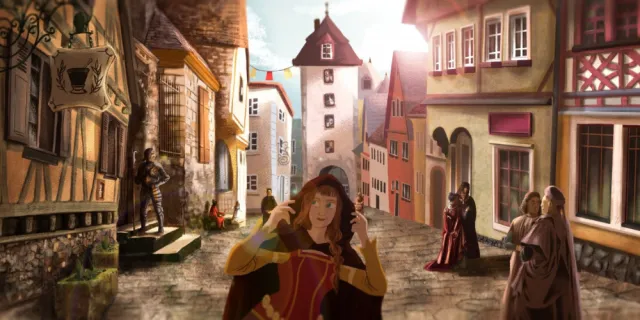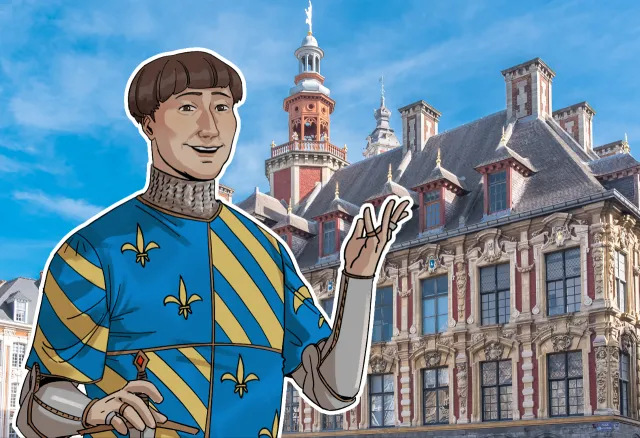







You will visit the most beautiful points of interest in Lille







3 days in Lille: an itinerary to feel the city
Starting your stroll at the Old Faculty of Medicine and Pharmacy, it's diving into a neighborhood where history and everyday life mingle. Over three days, you will pass from lively lanes to grand squares, from chiseled façades to characterful museums. This route is designed to savor the city without rushing, alternating cultural discovery, wandering, and tasty breaks.
The first day anchors you in Vieux-Lille, between cobbled streets and houses bearing witness to the past. The second day will focus on the civic and cultural scene around the Opera, the Chamber of Commerce, and the Palais des Beaux-Arts. The third day offers more intimate walks, from hospices to charming blocks, and ends with music on Place du Concert. I have aimed to balance the steps so that each morning gives way to a quieter afternoon, ideal for enjoying without fatigue.
Expect simple but sincere discoveries: a portal that catches the eye, a church that surprises with its interior, a tea room that re-energizes you. Follow this itinerary like a playlist: some steps will be must-sees, others breaths. There is here a share of experience and a share of freedom for you to add your own moments.
Ready to walk, to look up and to taste? Leave space for the unexpected and a few tasty stops. This guide highlights a clear itinerary, selected points of interest, and practical tips for three well-filled days, while leaving room for wonder.
Day-by-day summary
Day 1 — Old Lille and its alleyways: Start at the Old Faculty of Medicine and Pharmacy, then stroll along Rue Saint-Etienne before yielding to the temptation of a stop at Maison Meert. Continue along Rue Esquermoise and Rue Basse to feel the soul of the neighborhood. In the afternoon, cross Porte de Paris, discover the Hospice Gantois and end at the Palais des Beaux-Arts for an artistic immersion.
Day 2 — The civic and cultural center: Morning around the Opéra de Lille, the Chambre de Commerce and Place du Général-de-Gaulle with the Goddess Column and Place Rihour. In the afternoon, stroll to Saint-Maurice Church, pass by the Ancien Théâtre de Lille and the Théâtre du Nord, then go up Rue de la Grande Chaussée to reach Cathedral Notre-Dame-de-la-Treille.
Day 3 — Hidden treasures and a musical finish: A gentle morning at Hospices Comtesse and the Ilôt Comtesse, discover the Maison de Gilles de la Boë, and finish at Place du Concert to close the itinerary. Each day combines culture, architecture and tasty moments for a complete overview of the city.
Day 1
7 stops
Morning
-
1
Rue des Chats Bossus
45 min
- The "street of hunchback cats" is one of Lille's oldest streets.
- The street owes its name to an old estaminet (tavern).
- The former fishmonger's A L'Huîtrière has been a Lille institution for over a century, an essential part of Lille's heritage for its interior and art deco façade.
- An enigmatic golden arm hanging for several centuries on the corner of the street keeps all its mystery.
- Cherubs adorn the street, looking at each other to indicate the same house and turning back to back to mark the neighborhood boundary.
- Boats float on the walls and balcony of some buildings.
Coddy games passing through
-
2
Place du Concert
45 min
- It is so named because of the presence of a conservatory concert hall.
- Originally, the square was called "place du cloître Saint-Pierre" and stood on the site of the canons' enclosure of the collegiate church of Saint-Pierre.
- The canonical buildings damaged during the siege of 1792, as well as the collegiate church, were destroyed from 1794 onwards.
- The square was renamed "Place du Concert" in 1803.
- Lille's School of Fine Arts, which stood opposite the conservatory until 1964, extended into Rue Alphonse Colas.
- An archaeological dig carried out at 12 Place du Concert revealed features dating back to the 11th century, when the town originated.
Coddy games passing through
-
3
Ilôt Comtesse
45 min
- L'ilôt comtesse refers to the garden of the Hospice Comtesse, founded in 1237 by Joan of Constantinople, Countess of Flanders.
- A fire in 1468 destroyed the original establishment, but parts were rebuilt over the centuries.
- Recreated in the 1980s, the garden houses some thirty period medicinal plants, testifying to the use of these plants in the 13th century.
Coddy games passing through
-
4
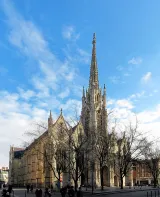
Notre-Dame-de-la-Treille Cathedral
Religion · 30 min
- The cathedral stands on a miraculous statue venerated since the 13th century.
- Construction began in 1856 and was completed almost 150 years later after many compromises, in 1999, due to numerous financial difficulties.
- The project aimed to rebuild a large church in the heart of the city, as well as to promote the creation of an episcopal see in Lille to reinforce its status as a religious capital.
- A model of the original project is present in the cathedral (pictured).
- In Gilleson Square, which surrounds the cathedral, you can also admire the Campanile Saint-Nicolas, the bell tower that stands alone from the cathedral.
© Wikimedia Commons
Coddy games passing through
-
5
Napoleon bridge
Bridges · 45 min
- The Napoleon Bridge has a chequered history, having been destroyed and rebuilt several times in honor of Napoleon I.
- Originally built in 1812, it was destroyed in 1918 by the German army, oris partially rebuilt in 1920, then destroyed again in 1944.
- Its third reconstruction was completed in 2014 as part of the rehabilitation of the citadel park.
- The base of each staircase is framed by 2 ornamented pillars, and two Greek sphinxes.
© Wikimedia Commons


Afternoon
-
6
Hospice Comtesse
Museums · 1h30
- Hospice Comtesse (also known as Hospice Notre-Dame) is a former hospice in Lille founded by Joan, Countess of Flanders, in 1237.
- The hospice remained Lille's main hospital until the late 18th century, and then became a hospice for the elderly and orphans after the French Revolution.
- Since 1962, it has housed a museum of Art and History that presents the social and cultural life of Lille in the 17th and 18th centuries.
- Regular exhibitions are organized in the patients' room, and the dormitory is dedicated to exhibiting contemporary works tracing the history of the city.
© Wikimedia Commons
Coddy games passing through
-
7
Maison de Gilles de la Boë
Historic architecture · 45 min
- This house, also known as the Bon Bouillon, was built in 1636 near the old port of Lille for spice and cloth merchant Gilles de la Boé.
- It also housed an estaminet called "Au Bon Bouillon", hence its nickname.
- The ensemble is richly decorated with heavy fruit garlands linking thick brackets together.
© Wikimedia Commons
Coddy games passing through
Day 2
8 stops
Morning
-
8
Rue Saint-Etienne
45 min
- Its name refers to the former church of Saint-Étienne destroyed during the siege of 1792.
- The Hôtel Beaurepaire was dated 1572, as the only Renaissance style building in Lille.
- The house n° 62 is classified as a historical monument since December 21, 1984.
- The house at n° 60 is also classified as a historical monument since December 21, 1984.
- The Nouveau Siècle de Lille complex replaces the "Diplodocus" project and is owned by the Regional Council of Hauts-de-France.
Coddy games passing through
-
9
Place du Général-de-Gaulle
Landmark · 45 min
- Former names: Forum, Place du Marché, Place d'Armes, Grand'Place Created in the 14th century as a market, it is the historic heart of the city and home to monuments such as the Goddess Column, the Théâtre du Nord and the Vieille Bourse.
- During the French Revolution, the grand-place was the site of executions and demonstrations.
- It was renamed in honor of Charles de Gaulle after the Second World War.
- Today, it is a place for festivities, exchanges and various events, as well as a center of commercial activity.
© Wikimedia Commons
Coddy games passing through
-
10
Maison Meert
Historic architecture · 45 min
- Maison Méert is one of the oldest pastry shops still in business in the world, having its origins in 1761 in Lille.
- Madagascar vanilla-filled waffles are Méert's flagship product, packaged by the six in gilded paper or by the twelve in cardboard boxes.
- The store features a flamboyant style with Orientalist echoes, gilding, coffered ceilings and wrought-iron balconies.
- Méert has received numerous national and international awards and has played host to illustrious personalities such as Napoleon, Charles de Gaulle and Churchill.
© Wikimedia Commons
Coddy games passing through
-
11
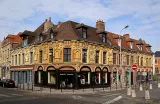
Rue Basse
45 min
- It is one of the oldest streets in Lille: in the eleventh century it already linked the ports of Basse Deûle and Quai du Wault.
- Animated by the markets, the street was a place of parade of carts loaded with goods. It was successively called Basse-Rue, rue des Grimaretz, rue des Dominicains, rue des Intrépides and rue de la Fédération.
- E served to transport goods between the ports of the Haute-Deûle and the Basse-Deûle before the opening of the Moyenne Deûle canal in 1751.
Coddy games passing through
-
12
Rue Esquermoise
45 min
- One of the oldest streets in Lille, used to reach the Grand'Place and the future route to Dunkirk.
- Named after the ancient village of Esquermes. Noteworthy are the Maison Meert and five historic buildings, such as numbers 4, 6, 8 and 5, 7, with toitures and facades classified as historic monuments. Until 1858, it led towards Esquermes.
- The rue Esquermoise crossed canals, such as the Pont de Weppes, and its layout has changed over time. A passageway opened after 2005 allows pedestrians and cyclists to reach the parvis de la Treille via the rue de Weppes.
Coddy games passing through
Afternoon
-
13
Théâtre du Nord
Theatres and entertainments · 45 min
- The theater is housed in a former 18th-century guardhouse called Grand(e) Garde.
- The building was constructed in 1717 after the conquest of the city by Louis XIV and served as a guardhouse for the garrison.
- A solar sculpture on the facade recalls the annexation of Lille to France in 1667.
- Le théâtre du Nord offers numerous plays covering a wide variety of genres and eras.
© Wikimedia Commons
Coddy games passing through
-
14
Rihour Square
45 min
- Place Rihour highlights the Palais Rihour, the war memorial, as well as a glass pyramid marking the arrival of the metro in 1983.
- The Palais Rihour was destroyed by fire in April 1916 and today only a small part dating back to the 15th century remains.
- Lille's monument to the dead, inaugurated in 1927, commemorates the harsh living conditions during the First World War, for soldiers and civilians alike.
- Lille was the first metro in the world to be automated, on tires and without a driver.
Coddy games passing through
-
15
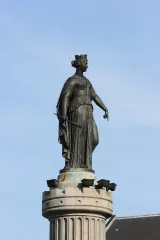
Column of the Goddess
45 min
- Since 1845, the monument has commemorated the heroism of the people of Lille during the 1792 siege of Lille by the Imperial (Austrian) army.
- The statue of the goddess at the top holds a boutefeu in her right hand and points to the inscription on the plinth, echoing the response of the mayor of Lille refusing to surrender the besieged city to the Imperials.
- The statue of the goddess is in bronze, stands three meters high, and is an allegory of the city of Lille.
- At its base, the column is surrounded by a basin making a fountain, added later.
© Wikimedia Commons
Coddy games passing through
Day 3
9 stops
Morning
-
16
Lille's old theater
Theatres and entertainments · 45 min
- Lille's theater, built in 1785 gave its name to the Place du Théâtre.
- In April 1903, a mysterious fire destroyed the theater, and reconstruction was abandoned in favor of the Cordonnier opera house, completed after World War I.
© Wikimedia Commons
Coddy games passing through
-
17
Rue de la Clef
45 min
- This is one of the oldest and most emblematic of the Vieux-Lille district.
- It is mentioned in the medieval cartulary but not in the 1066 Charter of Endowment of the Collegiate Church of Saint-Pierre.
- Once called "rue Marat," it regained its original name after being the site of the "Hôtel de la clef" in 1793.
Coddy games passing through
-
18
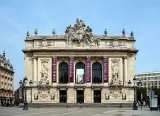
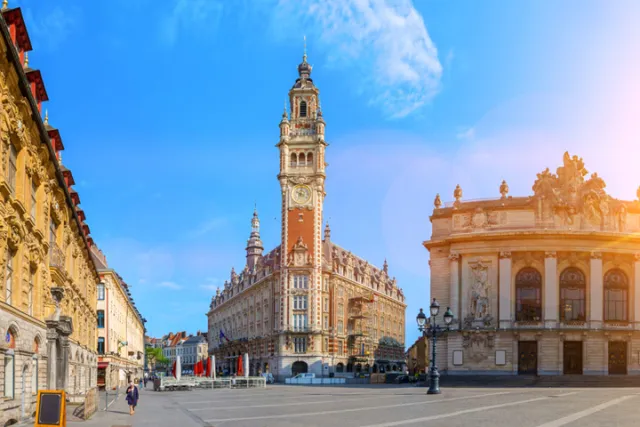
Lille Opera House
Theatres and entertainments · 45 min
- In 1668, the city of Lille became French, and operatic activity developed rapidly with performances organized in the town hall.
- At the end of the 18th century, a larger hall was built, inaugurating in particular the French premieres of famous operas.
- A fire destroys the opera house built in 1785, leading to the construction of a new building in 1903.
- The new opera house is occupied by the Germans during the First World War and used for German performances.
- After the end of the war, the opera house is restored and reopens in 1923 for its "French premiere".
© Wikimedia Commons
Coddy games passing through
-
19
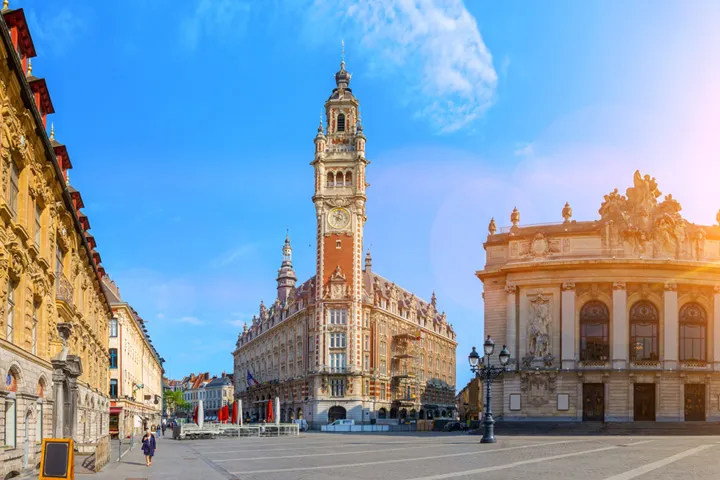
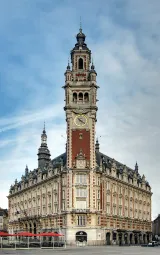
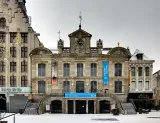
Chamber of Commerce
Historic architecture · 45 min
- Lille's Chamber of Commerce was founded in 1715.
- The building was constructed between 1910 and 1921.
- Its famous 76-meter-high neo-Flemish belfry features an automated carillon of 26 bells, playing the European anthem or "le P'tit Quinquin" depending on the time.
- It's often nicknamed the "New Stock Exchange," in opposition to the Old Stock Exchange opposite.
- During the German occupation in 1940, the New Stock Exchange served as the headquarters of the regional Kommandantur.
© Wikimedia Commons
Coddy games passing through
-
20
Rue de la Grande Chaussée
45 min
- It is one of the oldest streets in Lille, mentioned as early as 1066.
- The sign of the golden arm, which hangs since the 16th century, remains a mystery as to its origin.
- D'Artagnan, the famous musketeer, may have resided in the street while he was governor of Lille in 1672.
- L'Huîtrière is a legendary establishment with a superb Art Deco facade, one of the most beautiful in France.
Coddy games passing through
Afternoon
-
21
Saint-Maurice church
Religion · 30 min
- Its construction began in the late 14th century and was completed in the late 19th century.
- Over the centuries, the church has been enlarged, with additions to various parts, including the choir and tower in the 15th century, and the side chapels in the 16th and 17th centuries.
- The church was damaged by arson in 2001 and has undergone extensive restoration since then.
- The church interior houses paintings, sculptures and stained-glass windows by renowned artists.
- The church has two organs: a grand gallery organ built in 1877 and a choir organ built in 1882.
© Wikimedia Commons
Coddy games passing through
-
22
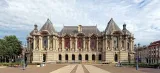
Palace of Fine Arts
Museums · 1h30
- Founded in 1792, the museum was initially made up of works confiscated from émigrés and religious institutions after the French Revolution.
- The museum has grown over the years thanks to gifts, bequests, and acquisitions by the city, including works by great artists such as David, Goya, Delacroix, Courbet and Corot.
- In 1892, a Palais des Beaux-Arts was built to house the growing collection, becoming one of France's largest art collections outside Paris.
- Today, the museum offers nearly 2,000 works for viewing, including sculptures, paintings, ceramics, drawings, prints and coins ranging from the 15th to the 20th century.
© Wikimedia Commons
Coddy games passing through
-
23
Hospice Gantois
Historic architecture · 45 min
- It was founded in 1462 for the purpose of sheltering thirteen destitute elderly people.
- It was initially attached to the collegiate church of Saint-Pierre.
- Ebetween the 18th and 20th centuries,the hospice was transformed into a modern hospital.
- During World War II, it took in modest elderly people, then wounded soldiers and prisoners.
- It was listed as a Lille Historical Monument in 1923 and 1967.
- The hospice operated until 1995, later becoming a luxury hotel, the Hermitage Gantois in 2003.
- The building included a sick room, a chapel, buildings around four courtyards, and was enlarged in the 17th and 18th centuries.
© Wikimedia Commons
Coddy games passing through
-
24
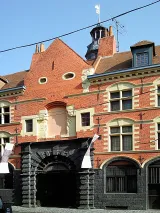
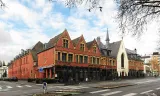
Former Faculty of Medicine and Pharmacy
45 min
- Built between 1886 and 1892, it is distinguished by its polychromatic architecture of glazed bricks, mosaics and ceramics.
- In 1954, the faculty moved to the CHU following the creation of the hospital center south of Lille.
- The building has recently been transformed into a multi-purpose complex called "Cosmopole" comprising: the 127-room Moxy hotel, 210 residences and an art gallery occupying an area of 20,000 m2.
Coddy games passing through


Practical details for visiting Lille
Where to stay
For a convenient stay, aim for central neighborhoods near Grand-Place: the area between Rue Faidherbe, Place du Général-de-Gaulle and Vieux-Lille is ideal. You’ll be within walking distance of the main sights and transport. Accommodation options range from charming small hotels in Vieux-Lille to more modern properties near the Chamber of Commerce. Expect variable rates: small hotels or bed-and-breakfasts often offer authenticity, mid-range accommodations provide a good comfort/price balance, and upscale hotels are around the main squares. In high season, plan for a slightly higher budget and book early. If you prefer the local vibe, look for an apartment or a homestay in Vieux-Lille or near Place Rihour. Finally, check the proximity of a tram or metro stop if you plan to move beyond the center; it’s often handy for departures and returns.
Getting around
The center is very walkable: distances between most points of interest are short, making walking the best way to appreciate the architecture. For longer journeys, the public transport network is reliable: tram and metro quickly connect neighborhoods, and bus lines complement service. The main stations around Place du Général-de-Gaulle and the Gare facilitate access in and out of your trip. Consider a bike-share or electric bike to save time between sites; it's practical and eco-friendly. If you're short on time, a tram ride can quickly bring you closer to a museum or a farther neighborhood. Finally, a car isn't essential in the center and parking can be expensive; favor park-and-ride lots or hotel reservations with parking if needed.
What to pack
Prepare season-appropriate clothing: light layers for spring and autumn, a waterproof coat for possible showers, and comfortable shoes for the pavements of Vieux-Lille. Bring a compact daypack with a water bottle, a small first-aid kit, and a portable charger. If you visit in winter, bring a beanie and gloves; in summer, a cap and sunscreen may be enough for long walks. Remember to slip in a compact umbrella and a light scarf to play with layers. For the cultural part, a notebook and a pen can be useful, as well as a map or mapping app to navigate. Finally, if you love photos, a small camera or a smartphone with enough memory will be perfect to capture façades, squares and architectural details.
Advance reservations
Some visits and experiences are worth booking in advance to avoid queues or guarantee your place. For the Palais des Beaux-Arts, check the ticketing and reserve if major temporary exhibitions are announced. Performances at the Lille Opera and Théâtre du Nord can sell out: book ahead if a show interests you. For popular restaurants, especially in Vieux-Lille, evening reservations are recommended, especially on weekends. If you want thematic guided tours (architecture, gastronomy or history), book in advance to ensure a slot. Finally, some accommodations and apartments fill up quickly in high season, so secure your lodging several weeks before you depart. These reservations free up time to stroll and enjoy.
Extras not to miss
Beyond the main itinerary, treat yourself to a few gems: wander through the passages and small courtyards of Vieux-Lille to uncover artisan shops, or climb to the heights of a square for an unexpected panorama. Explore local markets for the atmosphere and fresh products. Puzzle lovers will enjoy Coddy's urban escape games to discover the city in a different way. Also look for independent art galleries and intimate concert halls to feel the local scene. Finally, take a moment in a tea room or neighborhood café to observe city life: these breaks are often the most memorable revelations of a trip.
Local delights
The local gastronomy blends comforting dishes and tea-room sweets. Try specialties at bakeries and neighborhood brasseries for a culinary immersion: follow the shop windows of the historic houses and stop for a hot drink accompanied by a vieillette or a local pastry. Markets offer fresh produce and tasting stalls: ideal for a spontaneous picnic. For the evening, explore bouchons and brasseries offering hearty dishes with local beers. Don’t miss trying some sweet specialties in a tea room, and save room for dessert after a traditional meal. Neighborhood cafés are excellent spots for a pause and to observe city life.
When to visit Lille and how much it costs
Best seasons
Spring and autumn are often the best times to visit: the weather is generally mild, the streets come alive after winter or keep a beautiful light before winter. Summer attracts more people but offers a festive atmosphere and pleasant terraces. Winter can be quieter and more economical, with a different, more intimate vibe, ideal if you enjoy museums and hot cafes. Each season has its strengths: in spring the parks and gardens regain color, in summer the terraces buzz, in autumn walks are calmer, and in winter the cultural offering is often rich. Think of local events that can pace your visit depending on the period chosen.
Crowds
Crowds vary with season and weekends. School holidays and summer months see more visitors, especially around main squares and museums. If you prefer a relaxed pace, opt for weekday visits outside school holidays: mornings are often quieter and allow you to enjoy the sites without queues. Evenings can stay lively, especially in restaurant and bar neighborhoods. Occasional cultural events also attract crowds: check the local calendar to avoid heavy crowds if you're after tranquility. In short, for a more intimate experience, choose off-season or weekday.
Estimated budget
- Budget travel
- <h3>Economical budget</h3><p>To travel light, opt for accommodations in a youth hostel or a budget room outside the center, use walking and public transport, and favor quick meals or bistro-style options. Estimate: local breakfast, a simple lunch, admission to one museum, and transport for the day. Tip: buy a transport pass if available and choose free or reduced-price museums.</p>
- Mid-range budget
- <h3>Mid-range budget</h3><p>Opt for a 3-star hotel or a central apartment, mix neighborhood restaurants with a few fine dining meals, and buy a few tickets for the Palais des Beaux-Arts or a show. Include terrace coffee and a few local purchases. Estimate: comfortable lodging, two restaurant meals per day, a few paid visits, and tram/bike transport.</p>
- Comfort budget
- <h3>Comfortable budget</h3><p>Choose a charming hotel or a high-end address near Grand-Place, book dinners at renowned restaurants, attend a show at the Opera, and enjoy private transport if needed. Estimate: premium lodging, cultural outings, refined dinners, and souvenir shopping.</p>
Frequently asked questions about your stay in Lille
Last tips to enjoy
These three days are an invitation to discover the city at your own pace: blend strolls, museums, and tasty pauses for a balanced experience. Don't try to see everything, but feel it: listening to an opera aria while passing by, stopping in front of an ornate façade, or sharing a good meal are often the memories that last. Bring your curiosity, let yourself be carried by the lanes and leave room for the unforeseen.
If you return, you'll find more neighborhoods to explore and addresses to delve into. In the meantime, follow this itinerary like a flexible guide: it provides you with a structure, but the city will offer your own memorable moments. Bon voyage and wonderful discoveries on Place du Concert at the end of the journey!