




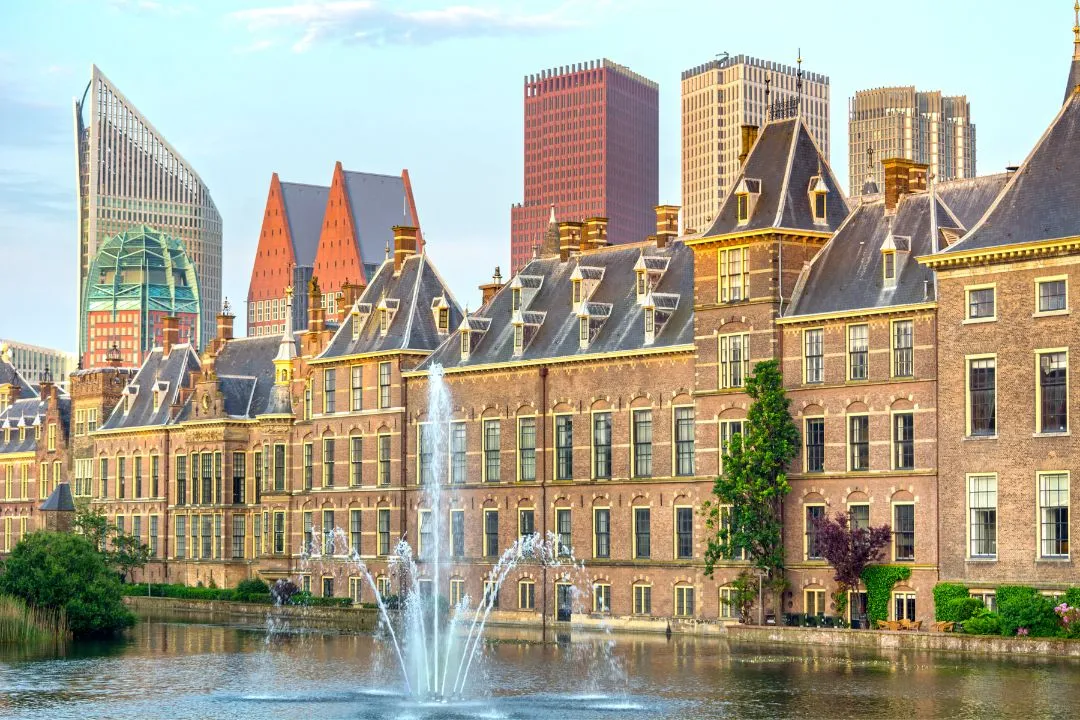
You will visit the most beautiful points of interest in The Hague


Day 1
10 stops
Morning
-
1
Departement van Justitie
Historic architecture · 45 min
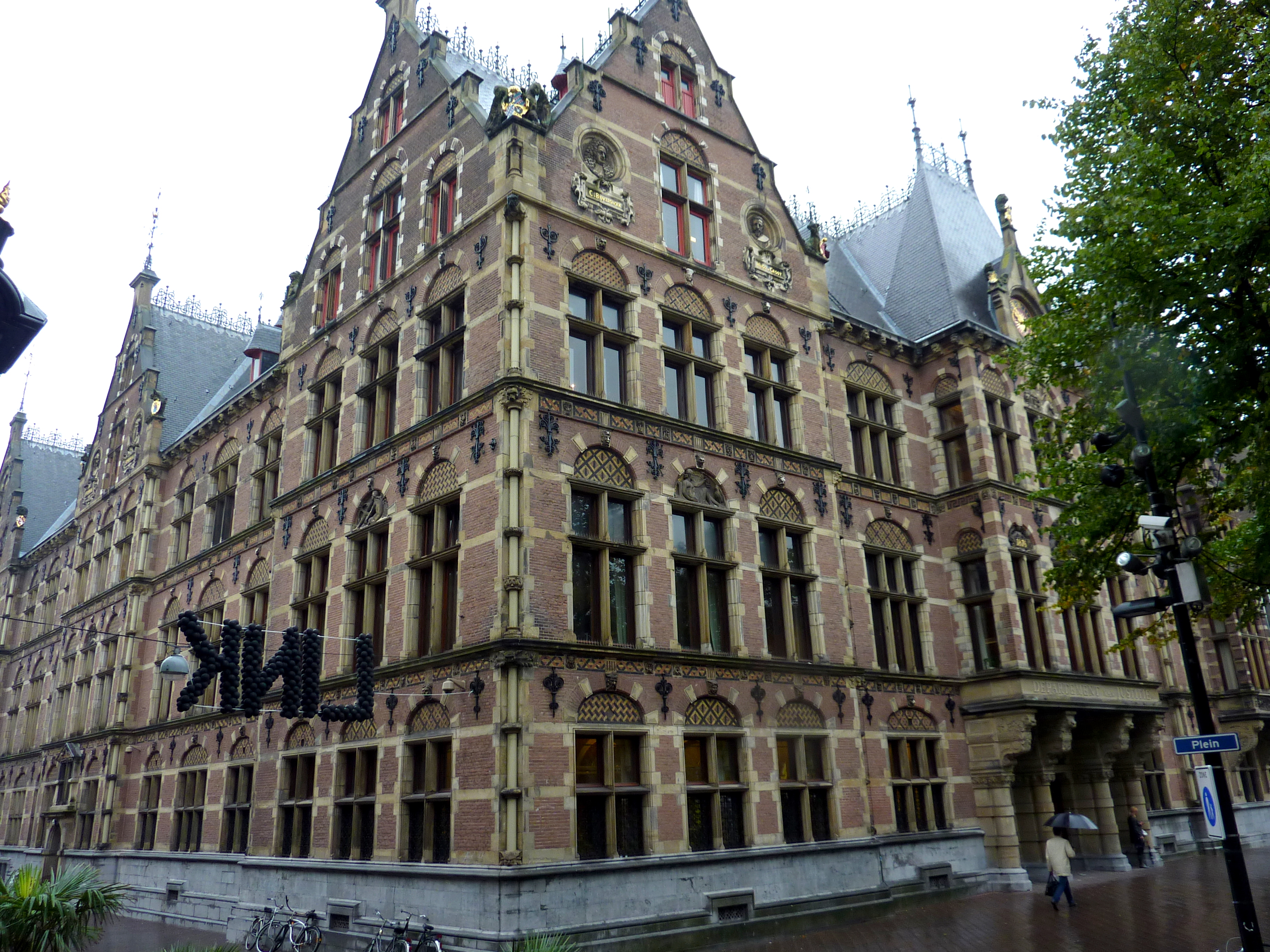
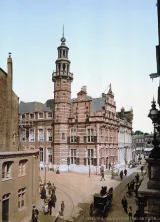
- The Department of Justice, also known as the Justice Building, is a former building of the Ministry of Justice.⏳ The Department of Justice was established in a 17th century house in 1815, and from 1862, also in the adjacent Huygens house.
- The building was demolished in 1876 for the new Ministry building, with several interior parts reused.
- This building was built between 1876 and 1883 in neo-renaissance style by architect Cornelis Peters, with decoration from sculptors Bart van Hove and Emil Bourgonjon.
- The building consists of a basement floor, ground floor, and two floors, composed of four wings enclosing a courtyard.
- The building housed offices, various meeting rooms and a library.
- It is now a part of the Second Chamber building, with various factions using its work and meeting rooms.
- The library is now known as the Handelingenkamer.
- Six medallions bearing the portraits of Dutch legal scholars are embedded in the building's facade.
- The building is registered as a national monument under registration number 17881.
© Wikimedia Commons
Coddy games passing through
-
2
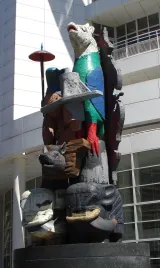
Frog with Umbrella
Historic · 15 min
- Karel Appel gained international fame as an expressive painter, co-founding the Cobra movement in the late 1940s, advocating freedom and experimentation inspired by spontaneous child drawings. Appel, known for his paintings, also created sculptures using 'objets trouvés' or found objects, ranging from waste to masks and cultural artifacts, reflecting diverse influences. In 2001, the 'Frog with Umbrella' sculpture, a gift for Den Haag's 750th anniversary, was bronzed and enlarged from the original wooden piece created in 1993 by Appel.
- André Kruysen and P.
- Struycken were involved in the bronze casting and colorful painting. Despite creating numerous sculptures, only a few of Appel's works, including 'Frog with Umbrella,' are displayed in public spaces.
© Wikimedia Commons
Coddy games passing through
-
3
Kattensteeg
45 min
- The Achterom features artistic cat murals depicting various scenes, including cats with kittens, cats with hats, and even a cat on a bike.
- Artists Marilou Klapwijk, SoGo, Dünya Atay, and Zesta&Page33 created the cat murals, connecting them with scratching posts and a ball of yarn.
- Achterom, located in a historic part of The Hague, has undergone improvements in lighting, greenery, and paving to enhance its image.
- The municipality commissioned The Hague Street Art to design playful cat artworks, adding a humorous touch to the street.
Coddy games passing through
-
4
Grote of Sint-Jacobskerk
Religion · 30 min
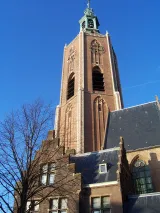
- The Groote Kerk de San Jaime is a landmark Protestant church known for having many members of the House of Orange-Nassau baptized there, including Willem-Alexander of the Netherlands and his daughter Catharina-Amalia, the Princess of Orange.
- Alongside Binnenhof, it is one of the oldest buildings in its city, notable for its high tower and bell carillon.
- The church's interior features fine vaulted ceiling, old stained glass windows, significant sepulchral monuments, and wooden shields referencing the knights of the Golden Fleece.
- The church's six-sided tower, one of the tallest in the country, houses several bells from the 16th to 17th century and 31 modern bells.
- The church suffered a fire in 1539, resulting in the stained glass windows being repaired by noteworthy glass artists including brothers Dirk and Wouter Crabeth of Gouda.
- One notable feature is a commemorative stone for Constantijn and Christiaan Huygens, who were buried in unmarked tombs within the church choir.
© Wikimedia Commons
Coddy games passing through
-
5
Haags Jantje
45 min
- One of the most loved sculptures in The Hague was made by sculptor Ivo Coljé, out of bronze.
- The sculpture is often associated with the children's song, "In The Hague there lives a count and his son is called Jantje".
- Visitors often touch the statue's hand, specifically its index finger and thumb, which shine from frequent contact.
- It is customary for visitors to 'shake hands' with the sculpture, affectionately called "Haags Jantje".
- The history of the statue and any connection with a historical 'Jantje' is unclear.
- The lyrics of the children's song were published in the 1871 collection of Dutch Baker and children's rhymes by Johannes van Vlot.


Afternoon
-
6
De Nederlanden van 1845
Historic architecture · 45 min
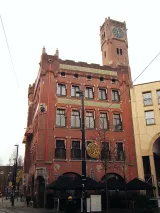
- De Nederlanden van 1845 was a Dutch insurance company formed in response to a void in the insurance market in North Netherlands after the separation from Belgium in 1830.
- Merged with the National Life Insurance Bank in 1963, creating Nationale-Nederlanden. The company expanded rapidly, establishing itself in major Dutch cities and venturing into international markets.
- In 1897, a headquarters was built in The Hague, and overseas agents were recruited. Under the leadership of Carel Henny, the company became a patron of architect Berlage, leading to the construction of distinctive offices in Amsterdam and The Hague, contributing to Berlage's status as a pioneering Dutch architect. Post-1900, De Nederlanden focused on customer expansion and diversification of insurance products, entering the life insurance sector in 1903 and later acquiring companies in various insurance domains. Despite challenges during World War II, the company rebounded post-war, experiencing growth in the Netherlands, expansion into Canada, and a merger with the Nationale Levensverzekering-Bank in 1962. In 1945, the company celebrated its centennial by releasing the "1845-spel," a board game based on insurance.
© Wikimedia Commons
Coddy games passing through
-
7
Het Nutshuis
Architecture · 45 min
- Het Nutshuis was the former headquarters of the Haagse Nutsspaarbank from 1921 until 1992, and is a significant part of the bank's history.
- The bank's first building was constructed in 1894 but was demolished just ten years later to allow for a street widening project and the creation of a square.
- The construction of the new building, Het Nutshuis, was delayed due to various reasons including the outbreak of World War I, scarce building materials, and internal disagreements over design plans.
- The first stone of Het Nutshuis was laid in 1920 and it took 116 weeks to complete the building due to strikes and construction hurdles.
- The Nutshuis building also contains a safe in the center that spans three floors where books and valuable documents could be stored safely.
- In 2002, the bank moved out of Het Nutshuis.
- The building underwent thorough renovation and re-opened in 2006 as a hub for social organizations and commercial room rentals.
- Today, it's still owned by Fonds 1818.
© Wikimedia Commons
Coddy games passing through
-
8
Design Museum Dedel
Museums · 1h30
- Design Museum Dedel was opened on July 1, 2019, with an exhibition dedicated to the work of Milton Glaser and Wim Crouwel, both 90 years old at that time.
- The museum stages thematic exhibitions of two-dimensional design such as graphic design, posters, wallpaper, among other materials.
- A planned exhibition, "KLM, the first century", was interrupted by the Covid-19 pandemic.
- The museum is set to reopen in 2023.
- Huis Dedel, the monumental building in which the museum is located, was built presumably by architect Pieter Post in 1642 for William Willemszn Dedel.
- The interior of Huis Dedel contains rare and internationally renowned artworks, including 19th-century wallpapers, lanterns, rococo-style plasterwork created around 1735, and seven ceiling paintings by Jacob de Wit.
- The Design Museum Dedel does not own a collection, but utilizes loans from the collection of the Advertising Arsenal Foundation and various public and private collections.
- It is also starting to collect historical wallpapers due to the monumental wallpapers of Huis Dedel.
Coddy games passing through
-
9
Old City Hall
Landmark · 45 min
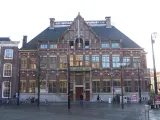
- The Oude Stadhuis (Old Town Hall) was built in 1564 comprising two buildings and a tower, constructed between the 16th and 18th centuries, and is known for its distinct Renaissance style. ⏰ The building was once a castle for powerful Lords of Brederode, but was confiscated in the late 14th century by Count Aalbrecht of Holland due to a controversy surrounding a murder.
- Funds that were initially collected for the purpose of building city walls around the city were instead used to construct the Old Town Hall by local mayors, Joost Jacobszoon, and Dirck van Alckemade.
- The Old Town Hall initially did not have a tower; it was added at the end of the 16th century. ⏳ Remarkably, the townhouse survived the plunders of the Eighty Years' War.
- It houses statues depicting "Faith," "Hope," "Love," "Strength," and "Justice." As of November 23, 2011, the clocks in the tower are rung four times a day to signal the start and end of the workday and lunch break.
© Wikimedia Commons
Coddy games passing through
-
10
Haagse Harry
Historic · 15 min
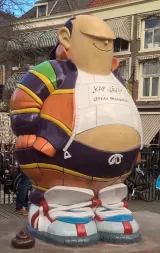
- Haagse Harry is a Dutch comic book series created by Marnix Rueb, which debuted in 1991.
- It centers on a resident of The Hague who speaks the Hague dialect.
- Haagse Harry lives in The Hague, is unemployed, rude, but has a good heart.
- He is known as an aggressive riot supporter of ADO Den Haag.
- Other important characters are Haagse Bianca, Harry's wife, and Henk Bres.
- Queen Beatrix, Mayor Wim Deetman and various politicians also appear frequently.
- All the characters speak flat Haags, including politicians and immigrants with accents.
- The strip makes jokes about various population groups, with stereotypical depictions.
- Haagse Harry first appeared in a monthly newspaper in the Hague nightlife scene and became so popular that he soon became his own cartoon character.
© Wikimedia Commons
Coddy games passing through