






Visit Valencia in 2 days
14 must-see POIs, optimized routes and anecdotes.
48 hours in Valencia: an itinerary to feel the city
Starting at Valencia's Archiepiscopal Palace and ending at the Torres de Serranos in two days is giving yourself time to feel the soul of a historic center where architecture and daily life cross paths at every street corner. This 2-day itinerary covers 14 carefully chosen points of interest to alternate art, history, architecture and small urban discoveries. You will walk, you will stop in cafes, and you will take detours that make a city come alive.
The first day plunges you into the administrative and cultural heart: the Fundación Bancaja, the majestic façade of the Palace of Justice, the whimsy of the House of the Dragons, then the Plaza del Ayuntamiento and its nearby places. The second day focuses on emblematic places that tell the story of commerce and power, from the Silk Exchange to the Torres de Serranos, passing by the palaces that shaped the urban landscape.
Along the cobbled streets, expect contrasts: Baroque façades beside modernist buildings, cultural institutions offering exhibitions, and neighborhood cafes providing welcome breaks. This guide emphasizes the experience, walking routes between each point of interest and practical tips to enjoy without rushing. It also contains accommodation suggestions, tips for getting around, and tasty ideas to help you turn an organized visit into a more personal stay.
Whether you're arriving for a long weekend or a short getaway, this itinerary favors human pace: strolls, heritage, museums, plazas and a pinch of culinary discovery. Put on comfortable shoes, leave some room for the unexpected, and get ready to see Valencia differently.
Loading map...
You will visit the most beautiful points of interest in Valencia

Day-by-day quick guide
Day 1 — Morning: Start at the Archiepiscopal Palace of Valencia to get oriented in the historic center. Continue with the Fundación Bancaja for an exhibition or a cultural cafe, then pass by the Palace of Justice. Continue toward the House of the Dragons and the Correos Building to admire the façades and the urban animation. Afternoon: Breathe in the real local life at the Ateneo Mercantil, cross the Plaza del Ayuntamiento, observe the architecture of the Banco de Valencia, and dive into history at La Nau and the Palace of the Marquis of Dos Aguas. Enjoy dinner in a lively neighborhood.
Day 2 — Morning: Start with the Lonja de la Seda, a masterpiece of medieval commerce, then visit the Palace of the Valencian Generalitat and the Palace of the Borgias. End your journey at the Torres de Serranos, a grand finale offering a beautiful vantage point over old Valencia. This second day focuses on heritage, monuments, and panoramas, while keeping a pleasant pace to savor each stop.
Day 1 - Valencia
9 POIs to discoverDay 1 - Morning à Valencia
5 Points of interest - Duration : 3h45 - Distance : 3.3 km - Walking : 0h44
© Wikimedia Commons
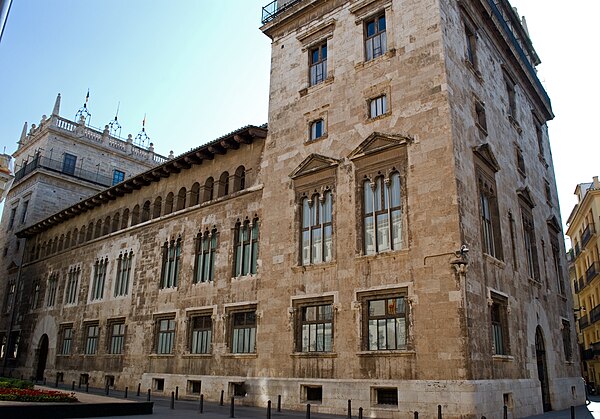
Palau de la Generalitat Valenciana
- The Palau de la Generalitat is a Gothic-style building, with Renaissance influences, dating from the 15th century.
- It currently serves as the seat of the Valencian Government.
- The construction of the palace began in 1421.
- The palace's architecture embodies a mix of artistic styles, from Gothic to Herrerian, and Renaissance from various eras.
- The main entrance of the palace leads into a Gothic-style courtyard featuring a staircase from 1525, which leads to the main floor from 1482.
- Within the premises, there is a significant amount of Valencian art, and the building itself is considered a prime example of Valencian civil architecture.


© Wikimedia Commons
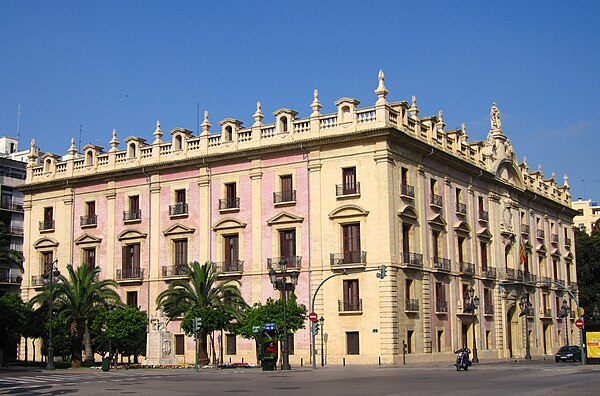
Palace of Justice of Valencia
- The current Palace of Justice was originally the Royal Customs House, built by order of Charles III between 1758 and 1802.
- It channeled all trade coming from the sea and made Valencia one of the economic centers of the 18th century.
- In 1828, it transformed into a tobacco factory and in 1914 its renovation started to convert it into the Palace of Justice.
- The building occupies a large rectangular block and its facades are made up of exposed brick walls between stone pillars, a cushioned base, and balconies with straight and curved frontispieces that open on the main floor.
- The building's features include a balustrade cornice, gargoyles, niches and a sculptural ensemble where Charles III appears between two Virtues, works by Ignacio Vergara.
- Inside, there is a monumental staircase, reminiscent of those in palaces, which opens after the front door, dividing the porticoed courtyard into two.
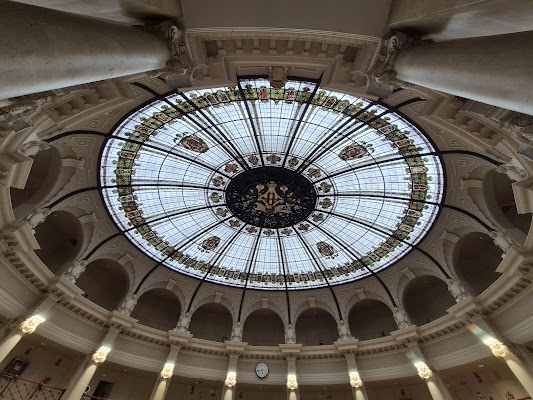
Edificio de Correos
- L'Edifici de Correus or Palau de correus i telègrafs de València is a building constructed between 1915 and 1922 in the Town Hall square.
- It was inaugurated in 1923 and was located in part of the old fishermen's quarter, with the Barques street as a testimony.
- The monumental building is an important part of the architectural and cultural heritage of the city, reaching the present day.
- Work of the Zaragozan architect Miguel Ángel Navarro, the construction presents an eclectic style with elements of Valencian modernism.Like most of the Post Office buildings of the time, this work symbolizes the progress associated with postal and telegraphic communications in the first decades of the twentieth century.
© Wikimedia Commons
Palace of the Borgias
- The Benicarló Palace (officially known as Palau de Benicarló) or Palace of the Borgia is a noble mansion of Valencian Gothic and Renaissance style; it currently serves as the headquarters for the Valencian Parliament.
- The palace was constructed in the 15th century as a residence for the Borgia family, who were significant figures in the then Kingdom of Valencia.
- Over the years, the palace has been owned by several prominent families; it was first owned by the House of Borgia from 1485 and fell into a ruined state after the dukes of Gandia abandoned it in mid-18th century.
- In the mid-19th century, the palace was sold to the Pujals family to establish a silk factory; by the end of the century the factory ceased operations and attempts began to restore the palace to its original splendor.
- During the Spanish Civil War, the palace served as the headquarters of the presidency of the Second Spanish Republic established in Valencia.
- The palace was built with a strong representative character and marked by spectacular measurements, most notably observable in its exterior facade.
- Several well-known artisans like Francesc Martínez and Pere Compte were involved in its construction.
© Wikimedia Commons
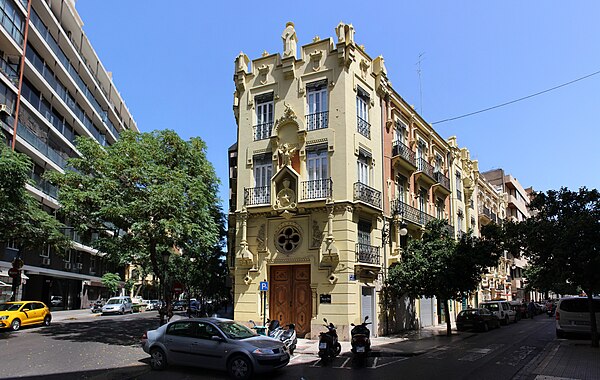
House of the Dragons
- The "Casa de los Dragones", also known as "Cortina II building", was built in 1901 by the architect José María Manuel Cortina Pérez.
- It is considered of Local Relevance with the identifier number 46.15.250-220.
- The facade composition follows the canons of classicism but with distinctly modernist decoration.
- The building has four floors dedicated to residences with commercial premises on the ground floor.
- It lacks interior courtyards due to the sharp angle of the corner and the length of the facades.
- The plot has a symmetry plan governed by the bisector of the corner it occupies, making it a completely built and compact plot.
- It is well-known for its lavish decoration, including the use of fantastic elements and animals, earning it the nickname "dragones" (dragons).
- The medieval cut is read in the battlements until the solution of the building's completion.
- The distribution of the apartments responds to the sequence of enclosures and rooms from past times, based on a grid that solves almost the entire floor except for the corner.
Day 1 - Afternoon à Valencia
4 Points of interest - Duration : 3h00 - Distance : 0.9 km - Walking : 0h12
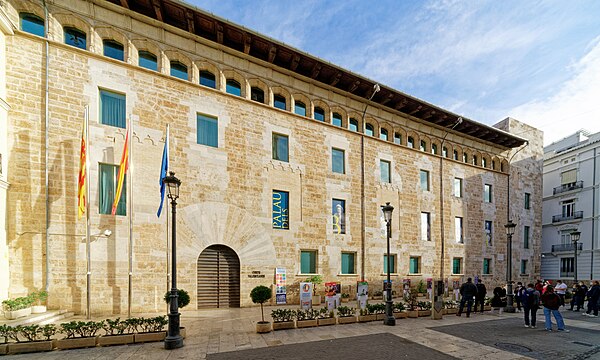
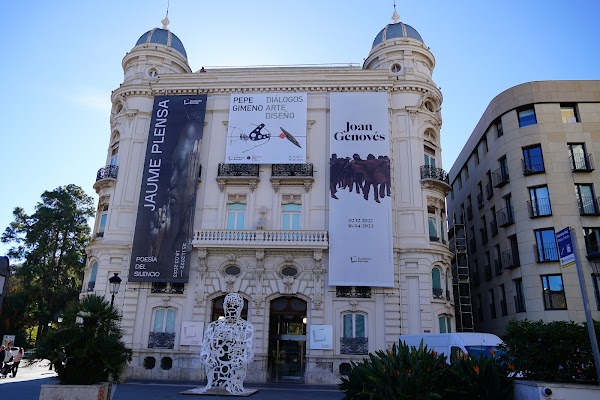
Fundación Bancaja
- The Bancaja Foundation is a private non-profit institution located in València.
- A reference center in the artistic field, it organizes temporary exhibitions of outstanding Spanish and international artists.
- It presents an art collection with more than 2,800 works covering various artistic periods, highlighting Valencian painting between centuries, contemporary art and the graphic work of Picasso.
- In addition to exhibitions, it offers activities such as concerts, workshops, lecture series and awards at its cultural and social center.
- Beyond being a museum space, the foundation aims to link culture with social action in order to contribute to the improvement of society.
© Wikimedia Commons
La Nau
- La Nau Cultural Center is a neoclassical building which is part of the University of Valencia. The building was built during the high point of Valencian architecture, personified in the works of Pere Compte.⏳ The current building, which dates back to 1830, was designed by Joaquín Martínez and occupies a whole city block.
- The building is situated on a plot of 2,900 square meters, with a facade of 70 meters.
- The building has two entrances, one of which leads to a small chapel and the other to the central cloister.
- In the center of the courtyard, there is a small garden surrounding a statue of Juan Luis Vives created in 1880 by Josep Aixa.
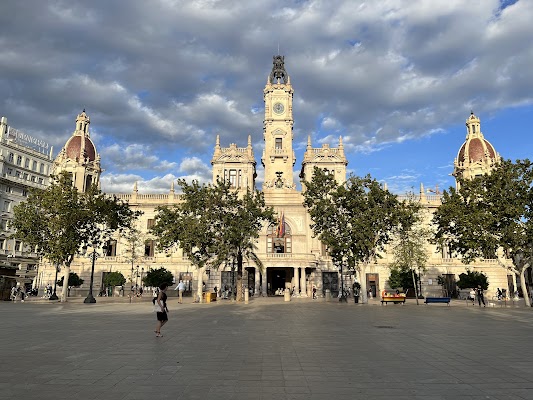
Plaza del Ayuntamiento
- The Town Hall Square is one of the most important squares in Valencia, Spain.
- Characterized by eclectic and rationalist buildings built in the first half of the 20th century, such as the town hall.
- It is notable for a circular fountain and a sculpture in homage to the 14th century city juror, Francesc de Vinatea.
- In the center of the square, flower stalls are located around a flat space.
- It is the site of the traditional mascletàs during the Fallas de Valencia.
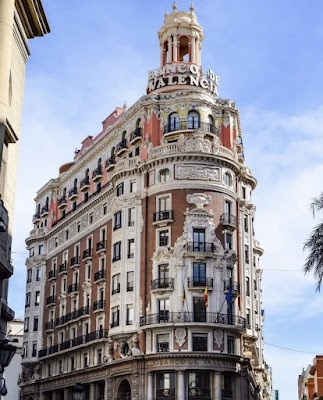
Banco De Valencia
- Banco de Valencia, S.
- A. was a Spanish bank headquartered in Valencia, Spain.
- In 2010, it was the 7th largest bank by market capitalization, exceeding €1.5 billion.
- On July 19, 2013, the deed of merger with CaixaBank was registered, being effective the integration.
- The "Banco de Valencia" brand was maintained in branches in Valencia and Castellón, adopting the black of "la Caixa" and the star of this entity.
- In June 2014, CaixaBank branches in those provinces were also labeled as "Banco de Valencia".
- In 2016, the "Banco de Valencia" brand was replaced by "CaixaBank." In 2016, the "Banco de Valencia" brand was replaced by "CaixaBank." In June 2014, the branches of CaixaBank in those provinces were also labeled as "Banco de Valencia".
Day 2 - Valencia
5 POIs to discoverDay 2 - Morning à Valencia
5 Points of interest - Duration : 3h45 - Distance : 1.4 km - Walking : 0h19
© Wikimedia Commons
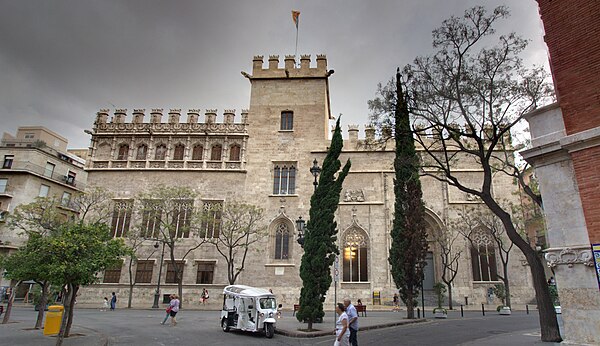
Llotja de la Seda
- La Lonja de la Seda or Lonja de los Mercaderes is a masterpiece of Valencian Gothic civil architecture.◾ Built between 1470 and 1471, it was designed by Francesc Baldomar and finished by his disciples Joan Ivarra and Pere Compte.
- The Lonja was declared a World Heritage Site by Unesco in 1996.
- The structure was modelled on the Lonja de Palma de Mallorca and symbolises the wealth of the Golden Age of Valencia and the commercial revolution during the Late Middle Ages.
- The building serves as a symbol of commercial prosperity as it was built at a time when Valencia was facing economic upheaval due to the discovery of America.
- The building has been estimated to be worth between 350 and 400 million euros.
Ateneo Mercantil de Valencia
- El Ateneo Mercantil de València: cultural institution founded on March 23, 1879 in the Colegio de Santo Pablo de València.
- Created by Estanislao García Monfort and other disciples of Eduardo Pérez Pujol to meet the cultural and training needs of the trade dependents of València.
- Aconteció an important association of the merchant bourgeoisie, promoting trade schools and sponsoring the creation of the Chamber of Commerce of Valencia and other institutions.
- President Tomás Trénor Palavicino was one of the organizers of the Valencian Regional Exhibition of 1909.
- During the Spanish Civil War, it was known as Ateneo Popular Valenciano, controlled by the related sector in the Second Spanish Republic.
- Banned from 1939 to 1950, it resumed activities in 1950.
- It received the medal of the city of Valencia in 1960 and was declared a Public Utility Entity in 1970.
© Wikimedia Commons
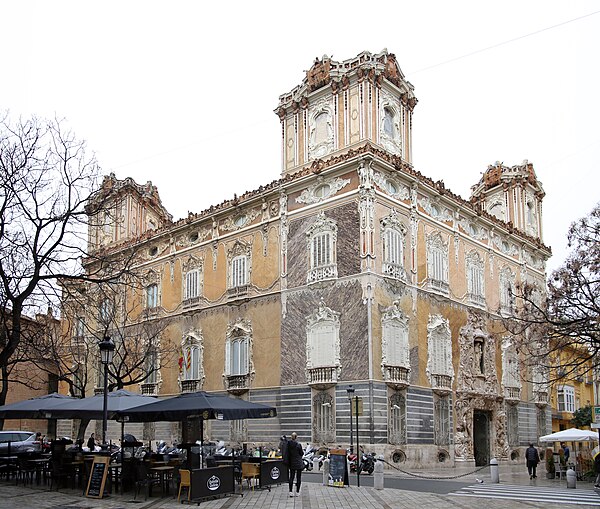
Palace of the Marqués de Dos Aguas
- The Marqués de Dos Aguas Palace is believed to have originally been the site of a Roman necropolis dating from the 1st to 3rd centuries AD.
- The building now hosts the National Museum of Ceramics and Sumptuary Arts González Martí, following a radical renovation of the original gothic manor house.
- The renovation included ornamental elements, departing from the severe character of the old manor house, with the collaboration of painter Hipólito Rovira, sculptor Ignacio Vergara, and decorator Luis Domingo.
- The building is irregularly square with a central courtyard and towers at the corners.
- Its facades are two-stories high, with a main entrance made of alabaster and featuring an image of the Virgin of the Rosary.
- Between 1853 and 1867, a new renovation took place, removing existing frescoes due to humidity damage and replacing them with stuccos imitating marbles; the balconies were also redesigned.
- In 1941 the palace was declared a historical-artistic monument.
- It was purchased by the state in 1949 to house the ceramic collection donated by Manuel González Martí, and after renovation, opened as a museum in 1954.
© Wikimedia Commons
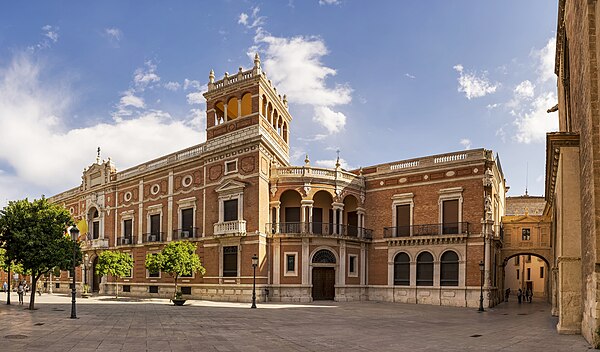
Archbishop's Palace of Valencia
- The Palacio Arzobispal is the residence of the Archbishop of Valencia.
- The current baroque historicist style building dates back to a reconstruction following the Spanish Civil War and was completed in 1946.
- The design and execution of the palace was managed by architect Vicente Traver, with Federico Ferrando Tena as the builder.⏳ The palace's origins can be traced back to the sale of some houses by Jaime I of Aragon, which were located opposite Santa María church.
- The palace once housed a large library founded in 1758, alongside a numismatic collection, ancient sculptures and valuable paintings.
- The palace was burnt down during the Spanish Civil War in 1936 and was only demolished in 1940, with a new one built in its place between 1941 and 1946.
© Wikimedia Commons
Torres de Serranos
- The Serranos Towers are one of the two fortified gates that still stand from the medieval wall of Valencia.
- The towers were designated a cultural heritage site in 1931 and still serve as a major entrance to the city.
- The structure features two polygonal towers joined by a central body, designed by master builder Pere Balaguer, who was inspired by other gothic gates.
- The construction of the Serranos Towers began on April 6, 1392 and ended on March 19, 1398.
- In 1586, the towers were converted into a prison for nobles and knights until the inmates were transferred to the San Agustin Convent in 1887.
- During the Spanish civil war, the towers served as a storage for evacuated artworks from the Prado Museum after necessary adaptations were made to the building.
Practical details for visiting Valencia
Where to stay
Choosing accommodation in Valencia depends mainly on your preference: proximity to the historic center, nightlife, or quiet residential area. To be closest to the itinerary, favor the neighborhoods of the historic center and El Carmen: pedestrian streets, easy access to monuments and plenty of cafes. If you prefer a more modern and gastronomic vibe, Ruzafa is a good choice with shops and restaurants. For families or quieter stays, the areas along the old riverbed offer comfortable hotels and apartments.
Types of accommodation range from charming little guesthouses to chain hotels, including rental apartments. Expect prices to vary by season: budget stays in hostels or small hotels, mid-range options with more services, and charming hotels or boutique hotels for higher comfort. Book in advance if you want a specific property in the center, especially on weekends or during local events.
Getting around
Valencia is best discovered on foot: many of the itinerary's points of interest are close to one another. For longer journeys, the metro and the bus network cover the city well and save time. The main central stations connect quickly to outer districts. Cycling is very handy: the city is increasingly bike-friendly, with numerous lanes and short-term rental services, ideal for linking sites. Consider combining walking, cycling, and public transport depending on the weather and your energy.
If you arrive or depart by train, the main station is accessible by metro or a short taxi ride. For occasional late-evening trips, taxis and ride-hailing services remain a safe option to save time.
What to bring
The suitcase varies by season, but a few essentials remain constant: comfortable shoes for walking on cobbles, a light waterproof jacket in case of showers, and a warm layer for cooler evenings. Consider a compact backpack for visits, a reusable water bottle, and adapters if needed. In summer, choose breathable fabrics, a hat, and sunscreen; off-season, a light coat and a scarf often suffice for evening strolls.
If you plan to enter religious sites or palaces, shoulders should be covered. Also bring a map or offline app for navigation if you lose connectivity, and your camera to capture architectural details.
Advance reservations
To make the most of these two days, it's wise to plan a few reservations: book your accommodation in advance if you come in high season or on weekends. Some temporary exhibitions at the Fundación Bancaja or guided tours of popular monuments may require tickets ahead of time; be sure to check official sites. If you want to dine in renowned restaurants in the center or have a special gastronomic experience, it's better to reserve a table to avoid disappointment.
Additionally, thematic guided tours and shows (theatre, concerts) around the center can sell out; booking online will give you more time options. For transportation, if you arrive by train or plane, plan your transfer to your hotel (taxi or shuttle).
Must-see extras
Beyond the 14 main stops, a few experiences enrich the visit: wandering the alleys of El Carmen for its façades and cafes, exploring local markets to feel daily life, or sitting in a park for a moment of calm. For a playful and original activity, try Coddy's urban escape games which offer city routes blending puzzles and discovery, perfect for rediscovering known places in a different way. Other options include thematic guided tours (architecture, street art) and temporary exhibitions at the Fundación Bancaja or La Nau.
Remember to tailor your extras to your pace: better a deep immersion in one place than multiplying visits without enjoying it.
Local delights
Valencia offers generous cuisine and seasonal produce. Among the must-tries are rice dishes, varied tapas, and seafood served in small tables. Look for markets to taste fresh produce: fruits, vegetables, charcuterie and local cheeses. Center cafes will let you discover coffee culture the Spanish way, and traditional bars serve small portions perfect for sampling several flavors.
Consider pairing your meals with a local drink or a regional wine if you like exploring pairings. For a sweet touch, look for pastries and small bakeries in the neighborhood: they often reveal lesser-known but delicious local specialties. Finally, small taverns and family-run restaurants are ideal for an authentic culinary experience away from the tourist circuits.
When to visit Valencia and how much it costs
Best seasons
The best periods to visit Valencia depend on what you are looking for: if you like mild weather and long days, spring and autumn offer a good balance between pleasant climate and terrace outings. Summer is hot and lively, ideal if you want to enjoy outdoor life, but expect more crowds during the day. Winter is calmer, convenient for crowd-free visits and finding lower accommodation rates, even if evenings can be chilly. In short, for a weekend focused on monuments and strolling, spring and autumn are often the best choices, with summer for outdoor vibe and winter for calm.
Crowds
Tourist flow varies with season and local events. The sites in the historic center attract a steady crowd: the Silk Exchange and the main squares are busier in high season and on weekends. The quieter periods are outside school holidays and major cultural events: you will then enjoy fewer lines and a more relaxed pace. To avoid crowds, favor morning visits or late afternoons; walking between sites also helps you escape the most urban areas during peak times.
Estimated budget
Budget: Economic: For an economical stay, aim for hostels, small hotels, or shared apartments, eat at tapas bars and walk or take the bus. Budget around 50–80 € per day for accommodation, meals, and transport, assuming you limit restaurant meals and opt for affordable local options.
Budget: Medium: With reasonable comfort (3-star hotel or well-located apartment), a few restaurant meals and entrance tickets for 1–2 museums, plan about 100–150 € per day. This budget allows more flexibility for gastronomic experiences and small guided tours.
Budget: Comfort: For a comfortable stay including a charming hotel, meals at quality restaurants, private guided tours or shows, plan 180 € and up per day. This range offers more freedom to choose reputable establishments and extras like excursions or a taxi on demand.
Frequently asked questions about your stay in Valencia
Ready to go?
These two days in Valencia have been designed so you can discover the essentials without rushing, favoring walking, breaks and curiosity. Beginning at the Archiepiscopal Palace of Valencia and ending your journey at the Torres de Serranos, you connect the big pages of history with the small scenes of daily life. Leave room for the unexpected: a café that calls you, a temporary exhibition, or an alley that deserves to be explored.
Remember that the value of a short trip lies as much in the places you visit as in the quality of the stops you choose: a lunch in a tavern, a moment in a sunny plaza, or a sunset stroll from an ancient city gate can transform your weekend. Bring your curiosity, your comfortable shoes, and a keen eye — Valencia will reveal its most true details.
Want more adventure?
Discover our urban escape games to transform your visit into an interactive adventure!

