





Visit Lisbon in 2 days
17 must-see POIs, optimized routes and anecdotes.
48 hours in Lisbon: between history and elegant avenues
Start your getaway at the Monument to the Discoveries and end it on the elegant Avenue of Liberty: this 2-day itinerary gathers the best of a neighborhood that breathes history, the sea and modernity. As you walk along the Tagus, you’ll quickly feel that every corner tells a different story — from great explorers to discreet palaces, including gardens that invite a pause. I propose a compact but comfortable itinerary, designed to savor without rushing.
The first day focuses on the seafront and Belem: the Jerónimos Monastery, the Belem Tower and the surrounding monuments make a coherent walk rich in perspectives. The second day takes a more urban and chic turn, with the discovery of the Counts of Almada Palace and a gradual ascent toward the Avenue of Liberty. Between these two tempos, alternate peaceful strolls and stops to observe the architecture.
This guide emphasizes the experience: where to pause, how to save time, what to observe and taste. You will also find practical advice for accommodations, transport and reservations, as well as suggestions to extend the discovery if you have a bit more time. My aim is to offer you a clear, flexible and enjoyable roadmap, so you can immerse yourself without stress.
Optimized itinerary, relaxed pace and choice of local experiences are at the heart of these 48 hours. Bring comfortable shoes, a notebook to jot down your impressions and a little curiosity: Lisbon likes to reveal itself slowly, around a façade or a bridge.
Loading map...
You will visit the most beautiful points of interest in Lisbon

Day-by-day summary
Day 1 — Morning: Start at the Monument to the Discoveries to get the measure of the neighborhood, then enter the Jerónimos Monastery and cross the Vasco de Gama Garden. Stop at Afonso de Albuquerque Square and at the Memorial Space Between the Word and the Color for architectural and visual contrasts. After lunch, explore the Lima Mayer Palace and the work Figuras Femininas, then return to the Belém Church and end the day with the Belem Tower and the Gago Coutinho and Sacadura Cabral Monument.
Day 2 — Morning: Take time for a visit to the Counts of Almada Palace to feel the more residential and historic atmosphere, then gradually climb toward the Avenue of Liberty to conclude your itinerary with its shops, cafés and elegant atmosphere. The final stroll is an opportunity for one last coffee on a terrace and to observe the blend of modernity and tradition that characterizes the city.
Day 1 - Lisbon
7 POIs to discoverDay 1 - Morning à Lisbon
5 Points of interest - Duration : 4h00 - Distance : 2.7 km - Walking : 0h36
© Wikimedia Commons
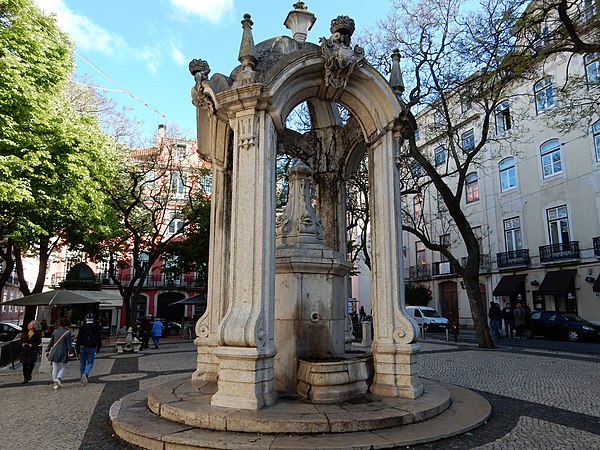
Fountain Carmo
- This beautiful fountain features a series of jets and decorative elements.
- It is located near the Convento do Carmo, a historic ruined site.
- The detailed decoration of the fountain adds a touch of elegance.
- It is surrounded by gardens and rest areas, making it a pleasant place to relax.


© Wikimedia Commons
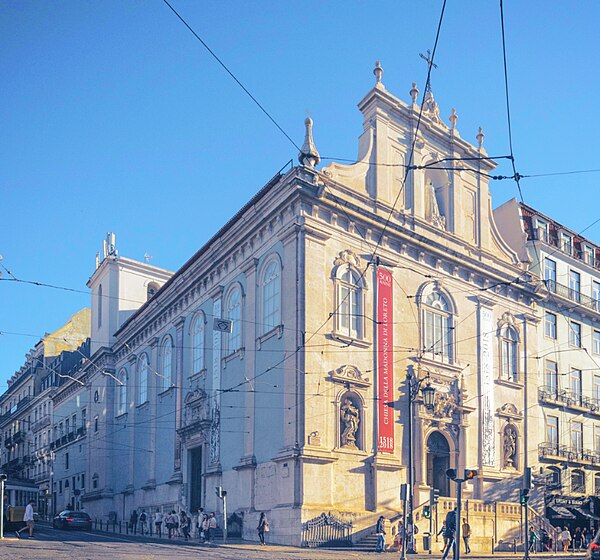
Loreto Church (Igreja do Loreto)
- Lisbon's Church of Loreto, or Church of the Italians, was built in 1518 by D.
- João V to accommodate Italian merchants.
- It was severely damaged in the 1755 earthquake and rebuilt in 1785.
- The church comprises a central nave with twelve side chapels representing the twelve apostles.
- The main façade features the image of Our Lady of Loreto and the papal coat of arms.
- It houses an 18th-century pipe organ.
© Wikimedia Commons
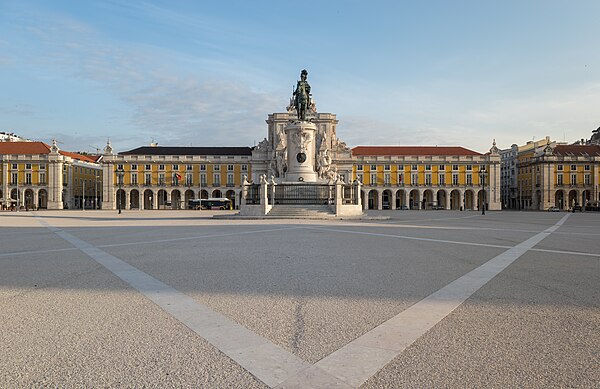
Trade square
- The Rua Augusta Arch is one of the square's most notable attractions, with incredible views of Lisbon.
- Many restaurants and cafes offer traditional Portuguese dishes in the square.
- The statue of Dom José I in the center of the square is an iconic figure of Lisbon.
- Praça do Comércio is an ideal place to watch the sunset over the river.
- It was completely rebuilt after the earthquake of 1755.
© Wikimedia Commons
Igreja de São Domingos
- This church is classified as a national monument by the Instituto de Gestão do Património Arquitetónico e Arqueológico.
- Built in 1241, at that time it was the largest church in the city.
- Before the end of the monarchy in Portugal in 1910, royal weddings were celebrated in this church.
- It has withstood earthquakes and disasters over the years.
- It is also important in the history of the Inquisition because it was the site of the Lisbon Massacre of 1506 and there is now a monument in front to remember the event.
© Wikimedia Commons
Museu da Farmácia
- It houses an incredible collection of objects related to pharmaceutical practice over the centuries. Visitors can explore the evolution of medicine and pharmacy, from ancient remedies to modern technologies.
- The museum also features an exhibition on the history of medicines and pharmaceutical substances.
- There are interactive exhibits that offer fascinating information on pharmacology.
- In addition, the museum has a specialized library on pharmacy and health.
Day 1 - Afternoon à Lisbon
2 Points of interest - Duration : 1h30 - Distance : 0.2 km - Walking : 0h02
© Wikimedia Commons
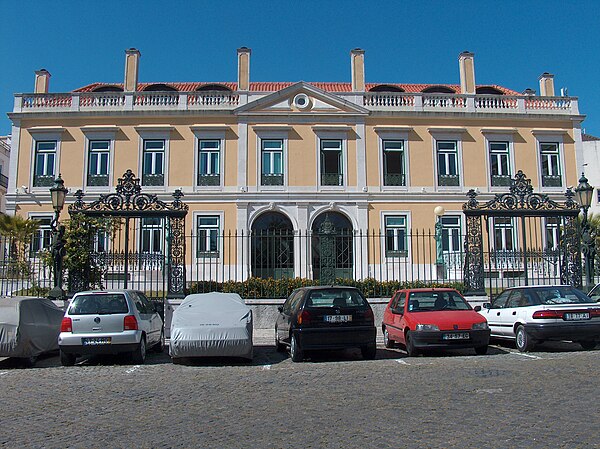
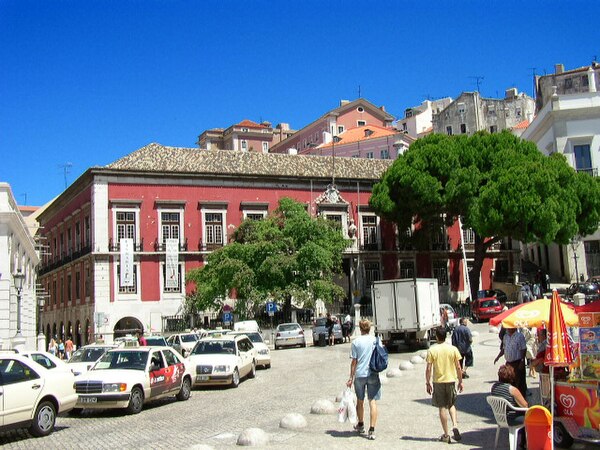
Palace Condes de Almada (Palácio dos Condes de Almada)
- Lisbon's Independence Palace is a National Monument, also known as Rossio Palace and São Domingos Palace.
- It belonged for centuries to the Almada and Abranches family.
- Place where the Portuguese Restoration Meeting took place, marking Portugal's independence in 1640.
- Although it is located in the historic centre of Lisbon, it preserves Arab architectural elements.
- It currently houses several cultural centres, including the Museum of the Restoration of Portugal.
© Wikimedia Commons
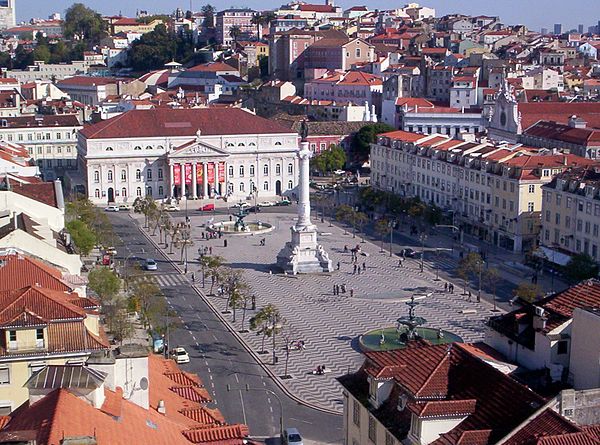
Rossio Square
- This iconic spot has been a meeting point in the city for centuries.
- The square has been the scene of historical events, theater and festivals over the years.
- In the center of the square stands a statue of King Pedro IV of Portugal.
- Rossio train station, with its fascinating architecture, is at one end of the square.
- The cafes and pastry shops around Rossio are famous for their traditional Portuguese sweets.
Day 2 - Lisbon
10 POIs to discoverDay 2 - Morning à Lisbon
5 Points of interest - Duration : 3h15 - Distance : 1.3 km - Walking : 0h17
© Wikimedia Commons
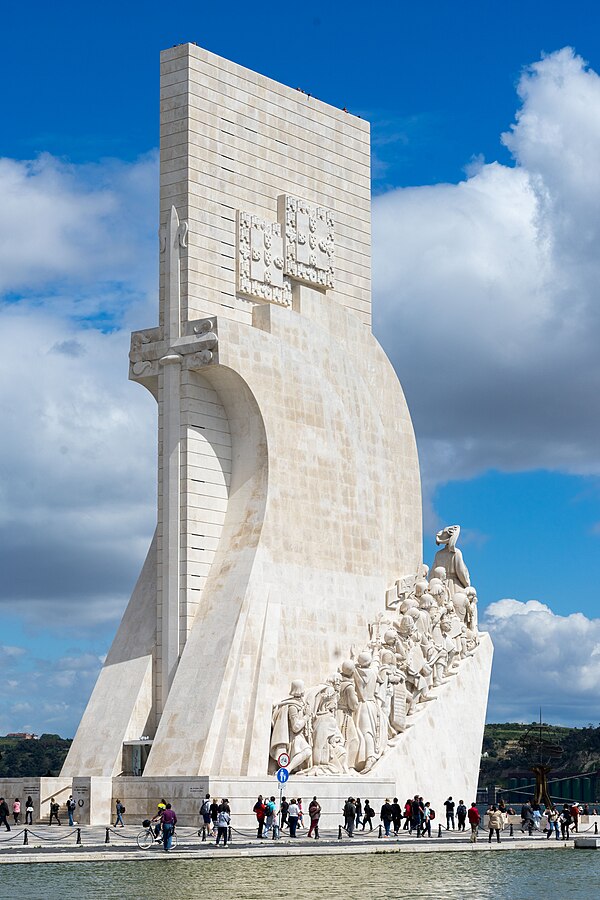
Monument of the Discoveries
- The monument depicts the prow of a caravel with 33 important figures from the Portuguese Age of Discovery, such as navigators Nuno Gonçalves and Camões, on its sides.
- At the entrance, the sword of the royal house of Avis is depicted, and at the bow is a statue of Henry the Navigator, holding a caravel and a map.
- In front of the monument is a 50-meter-diameter compass rose, with a planisphere in the center, representing the main routes of Portuguese expansion between the 15th and 16th centuries.
- The interior of the monument houses a cultural center, with an auditorium, exhibition rooms and a belvedere at the top, offering a beautiful view of Belém and the Tagus.
- The original monument was built in 1940 for the Universal Exhibition and was dismantled 20 years later to make way for its current pink stone version, inaugurated in 1960.

© Wikimedia Commons
Jerónimos Monastery
- The Jerónimos Monastery is an iconic Portuguese monastery belonging to the Order of Saint Jerome, representing the vast wealth amassed from Portuguese global exploration.
- It was built in 1502 on the site of a hermitage founded by Henry the Navigator.
- The monastery serves as a remarkable example of Manueline architecture style, blending Gothic elements with Renaissance influences.
- The Monastery, which withstood the devastating 1755 Lisbon earthquake, was damaged by English troops stationed there during the Napoleonic wars.
© Wikimedia Commons
Garden Vasco da Gama
- The garden, built in the 1980s, was named after the famous Portuguese navigator.
- Vasco da Gama was a Portuguese nobleman and explorer who was the first European to reach India by sea.
- His first voyage from 1497-1499 established a direct sea route from Europe to Asia, rounding the southern tip of Africa, avoiding the need to sail across the highly contested Mediterranean Sea.
- He led two of the Portuguese India Armadas, and his voyages are considered important milestones in Portuguese maritime exploration, marking the beginning of a sea-based phase of global trade.
- The Thai pavilion was gifted to Portugal by Thailand in recognition of 500 years of relations between the two countries.
© Wikimedia Commons
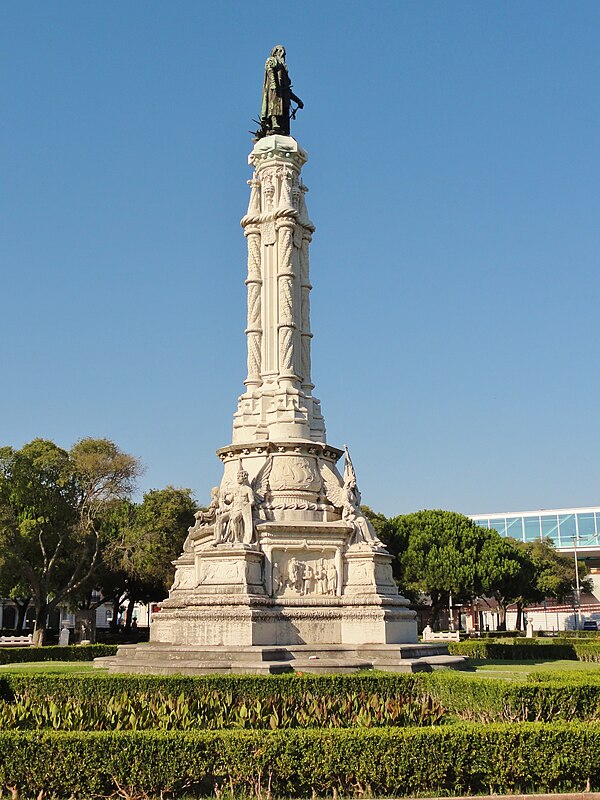
Afonso de Albuquerque Square
- The square is located across from the National Palace of Belém, an 18th-century building that is currently the residence of the President of Portugal.
- It is named after Afonso de Albuquerque, the second governor of Portuguese India, and offers a perfect view of the palace.
- It features a neo-Manueline monument by artists Silva Pinto and Costa Mota tio, which was inaugurated in 1902.
- The monument has a bronze statue of Afonso de Albuquerque and bas-reliefs depicting his life.
Pastéis de Belém
- The pastel de nata, meaning "cream tartlet," is a typical pastry in Portuguese cuisine.
- It can be eaten cold or warm, and dusted with icing sugar or cinnamon.
- The pastel de nata was supposedly invented in the 19th century by nuns from the Jeronimos Monastery, to generate funds for their order.
- Their shop, from 1837, is now the only one selling pastéis de Belém, the original pastéis de nata recipe.
- In the past, Lisbon and Belém were two separate cities connected by steamboats.
- The monastery and the Belem tower attracted many tourists who quickly praised the pastéis de Belém.
- The original recipe, kept secret since the 19th century, is closely guarded and only known by the master pastry chefs.
- Even though there are very few of these artisans, they continue to handcraft the pastéis de Belém.
- Any cafe or pastry shop in Portugal today offers pastéis de nata.
- However, only those made by the Fábrica dos pastéis de Belém can bear the original name pastéis de Belém because they know the secret recipe that gives the tartlets their unique flavor.
Day 2 - Afternoon à Lisbon
5 Points of interest - Duration : 3h45 - Distance : 2.2 km - Walking : 0h29
Tower of Belem
- It was constructed in the 16th century, during the height of the Portuguese Renaissance, in Portuguese Manueline style.
- It also incorporates other architectural designs, like minarets inspired by Moorish architecture.
- The fortification symbolized Portugal's maritime and colonial power in early modern Europe, and served as both a point of embarkation and disembarkation for Portuguese explorers and a ceremonial gateway.
- The Tower was built from lioz limestone and includes a bastion and a 30-metre tall, four-storey tower.
- It's often incorrectly stated that the tower was built in the middle of the Tagus River and now sits near the shore due to the river being redirected after the 1755 Lisbon earthquake.
- But, in reality, the Tower was built on a small island in the Tagus near the shore.
- Apart from its military purpose, the Belém Tower also celebrated the return of the Portuguese to India and served as a kind of welcoming gate for the fleets arriving at the mouth of the Tagus.
Church Santa Maria de Belém
- The church has a Latin cross plan, made up of three naves at the same height, covered by a vast poly-ribbed vault supported by six pillars.
- The cross vault covers, without intermediate supports, a width of 30 metres, representing "the most complete realisation of the late medieval ambition to cover the greatest possible span with the minimum of supports".
- In the chapel to the left of the transept are buried the Cardinal-King D.
- Henrique and those of the sons of D.
- Manuel I; in the one to the right is the tomb of D.
- Sebastião and the descendants of D.
- The church also houses the tombs of Camões and Vasco da Gama, of uncle Costa Mota.
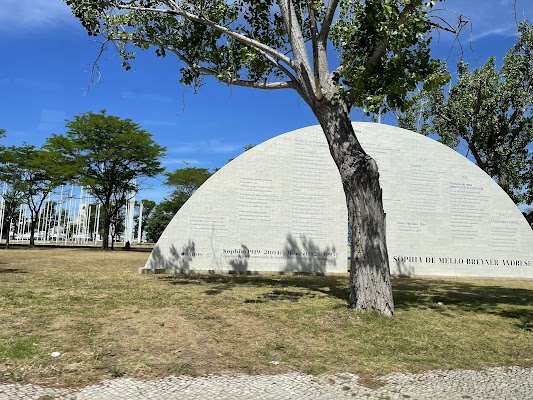
Memorial Espaço entre a Palavra e a Cor
- Sophia de Mello Breyner Andresen was born in 1919.
- The memorial, named Espaço Entre a Palavra e a Cor, features her poems on its exterior.
- The project was designed by Galeria Ratton based on a concept from artist Menez (real name Maria Inês da Silva Carmona), and highlights the friendship between the poet and the painter.
Compass rose
- A compass rose adorns the access terrace to the Padrão dos Descobrimentos.
- Made of black and red Limos limestone, it measures 50m in diameter and contains a 14m-wide planisphere.
- Dates, ships and caravels mark the main routes of Portuguese expansion between the 15th and 16th centuries.
- The surrounding background is made up of "mar largo" waves, an emblematic Portuguese pavement motif.
Monumental Fountain of Belém
- The central piece of a garden known as Fonte Luminosa da Praça do Império was created in 1940 by Architect Cotinelli Telmo.
- This frieze consists of the coats of arms of all the continental and overseas provinces of the empire, sculpted in relief, alternating with the water spouts.
- There is a sophisticated piping system composed of 568 nozzles and water outlets which include a central jet that reaches a height of 30 meters. .
Practical details for visiting Lisbon
Where to stay
For a stay centered on this itinerary, choose accommodation in the Belém neighborhood or the west-central area, near the seafront. Belém offers a calm and historic setting, ideal if you like walking to the monuments in the morning. The neighborhoods near the Avenue of Liberty are better for those who prefer a livelier nightlife and easy access to shops. Given the variety of options, consider boutique hotels if you’re looking for character, apartments for more autonomy, and small chains for standardized comfort. In general, expect very different offerings depending on the season: cheaper rooms in pensions or hostels, to comfortable and stylish options near the avenue. Look for a place with good transport connections to save time between Belém and the city center.
Getting around
This program lends itself well to walking: many points of interest are close to each other, especially in Belém. For longer journeys, combine public transport and walks on foot. The bus and tram network will easily connect you to the city center and shopping zones; favor lines that serve Belém and the avenue. For more flexibility, consider bikes or dockless scooters for short distances along the river. Taxis and ride-hailing services remain practical at the end of the day or to save time between two appointments. Finally, always leave a little margin for movement: discovery often happens while strolling, not just ticking boxes.
What to bring
Adapt your suitcase to the season, but a few essentials remain: good walking shoes, a light jacket for cooler evenings near the water, and a compact umbrella in case of unexpected rain. If you plan to visit the interiors of historic monuments, think of modest and comfortable clothing. Bring a portable charger for your photographic strolls and a small backpack for the day. To fully enjoy, slip in a notebook to jot down your impressions and, if you like, compact binoculars to observe the façade of monuments from the shore. Favor lightness: you will walk a lot.
Advance reservations
To optimize your time, book in advance the guided tours or skip-the-line tickets for highly frequented places if you want to go inside monuments. Also consider reserving a table for lunch or dinner in popular restaurants, especially if you travel on a weekend or in peak season. If you plan to attend a show or listen to fado, buy your tickets before you arrive to avoid disappointment. Finally, if you prefer a specific accommodation or a well-located apartment, book it as soon as possible: good addresses go fast. By reserving a few key elements, you gain peace of mind and time to stroll between each step.
Must-see extras
Beyond the 13 listed points, treat yourself to a few additional experiences: a stroll along the river at sunset for a different perspective on the monuments, and a stop in the small gardens that punctuate the route. For a fun and immersive activity, try Coddy’s urban escape games to discover the city in the form of puzzles and local stories. Also explore neighborhood markets to feel daily life and spot local products. For architecture lovers, look for lesser-known façades and private palaces visible from the street: the city also reads through its details. Finally, plan a moment of relaxation in a terrace cafe to observe the comings and goings of residents.
Local delights
Gastronomy is an integral part of the experience: sample the specialties offered in the neighborhood's small pastry shops and brewpubs. Look for bakeries for a coffee and pastry break, and try the seafood dishes in restaurants near the river. Do not neglect the small eateries and tavernas where simple and tasty dishes are served, often prepared with local products. For pastry lovers, stop at a bakery for a traditional dessert. Finally, let the waiters and locals guide you: they are often the ones who will point you to the most authentic addresses for a neighborhood lunch or an after-work drink in the evening.
When to visit Lisbon and how much it costs
Best seasons
The best periods to visit depend on what you are after. Spring and autumn often offer a good compromise between pleasant weather and moderate crowds: days are conducive to strolling along the river and visiting monuments. Summer draws more people, with a festive atmosphere and long evenings, but this implies more crowds around tourist sites. Winter remains an option if you are looking for calmer rates and less crowded streets; expect cooler temperatures and reduced hours for some places. By choosing the season, consider the balance between weather, local events and crowds so that your stay matches your expectations.
Crowds
The areas around popular monuments can be very busy during school holidays and the summer months: expect higher crowds at the Monument to the Discoveries, the Jerónimos Monastery, and the Belem Tower. If you prefer quieter moments, plan visits early in the morning or late afternoon, and avoid peak hours for restaurants. Weekdays are generally quieter than weekends. For a more intimate experience, explore secondary lanes and gardens less visible from the main route: the city often offers havens of peace a stone's throw from the busiest axes.
Estimated budget
Budget-friendly: Opt for simple accommodations such as hostels or pensions, prioritize meals in small eateries, and use public transport or walking. Favor free activities like riverside strolls and facade-watching. This travel mode relies on <strong>frugality</strong>, <strong>flexibility</strong> and discovery on foot.
Medium budget: Choose a moderately charming hotel or a well-located apartment, mix in pleasant cafes and a few comfortable restaurants, and book one or two guided tours. This level allows a good balance between comfort and immersion, with options for paid activities on occasion and quality meals without extravagance. Aim for reasonable comfort and <strong>convenience</strong>.
Comfort budget: Head toward more refined hotels, book tables in reputed restaurants, and plan private tours or exclusive experiences. You will enjoy more personalized service, central locations and a more relaxed pace. This choice focuses on <strong>well-being</strong>, meal quality and the <strong>convenience</strong> of getting around.
Frequently asked questions about your stay in Lisbon
In conclusion
These 48 hours offer a beautiful balance between history, riverside walks and more urban moments at the end of the journey on the Avenue of Liberty. The itinerary is designed so you can feel the soul of the neighborhood without sacrificing comfort: alternate visits, indulgent breaks and ramblings. Leave room for the unexpected — a façade that stops you, a coffee that smells good, a conversation with a local — because these small interruptions are often what transform a trip into a lasting memory.
If you only have two days, prioritize the quality of experiences over quantity. Bring a succinct guide, comfortable shoes and the willingness to get a little lost to better rediscover the city. And if you have a half-day to spare, consider adding an original activity like Coddy's urban escape game to see the city differently. Have a great trip, and let yourself be surprised by the details: they often are the true richness of a getaway.
Want more adventure?
Discover our urban escape games to transform your visit into an interactive adventure!


