



You will visit the most beautiful points of interest in Louvain-La-Neuve
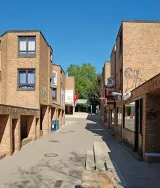
Two days in Louvain-la-Neuve: a stroll between culture and nature
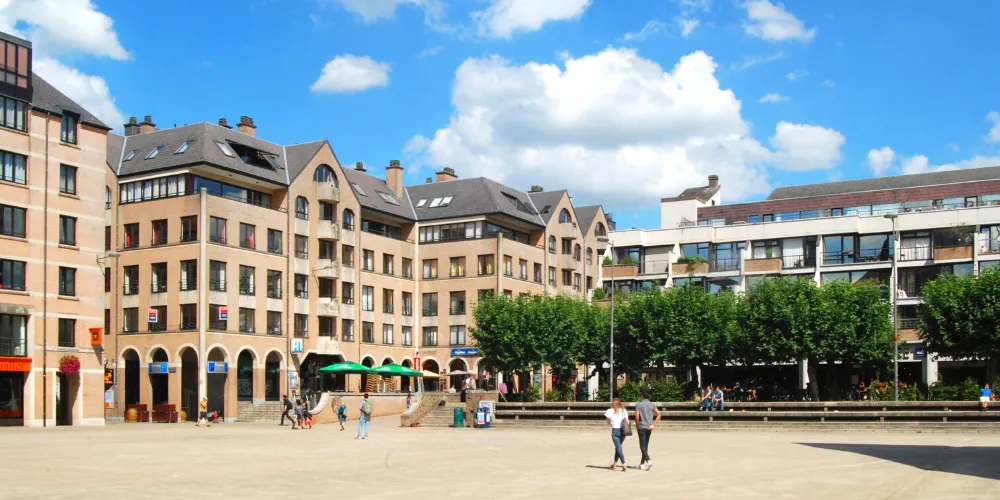
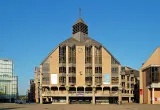
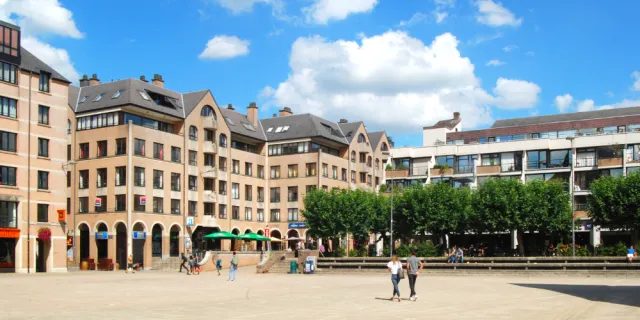
Starting your visit at the Louvain-la-Neuve's Grand-Place, it's entering a city that breathes university life and everyday life. The square is an excellent landmark: cafés, shops and student buzz set the tone. As you stroll the pedestrian streets, you will quickly feel the strong link between culture and green space that characterizes the city — a living balance between contemporary architecture and expanses of water.
On the first day, let yourself be carried by the paths around the Lake of Louvain-la-Neuve and by the little treasures of the center: murals, theatre, museums. Parc de la Source offers pleasant nature breaks, and the mural “Petites Histoires d’une Grande Université” tells, without words, a local story worth a detour. You will also discover the particular atmosphere of squares like Montesquieu and streets like Rue des Wallons, where the city becomes more intimate.
At the museum as at the theatre, the human scale prevails: it is a city of a human size where one takes the time to observe. The Hergé Museum is a cultural strong point while the Saint-François d'Assise Church offers a quieter and more contemplative pause. Each stop offers a different facet — artistic, natural or convivial — which makes the itinerary varied without being exhausting.
Over two days, you will alternate strolls, visits and indulgent breaks to appreciate the sweetness of the local pace. This guide accompanies you step by step: day-by-day itinerary, practical tips for lodging and getting around, tasty ideas and options to fully enjoy Louvain-la-Neuve.
Day-by-day summary
Day 1 — Morning: Start at the Louvain-la-Neuve's Grand-Place to feel the city’s pulse, then head to Parc de la Source and the Jean Vilar Theatre for a cultural atmosphere. Do not miss the mural "Petites Histoires d’une Grande Université" before admiring the Lake of Louvain-la-Neuve. After a lunch break, explore Place Montesquieu, pass by the Saint-François d'Assise Church and end the afternoon at the Hergé Museum. End the day on Rue des Wallons and Place des Wallons for a convivial moment.
Day 2 — Morning: Revisit the places you liked from the start at the Grand-Place, stroll again through Parc de la Source and enjoy a visit you didn’t do the day before at Theatre Jean Vilar or around the mural. After lunch, revisit Place Montesquieu, take a break at the Saint-François d'Assise Church, deepen the visit to the Hergé Museum if needed and finish calmly on Rue des Wallons and Place des Wallons.
Day 1
9 stops
Morning
-
1
Grand-Place de Louvain-la-Neuve
45 min
- Louvain-la-Neuve's Grand-Place is an urban public space located in Louvain-la-Neuve, Belgium, with a summer beach since 2008, named "Louvain-la-Plage".
- Louvain-la-Neuve's design aims to mix academic and urban buildings, distinguishing between urban and academic spaces.
- The university town was founded following linguistic tensions between communities, leading to the creation of the university in 1970.
- Construction of the town began in 1970 with different neighborhoods, gradually developing towards the current center.
- The Albert Descamps college evokes a church, the Agora Auditoriums have a brutalist architecture and the southern area has a postmodern style.
© Wikimedia Commons
Coddy games passing through
-
2
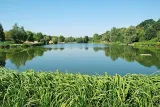
Louvain-la-Neuve's Lake
Waterbody · 45 min
- Lac de Louvain-la-Neuve is an artificial lake created in 1984. a renovated promenade borders its 5 hectares of surface.
- With an average depth of 1.2 meters, the lake is home to a biodiversity that includes different species of birds, fish, amphibians and plants.
- The lake serves as a fishing pond and storm basin to prevent flooding.
- The lake serves as a fishing pond and storm basin to prevent flooding.
© Wikimedia Commons
-
3
Parc de la Source
45 min
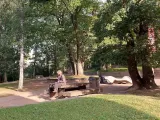
- With the opening of the Hergé Museum in 2009, the adjacent Parc de la Source was redeveloped.
- In order to give identity to the small public spaces, it was decided to name them according to their description.
- Thus, the clearing surrounding the sculpture "The Four Seasons" by Benjamin Zwarts has been given the same name.
-
4
Mural "Small stories of a great university".
45 min
- "Small Stories of a Great University" is the second fresco created by Claude Rahir in Louvain-la-Neuve.
- Unfortunately, the expansion of the city has forced the sacrifice of most of this fresco.
- Therefore, the present fresco represents only a small fraction (the left part) of its original size, which extended to almost 60 meters in length.
- Originally, this fresco told the history of the University from 1425 to 1980.
- As only the left part of the mural has been preserved, only the beginning of the story can be seen.
- The upper part of the fresco depicts Pope Martin V and the Leuven City Council, symbolizing the papal authority under which the Catholic University of Leuven (UCL) was founded in 1425.
-
5
Théâtre Jean Vilar
45 min
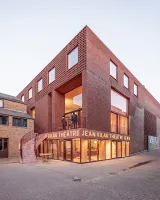
- Théâtre Jean Vilar is an example of Brutalist architecture in Louvain-la-Neuve.
- Founded in 1968 by Armand Delcampe, the Atelier Théâtre Jean Vilar is a theatrical institution in the tradition of Jean Vilar.
- The original Ferme de Blocry venue became too small, leading to the construction of a new venue in 1979 by architect Jean Potvin.
- The theater is adorned with frescoes by local and international artists, notably as part of the Kosmopolite Art Tour 2015. frescoes depicting theatrical motifs, landscapes and stylized blue birds can be seen on the exterior walls.
- Sculptures, including the Assyrian Cylinder, also adorn the theater's surroundings, enriching the overall artistic experience.

Afternoon
-
6
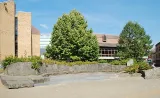
Montesquieu Square
45 min
- The Montesquieu Square is a brutalist and functionalist architectural complex built from 1973 to 1981 in Louvain-la-Neuve, Belgium's Ottignies-Louvain-la-Neuve region, showcasing various university faculties and the Montesquieu Auditoriums. Louvain-la-Neuve's planning focused on integrating academic structures with urban life, emphasizing distinct urban and academic areas, as seen with places like Montesquieu Square and Cardinal Mercier Square. The construction of Louvain-la-Neuve started in the 1970s, with successive phases building the city center, including Montesquieu Square and surrounding areas, continuing into the present era. The square houses several key university buildings: Jacques Leclercq College, Thomas More College (Law and Criminology), Montesquieu Auditoriums, and the Léon Dupriez College. The place exhibits a deceptive façade, concealing the size of the buildings behind it, with a mix of brutalist and functionalist architectural styles.
© Wikimedia Commons
Coddy games passing through
-
7
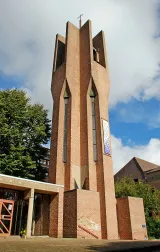
Église Saint-François d'Assise
Landmark · 45 min
- This church was built between 1974 and 1984 by architect Jean Cosse.
- Jean Cosse wanted to add a bell tower, but in 1974, the authorities would not allow it.
- Ten years later, four bells were installed in a separate bell tower.
- Cosse also designed the Blocry church in Louvain-la-Neuve and the Clerlande monastery in Ottignies.
- Pope John Paul II visited the church, met with the university community and delivered a speech at the Grand-Place in Louvain-la-Neuve.
- The visit was commemorated with plaques on the "Pont du Pape" and at the Faculty of Theology.
© Wikimedia Commons
Coddy games passing through
-
8
Hergé Museum
Sculptures · 45 min
- The Musée Hergé is a museum dedicated to the life and work of Belgian cartoonist Georges Remi (1907-1983), known as Hergé, creator of the comic book series The Adventures of Tintin.
- The museum is located in the center of Louvain-la-Neuve, on the edge of a green park, Le Parc de la Source, with an address at "Rue Labrador 26", Tintin's first home in the books.
- It was designed by French architect Christian de Portzamparc, with interiors designed by cartoonist Joost Swarte, and opened in June 2009.
- It contains eight permanent galleries displaying original works by Hergé, as well as the story of his life and career, featuring not only The Adventures of Tintin, but also his other comic strip characters.
- In addition to the permanent exhibits, the museum houses a gallery of temporary exhibitions that are renewed from time to time and offers three-hour narrated tours to visitors via headphones connected to an iPod.
Coddy games passing through
-
9
Rue des Wallons and Place des Wallons
45 min
- They were built in 1975, showing the brutalist style characterizing the architecture of the area in the 1970s.
- Rue des Wallons reflects the name "Vlamingenstraat" of Leuven, literally meaning "Flemish street." Place des Wallons was the center of Louvain-la-Neuve in its early years, along with other squares such as the Galilée and the des Sciences.
- Rue des Wallons was the first major axis of the new city, connecting the eastern part with the initial development area, including academic facilities and libraries.
- The architecture on the street and Place des Wallons reflects the brutalist style, with exposed concrete and colorful murals.
© Wikimedia Commons
Coddy games passing through
Day 2
9 stops
Morning
-
10
Grand-Place de Louvain-la-Neuve
45 min
- Louvain-la-Neuve's Grand-Place is an urban public space located in Louvain-la-Neuve, Belgium, with a summer beach since 2008, named "Louvain-la-Plage".
- Louvain-la-Neuve's design aims to mix academic and urban buildings, distinguishing between urban and academic spaces.
- The university town was founded following linguistic tensions between communities, leading to the creation of the university in 1970.
- Construction of the town began in 1970 with different neighborhoods, gradually developing towards the current center.
- The Albert Descamps college evokes a church, the Agora Auditoriums have a brutalist architecture and the southern area has a postmodern style.
© Wikimedia Commons
Coddy games passing through
-
11
Louvain-la-Neuve's Lake
Waterbody · 45 min
- Lac de Louvain-la-Neuve is an artificial lake created in 1984. a renovated promenade borders its 5 hectares of surface.
- With an average depth of 1.2 meters, the lake is home to a biodiversity that includes different species of birds, fish, amphibians and plants.
- The lake serves as a fishing pond and storm basin to prevent flooding.
- The lake serves as a fishing pond and storm basin to prevent flooding.
© Wikimedia Commons
-
12
Parc de la Source
45 min
- With the opening of the Hergé Museum in 2009, the adjacent Parc de la Source was redeveloped.
- In order to give identity to the small public spaces, it was decided to name them according to their description.
- Thus, the clearing surrounding the sculpture "The Four Seasons" by Benjamin Zwarts has been given the same name.
-
13
Mural "Small stories of a great university".
45 min
- "Small Stories of a Great University" is the second fresco created by Claude Rahir in Louvain-la-Neuve.
- Unfortunately, the expansion of the city has forced the sacrifice of most of this fresco.
- Therefore, the present fresco represents only a small fraction (the left part) of its original size, which extended to almost 60 meters in length.
- Originally, this fresco told the history of the University from 1425 to 1980.
- As only the left part of the mural has been preserved, only the beginning of the story can be seen.
- The upper part of the fresco depicts Pope Martin V and the Leuven City Council, symbolizing the papal authority under which the Catholic University of Leuven (UCL) was founded in 1425.
-
14
Théâtre Jean Vilar
45 min
- Théâtre Jean Vilar is an example of Brutalist architecture in Louvain-la-Neuve.
- Founded in 1968 by Armand Delcampe, the Atelier Théâtre Jean Vilar is a theatrical institution in the tradition of Jean Vilar.
- The original Ferme de Blocry venue became too small, leading to the construction of a new venue in 1979 by architect Jean Potvin.
- The theater is adorned with frescoes by local and international artists, notably as part of the Kosmopolite Art Tour 2015. frescoes depicting theatrical motifs, landscapes and stylized blue birds can be seen on the exterior walls.
- Sculptures, including the Assyrian Cylinder, also adorn the theater's surroundings, enriching the overall artistic experience.
Afternoon
-
15
Montesquieu Square
45 min
- The Montesquieu Square is a brutalist and functionalist architectural complex built from 1973 to 1981 in Louvain-la-Neuve, Belgium's Ottignies-Louvain-la-Neuve region, showcasing various university faculties and the Montesquieu Auditoriums. Louvain-la-Neuve's planning focused on integrating academic structures with urban life, emphasizing distinct urban and academic areas, as seen with places like Montesquieu Square and Cardinal Mercier Square. The construction of Louvain-la-Neuve started in the 1970s, with successive phases building the city center, including Montesquieu Square and surrounding areas, continuing into the present era. The square houses several key university buildings: Jacques Leclercq College, Thomas More College (Law and Criminology), Montesquieu Auditoriums, and the Léon Dupriez College. The place exhibits a deceptive façade, concealing the size of the buildings behind it, with a mix of brutalist and functionalist architectural styles.
© Wikimedia Commons
Coddy games passing through
-
16
Église Saint-François d'Assise
Landmark · 45 min
- This church was built between 1974 and 1984 by architect Jean Cosse.
- Jean Cosse wanted to add a bell tower, but in 1974, the authorities would not allow it.
- Ten years later, four bells were installed in a separate bell tower.
- Cosse also designed the Blocry church in Louvain-la-Neuve and the Clerlande monastery in Ottignies.
- Pope John Paul II visited the church, met with the university community and delivered a speech at the Grand-Place in Louvain-la-Neuve.
- The visit was commemorated with plaques on the "Pont du Pape" and at the Faculty of Theology.
© Wikimedia Commons
Coddy games passing through
-
17
Hergé Museum
Sculptures · 45 min
- The Musée Hergé is a museum dedicated to the life and work of Belgian cartoonist Georges Remi (1907-1983), known as Hergé, creator of the comic book series The Adventures of Tintin.
- The museum is located in the center of Louvain-la-Neuve, on the edge of a green park, Le Parc de la Source, with an address at "Rue Labrador 26", Tintin's first home in the books.
- It was designed by French architect Christian de Portzamparc, with interiors designed by cartoonist Joost Swarte, and opened in June 2009.
- It contains eight permanent galleries displaying original works by Hergé, as well as the story of his life and career, featuring not only The Adventures of Tintin, but also his other comic strip characters.
- In addition to the permanent exhibits, the museum houses a gallery of temporary exhibitions that are renewed from time to time and offers three-hour narrated tours to visitors via headphones connected to an iPod.
Coddy games passing through
-
18
Rue des Wallons and Place des Wallons
45 min
- They were built in 1975, showing the brutalist style characterizing the architecture of the area in the 1970s.
- Rue des Wallons reflects the name "Vlamingenstraat" of Leuven, literally meaning "Flemish street." Place des Wallons was the center of Louvain-la-Neuve in its early years, along with other squares such as the Galilée and the des Sciences.
- Rue des Wallons was the first major axis of the new city, connecting the eastern part with the initial development area, including academic facilities and libraries.
- The architecture on the street and Place des Wallons reflects the brutalist style, with exposed concrete and colorful murals.
© Wikimedia Commons
Coddy games passing through
Practical details for visiting Louvain-La-Neuve
Where to stay
To fully enjoy Louvain-la-Neuve, opt for lodging near the Grand-Place or around the Lake: you will be a stone’s throw from the main sites and public transport. Options range from a youth hostel and small independent hotels to short-term rental apartments. The neighborhoods around the square and Rue des Wallons offer a gentle nightlife and easy access to restaurants and cafes. If you seek more quiet, a place near the park guarantees green and leafy mornings.
In terms of comfort, budget hotels are suitable if you are mainly in town all day; comfort establishments offer more services (breakfast, larger rooms). Remember to book early for university weekends. Proximity, price and ambiance are the criteria to prioritize according to your travel style.
Getting around
Louvain-la-Neuve is an ideal playground for walking: most of the points of interest on this program are accessible on foot from the Grand Place. Distances are modest, which makes the day pleasant and easy to pace. Bus services serve the city for longer trips or to reach peripheral neighborhoods. There is no metro network in the town; so don’t count on it.
Cycling is a great option if you want to speed up your trips while staying outdoors: the tracks and paths around the lake are welcoming. In the evenings, walking remains often the simplest way to move between restaurants and bars. Keep a map or a local app handy for bus lines, and plan comfortable shoes to enjoy the strolls.
What to bring
Depending on the season, tailor your luggage to outdoor strolls around the lake and to cultural visits. Comfortable walking shoes are essential: the program includes a lot of walking and city excursions. A lightweight, waterproof jacket is useful for sudden showers and cooler evenings by the water. For indoor visits like the Hergé Museum or the theatre, plan for a casual but neat outfit.
If you enjoy photography, bring a camera or a smartphone with a spare battery. Also consider a small reusable bottle and sunglasses for sunny days. Carry a light backpack for your day stuff and some rain protection if you travel outside summer.
Advance reservations
To get the most out of your stay, book in advance what can fill up: accommodations near the Grand Place on weekends, some tables at popular restaurants, and performances at the Théâtre Jean Vilar. The Hergé Museum can have peak crowds: check the online ticketing to avoid waiting. If you plan a guided tour or a cultural workshop, lock your spots in advance.
Finally, for special culinary activities (concept dinners or theme evenings), reservations are often advisable. These simple steps will let you spend more time enjoying than waiting. Planning ahead saves time, especially during peak university season.
Extras not to miss
Beyond the main itinerary, a few experiences complement the discovery well: longer walks around the lake at sunset, a lingering coffee on Rue des Wallons, or a thematic visit when the theater offers a special program. Local markets sometimes punctuate weekends and are worth a detour for fresh products and a convivial vibe.
For a playful and original activity, think of Coddy's urban escape games: they offer city routes that mix puzzles and heritage discovery, perfect to turn your stroll into an adventure. The themed guided walks (architecture, street art) are also wonderful options to explore the city differently.
Local delights
The culinary scene of Louvain-la-Neuve blends small restaurants, student cafés, and more refined addresses. Don't miss tasting local classics in the bistros and market products when available. Cafés around the Grand Place are perfect for a gourmet break; Rue des Wallons hosts more intimate establishments for a relaxed dinner.
For a convivial experience, look for daily specials and seasonal dishes, often prepared with local ingredients. Markets and fine grocers offer regional specialties, cheeses and artisanal breads that always please. Conviviality, seasonality and local products are to be prioritized to savor the city.
When to visit Louvain-La-Neuve and how much it costs
Best seasons
Louvain-la-Neuve can be visited well almost all year round, but each season has its advantages. Spring brings buds and mild temperatures, ideal for walks by the lake and the Parc de la Source. Summer offers long days and a lively atmosphere, enjoyable for terraces and late strolls. Autumn colors the green spaces and offers a particularly photogenic light, while winter is quieter and conducive to warm cultural visits indoors.
If you’re looking for a period to avoid student crowds while enjoying pleasant weather, favor late spring or early autumn. Each season requires choices of clothing and activities, but the city’s charm remains constant: nature, culture and conviviality are present all year round.
Crowds
Crowds depend heavily on the university calendar and local events. Back-to-school periods and certain weekends of university events see an increase in attendance, especially around the Grand Place and the cafes. Summer months are generally busier with casual visitors and outdoor activities.
For quieter visits, aim for weeks outside school holidays or weekday mornings: you’ll enjoy a slower pace and shorter lines in museums. The quietest areas remain along the lake and in peripheral parks, even during busier periods.
Estimated budget
- Budget travel
- Economical budget: Opt for hostels, homestays or simple rentals. Eat at small bistros, have picnics by the lake, and walk for getting around. Realistic estimate for a night in an economical option, simple meals and a few visits: modest costs but vary by season.
- Mid-range budget
- Moderate budget: Choose a 2-3 star hotel or a central apartment, alternate neighborhood restaurants and cafés, book one or two guided tours or paid admissions. This category offers good comfort without excess, with more flexibility for outings and extras.
- Comfort budget
- Comfortable budget: Opt for a comfortable hotel or a boutique address near the Grand-Place, dine in more refined restaurants and enjoy a few paid experiences (shows, private guided tours). This level allows travel without constraint and to discover the city in total serenity.
Frequently asked questions about your stay in Louvain-La-Neuve
Safe travels and happy discoveries
These two days in Louvain-la-Neuve are designed to alternate peaceful strolls, cultural discoveries and convivial breaks. Starting from the Grand-Place and ending on the Rue des Wallons and Place des Wallons, you will have a faithful overview of the city: nature, heritage and local ambiance. Take the time to listen to the city sounds, linger by the lake or revisit a place you liked.
Adapt the pace to your wishes, savor the local specialties and let yourself be surprised by spontaneous detours. Louvain-la-Neuve often reveals itself in small details — a mural, a sunlit bench, a warm café — and that's where the best memories reside. Have a great stay, and enjoy every step.