






You will visit the most beautiful points of interest in Mons

Mons in 2 days: an itinerary to feel the city
Starting at the Mons Belfry and ending at the street art Dissipation: that's a way to discover Mons by following its historical landmarks and urban surprises. In two days, you will see both the monuments that tell the city's history and the contemporary works that give it character. The itinerary alternates walking, stops in cultural venues and detours for street art, which makes the pace easy to manage without rushing.
The first day focuses around the medieval heart: the Sainte-Waudru Collegiate Church, the castral enclosure and the Castle of the Counts of Hainaut offer a collage of architectures and atmospheres. You will also pass by churches and an initial street art piece to feel the transition between heritage and contemporary creation.
The second day starts at the Grand Place and continues with the Royal Theatre, the City Hall and the Mont-de-Piété - Museum of the Doudou, places that speak as much of public life as of local traditions. The itinerary ends with a series of mural interventions, including Hell'o and the final piece Dissipation, perfect for closing the visit on a contemporary and visual note.
This guide aims to give you a clear framework, practical tips and ideas to enjoy Mons stress-free. You'll find accommodation suggestions, tips for getting around, what to book and extras to extend the discovery. Let yourself be carried by the streets, take time to enter places that intrigue you and keep an eye on street art: it often tells unexpected stories.
Quick itinerary: Mons in 48 hours
Day 1 morning: Start at the Mons Belfry to feel the city's historical axis, then follow the lanes toward the castral enclosure and the Sainte-Waudru Collegiate Church. Take a photo break at the St. Elisabeth Church and spot the street art 'Le Monstrueux' before lunch. Day 1 afternoon: Dedicate your afternoon to the Castle of the Counts of Hainaut, take time to explore its surroundings and the ambiance around the site.
Day 2 morning: Head to the Grand Place to observe local life, visit the City Hall and stroll to the Mons Royal Theatre. Push on to the Mont-de-Piété - Museum of the Doudou to understand a local tradition, then be surprised by the street art 'Hell'o'. Day 2 afternoon: End with a stroll dedicated to mural artworks and finish in front of 'Dissipation'.
This plan is deliberately flexible: favor walking, plan coffee breaks and leave margin to enter a museum or linger in front of a mural. The essential is to alternate heritage and urban discoveries to feel the soul of Mons.
Day 1
4 stops
Morning
-
1
Mont-de-Piété - Musée du Doudou
Museums · 1h30
- The future Doudou Museum will be located in a former mount of piety.
- It was built in 1625 according to plans by Wenceslas Coebergher, architect and superintendent of these establishments under the Archdukes Albert and Isabella.
- It formerly functioned as a "charity bank", allowing loans of money in exchange for a personal object.
- The building, massive and rectangular with bricks from the region, is notable for its impressive staircase, one of the oldest known in Mons.
- It underwent restorations in 1930 and recently, maintaining its original structure.
Coddy games passing through
-
2
Wall of the ancient comtal castle of Mons
45 min
- The remains of the castral enclosure of the former comital castle of Mons are the remains of fortifications erected in the late 12th century.
- These remnants are classified as monuments and are located in the center of the city of Mons.
- Access to the castral enclosure is through the Castle ramp or the César alley.
- The Chapel of Saint-Calixte and the Mons Belfry are located within the enclosure.
- The creation of the Castle Park in the 19th century allowed for the renovation and consolidation of the castral enclosure.
- The Castle Park is accessible all year round and provides access to the UNESCO World Heritage-listed Mons Belfry.
Coddy games passing through
-
3
Eglise Sainte-Élisabeth
Religion · 30 min
- Chapel built in the 14th century, giving way to a Gothic building in the 16th, then Baroque in the 18th century, dedicated to its patron saint, Elizabeth, Queen of Hungary.
- In 1714, during the celebration of the feast of the Annunciation, an accidental fire devastated the building.
- Restoration work was undertaken under the direction of the architect from Mons, Claude-Joseph de Bettignies.
- Pillars, ribs and the façade that resisted the fire were preserved.
- The rest was rebuilt in baroque style.
Coddy games passing through
-
4
Street art "Le Monstrueux"
45 min
- L'Art habite la ville Festival, Mons."Le Monstrueux" Blancbec 2019.


Day 2
8 stops
Morning
-
5
Grand-Place
Landmark · 45 min
- The Grand-Place is the central square of the historic center of the Belgian city of Mons.
- A famous statue of a monkey can be found on the facade of the Hotel de Ville, which is a popular tourist attraction.
- The Grand-Place was historically used for public executions, including the guillotining of criminals.
- There is a fountain on the square with 92 pumps that propel water from the ground.
- The Grand-Place hosts a fair in the fall and a Christmas market and ice rink in the winter.
- The square is surrounded by historic buildings, including the Hotel de Ville and the Royal Theater.
© Wikimedia Commons
Coddy games passing through
-
6
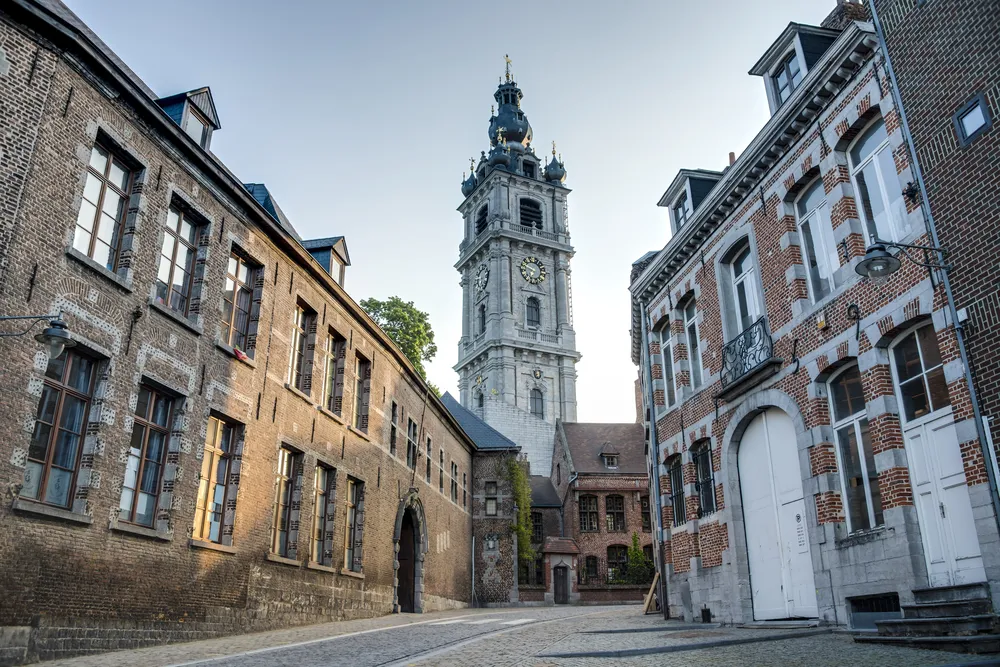
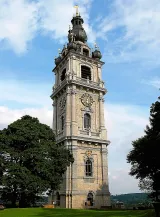
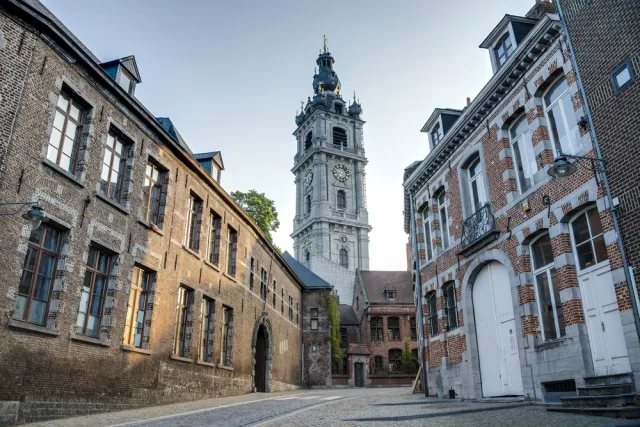
Belfry of Mons
View points · 45 min
- The Belfry of Mons is one of the most recent ones among the belfries of Belgium and France.
- It is the only Baroque-style belfry recognized by UNESCO and measures 87 meters.
- The belfry houses a carillon of 49 bells that ring every quarter of an hour in the city, especially during various festivities.
- The origin of the site dates back to the 11th century when the counts of Hainaut decided to establish their residence there.
- It was built after the collapse of the "Clock Tower" for civil protection reasons and punctuated the daily life of the city, having been used to fight against fires and as a trigger point for bombing alerts during the Second World War.
- The Belfry of Mons hosts an interpretation centre dedicated to its history and its recognition as a UNESCO heritage site since July 2015, and offers various animations throughout the year.
© Wikimedia Commons
Coddy games passing through
-
7
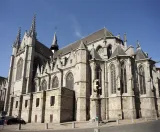
Sainte-Waudru Church
Landmark · 45 min
- Saint Waltrude Collegiate Church is a Catholic parish church in Belgium.
- The church is named in honor of Saint Waltrude of Mons.
- The church's history dates back to 1450, when construction of the east end began.
- The interior of the church contains important artworks, including sculptures by Jacques du Broeucq and paintings by renowned artists such as Peter Paul Rubens.
- The church's exterior showcases fine Brabantine Gothic architecture.
© Wikimedia Commons
Coddy games passing through
-
8
Royal Theater of Mons
45 min
- The neo-classical Grand Théâtre was built to plans by architect Sury and inaugurated on October 18, 1843.
- Featuring 3 balconies (currently 2), the Italianate theater has hosted memorable moments in lyric theater, with artists such as Sarah Bernard.
- Today, the Théâtre Royal offers a variety of shows, organized by Mars or other operators, in a hall with walls draped in garnet velvet.
- La Salle des Redoutes, offering stunning views of the Grand-Place, was completely renovated in 2015 and is used for smaller forms or receptions.
- In 2017, the City of Mons and Mars joined forces with a private partner, Salvatore Anzalone, to manage the Théâtre Royal, with the aim of expanding the cultural offering.
- Salvatore Anzalone won the concession to operate the Théâtre Royal after a public tender widely publicized by Mars, reinforcing the diversity of cultural forms and aesthetics in Mons.
Coddy games passing through
-
9
Mons Town hall
45 min
- It has been classified as a monument since 1936 and is part of the exceptional heritage list of the Walloon Region since 2009.
- The City Hall is situated on the Grand-Place of Mons, which also includes other classified buildings.
- It was previously known as the "Maison de la Paix" and served as the place for the city's communal organization.
- A small statue of a monkey can be found on the left side of the entrance, believed to be a symbol of good luck when touched.
Coddy games passing through

Afternoon
-
10
Castle of the Counts of Hainaut
Religion · 30 min
- The Saint-Calixte chapel is an ancient religious building, constructed in the 11th century and remodeled in the 14th century.
- It is located in the historic center of Mons, Belgium, and was originally part of the castle of the Counts of Hainaut.
- Today, it is a part of the Mons Belfry site, which is a UNESCO World Heritage site.
- The chapel was built in 1051 to house relics of Pope Calixtus I, who passed away in the 3rd century.
- The chapel was constructed using sandstone from the town of Bray.
- The building is owned by the City of Mons and is often used for various events such as concerts and activities organized by the Mons Museum Center.
© Wikimedia Commons
Coddy games passing through
-
11
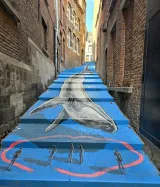
Street art "Dissipation"
45 min
- L'Art habite la ville Festival, Mons. "Dissipation" Nevercrew 2023.
-
12
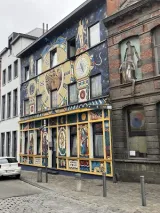
Street art (Hell'o)
45 min
- L'Art habite la ville Festival, Mons. Hell'o 2023.
Practical details for visiting Mons
Where to stay
For two days in Mons, aim for central accommodation to optimize walking around. The neighborhoods around the Grand Place and the Mons Belfry are practical: you’ll have the main sites within easy reach and you’ll find cafés and restaurants. If you prefer a quieter neighborhood, look for places near the park or pedestrian axes that stay within short distance of the attractions.
For the type of accommodation, consider a mix of boutique hotel, bed and breakfast, or private apartment depending on your budget and your desire for privacy. Small local places often offer a warmer experience than a big chain and make on-site recommendations easier.
In terms of price, expect variable averages depending on the season: rates can be higher during local events. For two nights, anticipate a price range that will depend on the chosen standard, but staying near the center will save time and let you enjoy more of Mons' atmosphere.
Getting around
Mons is very walkable: most of the places on this itinerary are clustered together and the streets are pleasant for walking, which lets you enjoy façades and street art. Bring comfortable shoes for occasionally uneven surfaces.
For longer trips or if you prefer not to walk, check local bus lines that serve the center and nearby neighborhoods. The network makes it easy to reach somewhat farther areas. Cycling is also a good option to save time and enjoy gentle mobility: look for bike rentals in the city center.
There is no metro in Mons, so rule out this option and focus on walking, bus and bike. Remember to check public transport schedules according to your plan and allow a few minutes to return to your accommodation or join a guided tour.
What to bring
For two days in Mons, opt for light, versatile luggage. Pack clothing that adapts to weather changes: a waterproof jacket and an intermediate layer are often useful. Put a compact umbrella or a windbreaker in your bag, as the weather can change quickly.
For footwear, comfortable walking shoes are essential, especially if you plan to explore the lanes and the castle surroundings on foot. Also plan a light daypack, a reusable water bottle and a portable charger for your phone: you'll want to photograph the street art and the squares.
If you visit during a cooler period, add a beanie or scarf; in summer, think sunglasses and sun protection. Bring an ID and your reservation confirmations, as well as a map or offline app to orient yourself easily.
Advance reservations
Some visits and experiences require planning. Book ahead tickets for museums or temporary exhibitions at Mont-de-Piété - Museum of the Doudou if you know you want to go, and check availability for guided tours of the Castle of the Counts of Hainaut or the Mons Belfry when they exist.
For meals, consider reserving a table in the most popular restaurants around the Grand Place, especially on weekends or during events. If you want to attend a show at the Mons Royal Theatre, get your tickets as early as possible: the programming can attract a loyal audience.
Finally, if you want to join a street event or a themed tour, check slots and book. In short: book the museums, the performances and the popular restaurants to avoid disappointments, and arrive with printed confirmations or ones accessible on your phone.
Must-see extras
Beyond the main itinerary, Mons offers curiosities to slip into your visit depending on the time available. Stroll through the side streets to discover facades and small squares where the local vibe reveals itself. Spot street art murals scattered beyond the route for a more complete discovery.
Try a street-art-focused walk that includes Le Monstrueux, Hell'o and other interventions up to Dissipation. For a fun activity, check out Coddy's urban escape games: they offer a unique way to explore the city by solving puzzles while discovering hidden places.
End a day in a local café or a microbrewery to feel the atmosphere. If you have an extra half-day, indulge in a themed tour (art, history or local traditions) according to your interests.
Local delights
Mons' culinary scene blends friendly simplicity with local produce. Don't miss tasting the specialties offered by bistros and markets: characterful dishes and terroir treats that pair well with a day of walking. Look for cafés where the community gathers for an espresso or a break.
Markets often offer fresh produce and stalls where you can discover cheeses, charcuterie and artisanal breads: ideal for an improvised picnic on a square. Also try places offering regional desserts and pastries for a sweet pause between two visits.
To drink, explore local beers and specialty coffees. The small restaurants around the historic center serve simple yet refined cuisine; don't hesitate to ask staff for recommendations on the daily specials or regional products to tailor your gastronomic experience in Mons.
When to visit Mons and how much it costs
Best seasons
To visit Mons, temperate seasons are often the most pleasant. Spring offers days that warm up and light conducive to photos of monuments and street art. Summer provides longer hours to linger on terraces, but can also bring a bit more crowd. Autumn is a time of color and a calmer vibe, while winter remains quiet and suits those seeking a more intimate museum and church experience.
Each season has its advantages: spring for strolling, summer for terraces and outdoor events, autumn for light and slower pace, winter for indoors and fewer crowds. If you have a preference for cultural events or exhibitions, check the local calendar before booking.
Crowds
Mons is generally not as crowded as major capitals, but crowds vary according to weekends, local festivals, and cultural events. The areas around the Grand Place and the Belfry are naturally busier at noon and late afternoon. To avoid crowds, favor visits early in the morning or late in the afternoon and enjoy the midday break in lesser-known side streets.
If your goal is to observe the places without noise or queues, plan midweek or outside event periods. By contrast, if you love the buzz and markets, choose a time of high footfall: the atmosphere there is more vibrant. Adjust your itinerary according to your tolerance for crowds.
Estimated budget
- Budget travel
- Budget-friendly: For an economical stay, plan to opt for a bed and breakfast or a small apartment on the outskirts, eat budget menus or market dishes, and favor walking to get around. Estimate should include basic accommodation, a few modest meals, local transportation, and entries limited to free or low-cost attractions.
- Mid-range budget
- Medium budget: With a middle budget, choose a charming hotel near the center, alternate quality restaurants and snacks, and plan a few paid visits (museums, guided tours). This budget lets you book comfort and convenience while taking part in a paid activity such as a show or a special guided tour.
- Comfort budget
- Comfortable budget: For a more comfortable stay, book a well-located and well-rated hotel, dine at recommended tables, buy tickets for shows at the Royal Theatre, and book private or guided tours. This level includes extras like a tasting, artisanal purchases, and maximum flexibility in reservations.
Frequently asked questions about your stay in Mons
Last notes before you go
In two days, Mons reveals itself as a city that is both deep and accessible: heritage, artistic scenes and neighborhood atmospheres respond to each other seamlessly. Follow the itinerary as a flexible suggestion: give yourself the freedom to step into a church, pause in front of a mural, or linger over a coffee when the moment feels right.
Think about keeping a pace that suits you and prioritizing the quality of moments over simply ticking off monuments. The streets tell stories if you take the time to listen. And if a street art piece catches your eye, treat yourself to reinterpreting it with photos or notes: it's often these personal impressions that linger after the trip.
Have a great stay in Mons: may your visit be full of discoveries, tasty breaks and simple moments that make a city unforgettable. Return with pictures, addresses and, perhaps, the desire to return to explore other lesser-known streets.