
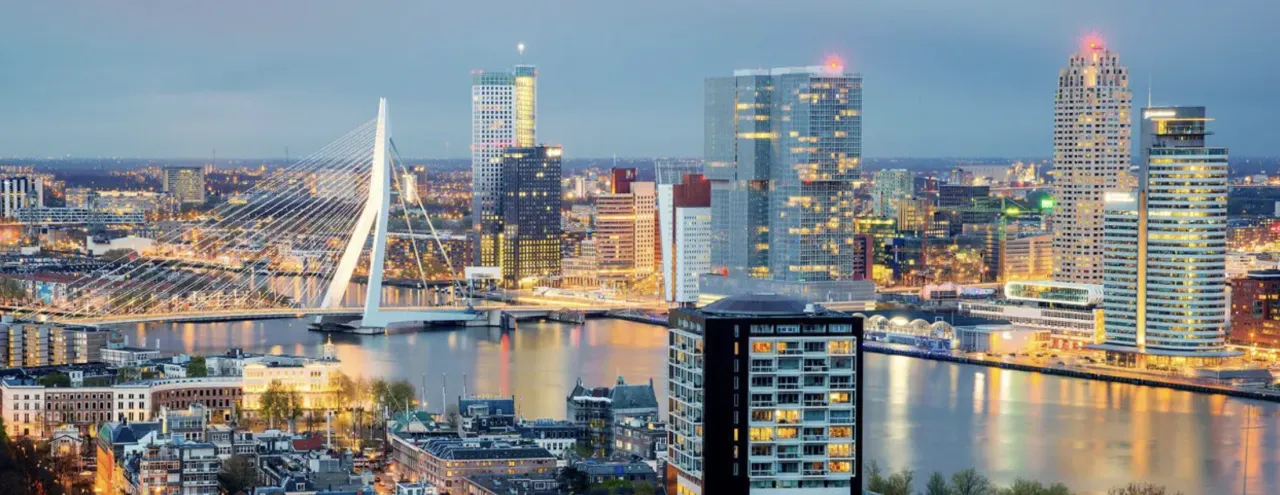
You will visit the most beautiful points of interest in Rotterdam



48 hours in Rotterdam: a lively and thoughtful itinerary
Starting a stroll at the Poortstraat and ending at the Korte Hoogstraat offers you a dense and vivid glimpse of Rotterdam: a city that breathes the architecture, creativity, and sociability. In two days, you can combine pedestrian walks, accessible museums, and lively squares without feeling rushed. I like to think of this itinerary as a sequence of easy-to-walk steps, punctuated by coffee breaks and cultural stops.
The program is balanced: the first day emphasizes major public buildings and nearby museums, following public squares like Stadhuisplein and Schouwburgplein. The second day favors the energy of the shopping center and shopping streets — Oude Binnenweg, Binnenwegplein and the famous Beurstraverse — to feel the city's daily pulse.
I've designed this itinerary so you can savor each stop without rushing. You'll have time to observe the façades, linger in a museum such as the Chabot Museum or the Natural History Museum Rotterdam, and discover less expected places like the Arminiuskerk or the public structure of the Nieuwe Delftse Poort - Cor Kraat. The pace remains flexible: active mornings, calmer afternoons.
Along the two days, you will encounter squares where locals meet, independent shops, and cultural venues that make Rotterdam distinctive. This guide gives you the thread of the route, practical tips on accommodation and transport, and extras to extend your visit if you have a little more time.
Quick guide — Day by day
Day 1 — Morning: Start at the Poortstraat to soak up the local atmosphere before joining the Nieuwe Delftse Poort - Cor Kraat and the Stadhuis Rotterdam. Cross the Stadhuisplein then head to the Schouwburgplein for a first coffee break and a look at urban life. Afternoon: take time to visit the Arminiuskerk, then the Chabot Museum for a dose of modern art and finally the Natural History Museum Rotterdam if you enjoy natural history collections and family-friendly exhibitions.
Day 2 — Morning: Begin at OPEN Rotterdam, then stroll up the Oude Binnenweg to the Binnenwegplein. Continue toward the Beurstraverse to feel the shopping buzz and finish your stroll at the Korte Hoogstraat, perfect for a last coffee or a last-minute purchase. The itinerary is designed to be largely pedestrian, with quick public transport options between sections if you prefer to save steps.
Day 1
10 stops
Morning
-
1
Louis Davids monument
45 min
- Louis Davids was a cabaret performer, singer, and writer, a prominent figure in Dutch cabaret.
- This memorial is located where Davids was born, with a broken LP symbolizing the vanished past of the neighborhood.In 1883, the district was Rotterdam's main red light district; by 1912, it transformed into a growing port city.
- Davids gained fame in Amsterdam with songs like 'De Olieman' and 'Naar de Bollen' after leaving Rotterdam.
- Gramophone records and radio aided the spread of Davids' fame during the rise of these technologies.
- Designed by Mathieu Ficheroux, the monument is made of stone, steel, and mosaic, featuring a portrait of Davids with a hopeful inscription.
- Due to redevelopment, the monument was in storage but was restored and placed back on Raamplein on March 24, 2016.
Coddy games passing through
-
2
Nieuwe Delftse Poort - Cor Kraat
45 min
- The Delftsche Poort in Rotterdam, built in 1764 by architect Pieter de Swart, was the third gate at that location, replacing the previous two due to dilapidation.
- In the 1930s, the city decided to relocate the gate about a hundred meters to improve traffic flow, and the relocation began in 1939.
- During the 1940 bombing, the lower part of the gate and stored sculptures were damaged, leading to a decision in 1941 to abandon its completion.
- A lion, part of the gate's decoration, was missing for years but was found in Blaricum and returned to Rotterdam in 1976.
- In 1811, Napoleon entered the city through Delftsche Poort and received three copper city keys from the city government.
- The area around Hofplein and Delftsche Poort was a pre-war entertainment hub in Rotterdam.
Coddy games passing through
-
3
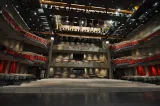
Theater Rotterdam Schouwburg
45 min
- The original "Groote Schouwburg" was established in 1887 on Aert van Nesstraat, featuring neoclassical architecture and 1250 seats.
- The "Verenigde Rotterdamse Toneellisten" performed new Dutch plays there, but dwindling attendance post-World War I led to a merger with Hofstadtoneel from The Hague.
- The group dissolved in 1938.
- The Groote Schouwburg was destroyed during the May 14, 1940, Rotterdam bombing.
- A new theater, with 1000 seats, was completed in 1947 by Stichting Amsterdams Rotterdams Tooneel (START).
- Due to inadequate facilities, stage, and acoustics, a decision in 1984 led to the replacement of the temporary building by Wim Quist's design in 1988.
- The inaugural performance in the new building on April 15, 1988, was "Pol," based on Willem van Iependaal's book.
Coddy games passing through
-
4
Stadhuisplein
45 min
- Thanks to its many dining options, the square is a popular nightlife spot in Rotterdam.
- Feyenoord’s greatest hits are celebrated by thousands of fans at the Stadhuisplein. The square plays an important role as a union between Coolsingel and Lijnbaan.
- Stadhuisplein houses the sculptural group of Mari Andriessen 'Monument to all fallen soldiers 1940 - 1945'.
Coddy games passing through
-
5
Jan Evertsenplaats
45 min
- Johan Evertsen was a 17th-century Dutch admiral from a notable seafaring family.
- He commanded fleets in several campaigns and major naval actions, including engagements against privateers.
- He died from a leg wound sustained during the Two Days' Battle and was given a ceremonial burial with posthumous honors.


Afternoon
-
6
Schouwburgplein
45 min
- The Schouwburgplein is a prectangular 12,250 m² square yard made with special materials such as epoxy, wood, rubber and metal. It was created in 1946 as part of the Rotterdam Reconstruction Plan after World War II. In 1996, it was redesigned by the West 8 agency and architect Adriaan Geuze, coinciding with the opening of the Pathé cinema in the square. The square includes the Pathé cinema, the Rotterdamse Schouwburg theater, the De Doelen concert palace, restaurants and stores around.
Coddy games passing through
-
7
Stadhuis Rotterdam
45 min
- The Rotterdam City Hall was built between 1914 and 1920 by Henri Evers and is one of the few buildings in the center of Rotterdam to survive the bombing of May 14, 1940.
- Recognized as Rijksmonument since October 10, 2000.
- Rotterdam's first city hall was in Hoogstraat, but due to lack of space, it was decided to build a new one in Coolsingel in 1905.
- Although the building was left largely intact after the 1940 bombing, heat damaged the concrete structure.
- The building's design follows the Beaux-Arts style with Byzantine, Romanesque and Art Deco influences.
- The 71-meter-high clock tower stands out on Coolsingel's main facade, with a gilded statue of an angel at the top, the work of sculptor Johan Keller.
Coddy games passing through
-
8
POST
45 min
- The iconic post office building on Coolsingel is being restored to its former glory after years of neglect. The renovated post office will house a hotel, spectacular apartments, high-quality dining, diverse retail, and public spaces connecting Rodezand to the new Coolsingel.
- The post office, surviving German bombings, played a crucial role in local industry.
- It's now being rejuvenated to align with Rotterdam's comprehensive urban vision. In the early 20th century, the post office drove urban development, supporting trade and introducing new telegraphy technology, becoming a symbol of progress. After the war, the post office lagged in development, losing its significance.
- Now, it's transforming into a focal point, connecting different parts of the city.
Coddy games passing through
-
9
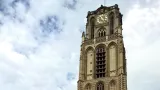
Grote Kerk (Sint-Laurenskerk)
45 min
- Built as a Roman Catholic church between 1449 and 1525.
- A wooden spire was added in 1621, designed by Hendrick de Keyser; it was demolished in 1645 due to the poor-quality wood.
- It was the first all-stone building of its time.
- During a May 14, 1940 air raid, it was heavily damaged with only the tower and walls surviving; restoration began with a foundation stone laid in 1952 and completed in 1968.
-
10
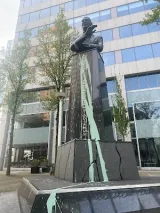
Statue Pim Fortuyn
45 min
- Pim Fortuyn was a politician, author, civil servant, businessman, sociologist and academic.
- He served as an extraordinary professor at Erasmus University, then pursued a business career and advised the government on social infrastructure. He was openly gay and a supporter of gay rights, while rejecting being labeled far-right and distancing himself from other extreme-right figures.
- He began as a Marxist and sympathized with the Communist Party, later joined the Labour Party, and shifted right in the 1990s, criticizing multiculturalism, immigration and Islam.
- His assassination in 2002 shocked the nation, sparked debate on immigration and culture, and left a lasting influence through the idea of Fortuynism and subsequent right-leaning politics.
Day 2
9 stops
Morning
-
11
OPEN Rotterdam
45 min
- OPEN Rotterdam is Rotterdam's local broadcaster with two TV channels and the radio station FunX Rotterdam.
- It was founded in 2013 by Oscar Langerak, Andre Freyssen and Rob Freijssen.It has received a license from the Commissariaat voor de Media in 2013 to carry out local media policy, which was extended for five years in 2018.
- The station was nominated as Local Omroep van het Jaar and won in the "News" category in 2017 and 2021 for the series "Stem uit de wijk".
- The station is based in Rotterdam and its broadcasting area covers the entire city.
Coddy games passing through
-
12
Chabot Museum
45 min
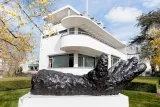
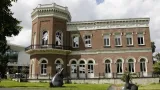
- Chabot Museum is situated in Rotterdam, Netherlands, in the Museumpark near Museum Boijmans van Beuningen. Housed in a white villa designed in 1938, the museum is a rijksmonument (national heritage site) since 2000. The museum opened its doors in 1993. Dedicated to Hendrik Chabot, the collection includes works from the 1920s (Schortemeijer collection) and 26 pieces from the Second World War (Mrs.
- Toll-Breugem's private collection). Since 2016, the museum presents the Hendrik Chabot Prijs, an award for visual arts.
Coddy games passing through
-
13
Natural History Museum Rotterdam
45 min
- Since 1987, it has been housed in Villa Dijkzigt on Land van Hoboken at Westzeedijk 345, attracting approximately 40,000 visitors annually.
- The museum's collection includes animals, shells, fossils, and other natural specimens, initially starting as the Cabinet of Dr.
- The museum underwent various relocations before becoming an independent entity in 1987, thanks to support from the government and businesses.
- Villa Dijkzigt underwent renovations in 1990, including a raised roof and an added second floor.
- In 1995, the museum saw further renovations, including a new glass pavilion by architect Erick van Egeraat.
- The museum houses the preserved skeleton of Ramon, an Asian elephant from Blijdorp, who died in 1998 at the age of 28.
- Ramon was the father of Bernhardine and four other elephants.
Coddy games passing through
-
14
Kathedraal van de Heilige Nikolaas
45 min
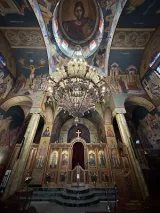
- The Holy Nicholas Cathedral in Rotterdam's Museumpark is a unique Greek Orthodox church.
- The exterior of the cathedral is simple, but the interior is adorned with vibrant, colorful paintings.
- The paintings depict scenes from the lives of Saint Nicholas and other saints, creating a storybook-like atmosphere.
- The entire church is a visual delight, and the real surprise is the beautifully decorated dome.
- A must-see for visitors, the cathedral offers a captivating experience, encouraging observers to look up and admire the artistry.
Coddy games passing through
-
15
G.J. de Jongh-monument
45 min
- The monument honors Gerrit Johannes de Jongh, a key figure in Rotterdam's port growth in the late 19th and early 20th centuries.
- Designed by architects Ad van der Steur, Leendert Bolle, Jaap Gidding, and sculptor Henk Chabot.
- De Jongh directed the Rotterdam Public Works Department during the port's significant expansion.
Coddy games passing through

Afternoon
-
16
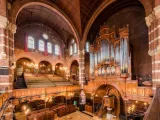
Arminiuskerk
45 min
- The Arminius Church, also known as the Remonstrant Church was built in 1895-1897.
- It is a church of the Remonstrant community and is designated as a national monument.
- Named after theologian Jacobus Arminius, the church has historical significance as the remonstrants separated from the Gereformeerde Kerk in 1610.
- The building, designed by architects H.
- Stok Wzn., features transitional architecture with neoromanesque elements.
- The exterior is constructed with red brick, and the facade includes decorative elements like a dwerggalerij and inscriptions.
- The church interior boasts a central structure with wooden cross-vaulting, stained glass windows, and a notable organ built in 1898.
Coddy games passing through
-
17
Museum Boijmans Van Beuningen
45 min
- The museum building, designed in traditionalist 1930s architecture, includes exhibition halls, a print room, and a library.
- It closed in 2019 for extensive renovations, with the Depot Boijmans Van Beuningen opening to the public in 2021.
- Founded in 1849, the museum originated from a legacy by collector Frans Jacob Otto Boijmans.
- A fire in 1864 damaged a substantial part of the collection, but subsequent acquisitions and donations helped rebuild it.
- Throughout the 20th century, the museum received significant collections from donors like D.G. van Beuningen, enriching its holdings with works by Van Eyck, Titian, Bosch, and Dalí.
- In the 21st century, the museum continued to expand its collection through acquisitions and partnerships, showcasing contemporary artists like Pipilotti Rist and Olafur Eliasson.
- The museum's permanent collection is organized by period and style, covering Gothic, Renaissance, Baroque, Romanticism, Impressionism, Realism, Surrealism, Modern Art, and Contemporary Art.
- Museum Boijmans Van Beuningen produced its own television program, Boijmans TV, in 2010, aiming to engage a wider audience with art through TV Rijnmond and online platforms.
Coddy games passing through
-
18
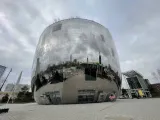
Depot Boijmans Van Beuningen
45 min
- The world's first publicly accessible art depot located next to Museum Boijmans Van Beuningen in Rotterdam's Museumpark.
- Displays 154,000 artworks collected over 174 years in 14 depot rooms with five different climates.
- Offers a unique perspective on collection management activities alongside the objects. Free insta-tours daily, granting access to all storage and work areas; reservations recommended due to limited capacity.
- Exclusive access to depot spaces, insights into architecture, collection stories, and the opportunity to ask questions to the guide.
Coddy games passing through
-
19
Oude Binnenweg
45 min
- The street consists of three parts: Binnenwegplein, Oude Binnenweg and Nieuwe Binnenweg.
- The Binnenweg existed since 1454 as a connection between Rotterdam, Schoonderloo and Delfshaven.
- In the 17th century, the Binnenweg was already built up to the Mauritsweg.
- The stretch between Karel Doormanstraat and Mauritsweg was hardly affected by the bombing in Rotterdam and is the only pre-war shopping street still existing in the center. The section between Karel Doormanstraat and Mauritsweg is now a pedestrian zone.
- Between 1888 and 1974, the street was called simply 'Binnenweg', without the addition 'Oude'.
Coddy games passing through
Practical details for visiting Rotterdam
Where to stay
Choosing a central neighborhood helps maximize walking time. Favor a room near Stadhuisplein or Oude Binnenweg to be at the heart of cafés, shops, and transport links. If you prefer a calmer vibe, look for accommodations near the Chabot Museum or around residential streets close to the route. For types of accommodation: opt for budget hotels or hostels for light travelers, mid-range hotels in the center for a good compromise, or a boutique hotel if you want more character. Regarding average prices, expect rates to vary with the season: economical options ideal for tight budgets, comfort offers for those who want more space and services, and high-end proposals for a more luxurious stay. Booking in the center will save you morning commutes and give you the freedom of a quick return after a full day.
Getting around
The heart of this itinerary is designed for walking: the distances between Poortstraat, Stadhuisplein, Oude Binnenweg and Korte Hoogstraat are pleasant to walk and reveal the city's soul. The public transport network (metro, tram and bus) is handy if you want to save time: find a station near your accommodation for quick connections. Renting a bike is a common option to cover several neighborhoods at once and feel the city in a different way; opt for comfortable bikes and lock them well. For longer journeys or when weather turns, the trams and metros are reliable and frequent. If you travel with luggage or need door-to-door transfer, a short taxi or ride-hailing ride can be practical. Finally, always keep a pair of comfortable shoes: even if you take transit, you'll be walking a lot to enjoy the squares and museums.
What to pack
The weather can change quickly, so bring layers: a lightweight waterproof jacket, a windproof jacket and sweaters depending on the season. Comfortable walking shoes are essential for exploring the squares and shopping streets. If you plan museum visits, a light and secure bag is enough; add a power bank for your phone if you use lots of maps and photos. In summer, don't forget sunglasses and sun protection; in winter, plan a hat, gloves and a scarf for cold, windy days. Finally, bring a small first-aid kit and adapters if needed for your electronic devices.
Advance reservations
Some steps benefit from prior booking to save time: temporary exhibitions at the Chabot Museum or other museums may require timed tickets, as well as some performance venues around the Schouwburgplein. If you want to dine in popular restaurants in the center or on Oude Binnenweg in the evening, it's wise to book a table, especially on weekends. For those seeking a guided experience or an organized tour (architectural walk, thematic visit), consider booking in advance to guarantee availability. Finally, if you plan to rent a bike, a reservation in high season will prevent bad surprises.
Must-see extras
If you have extra time, a few detours really enrich the visit: the famous covered hall and the cube houses (if you want surprising architecture), a stroll along the port to feel the maritime atmosphere, or a local market to taste the city on the go. For something playful and immersive, try the Coddy urban escape games, which turn the city into a playground and let you discover hidden alleyways and stories. The themed guided walks (street art, contemporary architecture) also offer a different perspective. Finally, don't hesitate to explore independent galleries and designer shops on Oude Binnenweg and its surroundings.
Local delights
Rotterdam has a diverse and lively culinary scene. Enjoy small spots for quick lunches, specialty cafes, and neighborhood bakeries. Seek out stands and markets to taste typical snacks, and explore restaurants that blend local and international influences: you'll find simple, honest dishes. Cafés around Binnenwegplein are perfect for a break, while the shopping boulevards host pastries and take-away snacks. For a convivial experience, look for small breweries and restaurants that focus on seasonal produce. Finally, soak up the atmosphere by taking coffee on a terrace on a lively square.
When to visit Rotterdam and how much it costs
Best seasons
Spring and autumn often offer a good compromise: mild weather, days great for walking, less crowds than in summer. Summer lets you enjoy terraces and late daylight, but central places can be busier. Winter gives the city a different face, more intimate and often quieter, with the cozy atmosphere of heated cafes and museums; however, days are shorter and sometimes windy. Each season has its charms: for rain-free strolls, aim for the warm period; for tranquil cultural visits, the in-between seasons are ideal. Remember to check local events that can make certain dates livelier.
Crowds
The central areas around Oude Binnenweg, the Beurstraverse and Stadhuisplein are naturally busier, especially in late afternoon and on weekends. Museums can see crowds during particular exhibitions; on weekdays, you'll generally have more space and calm. If you want to avoid the crowds, schedule museum visits early in the morning or in the mid-afternoon, and prefer side streets to main arteries during peak hours. Big squares and top tourist spots stay lively, but the city also offers many quiet corners if you want to stray from the main flows.
Estimated budget
- Budget travel
- Economical budget: Count on affordable accommodation options (hostels, small rooms), simple take-away lunches, and primarily walking or public transport. Plan a budget that covers economical lodging, modest meals and a few museum tickets. Be prepared to limit sit-down restaurants and favor markets and snacks to keep costs low.
- Mid-range budget
- Medium budget: 3-star hotel or good B&B in the center, occasional meals in nice restaurants, a few paid visits and one or two taxi transfers if needed. This level allows comfortable enjoyment of museums, a reservation in recommended restaurants, and renting a bike for a few hours without constantly worrying about savings.
- Comfort budget
- Comfortable budget: Charming hotels or higher-end chains in the city center, dinners in well-rated restaurants, private guided tours or special experiences, and easy mobility by taxi/VTC. This budget includes more freedom for extras (shopping, shows) and lodging with more complete services for a relaxed stay.
Frequently asked questions about your stay in Rotterdam
Final tips to fully enjoy
At the end of the journey, arriving at the Korte Hoogstraat, take a moment to look back: two days are enough to give a good first impression but the city invites you to return. Keep in mind the balance between discovery and pauses — it's often in quiet moments on a terrace or in a gallery that you capture the local spirit. If something particularly pleased you, note it down to deepen on a future stay. Take away images of lively squares like Stadhuisplein and Schouwburgplein, memories of more intimate museums, and, why not, the desire to try an urban escape game like Coddy's urban escape games.
I hope this itinerary will help you structure your 48 hours while keeping the freedom to improvise. Take your time, listen to your current desires, and let the city surprise you as you wander the streets between Poortstraat and Korte Hoogstraat.