










You will visit the most beautiful points of interest in Tilburg
2 Days in Tilburg: A Compact Itinerary Through the City Centre
Tilburg is the kind of city that works well when you slow down a little. A 2-day itinerary in Tilburg does not need a long list of major landmarks to feel full; it feels more about moving between streets, squares, and churches at an easy pace, noticing how the city centre shifts from one atmosphere to another. Starting at Oude Markt and ending at Heuvelse kerk gives the trip a clear shape, with each stop adding a different layer to the same walk.
The appeal here is in the simplicity of the route. Oude Markt sets the tone with a central, social feel, while Heuvel brings you into one of the places where the city seems to gather itself. Then Heuvelse kerk gives the itinerary a quieter finish, with a sense of pause that balances the busier parts of the day. Because the route is repeated across two mornings, the rhythm feels familiar rather than rushed, which makes it easy to notice details you might otherwise miss.
This is a good itinerary if you like city breaks that are more about walking, atmosphere, and short transitions than long transfers. You can take your time, stop for a coffee, and let the city centre unfold naturally. That makes Tilburg especially suitable for travelers who prefer a grounded experience: not overloaded, not overplanned, just enough structure to keep the day moving.
In two days, you get a clear feel for the city’s center and how its public spaces connect. It is a straightforward Tilburg itinerary, but that is part of what makes it easy to enjoy.
2-Day Tilburg Itinerary at a Glance
Day 1 begins at Oude Markt, then continues to Heuvel and finishes at Heuvelse kerk. It is a short and central walking day, ideal for getting your bearings in Tilburg without needing transport. The route works well as a gentle introduction to the city centre, with time to pause between stops and take in the surroundings.
Day 2 follows the same morning structure: Oude Markt, Heuvel, and Heuvelse kerk. That repetition may sound simple, but it can be useful if you like returning to places with a different mood, a different pace, or better weather. It also keeps the itinerary easy to follow, especially if you are building the rest of your day around lunch, shopping, or a relaxed afternoon.
Because the main points are close together, this 2-day Tilburg itinerary is not about covering a huge distance. It is about noticing the city centre in a calm, practical way. If you want a trip with low stress, short walking distances, and a clear ending point, this route does the job neatly.
Day 1
3 stops
Morning
-
1
Oude Markt
45 min
- In 1575, King Philip II granted Tilburg the right to hold four annual fairs and a weekly market on Saturdays.
- Due to frequent plundering, Tilburg residents had to buy goods on markets far from the town.
- Products were sourced from outside the region, like Willem Aert Piers from Dordrecht selling various goods on the Tilburg market in 1580.
- The weekly market initially took place near the church (Oude Markt), and annual fairs were held on the Heuvel.
- The market's location saw disputes in the 16th and 17th centuries, with relocations to areas like Heikestraat/Varkensmarkt.
- Market expansion occurred in 1870 and 1896, utilizing spaces like Monumentstraat, Paleisstraat, and Willemsplein.
Coddy games passing through
-
2
Heuvel
45 min
- The Heuvel in Tilburg, the central square of the city, surrounded by the main shopping street (Heuvelstraat) and the important Heuvelring road.
- The Korte Heuvel, a street with cafes, is located on the opposite side of Heuvelring, and the Heuvelse kerk is nearby. Tilburg has a mention dating back to 709, describing an act related to a gifted piece of land named Tilliburgis.
- Until 1898, Heuvel was the only place in Tilburg where residents could get drinking water.
- The construction of a watertower in 1898 changed this. On October 27, 1944, the German occupation of Tilburg ended, marked by the arrival of the 15th Scottish Infantry Division at Heuvel.
- A significant tree, known as the lindeboom, was cut down in 1994 due to disease, and attempts were made to replant its successors. The debate over having a linde tree on Heuvel continues.
- Attempts to replant and maintain linde trees faced challenges, and a descendant of the original linde still exists, but not in the central area of Tilburg.
- In 1996, significant changes were made to Heuvel, including placing the statue on a glass pedestal, constructing a municipal bicycle cellar, and prohibiting cars on the square.
- A major renovation in 2008, chosen by public referendum, gave the square a new design with fountains and grass strips. The renovation in 2008 coincided with the 200th anniversary of Tilburg receiving city rights from King Louis Napoleon Bonaparte.
Coddy games passing through
-
3
Heuvelse kerk
Religion · 30 min
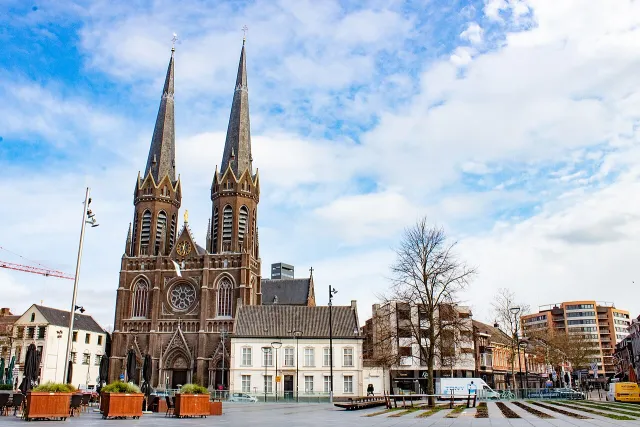
- The Heuvelse kerk is a neo-Gothic Catholic church dedicated to Saint Joseph and designed by Hendrik van Tulder.
- Construction of the Heuvelse kerk occurred in two phases between 1871–1889 due to budget constraints.
- The church features a cruciform basilica floor plan and two towers that stand 72 metres tall.
- The interior includes a four-part rib vault, two organs, and a winged altarpiece by Hendrik van der Geld.
- Frescos of the Stations of the Cross were painted by Georges de Geetere.
- The parish of the Heuvelse kerk announced plans to sell the church in 2019, but the bishop postponed these plans.
- A carillon of 35 bells was installed in 1925, but was never fully restored after the bronze bells were removed during World War II.
© Wikimedia Commons
Coddy games passing through

Day 2
3 stops
Morning
-
4
Oude Markt
45 min
- In 1575, King Philip II granted Tilburg the right to hold four annual fairs and a weekly market on Saturdays.
- Due to frequent plundering, Tilburg residents had to buy goods on markets far from the town.
- Products were sourced from outside the region, like Willem Aert Piers from Dordrecht selling various goods on the Tilburg market in 1580.
- The weekly market initially took place near the church (Oude Markt), and annual fairs were held on the Heuvel.
- The market's location saw disputes in the 16th and 17th centuries, with relocations to areas like Heikestraat/Varkensmarkt.
- Market expansion occurred in 1870 and 1896, utilizing spaces like Monumentstraat, Paleisstraat, and Willemsplein.
Coddy games passing through
-
5
Heuvel
45 min
- The Heuvel in Tilburg, the central square of the city, surrounded by the main shopping street (Heuvelstraat) and the important Heuvelring road.
- The Korte Heuvel, a street with cafes, is located on the opposite side of Heuvelring, and the Heuvelse kerk is nearby. Tilburg has a mention dating back to 709, describing an act related to a gifted piece of land named Tilliburgis.
- Until 1898, Heuvel was the only place in Tilburg where residents could get drinking water.
- The construction of a watertower in 1898 changed this. On October 27, 1944, the German occupation of Tilburg ended, marked by the arrival of the 15th Scottish Infantry Division at Heuvel.
- A significant tree, known as the lindeboom, was cut down in 1994 due to disease, and attempts were made to replant its successors. The debate over having a linde tree on Heuvel continues.
- Attempts to replant and maintain linde trees faced challenges, and a descendant of the original linde still exists, but not in the central area of Tilburg.
- In 1996, significant changes were made to Heuvel, including placing the statue on a glass pedestal, constructing a municipal bicycle cellar, and prohibiting cars on the square.
- A major renovation in 2008, chosen by public referendum, gave the square a new design with fountains and grass strips. The renovation in 2008 coincided with the 200th anniversary of Tilburg receiving city rights from King Louis Napoleon Bonaparte.
Coddy games passing through
-
6
Heuvelse kerk
Religion · 30 min
- The Heuvelse kerk is a neo-Gothic Catholic church dedicated to Saint Joseph and designed by Hendrik van Tulder.
- Construction of the Heuvelse kerk occurred in two phases between 1871–1889 due to budget constraints.
- The church features a cruciform basilica floor plan and two towers that stand 72 metres tall.
- The interior includes a four-part rib vault, two organs, and a winged altarpiece by Hendrik van der Geld.
- Frescos of the Stations of the Cross were painted by Georges de Geetere.
- The parish of the Heuvelse kerk announced plans to sell the church in 2019, but the bishop postponed these plans.
- A carillon of 35 bells was installed in 1925, but was never fully restored after the bronze bells were removed during World War II.
© Wikimedia Commons
Coddy games passing through
Practical details for visiting Tilburg
Where to Stay
For a short stay in Tilburg, the easiest option is to stay near the city centre. That keeps you close to Oude Markt, Heuvel, and Heuvelse kerk, so you can walk almost everywhere on this itinerary. If you want to keep things simple, look for mid-range hotels or small city apartments rather than larger properties outside the centre. Being able to step out and start your morning on foot makes a real difference on a 2-day trip.
If you prefer a quieter base, choose accommodation just outside the busiest central streets. You will still be close enough to walk in, but the evenings may feel a little calmer. This is especially handy if you are staying only one or two nights and want a relaxed return after dinner. For travelers who like a more flexible setup, serviced apartments can work well because they give you extra space and the option of a slower breakfast.
In practical terms, budget options are often simpler but still well located, while comfort stays usually offer a better room standard and easier check-in. For a short urban break like this, location matters more than size. I would prioritize a place near the centre over a larger hotel farther away, especially if you want to keep the itinerary easy and walkable.
Getting Around
This itinerary is best done on foot. The route between Oude Markt, Heuvel, and Heuvelse kerk is centered enough that walking feels natural and practical. You do not need to rely on complicated transport for the main stops, which keeps the whole trip light and flexible. If you enjoy exploring a city at street level, Tilburg works well for that.
For longer cross-city moves, bus services are the main public transport option to keep in mind. They are useful if your hotel is outside the centre or if you want to reach a different part of the city after your morning itinerary. A bike is also a very good option in Tilburg, especially if you are comfortable cycling in a city environment. It can save time and makes it easy to expand your plans beyond the central route.
If you are staying close to the itinerary, you may find that a combination of walking and occasional bus use is enough. That is usually the least stressful approach for a 2-day city break. I would keep the center on foot and only bring in transport when you need to move farther out. It keeps the day smooth and leaves more room for spontaneous stops.
What to Pack
For Tilburg, the most useful thing to pack is a pair of comfortable walking shoes. This itinerary is centered on short walks through the city centre, and you will enjoy it much more if your feet are happy. A light day bag is also helpful for carrying water, a phone charger, and anything you pick up along the way. Since the route is compact, there is no need to overpack.
Seasonally, it is smart to bring layers. In cooler months, pack a warm coat, scarf, and something that can handle wind or rain. In spring and autumn, a mix of lighter and warmer pieces works best because the weather can shift during the day. In summer, a breathable outfit is enough for most of the route, though a light jacket can still be useful if you are out early or late. An umbrella is a sensible addition year-round.
If you like taking photos or making notes about places, bring a phone with enough battery or a small power bank. For a short city trip, I would keep packing simple and practical. Think layers, walking comfort, and weather flexibility rather than anything complicated.
Advance Reservations
For this Tilburg itinerary, you do not need to reserve much for the main route itself, since Oude Markt, Heuvel, and Heuvelse kerk are straightforward places to visit on your own schedule. Still, it is worth planning ahead for anything that depends on timing, such as a specific restaurant booking or a ticketed activity elsewhere in the city. That way, the rest of the day stays free and relaxed.
If you want to eat at a popular spot in the city centre, booking ahead can help, especially for dinner on a busy weekend. The same goes for any show, event, or museum visit you may want to add outside the itinerary. Short trips are easier when the parts that require fixed times are settled before you arrive. Then you can keep your mornings open for walking and exploring.
Accommodation is the one thing I would book early if your travel dates are specific. Central places tend to be the most convenient for a 2-day stay, and those rooms are often the first to go. Think hotel, dinner reservation, and any ticketed experience you really care about. Everything else can usually stay flexible.
Must-See Extras
If you have extra time beyond the main route, it is worth exploring a little more of Tilburg beyond the three core stops. A slower walk through the centre can reveal more of the city’s everyday rhythm, especially in the streets around the squares. That is often where the trip starts to feel personal rather than just scheduled. You do not need a packed list to enjoy the city more deeply.
One fun option for travelers who like something interactive is to try Coddy escape games for the city. It adds a different pace to a city break and can be a nice contrast to the straightforward walking route of this itinerary. If you enjoy problem-solving or want a more playful way to experience the centre, it is an easy extra to consider.
You could also use your extra time for a café stop, a low-key shopping stroll, or simply a longer break near Heuvel. The beauty of a compact itinerary is that it leaves room for choice. I would keep the extra activities light and local rather than forcing in too much. Walking, coffee, and one unexpected stop is often enough.
Local Delights
Tilburg is a good place to build a trip around relaxed food stops rather than formal dining. Look for easy café meals, a casual lunch in the centre, or a simple dinner after walking the itinerary. The central area around Oude Markt and Heuvel makes it easy to pause for something warm, quick, or seasonal without losing the rhythm of the day.
If you enjoy local food markets or small grocery-style stops, they can be useful for snacks, bread, cheese, and a quick picnic-style break. That kind of experience fits well with a short city itinerary because it lets you keep moving without turning the day into a long sit-down meal. It also keeps the budget flexible.
For a more typical local experience, I would focus on cafés, simple lunch places, and evening drinks near the centre. The appeal is less about a single signature dish and more about how easily food fits into the pace of the city. That is often what makes a short stay feel satisfying.
When to visit Tilburg and how much it costs
Best Seasons
Spring and early autumn are the easiest seasons for a 2-day Tilburg itinerary. The weather is often more comfortable for walking, and the city centre feels pleasant without being too intense. These periods work especially well if you want to move between Oude Markt, Heuvel, and Heuvelse kerk on foot and spend more time outside without constantly adjusting for heat or cold.
Summer can also be nice if you like longer daylight and a more active atmosphere, though it may feel busier at certain times. Winter has a quieter, more restrained feel, which can suit this itinerary if you prefer a calmer city break and do not mind colder, wetter weather. In that case, the appeal comes from slow walks, warm stops, and fewer crowds rather than outdoor comfort.
If you are choosing purely for ease, I would lean toward spring or early autumn. They tend to offer the best balance of walking weather, city energy, and flexibility.
Crowds
Tilburg’s centre is generally manageable, and this itinerary does not depend on high-demand attractions, which helps a lot. Around Oude Markt and Heuvel, you may notice more activity during lunch, after work, and on weekends, but it usually feels lively rather than overwhelming. That makes the route easy to enjoy without much planning pressure.
The quietest moments are often early in the day and on weekday mornings, which is convenient if you prefer a slower atmosphere. Heuvelse kerk can feel like a natural change of pace at the end of the route, especially when the surrounding streets are calmer. If you enjoy taking photos or simply want space to look around, those softer hours are the best time to walk.
In short, this is not the kind of itinerary that gets ruined by crowds. It is more about choosing your pace. If you want less movement around you, aim for weekdays and earlier hours. If you prefer a more animated city-centre feel, weekend afternoons will give you that.
Estimated budget
- Budget travel
- Budget option: expect around <strong>€50-€90 per day</strong> if you stay in a basic, well-located room or hostel-style accommodation and keep meals casual. This usually covers walking the itinerary, simple café stops, and public transport only if needed.
- Mid-range budget
- Mid-range budget: expect around <strong>€100-€180 per day</strong> for a comfortable central hotel, a nicer lunch and dinner, and a few extra coffees or snacks. This is the easiest range for a balanced 2-day stay in Tilburg.
- Comfort budget
- Comfort budget: expect around <strong>€190-€320+ per day</strong> if you choose a higher-end hotel, book a better restaurant, and include extra activities or more flexible transport. This suits travelers who want convenience and a little more room around the itinerary.
Frequently asked questions about your stay in Tilburg
A Simple Tilburg Weekend That Stays Easy
A 2-day itinerary in Tilburg does not need to be complicated to work well. With Oude Markt, Heuvel, and Heuvelse kerk as the backbone of the route, you get a city-centre experience that is clear, walkable, and pleasantly unhurried. That is what makes this kind of trip appealing: it gives you structure without crowding the day.
If you like city breaks that leave room to breathe, Tilburg fits that mood nicely. You can walk the route, stop for a coffee, look around without rushing, and let the city reveal itself in small moments rather than big declarations. The repeated two-day format also gives the itinerary a steady rhythm, which can be surprisingly satisfying on a short trip.
By the time you reach Heuvelse kerk, the trip feels complete in a quiet, practical way. You have seen enough to understand the centre, but not so much that the city starts to feel blurred together. That balance is often what makes a short stay memorable. If you are planning a relaxed weekend in Tilburg, this is a very natural way to do it.