









You will visit the most beautiful points of interest in Breda


Two days in Breda: a weekend to feel the city
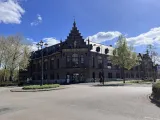
Starting your getaway at the Governor's House sets the tone right away: you are in the heart of a city centre that unfolds on foot, between alleys, squares and façades inviting strolling. Breda isn't a megacity to rush through; it invites you to take your time—enter a church, sit on a café terrace or stroll along a shopping street like Willemstraat. This short two-day itinerary is designed to savor these small breaths.
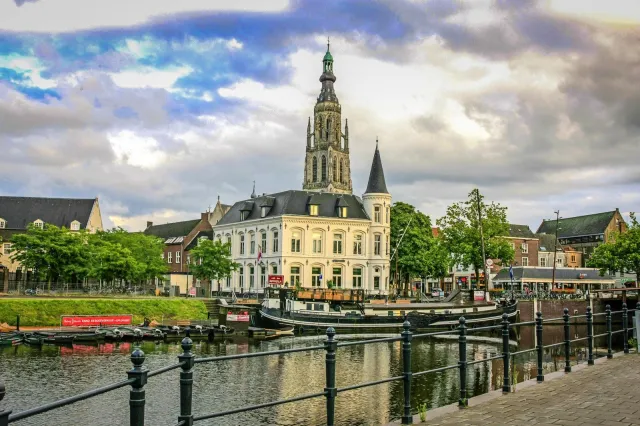
The day alternates between monuments visible from the outside and places to sit: the Church of Our Lady will offer you a moment of calm, while landmarks such as Den Anker or the Beguinage add texture to your walks. I’ve structured these two days so that each morning is rich in historical landmarks and each afternoon is more relaxed, for chatting, having a drink or simply watching local life.
You won’t find here a rush to see it all, but a program designed to feel the city: coffee breaks, detours through inviting backstreets and photographic stops where you feel like it. If you enjoy exploring on foot and getting intentionally lost, this plan will suit you perfectly. Bring good shoes, a quiet curiosity and a bit of flexibility — that is often where the best discoveries are made.
Quick guide — Day by day
Day 1, morning: Start at the Governor's House to orient yourself, then reach the Church of Our Lady for a moment of contemplation and architectural observation. Continue toward Den Anker and the Episcopal Palace, taking time to appreciate the arrangement of the squares and façades. End the morning at the Baron Monument, a practical reference point for getting your bearings.
Day 1, afternoon: Head back down toward Willemstraat for shopping or a stroll, then let yourself be drawn into the peaceful atmosphere of the Beguinage, a green and intimate setting to finish the day.
Day 2: Repeat a similar loop if you want to deepen certain stops. In the morning, revisit the places you liked or discover details missed the day before; the afternoon is ideal for slow visits on Willemstraat and a final moment at the Beguinage before departure.
Day 1
10 stops
Morning
-
1
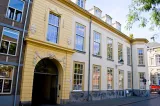
Gouverneurshuis
Historic architecture · 45 min
- In 1608, Justinus van Nassau, illegitimate son of William of Orange, bought De Engel House and built a new one in its place.
- Between 1790 and 1792, King William I undertook major renovations, designing a new facade by Johan van Westenhout in the style of Louis XVI.
- From 1795 to 1802, it served as barracks and from 1803 to 1811 as the seat of the Departmental Court of Brabant.
- From 1828 to 1923, it was the residence of the Governor of the Royal Military Academy.
- It later became the Ethnographic Museum of the Academy.
- In 1956, the Justinus van Nassau Ethnographic Museum was opened, which underwent significant renovation between 1962 and 1968.
- However, due to budget cuts, the museum closed on January 1, 1993 and currently houses apartments.
© Wikimedia Commons
Coddy games passing through
-
2
Episcopal Palace
Religion · 45 min
- The Bishop's Palace in Breda has been the seat of the bishop of the Dutch bishopric of Breda since 1859.
- Hendrik Montens, a nobleman and advisor to Hendrik III, built a manor house in the early 15th century.
- After the great fire in the city in 1534, the building was rebuilt and embellished in Gothic style by Montens, who also oversaw the creation of the Mastbos south of Breda.
- In 1859, the building was acquired by the bishopric of Breda as the bishop's residence, receiving the title "Episcopal Palace".
- It remains the only manor house used entirely as a residence.
- The palace houses a transcendental 16th century Gothic foyer and features extensive gardens.
© Wikimedia Commons
Coddy games passing through
-
3
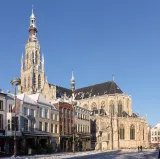
Grote of Onze-Lieve-Vrouwekerk
Religion · 30 min
- This church was built between 1410 and 1547, noted for its Gothic style and a tower 97 meters high, being the most significant monument of the city.
- Throughout its history, it suffered several events such as fires, reconstructions and restorations, the last one between 1993 and 1998.
- Initially Catholic, after the Protestant Reformation in 1637, the church was attached to the Protestant Church in the Netherlands.
- The church houses a 16th-century organ, one of the largest in the Netherlands.
- The Prince's Chapel, a former mausoleum of the House of Orange-Nassau, is part of the complex, built between 1520 and 1525.
- Although it was planned to bury William of Orange in the chapel, he was eventually buried in the mausoleum of the Nieuwe Kerk in Delft due to the political circumstances at the time.
© Wikimedia Commons
Coddy games passing through
-
4
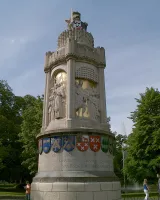
Baroniemonument
Historic · 15 min
- The Baroniemonument, also known as the Nassau-Baroniemonument, is a work by Dutch architect Pierre Cuypers.
- It commemorates the 500-year relationship (in 1904) between Breda and the House of Orange-Nassau.
- In 1404, Engelbrecht I of Nassau-Siegen was honored as lord of Breda.
- It depicts a lion-crowned fortress in a Dutch garden, with the names and coats of arms of Engelbrecht and his wife, Johanna van Polanen, and the coats of arms of the municipalities in the Barony of Breda. The monument features images of coats of arms of various municipalities associated with the Barony of Breda.
- It is a significant symbol of Breda's historical continuity with the House of Nassau.
© Wikimedia Commons
Coddy games passing through
-
5
Den Anker
Other buildings · 45 min
- The farm-turned-café, known as In Den Anker, is more than 350 years old and is located west of Zundert.
- The management of the place has remained in the De Beer family since 1861, with Karien and Jos being the current owners.
- Customers can enjoy simple drinks, including 35 types of specialty beers and basic snacks such as appeltaart.
- The fairytale-like interior maintains the old-fashioned aesthetic, with items embroidered by the current owners' great-grandmother.
- Despite the changes, the place retains its original essence without modernizations like sound systems or coffee machines.
© Wikimedia Commons
Coddy games passing through

Afternoon
-
6
Willemstraat
45 min
- The Willemstraat in Breda was named after King Willem III in 1873, coinciding with the celebration of his 25-year reign in 1874.
- King Willem III visited Breda in 1874 and likely passed through the Willemstraat during his visit to unveil the Citadel monument in Ginneken.
- Oranjestraatnamen (Orange Street Names) in Breda: Streets were named after members of the royal family; the most prominent street was often named after the reigning monarch.
- Oranjestraatnamen in the Netherlands lack extensive studies; they serve to reinforce the social-political order and official historical narrative in urban environments.
- Literature sources include works by Rob Kooloos on street names in the Netherlands and Gerard Otten's research on Breda's streets, their historical context, and naming conventions.
Coddy games passing through
-
7
Begijnhof
Historic · 45 min
- The Beginenhof is a walled complex of houses and a small church.
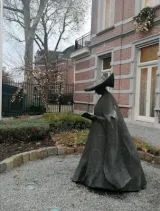
- It comprises 29 houses spread over two courtyards and clustered around a herb garden, with a sculpture of two Beguines conversing. The Beguines, pious Catholic women, sought a life of reflection and prayer without taking vows of poverty or chastity like the nuns.
- Founded around 1240 in Breda, the community grew with the support of donations, especially from Hendrik V. van Schoten and his wife Sofia van Berthout. St.
- Catherine's Church, erected in 1836-1838, is a brick building in the Classicist style with round-arched windows and a main facade with a statue of St.
- The complex includes several structures, such as the old Prinsenpoort gateway, the Beguines' houses, the sacristan's house, the herb garden, among others.
- Some houses had specific uses, such as care for the sick, training of novices and the residence of the Mother Superior. Within the complex, there is a restored herb garden, a space for laundry laundering, a statue of the Virgin Mary and an adjacent Valkenberg park. In 2017, the Beginenhof Breda celebrated its 750th anniversary with various activities, being the oldest and most active entity of its kind in Europe.
© Wikimedia Commons
Coddy games passing through
-
8
Main Square
Landmark · 45 min
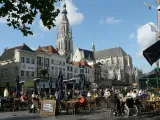
- Breda's Grand-Place is the city's main square. It is rectangular and houses the large Notre-Dame church, the town hall, restaurants and cafes. This square dates back to the Middle Ages, being the site of executions and housing inns and a halle aux viandes (butcher's shop). Events such as the Breda Jazz Festival, the Breda Carnival and the Breda Singelloop are held here.
- Annually, a Christmas market is held in December. The square is home to the Notre-Dame church, the statue of Judith and the head of Holopherne, the town hall and a book and antiques market on Wednesdays.
© Wikimedia Commons
Coddy games passing through
-
9
Willem Merkxtuin
45 min
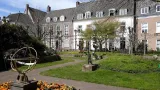
- Willem Merkxtuin is a garden in the Centrum district of the Dutch city of Breda.
- It is located behind the old manor houses in Catharinastraat, extending from Reigerstraat.
- It is named after Willem Merkx, mayor of Breda from 1967 to 1983.
- It is a small green oasis in the middle of the city.
- It houses some sculptures in the garden. It is accessed through a passage behind the aviary, leading to the Stadserf and the back side of Breda City Hall on the Grote Markt Breda.
Coddy games passing through
-
10
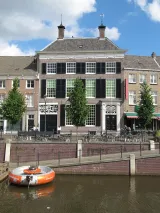
Court of Breda
45 min
- Breda's Gerechtsgebouw is a former court building in the city.
- The monument was designed by Willem Cornelis Metzelaar between 1883 and 1886, in neo-Renaissance style, with features such as pediment, arched frontispiece and tile panels by Hildo Krop.
- It functioned as a district court and justice of the peace, with wings housing the House of Detention and court with entrance for the public.
- Until January 1, 2014, it housed a women's prison.
Coddy games passing through
Day 2
10 stops
Morning
-
11
Gouverneurshuis
Historic architecture · 45 min
- In 1608, Justinus van Nassau, illegitimate son of William of Orange, bought De Engel House and built a new one in its place.
- Between 1790 and 1792, King William I undertook major renovations, designing a new facade by Johan van Westenhout in the style of Louis XVI.
- From 1795 to 1802, it served as barracks and from 1803 to 1811 as the seat of the Departmental Court of Brabant.
- From 1828 to 1923, it was the residence of the Governor of the Royal Military Academy.
- It later became the Ethnographic Museum of the Academy.
- In 1956, the Justinus van Nassau Ethnographic Museum was opened, which underwent significant renovation between 1962 and 1968.
- However, due to budget cuts, the museum closed on January 1, 1993 and currently houses apartments.
© Wikimedia Commons
Coddy games passing through
-
12
Episcopal Palace
Religion · 45 min
- The Bishop's Palace in Breda has been the seat of the bishop of the Dutch bishopric of Breda since 1859.
- Hendrik Montens, a nobleman and advisor to Hendrik III, built a manor house in the early 15th century.
- After the great fire in the city in 1534, the building was rebuilt and embellished in Gothic style by Montens, who also oversaw the creation of the Mastbos south of Breda.
- In 1859, the building was acquired by the bishopric of Breda as the bishop's residence, receiving the title "Episcopal Palace".
- It remains the only manor house used entirely as a residence.
- The palace houses a transcendental 16th century Gothic foyer and features extensive gardens.
© Wikimedia Commons
Coddy games passing through
-
13
Grote of Onze-Lieve-Vrouwekerk
Religion · 30 min
- This church was built between 1410 and 1547, noted for its Gothic style and a tower 97 meters high, being the most significant monument of the city.
- Throughout its history, it suffered several events such as fires, reconstructions and restorations, the last one between 1993 and 1998.
- Initially Catholic, after the Protestant Reformation in 1637, the church was attached to the Protestant Church in the Netherlands.
- The church houses a 16th-century organ, one of the largest in the Netherlands.
- The Prince's Chapel, a former mausoleum of the House of Orange-Nassau, is part of the complex, built between 1520 and 1525.
- Although it was planned to bury William of Orange in the chapel, he was eventually buried in the mausoleum of the Nieuwe Kerk in Delft due to the political circumstances at the time.
© Wikimedia Commons
Coddy games passing through
-
14
Baroniemonument
Historic · 15 min
- The Baroniemonument, also known as the Nassau-Baroniemonument, is a work by Dutch architect Pierre Cuypers.
- It commemorates the 500-year relationship (in 1904) between Breda and the House of Orange-Nassau.
- In 1404, Engelbrecht I of Nassau-Siegen was honored as lord of Breda.
- It depicts a lion-crowned fortress in a Dutch garden, with the names and coats of arms of Engelbrecht and his wife, Johanna van Polanen, and the coats of arms of the municipalities in the Barony of Breda. The monument features images of coats of arms of various municipalities associated with the Barony of Breda.
- It is a significant symbol of Breda's historical continuity with the House of Nassau.
© Wikimedia Commons
Coddy games passing through
-
15
Den Anker
Other buildings · 45 min
- The farm-turned-café, known as In Den Anker, is more than 350 years old and is located west of Zundert.
- The management of the place has remained in the De Beer family since 1861, with Karien and Jos being the current owners.
- Customers can enjoy simple drinks, including 35 types of specialty beers and basic snacks such as appeltaart.
- The fairytale-like interior maintains the old-fashioned aesthetic, with items embroidered by the current owners' great-grandmother.
- Despite the changes, the place retains its original essence without modernizations like sound systems or coffee machines.
© Wikimedia Commons
Coddy games passing through
Afternoon
-
16
Willemstraat
45 min
- The Willemstraat in Breda was named after King Willem III in 1873, coinciding with the celebration of his 25-year reign in 1874.
- King Willem III visited Breda in 1874 and likely passed through the Willemstraat during his visit to unveil the Citadel monument in Ginneken.
- Oranjestraatnamen (Orange Street Names) in Breda: Streets were named after members of the royal family; the most prominent street was often named after the reigning monarch.
- Oranjestraatnamen in the Netherlands lack extensive studies; they serve to reinforce the social-political order and official historical narrative in urban environments.
- Literature sources include works by Rob Kooloos on street names in the Netherlands and Gerard Otten's research on Breda's streets, their historical context, and naming conventions.
Coddy games passing through
-
17
Begijnhof
Historic · 45 min
- The Beginenhof is a walled complex of houses and a small church.
- It comprises 29 houses spread over two courtyards and clustered around a herb garden, with a sculpture of two Beguines conversing. The Beguines, pious Catholic women, sought a life of reflection and prayer without taking vows of poverty or chastity like the nuns.
- Founded around 1240 in Breda, the community grew with the support of donations, especially from Hendrik V. van Schoten and his wife Sofia van Berthout. St.
- Catherine's Church, erected in 1836-1838, is a brick building in the Classicist style with round-arched windows and a main facade with a statue of St.
- The complex includes several structures, such as the old Prinsenpoort gateway, the Beguines' houses, the sacristan's house, the herb garden, among others.
- Some houses had specific uses, such as care for the sick, training of novices and the residence of the Mother Superior. Within the complex, there is a restored herb garden, a space for laundry laundering, a statue of the Virgin Mary and an adjacent Valkenberg park. In 2017, the Beginenhof Breda celebrated its 750th anniversary with various activities, being the oldest and most active entity of its kind in Europe.
© Wikimedia Commons
Coddy games passing through
-
18
Main Square
Landmark · 45 min
- Breda's Grand-Place is the city's main square. It is rectangular and houses the large Notre-Dame church, the town hall, restaurants and cafes. This square dates back to the Middle Ages, being the site of executions and housing inns and a halle aux viandes (butcher's shop). Events such as the Breda Jazz Festival, the Breda Carnival and the Breda Singelloop are held here.
- Annually, a Christmas market is held in December. The square is home to the Notre-Dame church, the statue of Judith and the head of Holopherne, the town hall and a book and antiques market on Wednesdays.
© Wikimedia Commons
Coddy games passing through
-
19
Willem Merkxtuin
45 min
- Willem Merkxtuin is a garden in the Centrum district of the Dutch city of Breda.
- It is located behind the old manor houses in Catharinastraat, extending from Reigerstraat.
- It is named after Willem Merkx, mayor of Breda from 1967 to 1983.
- It is a small green oasis in the middle of the city.
- It houses some sculptures in the garden. It is accessed through a passage behind the aviary, leading to the Stadserf and the back side of Breda City Hall on the Grote Markt Breda.
Coddy games passing through
-
20
Court of Breda
45 min
- Breda's Gerechtsgebouw is a former court building in the city.
- The monument was designed by Willem Cornelis Metzelaar between 1883 and 1886, in neo-Renaissance style, with features such as pediment, arched frontispiece and tile panels by Hildo Krop.
- It functioned as a district court and justice of the peace, with wings housing the House of Detention and court with entrance for the public.
- Until January 1, 2014, it housed a women's prison.
Coddy games passing through
Practical details for visiting Breda
Where to stay
To fully enjoy this itinerary, choose central accommodation: the area around the Governor's House and the main squares is ideal for walking from one point to another. If you prefer a more residential vibe, opt for lodging near the Beguinage, which offers calm and proximity. Types of accommodations range from a charming small hotel to independent apartments; there are also B&B options for a more personal experience. On the budget side, expect about 60–80 EUR for economical nights, 90–150 EUR for comfortable options, and more upscale establishments beyond. Booking an apartment often provides more space for an afternoon break, while a central hotel shortens morning/evening commutes.
Remember to check the proximity of transport or parking if you are arriving by car.
Getting around
Breda is very walkable: most of the points on this itinerary, including the Governor's House, the Church of Our Lady and the Beguinage, are reachable within short walks. For longer trips or if you're in a hurry, the bus network covers the city; check the lines serving the centre. Cycling remains a practical and local way to gain speed and cover more without losing touch with the street — rental stations and free-floating services are often available. If you arrive by car, plan ahead for parking: favor a hotel with parking or a park-and-ride at the edge of town, then finish on foot. Finally, always keep a map or offline app handy, especially if you enjoy wandering off the main routes.
Walking and cycling are the best ways to feel Breda's vibe.
What to bring
Pack your bag according to the season, but a few essentials apply year-round: good walking shoes for the city pavements, a coat or a waterproof jacket to ward off unexpected showers, and a small refillable bottle. If you visit in spring or autumn, plan for layers: temperatures can vary and evenings can be cool. In summer, sun protection, sunglasses and a hat will be handy for walks on Willemstraat and around the Beguinage. Winter calls for a warm coat and gloves to enjoy the outdoors comfortably. Also consider a portable charger for your phone if you plan to take many photos or use online maps. Finally, a foldable bag for shopping and a small first-aid kit make your days more comfortable.
Advance reservations
Some things deserve to be reserved, especially on weekends and in peak season. To be comfortable, book your accommodation early enough, especially if you want a central location near the Governor's House or the Beguinage. Popular restaurants on or near Willemstraat can fill up: consider reserving a table in the evening. If you want to join guided tours, local workshops or shows, secure your seats in advance. For travelers who prefer to rent a bike or a private guide for a half-day, advance booking guarantees availability. Finally, if you plan to visit places with restricted access, check the modalities and buy tickets in advance when possible.
A small planning gesture saves you time on site.
Extras not to miss
Beneath the stops of the itinerary, treat yourself to a few experiences that add depth to your visit: a bike ride through less touristy neighborhoods, a pause in a café frequented by locals, or a discovery of small independent shops in the streets adjacent to Willemstraat. For a playful and original activity, don't miss Coddy's urban escape games: they offer immersive routes that blend puzzles, walking and city discovery — perfect for testing your sense of direction in a team. Also explore local markets depending on the season to taste fresh products and observe everyday life. Finally, plan a moment to deliberately get lost: it's often how you discover quiet and unexpected corners near the Beguinage.
These extras make the experience more personal and memorable.
Local delights
The local gastronomy unfolds between small addresses and market stalls. Look for cafés that serve fresh pastries and breweries offering local drinks to accompany a simple but well-prepared dish. The terraces along the shopping streets, especially around Willemstraat, are perfect for watching urban life while enjoying a snack. Do not neglect artisanal cheesemongers and bakeries for impromptu tastings. For a more elaborate meal, favor establishments that emphasize seasonal produce and short menus: this is often a sign of thoughtful cooking. Finally, enjoy a break at the Beguinage for tea or coffee in a calmer setting, away from the shopping bustle.
Tasting the city goes as much through the small places as through the more well-known tables.
When to visit Breda and how much it costs
Best seasons
Each season offers a different reading of the city. Spring brings a soft light and streets coming back to life, ideal for walks and terraces; summer is the liveliest time, suited to long evenings and markets, but expect more crowds. Autumn colors the green spaces and offers quieter walks, while winter quiets the city and makes indoor visits more comfortable (keeping in mind shorter days and cooler weather). If you want to avoid crowds while enjoying mild weather, late spring and early autumn are often the best compromise. However, avoid planning around major events without checking local dates, as they can influence accommodation availability.
Crowds
Visitor levels vary: weekends and peak season see a noticeable rise in visitors, especially around shopping arteries like Willemstraat and central sites. If you prefer a quieter experience, opt for weekday mornings for the popular sites, and afternoons outside peak hours to stroll in residential neighborhoods or at the Beguinage. Off-peak periods offer more space to sit on terraces, listen to the city and enjoy a slower pace. Conversely, days with local events can be opportunities to experience lively atmospheres if you enjoy the buzz.
Estimated budget
- Budget travel
- Budget economy: About 60–90 EUR per day. This covers a night in a hostel or small budget hotel, simple meals (sandwiches, street food or cafés), and limited transport (walking or occasional bus). Ideal for travelers who prioritize exploring on foot and light meals.
- Mid-range budget
- Budget mid-range: 120–200 EUR per day. This level allows a night in a comfortable central hotel, a few meals at a mid-range restaurant, bike rental for a day, and occasional paid visits. It is the most common budget for a comfortable weekend without excess.
- Comfort budget
- Budget comfort: From 220 EUR per day. This includes a well-located or boutique hotel, carefully chosen dinners, occasional private transport or guides, and additional purchases/activities. Suitable if you want more comfort and flexibility.
Frequently asked questions about your stay in Breda
Last tips before you go
Starting from the Governor's House and ending your weekend at the Beguinage, you will have traversed several atmospheres of the city: lively squares, shopping streets and quieter corners. Give yourself the freedom to repeat a walk you enjoyed or to linger longer in a café you glimpsed along the way. Keep in mind the importance of pace: a rhythm of alternating visits and breaks, and favor walking or cycling to better feel the city. If you have a little extra time, try a Coddy route for a playful and different approach to urban space. Finally, bring simple souvenirs: a photo, a tasty discovery or a conversation with a local — these are often the small things that make a short stay truly memorable. Safe travels and enjoy every step.