









Je gaat de mooiste bezienswaardigheden van Breda bezoeken


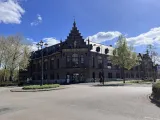
Twee dagen in Breda: een weekend om de stad te voelen
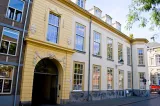
Beginnen aan je uitje bij het Gouverneurshuis zet meteen de toon: je bevindt je in het hart van een stadscentrum dat te voet ontdekt wordt, tussen steegjes, pleinen en gevels die uitnodigen tot kuieren. Breda is geen megastad om in hoog tempo te bezoeken; ze laat zich temmen door de tijd te nemen om een kerk binnen te gaan, op een terrasje te zitten of langs een winkelstraat als Willemstraat. Deze korte tweedaagse route is ontworpen om van deze kleine ademhalingen te genieten.
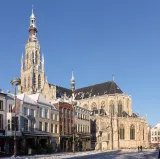
De dag wisselt af tussen monumenten die vanaf de buitenkant zichtbaar zijn en plaatsen waar men even kan zitten: de Grote of Onze-Lieve-Vrouwekerk biedt je een moment van rust, terwijl ankerpunten zoals Den Anker of het Begijnhof extra textuur aan je wandelingen geven. Ik heb deze twee dagen zo opgebouwd dat elke ochtend rijk is aan historische referenties en elke middag rustiger, om te praten, een drankje te doen of gewoon het lokale leven te bekijken.
Hier vind je geen race om alles te zien, maar een programma dat is ontworpen om de stad te voelen: koffiepauzes, omwegen in vriendelijke steegjes en fotografische stops waar je zin in hebt. Als je ervan houdt om te voet te verkennen en doelbewust te verdwalen, past dit plan perfect bij jou. Trek goede schoenen aan, een kalme nieuwsgierigheid en wat flexibiliteit mee — vaak ontstaan daar de beste ontdekkingen.
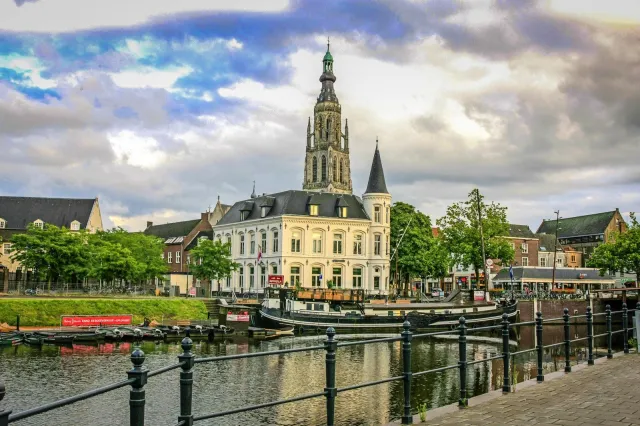
Korte gids — Dag per dag
Dag 1, ochtend: Begin bij het Gouverneurshuis om je weg te vinden, en ga daarna naar de Grote of Onze-Lieve-Vrouwekerk voor een moment van bezinning en architectonische observatie. Vervolg naar Den Anker en het Bisschoppelijk Paleis, terwijl je de lay-out van pleinen en gevels uitdrukt. Rond de ochtend af bij het Baroniemonument, een praktisch punt om je weg te vinden.
Dag 1, middag: Ga terug naar Willemstraat voor wat winkelen of een wandeling, en laat je vervolgens meevoeren door de rustige sfeer van het Begijnhof, een groene en intieme schepping om de dag af te sluiten.
Dag 2: Herhaal een soortgelijke ronde als je sommige stops wilt verdiepen. 's Ochtends kun je de plaatsen die je leuk vond opnieuw bezoeken of gemiste details van de voorgaande dag ontdekken; 's middags is ideaal voor trage bezoeken op Willemstraat en een laatste moment bij het Begijnhof voordat je vertrekt.
Dag 1
10 etappes
Ochtend
-
1
Gouverneurshuis
Historic architecture · 45 min
- In 1608 kocht Justinus van Nassau, de buitenechtelijke zoon van Willem van Oranje, het huis De Engel en bouwde er een nieuw voor in de plaats.
- Tussen 1790 en 1792 voerde koning Willem I uitgebreide renovatiewerkzaamheden uit en liet Johan van Westenhout een nieuwe gevel ontwerpen in de stijl van Lodewijk XVI.
- Van 1795 tot 1802 diende het als kazerne en van 1803 tot 1811 als zetel van het Departementaal Gerechtshof van Brabant.
- Van 1828 tot 1923 was het de residentie van de gouverneur van de Koninklijke Militaire Academie.
- Later werd het het Etnografisch Museum van de Academie.
- In 1956 werd het Etnografisch Museum Justinus van Nassau geopend, dat tussen 1962 en 1968 uitgebreid werd gerenoveerd.
- Vanwege bezuinigingen werd het museum echter op 1 januari 1993 gesloten en herbergt het nu flats.
© Wikimedia Commons
Coddy-spellen die hier langskomen
-
2
Bisschoppelijk paleis
Religion · 45 min
- Het Bisschoppelijk Paleis in Breda is sinds 1859 de zetel van de bisschop van het Nederlandse bisdom Breda.
- Hendrik Montens, edelman en adviseur van Hendrik III, bouwde aan het begin van de 15e eeuw een herenhuis, bouwde aan het begin van de 15e eeuw een herenhuis.
- Na de grote stadsbrand van 1534 werd het gebouw herbouwd en verfraaid in gotische stijl door Montens, die ook toezag op de bouw van het Mastbos ten zuiden van Breda.
- In 1859 werd het gebouw aangekocht door het bisdom Breda als bisschoppelijke residentie en kreeg het de titel "Bisschoppelijk Paleis".
- Het is nog steeds het enige landhuis dat volledig als woonhuis wordt gebruikt.
- Het paleis herbergt een transcendente gotische entreehal uit de 16e eeuw en heeft uitgestrekte tuinen.
© Wikimedia Commons
Coddy-spellen die hier langskomen
-
3
Grote of Onze-Lieve-Vrouwekerk
Religion · 30 min
- Deze kerk werd gebouwd tussen 1410 en 1547 en wordt gekenmerkt door de gotische stijl en de 97 meter hoge toren, waarmee het het belangrijkste gebouw van de stad is.
- De kerk is in de loop van haar geschiedenis verschillende keren verbouwd en gerestaureerd, voor het laatst tussen 1993 en 1998.
- De kerk was oorspronkelijk katholiek, maar werd na de protestantse reformatie in 1637 onderdeel van de Protestantse Kerk in Nederland.
- De kerk herbergt een 16e-eeuws orgel, een van de grootste in Nederland.
- De Prinsenkapel, een voormalig mausoleum van het Huis van Oranje-Nassau, maakt deel uit van het complex, dat tussen 1520 en 1525 werd gebouwd.
- Hoewel het de bedoeling was om Willem van Oranje in de kapel te begraven, werd hij uiteindelijk begraven in het mausoleum van de Nieuwe Kerk in Delft vanwege de politieke omstandigheden in die tijd.
© Wikimedia Commons
Coddy-spellen die hier langskomen
-
4
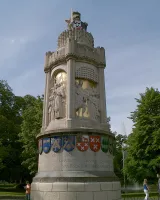
Baroniemonument
Historic · 15 min
- Het Baroniemonument, ook bekend als het Nassau Baronie Monument, is het werk van de Nederlandse architect Pierre Cuypers.
- Het herdenkt de 500-jarige relatie (in 1904) tussen Breda en het Huis Oranje-Nassau.
- In 1404 werd Engelbrecht I van Nassau-Siegen geëerd als Heer van Breda.
- Het toont een vesting met een leeuwenkroon in een Hollandse tuin, met de namen en wapens van Engelbrecht en zijn vrouw Johanna van Polanen en de wapens van de gemeenten van de Baronie van Breda. Het monument toont afbeeldingen van de wapenschilden van verschillende gemeenten die tot de Baronie van Breda behoren.
- Het is een belangrijk symbool voor de historische continuïteit tussen Breda en het Huis Nassau.
© Wikimedia Commons
Coddy-spellen die hier langskomen
-
5
Den Anker
Other buildings · 45 min
- De boerderij annex café In Den Anker is meer dan 350 jaar oud en ligt ten westen van Zundert.
- De familie De Beer runt de zaak al sinds 1861, Karien en Jos zijn de huidige eigenaren.
- Klanten kunnen genieten van eenvoudige drankjes, waaronder 35 speciaalbieren en eenvoudige hapjes zoals Appeltaart.
- Het sprookjesachtige interieur behoudt de ouderwetse esthetiek met voorwerpen die zijn geborduurd door de overgrootmoeder van de huidige eigenaren.
- Ondanks de veranderingen behoudt het café zijn oorspronkelijke essentie, zonder moderniseringen zoals geluidssystemen of koffiemachines.
© Wikimedia Commons
Coddy-spellen die hier langskomen

Middag
-
6
Willemstraat
45 min
- De Willemstraat in Breda is vernoemd naar koning Willem III in 1873 en viel samen met de viering van zijn 25-jarige regering in 1874.
- Koning Willem III bezocht Breda in 1874 en ging waarschijnlijk door de Willemstraat tijdens zijn bezoek om het Citadel-monument in Ginneken te onthullen.
- Oranjestraatnamen ( Orange Street Names ) in Breda: Streets zijn vernoemd naar leden van de koninklijke familie; de meest prominente straat is vaak vernoemd naar de regerende vorst.
- Oranjestraatnamen in Nederland mist uitgebreide studies; ze dienen om de sociaal-politieke orde en het officiële historische verhaal in stedelijke omgevingen te versterken.
- Literatuurbronnen omvatten werken van Rob Kooloos over straatnamen in Nederland en Gerard Otten's onderzoek naar de straten van Breda, hun historische context en naamgevingsconventies.
Coddy-spellen die hier langskomen
-
7
Begijnhof
Historic · 45 min
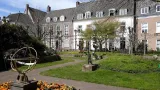
- Het begijnhof is een ommuurd complex van huizen en een kleine kerk.
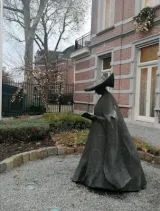
- Het bestaat uit 29 huizen verspreid over twee binnenplaatsen en gegroepeerd rond een kruidentuin met een beeld van twee begijnen in gesprek. De begijnen, vrome katholieke vrouwen, streefden naar een leven van contemplatie en gebed zonder een gelofte van armoede of kuisheid af te leggen zoals de nonnen.
- De gemeenschap, die rond 1240 in Breda werd gesticht, groeide dankzij giften van met name Hendrik V. van Schoten en zijn vrouw Sofia van Berthout. De Sint-Catharinakerk werd gebouwd in 1836-1838 en is een bakstenen gebouw in neoklassieke stijl met rondboogramen en een voorgevel met een beeld van Sint-Catharina.
- Het complex omvat verschillende gebouwen, zoals de oude Prinsenpoort, de begijnenhuizen, de kosterswoning, de kruidentuin en andere.
- Sommige huizen dienden voor speciale doeleinden, zoals verpleging, de opleiding van novicen en het verblijf van de moeder-overste. Binnen het complex bevinden zich een gerestaureerde kruidentuin, een ruimte voor het wassen van kleding, een Mariabeeld en een aangrenzend Valkenbergpark. In 2017 vierde het Bredase Begijnhof zijn 750-jarig bestaan als oudste en meest actieve organisatie in zijn soort in Europa met diverse activiteiten.
© Wikimedia Commons
Coddy-spellen die hier langskomen
-
8
Grote Markt
Landmark · 45 min
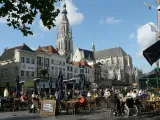
- De Grote Markt van Breda is het belangrijkste plein van de stad.
- Het heeft een rechthoekige vorm en herbergt de grote Notre-Dame kerk, het stadhuis, restaurants en cafés. Het plein dateert uit de middeleeuwen en was het toneel van executies en herbergde herbergen en een halle aux viandes (slagerij). Evenementen zoals het Breda Jazz Festival, het Breda Carnaval en de Bredase Singelloop vinden hier plaats.
- Elk jaar wordt er in december een kerstmarkt gehouden. Op het plein staan de Notre-Dame kerk, het standbeeld van Judith en het hoofd van Holopherne, het stadhuis en op woensdag een boeken- en antiekmarkt.
© Wikimedia Commons
Coddy-spellen die hier langskomen
-
9
Willem Merkxtuin
45 min
- Willem Merkxtuin is een tuin in de wijk Centrum van de Nederlandse stad Breda.
- Hij ligt achter de oude herenhuizen in de Catharinastraat en strekt zich uit vanaf de Reigerstraat.
- Hij is vernoemd naar Willem Merkx, burgemeester van Breda van 1967 tot 1983.
- Het is een kleine groene oase in het centrum van de stad.
- Er staan verschillende beelden in de tuin. Hij is te bereiken via een doorgang achter het vogelhuis, die leidt naar het Stadserf en de achterkant van het stadhuis van Breda op de Grote Markt Breda.
Coddy-spellen die hier langskomen
-
10
Gerechtsgebouw Breda
45 min
- Het Gerechtsgebouw in Breda is een voormalig gerechtsgebouw in de stad.
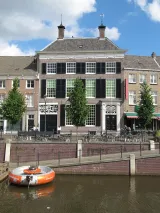
- Het gebouw is tussen 1883 en 1886 ontworpen door Willem Cornelis Metzelaar in neorenaissancestijl, met kenmerken als een fronton, gewelfde frontispice en tegeltableaus van Hildo Krop.
- Het diende als kantongerecht en vrederechter, met vleugels waarin het huis van bewaring en de rechtbank met toegang voor het publiek waren ondergebracht.
- Tot 1 januari 2014 was er een vrouwengevangenis in gevestigd.
Coddy-spellen die hier langskomen
Dag 2
10 etappes
Ochtend
-
11
Gouverneurshuis
Historic architecture · 45 min
- In 1608 kocht Justinus van Nassau, de buitenechtelijke zoon van Willem van Oranje, het huis De Engel en bouwde er een nieuw voor in de plaats.
- Tussen 1790 en 1792 voerde koning Willem I uitgebreide renovatiewerkzaamheden uit en liet Johan van Westenhout een nieuwe gevel ontwerpen in de stijl van Lodewijk XVI.
- Van 1795 tot 1802 diende het als kazerne en van 1803 tot 1811 als zetel van het Departementaal Gerechtshof van Brabant.
- Van 1828 tot 1923 was het de residentie van de gouverneur van de Koninklijke Militaire Academie.
- Later werd het het Etnografisch Museum van de Academie.
- In 1956 werd het Etnografisch Museum Justinus van Nassau geopend, dat tussen 1962 en 1968 uitgebreid werd gerenoveerd.
- Vanwege bezuinigingen werd het museum echter op 1 januari 1993 gesloten en herbergt het nu flats.
© Wikimedia Commons
Coddy-spellen die hier langskomen
-
12
Bisschoppelijk paleis
Religion · 45 min
- Het Bisschoppelijk Paleis in Breda is sinds 1859 de zetel van de bisschop van het Nederlandse bisdom Breda.
- Hendrik Montens, edelman en adviseur van Hendrik III, bouwde aan het begin van de 15e eeuw een herenhuis, bouwde aan het begin van de 15e eeuw een herenhuis.
- Na de grote stadsbrand van 1534 werd het gebouw herbouwd en verfraaid in gotische stijl door Montens, die ook toezag op de bouw van het Mastbos ten zuiden van Breda.
- In 1859 werd het gebouw aangekocht door het bisdom Breda als bisschoppelijke residentie en kreeg het de titel "Bisschoppelijk Paleis".
- Het is nog steeds het enige landhuis dat volledig als woonhuis wordt gebruikt.
- Het paleis herbergt een transcendente gotische entreehal uit de 16e eeuw en heeft uitgestrekte tuinen.
© Wikimedia Commons
Coddy-spellen die hier langskomen
-
13
Grote of Onze-Lieve-Vrouwekerk
Religion · 30 min
- Deze kerk werd gebouwd tussen 1410 en 1547 en wordt gekenmerkt door de gotische stijl en de 97 meter hoge toren, waarmee het het belangrijkste gebouw van de stad is.
- De kerk is in de loop van haar geschiedenis verschillende keren verbouwd en gerestaureerd, voor het laatst tussen 1993 en 1998.
- De kerk was oorspronkelijk katholiek, maar werd na de protestantse reformatie in 1637 onderdeel van de Protestantse Kerk in Nederland.
- De kerk herbergt een 16e-eeuws orgel, een van de grootste in Nederland.
- De Prinsenkapel, een voormalig mausoleum van het Huis van Oranje-Nassau, maakt deel uit van het complex, dat tussen 1520 en 1525 werd gebouwd.
- Hoewel het de bedoeling was om Willem van Oranje in de kapel te begraven, werd hij uiteindelijk begraven in het mausoleum van de Nieuwe Kerk in Delft vanwege de politieke omstandigheden in die tijd.
© Wikimedia Commons
Coddy-spellen die hier langskomen
-
14
Baroniemonument
Historic · 15 min
- Het Baroniemonument, ook bekend als het Nassau Baronie Monument, is het werk van de Nederlandse architect Pierre Cuypers.
- Het herdenkt de 500-jarige relatie (in 1904) tussen Breda en het Huis Oranje-Nassau.
- In 1404 werd Engelbrecht I van Nassau-Siegen geëerd als Heer van Breda.
- Het toont een vesting met een leeuwenkroon in een Hollandse tuin, met de namen en wapens van Engelbrecht en zijn vrouw Johanna van Polanen en de wapens van de gemeenten van de Baronie van Breda. Het monument toont afbeeldingen van de wapenschilden van verschillende gemeenten die tot de Baronie van Breda behoren.
- Het is een belangrijk symbool voor de historische continuïteit tussen Breda en het Huis Nassau.
© Wikimedia Commons
Coddy-spellen die hier langskomen
-
15
Den Anker
Other buildings · 45 min
- De boerderij annex café In Den Anker is meer dan 350 jaar oud en ligt ten westen van Zundert.
- De familie De Beer runt de zaak al sinds 1861, Karien en Jos zijn de huidige eigenaren.
- Klanten kunnen genieten van eenvoudige drankjes, waaronder 35 speciaalbieren en eenvoudige hapjes zoals Appeltaart.
- Het sprookjesachtige interieur behoudt de ouderwetse esthetiek met voorwerpen die zijn geborduurd door de overgrootmoeder van de huidige eigenaren.
- Ondanks de veranderingen behoudt het café zijn oorspronkelijke essentie, zonder moderniseringen zoals geluidssystemen of koffiemachines.
© Wikimedia Commons
Coddy-spellen die hier langskomen
Middag
-
16
Willemstraat
45 min
- De Willemstraat in Breda is vernoemd naar koning Willem III in 1873 en viel samen met de viering van zijn 25-jarige regering in 1874.
- Koning Willem III bezocht Breda in 1874 en ging waarschijnlijk door de Willemstraat tijdens zijn bezoek om het Citadel-monument in Ginneken te onthullen.
- Oranjestraatnamen ( Orange Street Names ) in Breda: Streets zijn vernoemd naar leden van de koninklijke familie; de meest prominente straat is vaak vernoemd naar de regerende vorst.
- Oranjestraatnamen in Nederland mist uitgebreide studies; ze dienen om de sociaal-politieke orde en het officiële historische verhaal in stedelijke omgevingen te versterken.
- Literatuurbronnen omvatten werken van Rob Kooloos over straatnamen in Nederland en Gerard Otten's onderzoek naar de straten van Breda, hun historische context en naamgevingsconventies.
Coddy-spellen die hier langskomen
-
17
Begijnhof
Historic · 45 min
- Het begijnhof is een ommuurd complex van huizen en een kleine kerk.
- Het bestaat uit 29 huizen verspreid over twee binnenplaatsen en gegroepeerd rond een kruidentuin met een beeld van twee begijnen in gesprek. De begijnen, vrome katholieke vrouwen, streefden naar een leven van contemplatie en gebed zonder een gelofte van armoede of kuisheid af te leggen zoals de nonnen.
- De gemeenschap, die rond 1240 in Breda werd gesticht, groeide dankzij giften van met name Hendrik V. van Schoten en zijn vrouw Sofia van Berthout. De Sint-Catharinakerk werd gebouwd in 1836-1838 en is een bakstenen gebouw in neoklassieke stijl met rondboogramen en een voorgevel met een beeld van Sint-Catharina.
- Het complex omvat verschillende gebouwen, zoals de oude Prinsenpoort, de begijnenhuizen, de kosterswoning, de kruidentuin en andere.
- Sommige huizen dienden voor speciale doeleinden, zoals verpleging, de opleiding van novicen en het verblijf van de moeder-overste. Binnen het complex bevinden zich een gerestaureerde kruidentuin, een ruimte voor het wassen van kleding, een Mariabeeld en een aangrenzend Valkenbergpark. In 2017 vierde het Bredase Begijnhof zijn 750-jarig bestaan als oudste en meest actieve organisatie in zijn soort in Europa met diverse activiteiten.
© Wikimedia Commons
Coddy-spellen die hier langskomen
-
18
Grote Markt
Landmark · 45 min
- De Grote Markt van Breda is het belangrijkste plein van de stad.
- Het heeft een rechthoekige vorm en herbergt de grote Notre-Dame kerk, het stadhuis, restaurants en cafés. Het plein dateert uit de middeleeuwen en was het toneel van executies en herbergde herbergen en een halle aux viandes (slagerij). Evenementen zoals het Breda Jazz Festival, het Breda Carnaval en de Bredase Singelloop vinden hier plaats.
- Elk jaar wordt er in december een kerstmarkt gehouden. Op het plein staan de Notre-Dame kerk, het standbeeld van Judith en het hoofd van Holopherne, het stadhuis en op woensdag een boeken- en antiekmarkt.
© Wikimedia Commons
Coddy-spellen die hier langskomen
-
19
Willem Merkxtuin
45 min
- Willem Merkxtuin is een tuin in de wijk Centrum van de Nederlandse stad Breda.
- Hij ligt achter de oude herenhuizen in de Catharinastraat en strekt zich uit vanaf de Reigerstraat.
- Hij is vernoemd naar Willem Merkx, burgemeester van Breda van 1967 tot 1983.
- Het is een kleine groene oase in het centrum van de stad.
- Er staan verschillende beelden in de tuin. Hij is te bereiken via een doorgang achter het vogelhuis, die leidt naar het Stadserf en de achterkant van het stadhuis van Breda op de Grote Markt Breda.
Coddy-spellen die hier langskomen
-
20
Gerechtsgebouw Breda
45 min
- Het Gerechtsgebouw in Breda is een voormalig gerechtsgebouw in de stad.
- Het gebouw is tussen 1883 en 1886 ontworpen door Willem Cornelis Metzelaar in neorenaissancestijl, met kenmerken als een fronton, gewelfde frontispice en tegeltableaus van Hildo Krop.
- Het diende als kantongerecht en vrederechter, met vleugels waarin het huis van bewaring en de rechtbank met toegang voor het publiek waren ondergebracht.
- Tot 1 januari 2014 was er een vrouwengevangenis in gevestigd.
Coddy-spellen die hier langskomen
Praktische details voor een bezoek aan Breda
Waar te verblijven
Om deze route volledig te benutten, kies je voor een centrale accommodatie: de wijk rondom het Gouverneurshuis en de belangrijkste pleinen is ideaal om van het ene punt naar het andere te lopen. Als je de voorkeur geeft aan een meer residentiële sfeer, kies dan een accommodatie nabij het Begijnhof, dat rust en nabijheid biedt. De soorten accommodaties variëren van een klein charmant hotel tot zelfstandige appartementen; er zijn ook B&B-opties voor een meer persoonlijke ervaring. Wat budget betreft, reken op gemiddeld voordelige overnachtingen rond de 60–80 EUR, comfortabele opties tussen 90–150 EUR, en meer verzorgde accommodaties erboven. Een appartement boeken geeft vaak meer ruimte voor een middagpauze, terwijl een centraal hotel de verplaatsingen 's ochtends/'s avonds verkort.
Let op de nabijheid van vervoer of parkeergelegenheid als je met de auto komt.
Vervoer
Breda wordt heel goed te voet ontdekt: de meeste punten van deze route, waaronder het Gouverneurshuis, de Grote of Onze-Lieve-Vrouwekerk en het Begijnhof, zijn bereikbaar via korte wandelingen. Voor langere afstanden of als je het druk hebt, werkt het busnetwerk door de stad; informeer naar de lijnen die het centrum bedienen. De fiets blijft een handige en lokale manier om sneller te gaan en meer terrein te dekken zonder het contact met de straat te verliezen — verhuurlocaties en self-service-functies zijn vaak beschikbaar. Als je met de auto komt, anticipeer op parkeren: geef de voorkeur aan een hotel met parkeerplaats of een park-and-ride aan de rand van de stad, en eindig te voet. Houd tenslotte altijd een kaart of een offline app bij de hand, vooral als je graag buiten de hoofdwegen ronddwaalt.
Lopen en fietsen zijn de beste manieren om de sfeer van Breda te voelen.
Wat mee te nemen
Bereid je tas voor op het seizoen, maar enkele essentials gelden het hele jaar door: goede wandelschoenen voor de kasseien in het centrum, een jas of waterdichte jas tegen onverwachte buien, en een kleine fles water. Als je in het voorjaar of de herfst bezoekt, neem lagen mee: variabele temperaturen en frisse avonds zijn normaal. In de zomer zijn zonnebrandcrème, een zonnebril en een hoed handig voor wandelingen op Willemstraat en rondom het Begijnhof. De winter vereist een geïsoleerde jas en handschoenen om van buiten te genieten zonder hinder. Denk ook aan een oplader voor je telefoon als je veel foto's wilt maken of online kaarten wilt gebruiken. Ten slotte zorgt een opvouwbare tas voor aankopen en een klein eerstehulppakket voor meer comfort tijdens je dagen.
Vroege reserveren
Sommige dingen verdienen het om gereserveerd te worden, vooral in het weekend en in het hoogseizoen. Om rustig te blijven, reserveer je overnachting ruim op tijd, vooral als je een centrale locatie dichtbij het Gouverneurshuis of het Begijnhof wilt. Populaire restaurants op of nabij de Willemstraat kunnen vol raken: overweeg om 's avonds een tafel te reserveren. Als je wilt deelnemen aan rondleidingen, lokale workshops of voorstellingen, secureer je plekken van tevoren. Voor reizigers die liever een fiets huren of een privé-gids voor een halve dag, garandeert vooraf reserveren beschikbaarheid. Tot slot, als je specifieke plaatsen wilt bezoeken die beperkte toegang hebben, controleer de toegangsvoorwaarden en koop je tickets van tevoren wanneer mogelijk.
Een kleine planning helpt je om geen tijd op locatie te verspillen.
Extras die je niet mag missen
Naast de stops van de route, laat je verleiden door enkele ervaringen die extra reliëf geven aan je bezoek: een fietstocht door minder toeristische wijken, een pauze in een café waar de locals komen, of een ontdekking van kleine onafhankelijke winkels in de straten rondom Willemstraat. Voor een speelse en originele activiteit, mis de escape games urbains van Coddy zeker niet: zij bieden onderdompelende routes die puzzels, wandeling en ontdekking van de stad combineren — perfect om je oriëntatiegevoel in team te testen. Verken ook de lokale markten afhankelijk van het seizoen om verse producten te proeven en het dagelijkse leven te observeren. Tot slot, reserveer wat tijd om je bewust te verdwalen: zo vind je vaak rustige en onverwachte plekjes dicht bij het Begijnhof.
Deze extras maken de ervaring persoonlijker en memorabeler.
Lokale lekkernijen
De lokale gastronomie ontdek je tussen kleine adresjes en marktstalletjes. Zoek de cafés die vers gebak serveren en de brouwerijen die lokale dranken aanbieden om een eenvoudig maar goed bereid gerecht te begeleiden. De terrassen langs de winkelstraten, met name rond Willemstraat, zijn perfect om het stadsleven te observeren terwijl je een hapje proeft. Vergeet de kaaswinkels en ambachtelijke bakkerijen niet voor plotselinge proeverijen. Voor een uitgebreider diner kies je best eetgelegenheden die de seizoensproducten en korte menu's benadrukken: vaak een teken van zorgvuldige keuken. Geniet tot slot van een pauze in het Begijnhof voor thee of koffie in een rustiger kader, weg van de winkelactie.
Proeven van de stad gaat net zo goed via de kleinschalige adresjes als via de bekendere tafels.
Wanneer Breda bezoeken en hoeveel het kost
Beste seizoenen
Elk seizoen biedt een andere kijk op de stad. De lente brengt zacht licht en straten die weer tot leven komen, ideaal voor wandelingen en terrassen; de zomer is het meest bruisende moment, geschikt voor lange avonden en markten, maar je kunt meer drukte verwachten. De herfst kleurt de groene ruimtes en biedt rustiger wandelingen, terwijl de winter de stad kalmeert en binnenshuis bezoeken comfortabeler maakt (rekening houdend met kortere dagen en koudere weersomstandigheden). Als je drukte wilt vermijden maar wel van aangenaam weer wilt genieten, zijn late voorjaar en vroege herfst vaak de beste compromis. Vermijd echter het plannen rond grote evenementen zonder lokale data te controleren, want die kunnen de beschikbaarheid van accommodaties beïnvloeden.
Drukte
De drukte niveaus variëren: weekenden en het hoogseizoen zien een significante toestroom van bezoekers, vooral rondom de winkelstraten zoals Willemstraat en centrale bezienswaardigheden. Als je de voorkeur geeft aan een rustigere ervaring, kies dan voor ochtenden op werkdagen voor populaire sites, en middagen buiten de spitsuren om door residentiële buurten te kuieren of bij het Begijnhof. Rustige periodes bieden meer ruimte om op een terras te zitten, naar de stad te luisteren en een ontspannen tempo te genieten. Aan de andere kant kunnen dagen met lokale evenementen een zeer levendige sfeer brengen als je van animatie houdt.
Geschat budget
- Budget reizen
- Budget economisch: tel ongeveer 60–90 EUR per dag. Dit dekt een nacht in een jeugdherberg of een klein budgethotel, eenvoudige maaltijden (sandwiches, streetfood of cafés) en beperkt vervoer (wandelen of af en toe een bus). Ideaal voor reizigers die de ontdekking te voet en lichte maaltijden verkiezen.
- Middenklasse budget
- Budget gemiddeld: Rekeneer op 120–200 EUR per dag. Dit niveau biedt een nacht in een comfortabel centraal hotel, enkele maaltijden in een restaurant van gemiddelde kwaliteit, een fietsverhuur voor een dag en af en toe betaalde bezoeken. Het is het meest voorkomende budget voor een comfortabel weekend zonder overdaad.
- Comfort budget
- Budget comfort: Vanaf 220 EUR per dag. Dit omvat een goed gelegen of boutiquehotel, verzorgde restaurants voor het diner, af en toe privévervoer of gids, en extra aankopen/activiteiten. Geschikt als je meer comfort en flexibiliteit wenst.
Veelgestelde vragen over uw verblijf in Breda
Laatste tips voordat je vertrekt
Vanaf het Gouverneurshuis vertrekken en je weekend eindigen bij het Begijnhof, dan heb je al verschillende sferen van de stad doorkruist: drukbezochte pleinen, winkelstraten en stille hoekjes. Laat jezelf de vrijheid om een wandeling die je fijn vond te herhalen of langer te blijven hangen in een café dat je onderweg bent tegengekomen. Houd het belang van het ritme in gedachten: afwisseling tussen bezoeken en pauzes, en geef de voorkeur aan wandelen of fietsen om de stad beter te voelen. Als je wat extra tijd hebt, probeer dan een Coddy-parcours voor een speelse en andere benadering van de stedelijke ruimte. Neem ten slotte eenvoudige herinneringen mee: een foto, een smaaksensatie of een gesprek met een local — dit zijn vaak die kleine dingen die een kort verblijf echt memorabel maken. Goede reis en geniet van elke stap.