






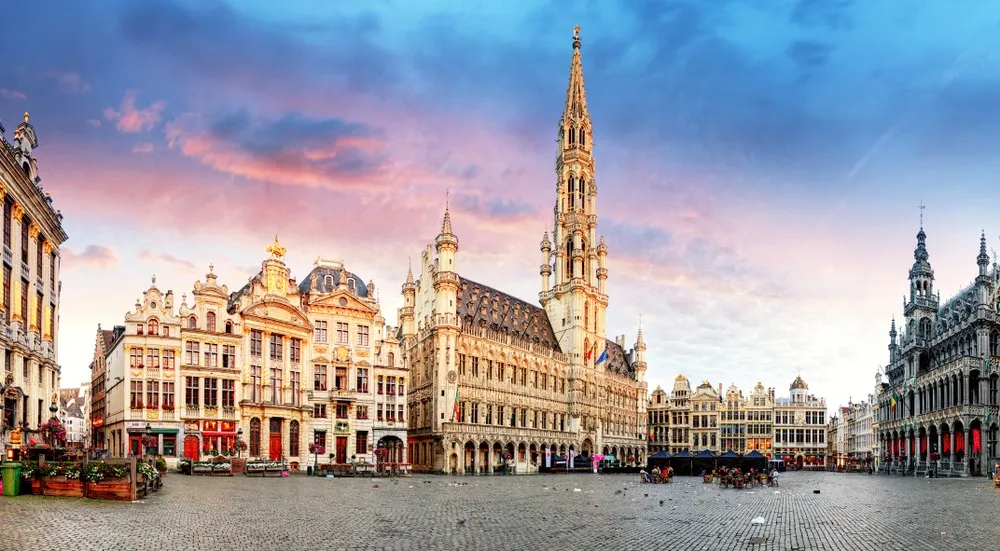
You will visit the most beautiful points of interest in Brussels


48 hours in Brussels: a lively, friendly itinerary
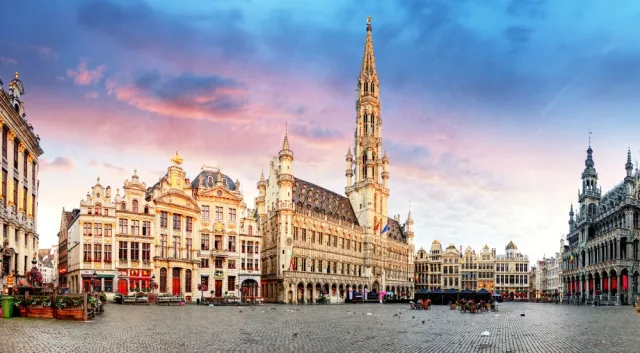
If you have two days to spend in Brussels, get ready to walk, look up now and then, and let yourself be surprised. This 48-hour itinerary starts gently at the Church of St. James on Coudenberg and ends with the mischievous wink of the Jeanneke Pis. Along the way you'll alternate between architecture, museums, small theatres and lively squares, and you'll discover spots where locals like to stroll.
I designed this route so that each half-day offers a balance between major cultural highlights and moments of urban life. In the morning, favor the calm energy of historic buildings and museums; the afternoon invites walks in the parks, coffee breaks and facades that tell a story. You'll pass by the Musical Instruments Museum, the Royal Palace of Brussels and the Royal Park Theatre, places that give a sense of the city.
Expect simple transitions: the city lends itself well to walking, and each stop becomes an opportunity for a sensory discovery — a shop window, a kiosk in a park, a sculpted facade. I wanted the itinerary to also highlight more intimate curiosities like the Museum of Original Figurines and neighborhood addresses such as the Sainte-Catherine Quarter.
In the pages that follow you'll find a day-by-day guide, practical advice on accommodation and transport, as well as culinary tips to make the most of Brussels. Keep an open mind and comfortable shoes: the city reveals itself best on foot, between grand squares and narrow streets full of character. Enjoy exploring.
Condensed itinerary for 2 days
Day 1 morning: start at the Church of Saint James on Coudenberg, then head to the Museum of Musical Instruments for a sound immersion. Continue to Charles de Lorraine Square and the Palace of Fine Arts, then cross to the Carrefour de l'Europe to feel the urban pulse. architecture, music, arts.
Day 1 afternoon: stroll toward the Ravenstein Hotel, visit the Royal Palace of Brussels and relax at the bandstand in Brussels Park. End the day at the Royal Park Theatre and the Museum of Original Figurines for a touch of the unusual. park, royal, theatre.
Day 2 morning: explore the Sainte-Catherine Quarter, step inside the Royal Toone Theatre, then discover the Charles Buls Fountain, the House of the Dukes of Brabant and Poelaert Square. neighborhood, tradition, square.
Day 2 afternoon: head down to Fontainas Square, take Old Grain Market Street, pass Saint Catherine Church and Stork Street, and finish in front of Jeanneke Pis. Neighborhood moments, discreet shops and local atmosphere punctuate this final afternoon. strolling, local flavors, neighborhood spirit.
Day 1
10 stops
Morning
-
1
Place Poelaert
Landmark · 45 min
- The square came to be as a result of major works that started in 1867. The initial development project, planned as a large semi-circular square, could not be fully realized due to the sudden death of architect Joseph Poelaert.
- The Palace of Justice opened in 1883.
- It has been under renovation since 1984.
- The restoration campaign has fallen so far behind schedule that the scaffolding installed in 2005 has itself had to undergo restoration.
- The square features notable monuments such as the National Monument to the Belgian Infantry and Monument to British soldiers.
© Wikimedia Commons
-
2
Egmont Park
Gardens and parks · 1h
- Egmont Park, opened to the public in 1918, has its origins in the gardens of Egmont Palace.You can discover: A orangery: building where potted citrus fruits were once brought in during the winter.
- Under a tumulus, an ice house was once used to store ice harvested in winter and used in summer A white stone aedicule called "Groote Pollepel".
- This is a reservoir that once played a very important role in supplying Brussels with water.
- Six Ionic columns that came from the Egmont Palace and were reassembled here after the fire that ravaged the palace in 1892. A statue of Peter Pan, a copy of the one in Kensington Gardens in London.
- The Marguerite Yourcenar passage evokes the author's memory through fourteen of her quotations.
- The old stables of Egmont Palace, built in neoclassical style.
© Wikimedia Commons
-
3
Godfrey of Bouillon
Sculptures · 45 min
- The bronze statue represents Godefroy de Bouillon brandishing the standard and shouting "Dieu le veut!".
- It was the first equestrian statue in Brussels.
- Prior to this, a statue of Charles de Lorraine, erected when Place Royale was created, stood here.
- This was overturned in 1794 and melted down to be turned into money.
- Godefroy de Bouillon was the first ruler of the Kingdom of Jerusalem, at the end of the First Crusade.
- He was born around 1058 and died on July 18, 1100 in Jerusalem.
- Godefroy de Bouillon answered Pope Urban II's call for the crusade and took part in the reconquest of Jerusalem.
- He was a member of the House of Flanders and a descendant of Charlemagne.
© Wikimedia Commons
-
4
Royal Museum of the Armed Forces and Military History
45 min
- The museum preserves a collection of objects and works of art linked to the country's wars and conflicts over 12 centuries.
- It occupies the northern half of the Cinquantenaire museum complex, with 40,000 square metres of exhibition space.⏳ The museum's current collection began to be assembled in 1910 on the occasion of the Brussels Universal and International Exhibition.
- The museum has a variety of sections covering different eras and aspects of military history.
© Wikimedia Commons
-
5
Place du Petit Sablon - Kleine Zavel
Squares · 45 min
- This is a public sculpture garden dedicated to the 16th century, featuring statues of personalities from the Spanish Netherlands. It is surrounded by a wrought iron and stone fence, with columns topped by 48 bronze statuettes representing the trades and corporations of the time. The square garden features terraced boxwood and flowers, laid out in symmetrical patterns, with alleys converging towards a central monument-fountain. Behind the monument, a double spiral staircase and a double incline compensate for the five meter height difference between the streets surrounding the square. Around this semicircle, ten Carrara marble statues representing personalities, artists or scientists of the 16th century are placed in ivy niches. .
© Wikimedia Commons
Afternoon
-
6
Church of Saint Jacques-sur-Coudenberg
Religion · 30 min
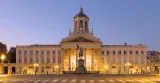
- Saint-Jacques-sur-Coudenberg Cathedral was built between 1776 and 1787.
- It is part of a group of nine neoclassical buildings surrounding Place Royale.
- A direct passageway from the gardens of the royal palace gives the church the unofficial status of "royal parish" In 1831, it was above the steps leading to the church porch that Leopold I pronounced the oath of loyalty to the Belgian Constitution that made him the first King of the Belgians.
© Wikimedia Commons
-
7
Brussels Park
Gardens and parks · 1h
- The creation of Brussels Park (not to be confused with the Parc Royal in Laeken), coincides with that of Place Royale, built from 1775 on the ruins of the castle of the Dukes of Brabant.It boasts numerous buildings and monuments: The Théâtre Royal du Parc abrite a theater that served as both a festival hall and a literary cabinet, where newspapers and novels were made available to the public for a penny.
- The Vauxhall and its bandstand: a former auditorium that borrowed its name from a London locality The Bandstand: to house national holiday celebrations and built in 1841 of ornate twelve-sided cast iron The octagonal basin adorned with eight "Hermes" statues that were once supplied with water.
- The sculpture garden contains some sixty sculptures inspired by Greco-Roman mythology.
- The bomb shelter, accessible from the Cercle Gaulois, is currently disused.
© Wikimedia Commons
-
8
Centre for Fine Arts of Brussels
45 min
Coddy games passing through
-
9
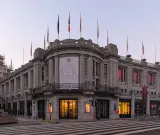
Musical Instrument Museum
45 min
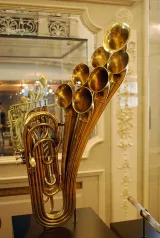
- The MIM is one of the world's leading musical instrument museums.
- Founded in 1877, the museum boasts over 8,000 instruments, of which more than 1,200 are on display.
- The museum is home to exceptional instruments, such as the luteal invented by Georges Cloetens and the Componium by Winkel.
- In addition to the permanent exhibition, the museum offers temporary exhibitions, concerts and educational activities for all audiences.
- The museum's library boasts more than 30,000 works specializing in musicology and organology.
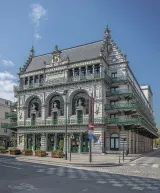
- The building, considered one of Brussels' Art Nouveau gems, was built in 1899 to plans by architect Paul Saintenoy. .
© Wikimedia Commons
Coddy games passing through
-
10
Charles of Lorraine
Sculptures · 45 min
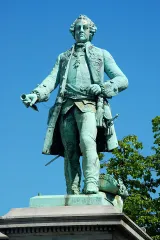
- Charles Alexandre de Lorraine (1712-1780) served as the Governor General of Austrian Netherlands and was a knight of the Order of the Golden Fleece.
- He was the twelfth child of Leopold I, Duke of Lorraine and Bar, and Élisabeth-Charlotte of Orléans, and the brother of Emperor Francis I.
- He was also the grand master of the Teutonic Order from 1761-1780.
- He married Archduchess Maria Anna of Austria in January 1744, but lost his wife, daughter, and mother within a span of a few days in 1744.
- His reign was known for the progress of the Enlightenment era and economical development, and he was considered one of the most popular governors of the Austrian Netherlands.
© Wikimedia Commons

Day 2
7 stops
Morning
-
11
Rue de la Cigogne
45 min
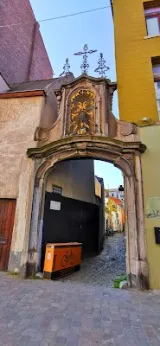
- Rue de la Cigogne is a hidden village in the heart of Brussels.
- The street is charming with its cobblestones, shrubs and discreet facades.
- The locals live here in tranquility and gather to chat al fresco.
- The street's entrance porch dates from 1780 and features a statuette dedicated to Saint-Roch. ⌛ Despite the years, Rue de la Cigogne retains its timeless charm.
- The street is a haven of peace, disconnected from the hustle and bustle of the city.
-
12
Sainte-Catherine district
45 min
- The quays district is also known as the Sainte-Catherine district.
- The district was once the former port of Brussels and home to canals used for transporting goods.
- The canals were filled in in the 19th century and replaced by wide boulevards.
- The district includes historic sites such as the Beguinage de and its church Saint-Jean-Baptiste-au-Béguinage and the Grand Hospice Pachéco.
- The district is also home to the Royal Flemish Theatre of Brussels and the house of La Bellone.
- The district's main thoroughfares include the Quais du Commerce, the Boulevards de Dixmude and d'Ypres, as well as the Rue des Commerçants and the Rue du Canal.
- The Quais district is also called the Alhambra district in its northern part.
-
13
Fontaine Anspach
45 min
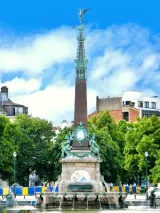
- The Anspach fountain was erected in 1897 as a tribute to Jules Anspach, former burgomaster of Brussels.
- It was originally located on Place de Brouckère, but was dismantled in 1973 due to metro construction work.
- It was reassembled here in the Square des Blindés in 1981, near the Quai aux Briques.
- The Anspach fountain features a granite obelisk surmounting a pedestal adorned with a bas-relief depicting the vaulting of the Senne.
- Jules Anspach was a major promoter of the work to vault it.
-
14
Royal Flemish Theatre
Theatres and entertainments · 45 min
- The Royal Flemish Theatre is located in the quayside district, where the inner harbour of the city of Brussels was located until the end of the 19th century.
- Its main façade is located in "rue de Laeken".
- It is the home of the Brussels-based Dutch-language theatre company (KVS), which aims to promote professional Dutch-language theatre in Belgium and abroad.
- The productions are drawn not only from the national and international classical repertoire, but also from contemporary forms of expression.
- There is also room for dance, poetry, music and the organisation of exhibitions.
© Wikimedia Commons
-
15
Black Tower
Towers · 45 min
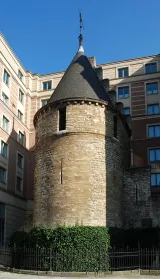
- The Black Tower is a well-preserved vestige of Brussels' first city wall, built in the 13th century.
- It survived the demolition of the part of the first wall located behind Saint Catherine's Church when new basins were built in the Port of Brussels.
- In the 16th century, the Black Tower was transformed into a tavern called "In de Toren".
- It was saved from demolition in 1888 thanks to the intervention of burgomaster Charles Buls, a fervent defender of Brussels' historic heritage.
- The tower has been restored and listed as a historic monument since 1937.
- The Black Tower is built of sandstone rubble, with a semicircular plan, an ivy-covered side and loopholes on the second floor.
© Wikimedia Commons
Afternoon
-
16
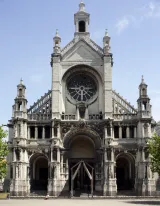
Saint Catherine Church
Religion · 30 min
- Brussels' Sainte-Catherine church was built between 1854 and 1874, replacing an earlier 15th-century edifice.
- Its design was entrusted to the talents of Joseph Poelaert, the architect of the Palais de Justice.
- The church's architecture is hybrid, blending Gothic and Baroque elements with neo-Renaissance-style furnishings.
- It was almost demolished to build a parking lot, but was reopened for worship in 2014.
- Catherine's Church then on the right of the square was demolished in 1893 and replaced by a power plant, today itself transformed into a museum of contemporary art called CENTRALE.
© Wikimedia Commons
-
17
Rue du Vieux Marché aux Grains
45 min
- This is a former 16th-century fortified moat.
- Originally, the square hosted a cattle market.
- Later, around 1650, it became a grain market.
- Today, the square is pleasant with its shaded terraces under the trees.
Practical details for visiting Brussels
Where to stay
To make the most of this 2-day itinerary, choose centrally located accommodation. The areas around Brussels Park and the Sainte-Catherine Quarter are particularly convenient: you’ll be within walking distance of the major museums, the squares and the theatres. If you enjoy nightlife and restaurants, favor the streets near Sainte-Catherine and the historic centre. For greater quiet, look for a hotel or apartment near Poelaert Square or on adjacent residential streets.
Expect a range of options: **hostels** and small hotels for a tight budget, **three-star hotels** or charming apartments for mid-range comfort, and a few more upscale hotels around the park for a comfortable stay. Average prices vary by season and immediate proximity to attractions: in low season, simple rooms become affordable, while during event periods rates climb.
Practical tip: choose lodging that allows you to reach the Church of St. James on Coudenberg easily on foot in the morning to start the itinerary without stress. A central base will save you time between the Royal Palace, the Musical Instruments Museum and the Sainte-Catherine Quarter. proximity, comfort, budget. Booking early helps secure the best place.
Getting around
Brussels can easily be explored on foot along this route: many points of interest are close to one another. Walking remains the best way to capture the atmosphere, especially between the Church of Saint James on Coudenberg, the Royal Palace and the park. For longer journeys, combine metro, tram and bus: the network covers the centre well and quickly connects peripheral neighbourhoods.
If you prefer sustainable mobility, cycling and bike‑sharing offer a good alternative for getting across the city. Several bike stations are located near the main squares and parks. Shared scooters are also available, but ask yourself whether they suit your comfort and the local traffic.
Some practical tips: use transport apps to plan your journeys, buy tickets valid for multiple trips if you plan to use the network several times, and favour walking in the areas around the Royal Palace, the Royal Park Theatre and the Sainte‑Catherine Quarter. planning, apps, flexibility. Walk when you can.
What to bring
The weather can vary: pack layers you can mix and match to stay comfortable during walks that combine indoor and outdoor. A lightweight waterproof jacket is useful in case of a sudden shower, and a pair of comfortable shoes is essential for walking the cobblestones between museums and squares. comfortable shoes, waterproof jacket, layers.
For devices, bring a portable charger and an adapter if needed: you'll want to photograph façades, museum interiors and street scenes. If you plan to attend a performance at the Royal Park Theatre or the Royal Toone Theatre, pack a smart-casual outfit.
Finally, keep a small kit with basic essentials (basic medication, bandages, and a small bottle of water): it will come in handy on long walks. practicality, comfort, prevention. Travel light but prepared.
Advance reservations
For a trouble-free stay, consider booking certain stops in advance. Seats for events at the Théâtre Royal du Parc and the Théâtre Royal de Toone can sell out quickly on performance nights: reserve your tickets ahead of time if a play catches your eye. Likewise, temporary exhibitions in the major museums and at the Palais des Beaux-Arts may require a reservation depending on the schedule.
For meals, it is recommended to book tables at popular restaurants in the city centre and the Sainte-Catherine quarter, especially on weekends. If you wish to visit the Musical Instruments Museum in a group or take part in guided tours, check whether a reservation is necessary. Finally, for accommodation, booking early allows you to choose lodging ideally located between the park and Sainte-Catherine.
In short: book for the shows, the exhibitions, and the very busy restaurants. Also consider combo tickets or passes if you plan to visit several museums in succession. anticipation, comfort, time management. A little organization multiplies the pleasure.
Extras not to miss
Beyond the main itinerary, I recommend a few experiences that add depth to the visit. Start with an exploration of the alleys around Sainte-Catherine: antique shops, workshops and small cafés reveal local treasures. Also don’t miss themed walks, such as discovering Art Nouveau façades or small hidden art galleries.
For a playful touch, include an urban escape game: Coddy’s urban escape games offer an interactive, local way to roam neighborhoods while solving puzzles. It’s an excellent activity for slightly rainy afternoons or to refresh the energy of a classic visit.
Finally, if time allows, venture on to neighborhood markets or occasional local events: flea markets, food markets or small street performances bring a real added soul. secret walks, escape games, markets, crafts. Mix things up.
Local Delights
The food scene along this route is rich and varied: from small breweries to neighborhood spots serving comforting dishes. Don't leave without trying the specialties often found at artisans and small tables near Sainte-Catherine and the historic center. local beers, chocolate, street-food specialties.
Neighborhood markets offer excellent opportunities to graze: cheeses, charcuterie, artisanal bakeries and fresh-produce stalls are perfect for putting together a quick lunch on the go. For dessert, indulge in local chocolate or a traditional pastry from a shop on a shopping street. Cafés around Place Fontainas or the park are ideal for a sunny break.
If you enjoy food-and-drink pairings, ask about the small breweries and beer bars in the center: they often offer local selections and explanations of the styles. local flavors, markets, neighborhood cafés. Savor as you stroll.
When to visit Brussels and how much it costs
Best seasons
To make the most of a short stay, the shoulder seasons offer a good compromise between pleasant weather and moderate crowds. Spring brings parks in bloom and lengthening days, while autumn provides soft light and warm tones on the façades. If you prioritize exhibitions and performances, winter can also be interesting for its cultural offerings, but expect shorter days.
Each season has its strengths: spring and autumn offer mild weather for walking between the Église Saint-Jacques-sur-Coudenberg, the Royal Palace and the Sainte-Catherine quarter. Summer is lively and invigorating, with more events and a bustling street life, but it can be more crowded. Winter highlights museums and cozy cafés.
Tip: tailor your choice to what you favour: outdoor strolls in spring/autumn, cultural events in winter, lively atmosphere in summer. Each season reveals a different facet.
Crowds
Crowd levels vary by location and time. Areas around the Royal Palace, the central park and the Sainte-Catherine Quarter can be lively, especially on weekends and during events or exhibitions. Weekday mornings remain the quietest times to visit museums and major sites, while afternoons see more people out walking and busy terraces.
If you prefer to avoid crowds, start early in the day or explore side streets and small museums that serve as less-visited refuges. Very compact attractions like the Museum of Musical Instruments attract a steady audience; planning your visit for the morning can improve the experience.
In summary: expect moderate crowds in the centre, bustling activity on weekends and during events, and quieter hours on weekday mornings. Adjusting your schedule lets you optimize your visit.
Estimated budget
- Budget travel
- You are an expert professional translator. Translate the following text from French into English. Preserve the style, tone and format, including any HTML tags if present. Do not add any explanations or additional comments, only the translation. Provide a direct and concise response. Be concise and get to the point. Budget tip: Plan a minimum to cover simple lodging (hostel or basic room), grab-and-go meals, public transport and a few entrance fees. Save by favoring walking, sandwiches or market food for meals, and by limiting paid visits. Looking for off-season deals and booking accommodation in advance helps you stay within this budget.
- Mid-range budget
- You are an expert professional translator. Translate the following text from French into English. Preserve the style, tone and format, including any HTML tags if present. Do not add explanations or additional comments, only the translation. Give a direct and concise response. Be concise and get to the point. Mid-range budget: Include a three-star hotel or a comfortable apartment, meals in small brasseries, a few museum visits and an occasional show. This budget offers more flexibility to dine in good neighborhood restaurants, buy a ticket for an exhibition and occasionally use public transport or a taxi to save time.
- Comfort budget
- You are an expert professional translator. Translate the following text from French into English. Preserve the style, tone and format, including any HTML tags if present. Do not add explanations or additional comments, only the translation. Give a direct and concise response. Be concise and get to the point. Comfort budget: Choose a well-located hotel near the park or the city center, dine at reputable restaurants, attend several shows and book private guided tours. This level also allows you to buy a few quality souvenirs and enjoy additional experiences such as tastings or guided excursions.
Frequently asked questions about your stay in Brussels
End the weekend on a high note
Ending your itinerary at the Jeanneke Pis is a playful, relaxed way to wrap up these 48 hours: a little wink after two days of exploring. I hope this route allowed you to alternate between major institutions and intimate discoveries, between museums, squares and neighborhood corners. Remember the small things: a kiosk in a park, a shop window that catches your eye, a cozy terrace.
Before you leave, take a moment to sit in a café, leaf through a postcard or simply watch the passersby: it is often these moments that turn a stay into a lasting memory. If you come back, you will find new exhibitions, other restaurants and lanes still to explore. curiosity, patience, a desire to return.
Have a good trip and happy discoveries: Brussels reveals itself to those who take the time to explore it on foot and with pleasure. May your two days be rich in small discoveries.