







You will visit the most beautiful points of interest in Nijmegen


2 days in Nijmegen: an itinerary to take your time
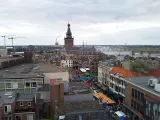
Starting a weekend in Nijmegen is to accept to slow down and listen to the city. This two-day itinerary starts at the Latin School and ends at the Labyrinth, passing through a selection of places that make you want to look up, pause in a café, follow a street at random. I propose a stroll where heritage, small discoveries and simple pleasures share the day.
The city here is not a single attraction to check off, but a mix of atmospheres. Between old buildings, city gates and curiosities like the Water Wolf and Aquanaut, you will find moments to observe, to photograph and to chat with locals. The itinerary is designed so you can walk without rushing and to turn back if something particularly appeals to you.
Each step is designed to be pleasant on foot: quiet squares, discreet chapels, façades with a story to tell. The route also includes central points such as the City Hall, the Grote Kerk (St. Stephen's Church) and the inevitable Anthonispoort. You will have time to enjoy a pause, explore a museum or simply get lost in a street.
By following this plan, aim for simplicity: contemplative moments, good local addresses and a few surprises. Let yourself be carried by the city's rhythm, keep a comfortable pair of shoes and enjoy these 48 hours to sense what makes Nijmegen unique. You’ll see, the repetition of steps over the two days leaves room for improvisation.
Quick guide — day by day
Day 1 — Morning: Start at the Latin School, proceed to the Waag Building, the plaque or the place named 'Al mot ik krupe...', then the Water Wolf and Aquanaut and the Sint Nicolaaskapel. This morning is ideal to soak in the historic center and take photos of the façades. Afternoon: continue to the Karel de Grote College, exterior visit of the City Hall, ascent or visit of the Grote Kerk (St. Stephen's Church), then discover the Anthonispoort before finishing the day at the Labyrinth for a contemplative conclusion.
Day 2 — Morning: You repeat the same circuit to deepen the places you liked: reconnect with the Latin School, revisit the Waag Building or take time to enter the Sint Nicolaaskapel. Afternoon: return to the major points like the Karel de Grote College and the City Hall, take the time to explore annex alleys or local shops, then finish at the Labyrinth in the evening. This repeated pattern leaves the freedom to adapt each step and discover the city at your pace. Practical if you want to compare morning and afternoon under a different light.
Day 1
4 stops
Morning
-
1
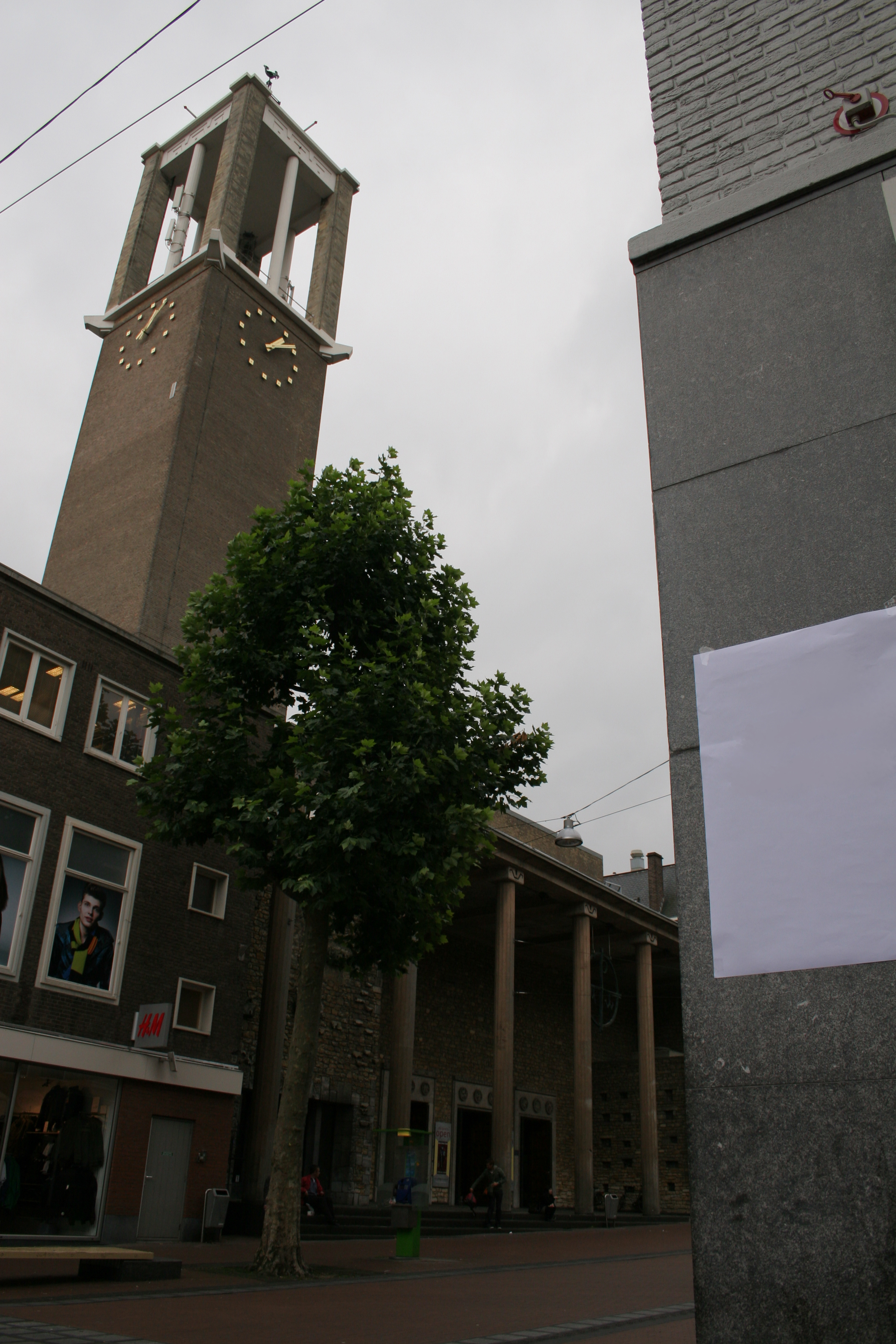
City Hall of Nijmegen
Historic architecture · 45 min
- The Nijmegen city hall, a historical early Renaissance-style building, was constructed in 1554-1555 under the leadership of Herman van Herengrave.
- The city hall houses numerous historical and modern pieces of art.
- From 1879-1882, the city hall was restored by architect Pierre Cuypers, who extended the building on the west side and made copies of the Renaissance sculptures on the facade.
- It suffered considerable damage in a 1944 bombing and ensuing fire, but its front and side facades were preserved and restored from 1947-1953.
- During this restoration period, the western wing built by Cuypers was replaced with a modern style wing; a brick tower with an onion-shaped top was also added.
- Key features inside the city hall include a collection of 17th-century tapestries that were bought for the negotiations that led to the Peace of Nijmegen in 1678-1679.
© Wikimedia Commons
Coddy games passing through
-
2
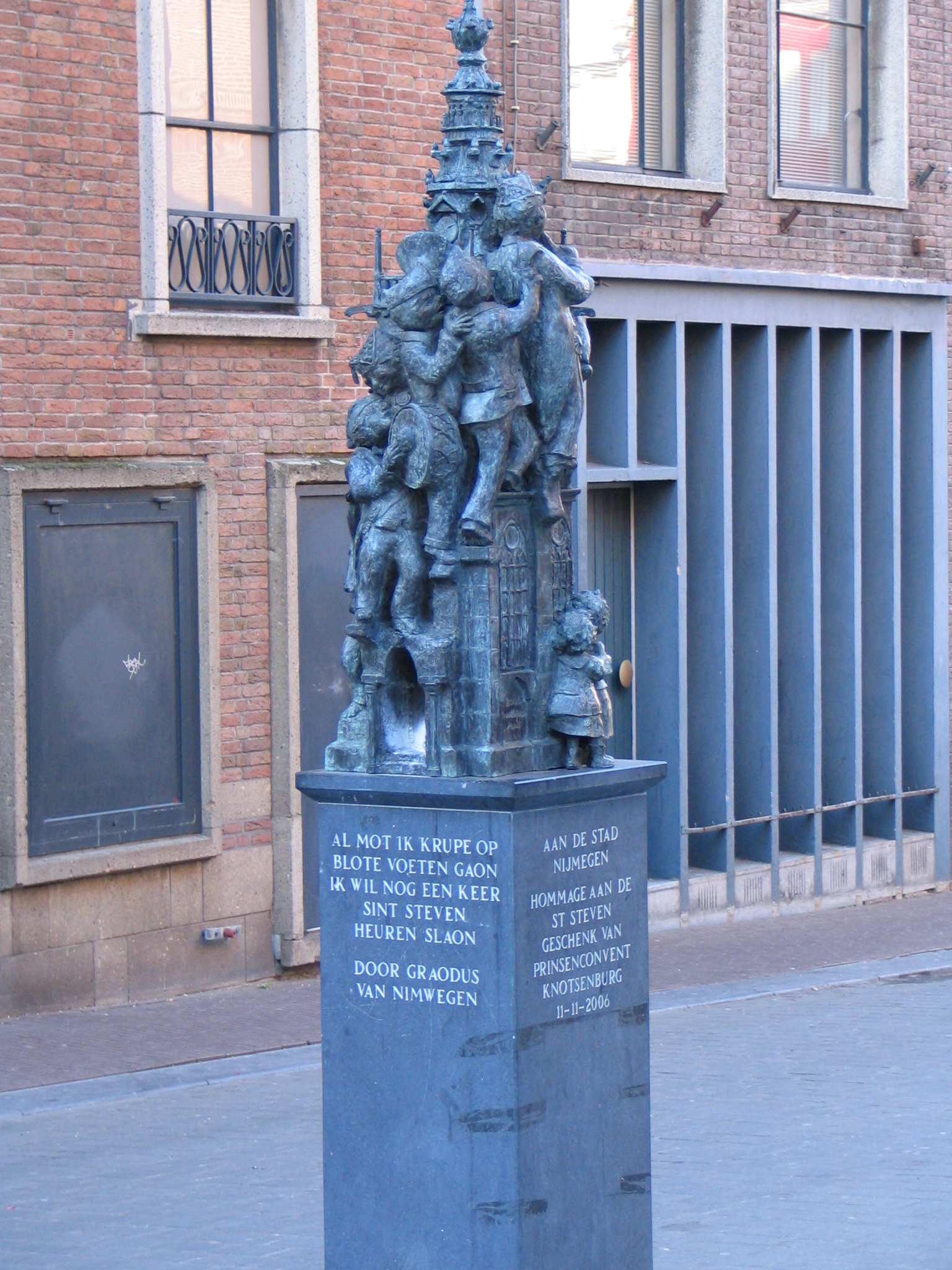
'Al mot ik krupe...'
Historic · 15 min
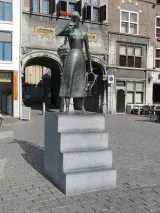
- Steven's Tower depicting a procession of Carnival revelers climbing, representing the Nijmegen Carnival song "Al mot ik krupe." The sculpture is a homage to the St.
- Steven's Tower and a gift from the Prinsenconvent to the city of Nijmegen on its 2000th anniversary.
- Created in 2006 by artist Toon Heijmans and signed as "fecit.".
© Wikimedia Commons
Coddy games passing through
-
3
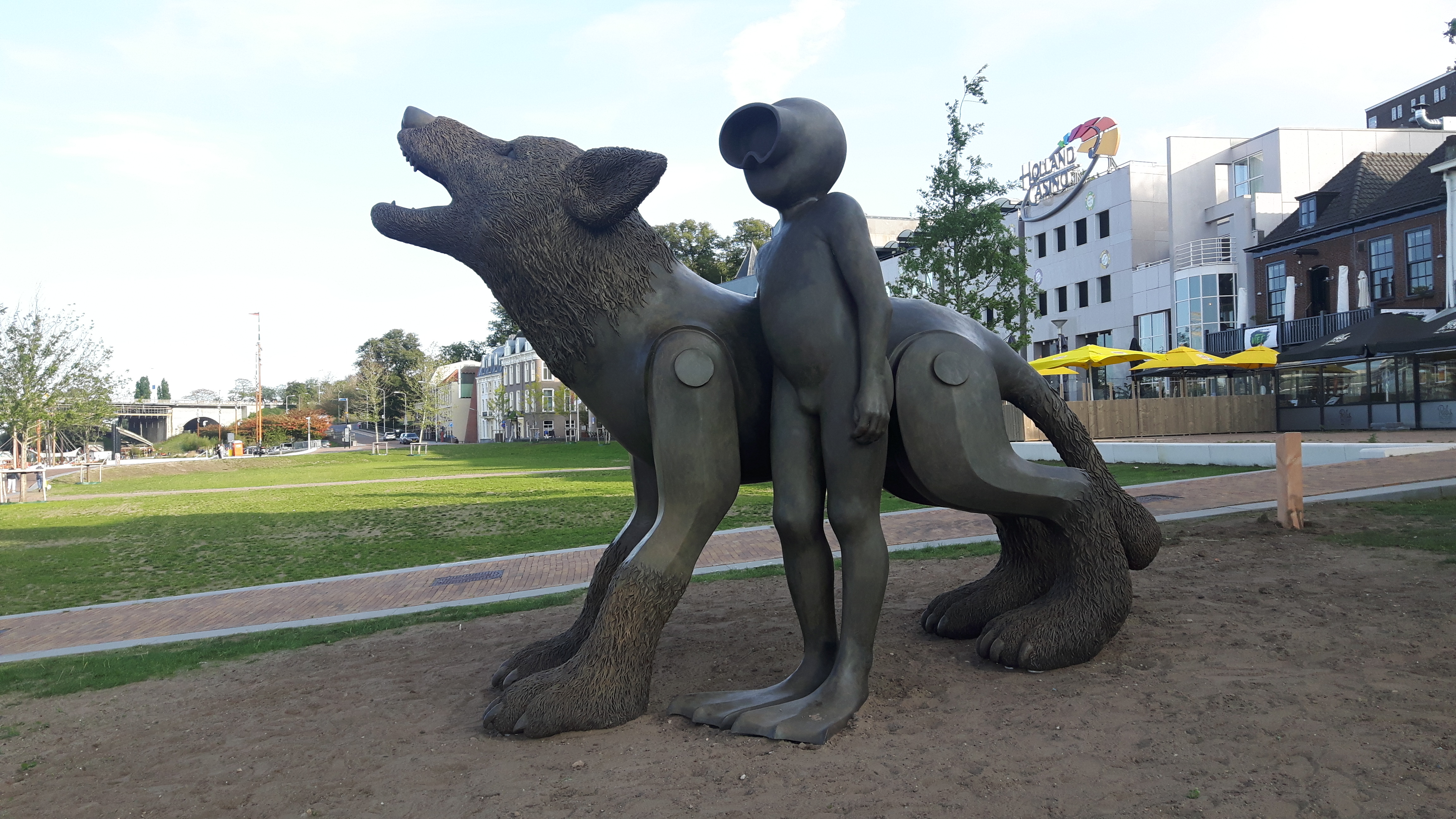
Waterwolf en Aquanaut
Historic · 15 min
- On September 19, the much-discussed artwork "Waterwolf and Aquanaut" by Space Cowboys (Albert Dedden and Paul Keizer) was revealed on Waalkade in Nijmegen. The 3.5-meter-high bronze sculpture pays homage to the new riverscape of Nijmegen and symbolizes the city embracing the Waal River again.
- It reflects the city's impressive history, the significance of water and the river, and the indomitable spirit of youth in the old city. The artists spent two years constructing the artwork in their Deventer studio, using materials like foam, cardboard, and clay.
- Bronsgieterij Kemner from Cuijk played a crucial role in casting the bronze sculpture. Kinderboekenschrijver Marloes Morshuis wrote a short story about Waterwolf and Aquanaut, accessible through a QR code at the site.
- The story is accompanied by a soundscape created by Peter Hendriks. The unveiling adds to the recent surge of new river-inspired artworks in the area, including "Gezicht van Nijmegen," "Kaaisjouwer," and now "Waterwolf and Aquanaut." Besiendershuis played a crucial role as the developer and mediator throughout the project.
- They were responsible for artistic guidance, fundraising, and overall organization.
© Wikimedia Commons
Coddy games passing through
-
4
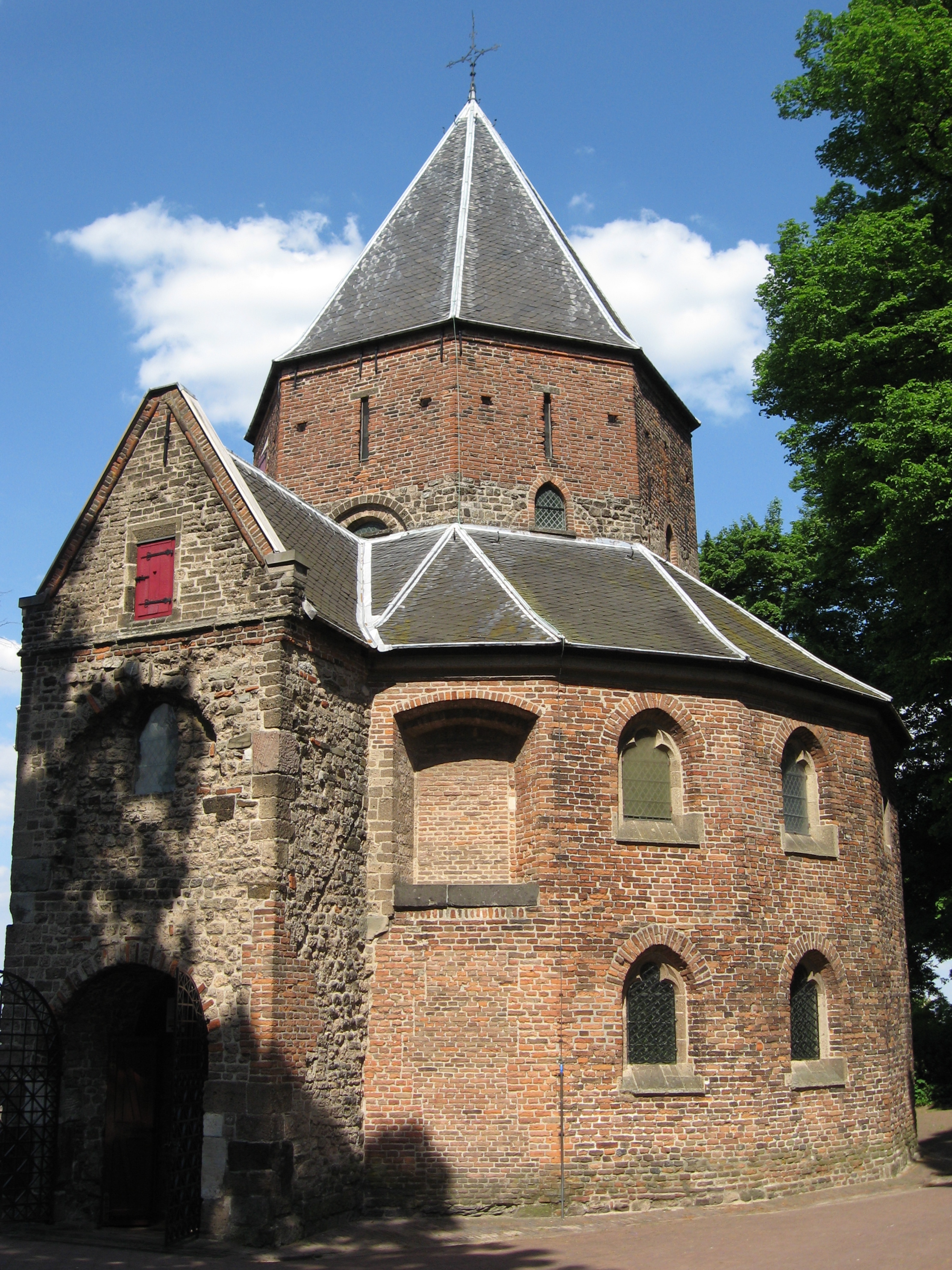
Sint Nicolaaskapel
Religion · 30 min
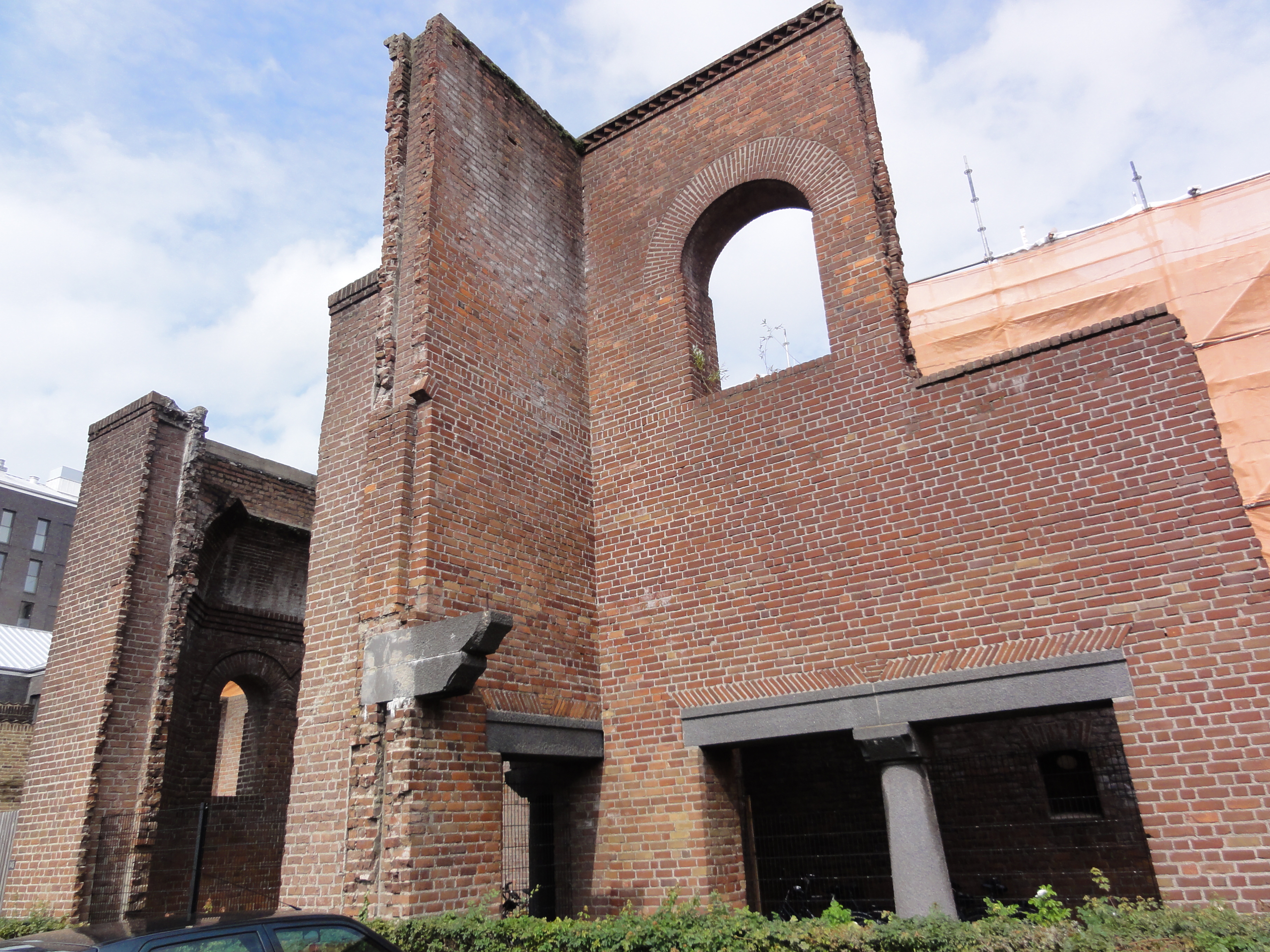
- The Sint-Nicolaaskapel, also known as Valkhofkapel or Karolingische kapel, is a chapel that dates back to around 1000.
- The chapel was built using the remains of the palatine chapel (paltskapel) of Charlemagne, who built a palace there in the 8th century.
- Over time, the exterior walls of the chapel have been modified and the octagonal core of the building has been raised with a defensive tower.
- Originally, due to its similarities to the palatine chapel in Aachen, the Sint-Nicolaaskapel was thought to date back to the 8th century, making it the oldest building in the Netherlands.
- This has been disproved.
- There are varying opinions on the origin of the chapel.
- Some sources name Theophanu of Essen as the founder while others argue it was built around 996 by Otto III for his mother, Empress Theophanu.
- The chapel is used for various purposes, including Greek Orthodox Church services, exhibitions and literary readings.
© Wikimedia Commons
Coddy games passing through


Day 2
10 stops
Morning
-
5
Karel de Grote College
45 min
- Karel de Grote College is a vocational-technical school in Nijmegen, Netherlands.
- It offers programs in a wide variety of fields, including business, engineering, hospitality & tourism, health care, computer science, and media & communication.
- With over 8,000 students and approximately 400 teachers, Karel de Grote College is one of the largest vocational-technical schools in the Netherlands.
- The school is known for its innovative approach to education and its emphasis on providing students with practical experience in their chosen field.
- Karel de Grote College also has a strong emphasis on internationalization and has exchange programs with many universities around the world.
Coddy games passing through
-
6
Vier Jaargetijden
Historic · 15 min
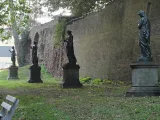
- The four cast iron statues represent the four seasons.
- They were cast to a design by French sculptor Mathurin Moreau.The statues represent the goddesses Flora (with budding branch, spring), Ceres (with ears of corn, summer), Pomona (with bunch of grapes, autumn) and Vesta (with firepot, winter).Originally the four statues were set up here in the green strip of Nassausingel, but in the 1960s they were moved to the Hunner Park as the middle of Nassausingel was converted into a parking lane.
- After the construction of the Charles Quint parking garage in 2012, the greenery of Nassausingel was restored and the ladies returned their original location.
© Wikimedia Commons
Coddy games passing through
-
7
St Peter Canisius Kerk
Religion · 30 min
- St Peter Canisius church in Nijmegen is a Roman Catholic Church located in the city centre.
- It is the oldest parish church in Nijmegen and was built in 1601 by the Jesuits.
- Its current form was designed by the architect J.P.F. van der Vlugt and was completed in 1932.
- The church is renowned for its Neo-Gothic interior with beautiful stained-glass windows and a magnificent rococo altar.
- The church is also home to a number of historical artifacts, including a 17th-century crucifix and a 17th-century statue of St Peter Canisius.
- Additionally, a number of important figures in Dutch history, including King Willem-Alexander and Queen Máxima, have been married in the church.
© Wikimedia Commons
Coddy games passing through
-
8
Symbool van Communicatie
Historic · 15 min
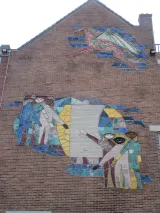
- This artwork consists of a relief on the facade of the old Chamber of Commerce building on the Mariënburg.
- Originally, the commission was issued in the form of a competition by the Chamber of Commerce.
- The condition specified was that the depiction should reflect the significance of world trade.The relief depicts individuals of different origins shaking hands.
- Above them flies the horse Pegasus: the symbol of progress.
- Trade is symbolized by an oval globe in the shape of a sailing ship.
- The white plane in the middle is the ship's sail.
- The artist himself says: ´The mixed people point out that trade and industry connects all continents and ultimately all people´.
© Wikimedia Commons
Coddy games passing through
-
9
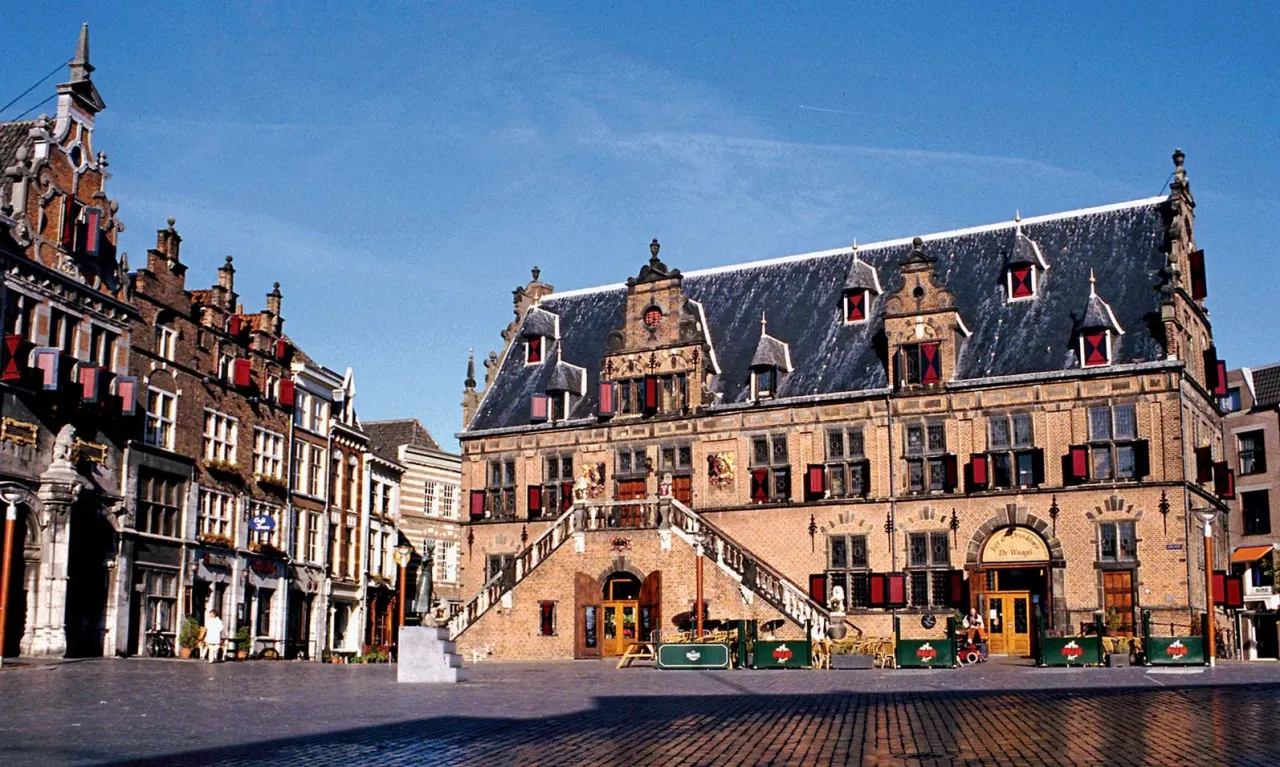
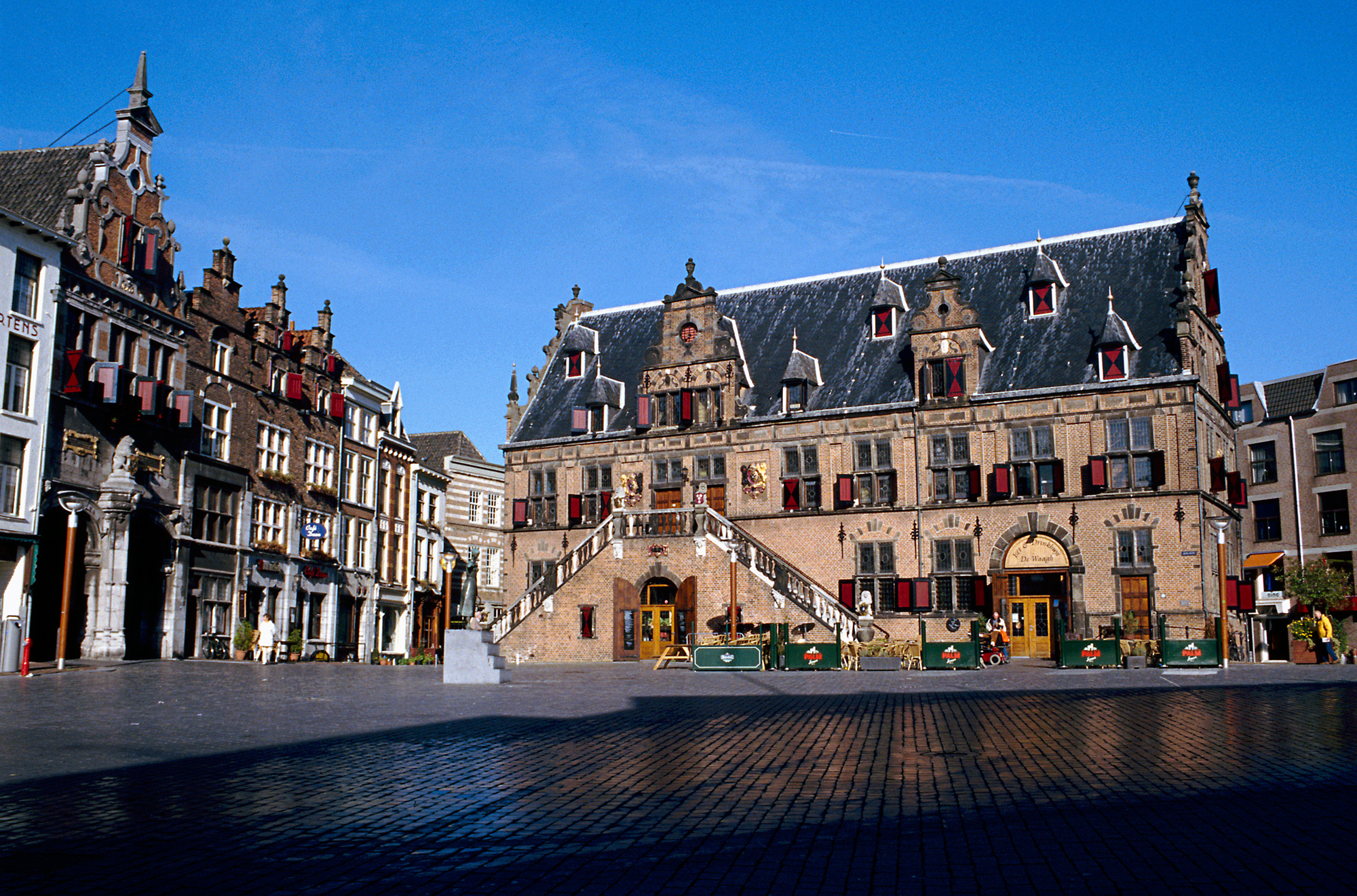
Waaggebouw
Historic architecture · 45 min
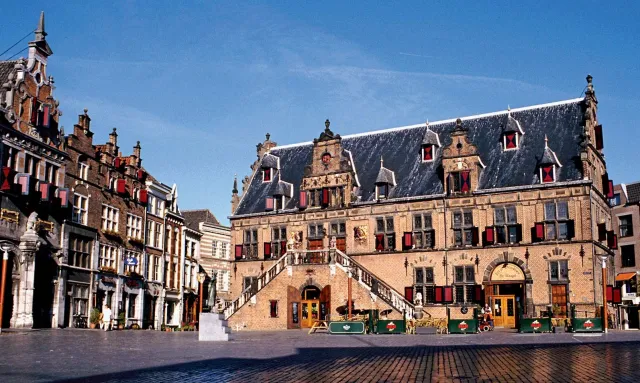
- De Boterwaag is a weigh house constructed around 1612-1613. The design was made by Cornelis Janssen van Delft and displays elements of Renaissance architectural style, similar to Hendrick de Keyser's work.
- A restoration took place in 1886, led by Jan Jacob Weve.
- The city weigh house was located on the right side (west side) of the building.
- The ground floor was a meat hall, equipped with ports for wagons and carts to drive in, and featured three cross rib vaults on pillars.
- The building temporarily housed several residences and until 1885, the main military guard of the city was located on the upper floor.
© Wikimedia Commons
Coddy games passing through
Afternoon
-
10
Anthonispoort
Fortifications · 45 min
- The Sint Anthonis or Maarten Schenckpoort is one of the few city gates in Nijmegen still standing, providing access to the city from the Waalkade.
- In 1589, Maarten Schenck besieged Nijmegen on behalf of the Republic.
- An attempt to take the city through Sint Anthonispoort failed as the citizens of Nijmegen confronted and repelled him.
- The citizens, waiting at the gate, forced Schenck and his troops into a panicked retreat.
- Unfortunately, Maarten van Schenk drowned in the river as his boat overturned due to his heavy armor.
- As an act of revenge, his decapitated and dismembered body was displayed – the head at Sint Anthonispoort and the remaining parts at other gates as a deterrent.
- In 1591, when Maurits van Nassau captured the city, he ensured Maarten van Schenk was buried with honor in the Sint Stevenskerk.
© Wikimedia Commons
Coddy games passing through
-
11
Mariken van Nieumeghen
Installation · 45 min
- "Mariken of Nijmegen" is a folktale from the Netherlands about a brave young girl who makes a pact with the devil in order to help her family.
- The tale of Mariken is a classic example of Dutch folklore, and is still popular today.
- The story follows Mariken, a young girl living in the city of Nijmegen who is forced to make a deal with the devil in order to help her family out of poverty.
- In exchange for riches, she must serve the devil for seven years.
- Through her courage and determination, Mariken ultimately defeats the devil and is rewarded with fame and fortune.
- The story serves as a reminder to never give up and to stay strong in the face of adversity.
© Wikimedia Commons
Coddy games passing through
-
12
Voormalig Weeshuis
Historic architecture · 45 min
- Natural stone frame with arched gateway surmounted by statuettes of orphans flanking a modern carved window, above which is carved coat of arms with a kneeling orphan on either side, mid 17th century.
- Beside the sidewalk an arched brick gate with blocks and masked keystone, giving access to a passage with archway, 17th century.
© Wikimedia Commons
Coddy games passing through
-
13
Grote of Sint-Stevenskerk
Religion · 30 min
- The Great Church or Sint-Stevenskerk is the oldest and largest church in Nijmegen, in the Dutch province of Gelderland.
- The church's history dates back to the seventh century, possibly linked to the Christianization campaign of Bishop Kunibert of Cologne.
- The current church was consecrated in 1272 by Albertus Magnus and administratively came under the authority of the chapter of the Apostles' Church in Cologne.
- The church underwent expansions repeatedly between the 13th to 16th centuries, including the addition of an impressive ambulatory.
- In 1591, the church became permanently Protestant except for a brief Catholic interlude around 1670.
- Today, the building is mainly used for weekly ecumenical church services, organ concerts, exhibitions, student association activities, and speeches.
© Wikimedia Commons
Coddy games passing through
-
14
Latin School (Nijmegen)
Historic architecture · 45 min
- De Latijnse School is a former Apostolic or Latin school.
- The school was built around 1544-1545 by architect Herman van Herengrave, in an early-Renaissance style.
- In 1842, the Latin school was transformed into a gymnasium, Stedelijk Gymnasium Nijmegen.
- Several institutions have been established in the building after the gymnasium.
- The building was restored in 1965 and has housed an urban planning advisory firm ever since.
- Today, the building is a state monument and bears the number 31170.
© Wikimedia Commons
Coddy games passing through
Practical details for visiting Nijmegen
Where to stay
For a two-day stay, choose central accommodation to limit walking between points of interest. The areas close to the historic center offer the best compromise between proximity, ambiance and access to transport. You'll find boutique hotels and guesthouses in streets close to the main squares, as well as simpler options like youth hostels just steps from the sites.
If you prefer a more residential atmosphere, look for a place a few minutes' walk from the gates of the old town: calm in the evening and guaranteed local hospitality. For a practical stay, favor establishments that offer luggage storage or a small kitchenette if you enjoy cooking. Between simple comfort and local charm, it's easy to find an address that fits your travel style.
Practical tips: book a room near bus stops if you plan to explore the surroundings, and check for parking availability if you're arriving by car. Finally, favor hotels that clearly display their check-in times and services to avoid surprises.
Getting around
On this short stay, walking is your best ally: most of the stops are close to one another and exploring on foot allows you to appreciate the architecture and the narrow streets. The local bus network remains useful for reaching peripheral neighborhoods or if you have time constraints. Look into day tickets for simplicity.
Biking is very common and convenient here; if you're comfortable, renting a bike for a few hours can save you time and open up different perspectives. Many accommodations offer rentals or can point you to local rental shops. For longer trips, combine bike and bus according to your wishes.
Keep in mind that some pedestrian zones and historic passages are more pleasant on foot than by bike. Favor walking around the main sites and biking to connect farther points. Practicality, flexibility and ecology should guide your transportation choice.
What to bring
Prepare according to the season, favoring light layers and a waterproof jacket if rain is forecast. Comfortable shoes are essential: cobblestones and old streets demand a good sole. Bring a small daypack for the day with water, a guide or a paper map if you like having a tangible reference.
If you plan to enter religious buildings or more formal places, a simple, modest outfit will be appreciated. Also consider a portable charger to keep your phone active all day, especially if you use maps or apps to navigate. For photographers, a small cleaning kit and rain protection for the camera are helpful.
Finally, bring some coins and cards for purchases and cafés. A compact umbrella and a scarf can turn a cool day into a pleasant moment. Comfort, preparation and versatility are the watchwords.
Advance reservations
For a two-day weekend, certain reservations will save you time. Book your central accommodation in advance to guarantee a comfortable choice. If you want to lunch or dine in popular restaurants in the center, a reservation is recommended, especially in the evening and on weekends.
Some guided tours, exhibitions or cultural events may require a reservation or a fixed-time ticket: check local offerings if a museum or show interests you. For groups or private tours, consider booking a few days ahead to avoid disappointment.
Another tip: if you plan to rent a bike, book it in advance during peak periods to ensure availability. Finally, for practical services like private parking or transfers, it's best to confirm their availability before you arrive. Organization, time-saving and serenity are the benefits of booking in advance.
Must-see extras
Beyond the main itinerary, consider taking time for lesser-known discoveries: small galleries, local artisan shops and hidden cafés that offer a different perspective on the city. Walks along secondary axes often reveal charming façades and scenes of daily life.
For a playful and different experience, try Coddy's urban escape games: they offer an interactive way to explore the city while solving puzzles. Perfect for groups or to add a touch of adventure to your weekend.
Finally, if the weather allows, look for workshops or occasional events that may take place during your stay. These off-the-beaten-path activities add color to your exploration and allow you to meet locals. Originality, interaction and memory are part of the joys of these extras.
Local delights
Local gastronomy is discovered in small cafés, markets and breweries. Look for places where the products are simple and well crafted: breads, cheeses, and seasonal plates are often highlighted. Cafés offer pastries and snacks ideal for a break between two visits.
Visit a local market if you find one during your stay: it's an opportunity to taste fresh products and observe the region's culinary habits. Small breweries and cozy restaurants serve comforting dishes, perfect after a day of walking.
For dinner, favor establishments that highlight local producers and homemade dishes. Local drinks and simple desserts complement a late-day meal nicely. Authenticity, freshness and conviviality are the watchwords for enjoying your stay.
When to visit Nijmegen and how much it costs
Best seasons
The city is pleasantly visited in spring and autumn when temperatures are mild and strolls remain enjoyable without high crowds. Summer brings more lively atmosphere and open terraces, which is ideal if you enjoy a festive vibe. Winter can offer welcome quiet, with fewer visitors and a more intimate atmosphere in cafés and museums.
Each season has its advantages: spring for softness and blooms, summer for activity and long evenings, autumn for more dramatic light, and winter for a calmer experience. Choose according to your taste for animation or calm and according to the activities you want to prioritize.
If you want to avoid the crowds, choose periods outside school holidays. Conversely, for a livelier nightlife and terraces, summer remains the best choice. Adapt your stay to the experience you seek.
Crowds
Crowds vary depending on seasons and weekends. Vacation periods and sunny days attract more visitors, especially around the main monuments and shopping streets. On weekdays, the city is often more relaxed, which makes visits and terrace breaks easier.
If you prefer calmer visits, plan your strolls early in the morning or late afternoon: the light is softer and the places are less crowded. Popular sites can remain enjoyable if you take your time and wander a little away from the main axes.
For a more local experience, avoid major announced events and look for off-peak slots for restaurants and visits. Time management and flexibility are your best assets in the face of crowds. Timing, flexibility and patience will ensure you a better stay.
Estimated budget
- Budget travel
- Economical budget: Opt for an inexpensive hostel or guesthouse, favor quick meals and markets, and use walking or cycling to get around. Look for free activities such as strolls in the historic center and exterior views of monuments. This will let you enjoy the city fully at a lower cost while remaining comfortable.
- Mid-range budget
- Moderate budget: Choose a well-located 2-3 star hotel, alternate between small local restaurants and a few nicer meals, and consider renting a bike for half a day. Purchase a day transit ticket if needed and leave room for a guided tour or a small paid activity.
- Comfort budget
- Comfortable budget: Favor a charming hotel or upscale property near the center, dine at reputable restaurants and book private guided tours or local experiences. Rent a bike or use mobility services as needed, and leave room for local shopping and comfortable extras like a private transfer.
Frequently asked questions about your stay in Nijmegen
Conclusion and travel tips
In two days, you will have the freedom to taste the essentials without rushing. The proposed itinerary prioritizes quietness, looking and gradual discovery: starting and ending at the same point on certain days leaves time to revisit your favorites. Take time to enter a chapel, sit at a terrace or follow a street that wasn't on the map.
Keep flexibility in your schedule: the best memory sometimes comes from an impromptu pause or a small find in a local shop. Bring comfortable shoes, a compact umbrella and a curious spirit. If you enjoy playful experiences, book a Coddy session to spice up the adventure.
Finally, let yourself be carried by the city's rhythm and return without obligation: Nijmegen lends itself well to revisits and aimless strolls. Have a great stay, and make the most of every moment to create your own personal itinerary.