








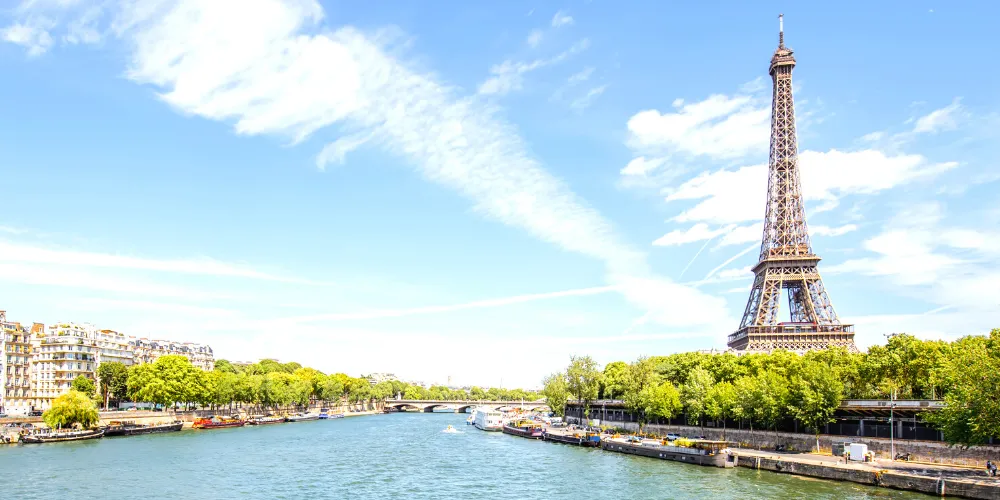
You will visit the most beautiful points of interest in Paris
A Day in Paris: a stroll between knowledge and calm waters
Start your day in the intellectual heart of the city, around the Paris-Sorbonne University and its neighbors. This stroll combines academic heritage, green spaces and historic squares, all at a pace that leaves room for observation and small discoveries. Here you'll find a pleasant alternation between studious streets and gardens conducive to a coffee break.
As the morning unfolds, the route takes you toward the Pantheon and then the Luxembourg Gardens, two stops that give the walk a dimension both solemn and serene. The contrast between the buildings marking intellectual history and the tree-lined avenues of the garden makes the morning gentle and inspiring. Take the time to listen to the city, watch the students, and soak in the atmosphere.
The afternoon explores corners perhaps less frequented by the usual routes: the Clock District, the National Archives and the charming Place des Vosges, before heading to the Port of the Arsenal to end the day along the water. These places offer contrasts of urban textures — cobblestones, façades, small squares — perfect for unhurried strolls and for authentic photos.
This day is designed to be walkable with a few short crossings by public transport if needed. The itinerary prioritizes discovery on foot, breaks in gardens, and the possibility to sit in a café to watch life go by. You will leave this day with the feeling of having touched several facets of the city: knowledge, art of living, and riverside calm.
Day-by-day summary
Morning: Start near the Paris-Sorbonne University, then go through the Sorbonne Observatory and the Square Samuel-Paty before reaching the Pantheon. End the morning with a stroll in the Luxembourg Gardens, ideal for a break and a coffee.
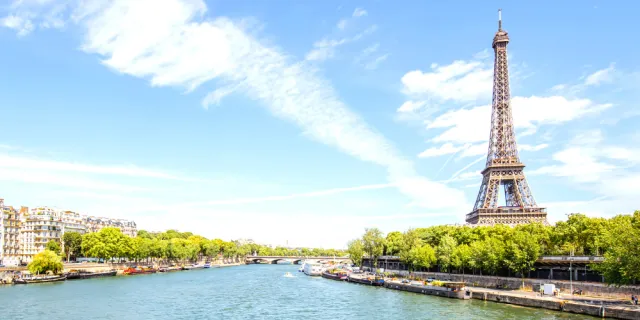
Afternoon: Resume your route toward the Clock District and explore the surroundings of the National Archives. Make a stop at the Georges-Cain Square, then cross to the luminous Place des Vosges. To close the day, head to the Port of the Arsenal where the evening light and boats offer a lovely conclusion to the stroll.
This plan leaves room for unexpected stops, a lunch in a neighborhood bistro or a detour to a bookstore. The key is to keep a comfortable pace: each place deserves at least 20–30 minutes to be enjoyed.
Day 1
10 stops
Morning
-
1
Louvre Museum
45 min
- Inaugurated in 1793, the Louvre is one of the three largest art museums in the world, along with the Hermitage Museum and the National Museum of China.
- The museum houses more than 500,000 works, including La Joconde, the Venus de Milo and the Code of Hammurabi.
- The Louvre Palace, which houses the museum, is a former royal residence.
- The museum is recognizable by the glass pyramid in its reception hall, erected in 1989.
- The Louvre Museum, which houses the museum, is a former royal residence.
Coddy games passing through
-
2
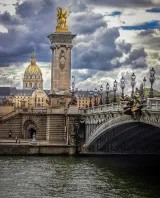
Alexandre III Bridge
45 min
- This steel-arched bridge crosses the Seine and links the esplanade des Invalides and avenue Winston-Churchill, where the Petit Palais and Grand Palais are located.
- It is named after the Russian Tsar Alexander III.
- It was built between 1896 and 1900 in the Beaux-Arts style with Art Nouveau lamps, cherubs, nymphs and winged horses.
- It was inaugurated in 1900 for the Paris Universal Exhibition.
Coddy games passing through
-
3
Marly's horses
45 min
- These 2 sculptures represent rearing horses struggling with their grooms, expressing the struggle of wild forces.
- They were sculpted in Carrara marble in 1745 by Guillaume Coustou.
- They were commissioned by Louis XV to adorn the Marly trough, at the entrance to the chateau park.
- In 1794, the sculptures were moved here, to the Place de la Concorde.
- In 1984, copies in reconstituted marble were installed.
- The originals are preserved in the Louvre Museum. .
Coddy games passing through
-
4
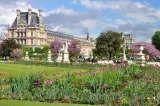
Tuileries Gardens
45 min
- This is the oldest and largest garden in Paris.
- It was created in the 16th century by Catherine de Médicis as an Italian-style garden to escape the stressful atmosphere of the Louvre.
- Some of the garden's trees even date back to the 1st Empire.
- The Jardin des Tuileries is an open-air museum with remarkable sculptures signed by renowned artists such as Rodin, Millet, Levesque and Waldeck-Rousseau.
- The garden is also home to the Musée de l'Orangerie and the Musée du Jeu de Paume.
- The Jardin des Tuileries carousel offers musical rides on wooden horses and ostriches.
- Don't miss the sailboats you can sail in the garden's octagonal basin.
Coddy games passing through
-
5
Place Vendôme
45 min
- Place Vendôme is one of the city's five royal squares, along with Place des Victoires, Place de la Concorde, Place des Vosges and Place Dauphine.
- It was created in 1686 and has been renamed several times over the years.
- At the center of the square is the Vendôme column, erected in 1810, destroyed by the population during the 1871 revolts and subsequently rebuilt.
- Before being associated with jewelry, the Place Vendôme was a central location for Parisian elegance, home to numerous couturiers and milliners.
- On the square, the Hôtel de Bourvallais houses the Ministry of Justice.
- The square is located just north of the magnificent Jardin des Tuileries.

Afternoon
-
6
Luxor Obelisk
45 min
- The obelisk comes from the Temple of Amun in Luxor, Egypt, and was erected in Paris in 1836.
- It is the oldest monument in Paris, predating the founding of the capital.
- It was transported from Egypt to France aboard the ship Luxor, built especially for the occasion.
- The obelisk is 23 meters high and weighs 222 tons, with a pedestal weighing 240 tons.
- It is made of syenite, a pink rock from Aswan, Egypt.
- The obelisk's pedestal is made of five blocks of pink granite from Brittany.
- The obelisk is made of pink granite from Brittany.
Coddy games passing through
-
7
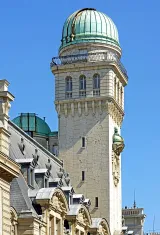
Astronomy tower of the Sorbonne
45 min
- The Sorbonne Observatory is a former astronomical observatory.
- The observatory is located on the rooftop of the Sorbonne.
- It houses an observational telescope belonging to the Société astronomique de France (SAF) and public observations are organized there.
© Wikimedia Commons
-
8
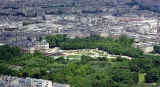
Jardin du Luxembourg
Landmark · 45 min
- The Luxembourg Garden is a public garden created in 1612 at the request of Marie de Medici and now belonging to the Senate.
- Its name is inspired by the former mansion of the Hôtel de Luxembourg.
- It houses the Palais du Luxembourg, seat of the French Senate, and the Petit Luxembourg.
- The Petit Luxembourg or Hôtel de la Présidence has been the residence of the President of the French Senate since 1825.
- It is adjacent to the Luxembourg Palace.
- In 2022, the garden was listed as the most beautiful in Europe and the third most beautiful in the world.
© Wikimedia Commons
-
9
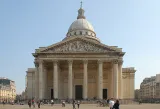
Panthéon
Religion · 30 min
- The Pantheon is a neoclassical mausoleum located on Mont Sainte-Geneviève, which has become the burial place of great French personalities.
- Its architecture (from 1758), as well as its name, is inspired by the Pantheon in Rome, which was a monument dedicated to the veneration of the gods and was reused as the tomb of illustrious personalities.
- Pantheon's architecture mixes different styles, including Gothic, Byzantine, Classical and Greco-Roman. Among those buried in the Pantheon are Voltaire, Rousseau, Victor Hugo, Émile Zola, Jean Jaurès, Jean Moulin, Louis Braille, Jean Monnet, Sadi Carnot, Pierre and Marie Curie, André Malraux and Soufflot, its architect.
- In 1851 Léon Foucault installed his famous pendulum in the Pantheon because the great height of the building facilitated the experiment.
- Through this experiment he succeeded in demonstrating the rotation of the Earth and the existence of the Coriolis force.
- A replica of the pendulum has been installed in the Pantheon since 1995.
© Wikimedia Commons
-
10
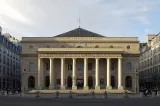
Odéon-Théâtre de l'Europe
Theatres and entertainments · 45 min
- The Théâtre national de l'Odéon, now called Odéon-Théâtre de l'Europe since 1990, is a public theater.
- It has witnessed many cultural and political events over the years.
- Opened in 1782, its architecture is neoclassical.
- Home to the premiere of The Marriage of Figaro in 1784.
© Wikimedia Commons
Practical details for visiting Paris
Where to stay
For a day like this, choose central accommodation to reduce travel. The Latin Quarter neighborhoods, near the Luxembourg Gardens, or around the Seine offer direct access to the sites mentioned. Another practical option: the Marais, which places the Port of the Arsenal and the Place des Vosges within walking distance. Expect a varied offering: small charming hotels, guesthouses and rental apartments. In terms of standard, an economical budget finds simple and clean rooms, a mid-range budget allows for comfortable 3-star hotels, and for premium comfort you will have access to larger establishments with top-notch service and location. Prices vary by season and proximity to attractions: book within a 15–25 minute walk from your starting point for greater flexibility. If you prefer nightlife, choose the Marais; for a quieter, more academic vibe, opt for the Latin Quarter.
Getting around
Walking is the best way to follow this itinerary: distances between points are often short and the city reveals itself slowly. For longer journeys, the metro remains fast and reliable, with stations near the Latin Quarter and the Marais. The bus offers an interesting tourist alternative, allowing you to observe the city in motion. Bike-sharing and scooters can shorten the gaps between two stops: handy if you want to vary the pace. Remember to check bike availability and respect pedestrian zones. For water activities, the Port of the Arsenal is within walking distance from the Place des Vosges; if you're in a hurry, a short taxi or ride-hailing ride remains a simple option. Keep a map or a transit app to save time and favor walking to fully enjoy spaces like the Luxembourg Gardens.
What to bring
Adapt your bag to the season and to the day primarily pedestrian. Prepare comfortable and already worn shoes: they will be your best ally for wandering the cobbles. Bring a small reusable water bottle and a compact umbrella if the weather is uncertain. For photography and documentation, a smartphone with enough battery or a small power bank will spare you from cutting short your shots. If you visit iconic sites like the Pantheon or the archives, plan a respectful outfit and a practical bag to store brochures and any purchases. In summer, think of a hat and sunscreen; in cold seasons, favor a warm layer, a scarf and gloves. Don’t forget the essentials: ID, bank card and a transit card or a mobile app to buy tickets if needed. A small notebook can improve the experience if you enjoy jotting down impressions and addresses.
Advance reservations
For a smooth day, book what can create lines or limit available spots. If you want to visit specific exhibitions or enter places with regulated access, consider buying skip-the-line tickets in advance. Booking a restaurant for lunch or dinner is advised, especially around the Place des Vosges and in the Marais where tables fill up quickly. If you plan to attend a show in the evening, lock your seats in advance to avoid disappointment. For visitors who prefer themed guided tours (history, architecture, gastronomy), a reservation is often necessary. Finally, if you travel in a group or with a tight pace, booking a taxi or transfer at the start or end of the day can offer more peace of mind. These precautions let you keep time to wander without stress.
Must-see extras
If you have a bit of extra time, indulge in some detours: wander the Marais alleys, discover the little bookstores and galleries around the Latin Quarter, or climb to viewpoints for a different panorama of the city. Don’t miss the lesser-known gardens and small squares that punctuate the itinerary, perfect for a quiet pause. For something original, explore Coddy's urban escape games which offer outdoor playful routes and bring an interactive dimension to your discovery. Other experiences to consider: a short canal cruise to see the city from the water, or a visit to the archives if you enjoy history. These extras add variety to the day and allow you to create more personal memories.
Local delights
The day offers many culinary opportunities: start with breakfast at a neighborhood bakery and try a fresh pastry. For lunch, opt for a traditional bistro or a small brasserie near the Luxembourg Gardens to enjoy simple and well-presented dishes. In the afternoon, a tea room or cafe around Place des Vosges is ideal for a sweet break. Do not miss local specialties: cheeses, charcuterie, and artisanal pastries. Neighborhood markets often offer fresh products and stalls where you can assemble a picnic for the garden. For dinner, explore the small spots in the Marais or the Latin Quarter offering seasonal dishes. If you enjoy food-and-drink pairings, let a waiter guide you to a wine selection. These tasty stops perfectly complement the day.
When to visit Paris and how much it costs
Best seasons
Each season brings a different color to the city. Spring is very pleasant: mild temperatures and blooming in the gardens, perfect for enjoying the Luxembourg Gardens and the squares. Summer offers long, lively days, but popular sites can be busier; consider starting early to avoid heat and crowds. Autumn brings golden light and warm hues to the parks, ideal for photos and calm strolls. Winter is quieter and often cheaper for accommodation; strolls can be cooler, but cafés and brasseries offer warm refuges. Whatever you choose, know that each season has its advantages: spring and autumn for weather/crowd balance, summer for activity, and winter for a more intimate experience.
Crowds
Peak periods generally correspond to school holidays and the summer months. Sites like the Pantheon and the gardens can be busier then: prefer morning visits to benefit from a bit more tranquility. The less-touristy neighborhoods included in this itinerary, such as the Clock District or Georges-Cain Square, stay often quieter even in peak season. Evenings and late afternoons at the Port of the Arsenal offer a more relaxed atmosphere, even in busy periods. If you are seeking a crowd-free visit, target shoulder seasons (early spring or autumn) and avoid local holiday weekends if possible. Planning major visits early in the morning helps enjoy the places with fewer people.
Estimated budget
- Budget travel
- <p>Economical budget: Plan inexpensive accommodation options such as hostels or simple rooms on the outskirts, cook or opt for bistro meals, and favor walking to reduce transport costs. Many outdoor attractions are free, which helps keep the budget in check.</p>
- Mid-range budget
- <p>Mid-range budget: Choose a central 2–3 star hotel or an apartment, mix bistro meals with a few neighborhood restaurants, and use the metro and a few taxis to save time. This level allows nice flexibility for extras like a small guided tour.</p>
- Comfort budget
- <p>Comfort budget: Choose a well-located 4-star hotel or a premium guesthouse, dine in renowned restaurants and book private tours or unique experiences. Comfort often includes little touches (service, proximity to sites) that greatly enhance the experience.</p>
Frequently asked questions about your stay in Paris
Ending the day beautifully
The loop from the Paris-Sorbonne University to the Port of the Arsenal invites you to mix curiosity, rest and discovery. As you traverse these places, you will touch on different facets of the city: intellectual, historical, residential and riverside. The ending by the water offers a moment of calm to reread your impressions and note addresses to keep for a future visit.
Keep in mind that the itinerary is flexible: it welcomes detours, extended stops in a garden, or an impromptu tasty break. If you return, you will see that every visit reveals new details and the neighborhoods always offer unexpected finds. Take time to savor each stop and let the city surprise you.
Happy discoveries and a lovely walk: may this day make you want to come back again and again, with new curiosities to explore.