



Visit Rome in 2 days
19 must-see POIs, optimized routes and anecdotes.
48 hours to taste Rome's essence
Starting your exploration at the Barcaccia Fountain and finishing at St. Peter's Square is embracing an itinerary that unfolds history, art and Roman life as a thread. In two days, you can't see everything, but you can feel the city deeply: the narrow streets that lead to the squares, the ancient façades, the small churches brimming with paintings, and of course the fountains and monuments that have made Rome famous. This route concentrates the best of the historic center, organized to walk without wasting time and to keep moments of pause and discovery.
The first day plunges you into iconic places around the Quirinal and the Pantheon: fountains, imperial columns and palaces. The second day climbs toward the Capitoline Hill and the splendor of St. Peter's Square, with stops that mix Baroque art and urban panoramas. I designed this itinerary to favor walking, the proximity between sites and the highlights accessible on foot, while leaving room for a sunlit coffee or an improvised gelato.
As you read the following paragraphs, you'll find a day-by-day summary, practical tips on where to sleep, how to get around, what to pack and what it's best to reserve. I also include off-the-itinerary suggestions for those who want to extend their discovery: small churches, viewpoints and local experiences. Expect lively alleyways, a few welcome stairs for cardio, and surprises behind every corner.
Traveling in Rome for two days requires some organization but also leaves room for the unexpected. Follow the city's rhythm, take time to enter a museum or sit on a fountain edge. You will leave with strong images and the very natural desire to come back. Buon viaggio!
Loading map...
You will visit the most beautiful points of interest in Rome

Condensed itinerary: 2 days in Rome
Day 1: Morning around the Quirinal and the institutions – start at the Barcaccia Fountain, then head to the Bibliotheca Hertziana and the Villa Medici for an initial immersion in art. Pass in front of the Montecitorio Palace and the Column of Marcus Aurelius before descending toward the Trevi Fountain. The afternoon centers on the historic center: Trevi Fountain, Temple of Hadrian, Obelisk of Montecitorio, Pantheon and the richly endowed Church of Saint Louis des Français. The itinerary favors walking to enjoy the alleyways and squares.
Day 2: Morning at the heart of power and the great squares – start with the Basilica of the Holy Apostles, then reach Palazzo Venezia and the Church of the Gesù. Continue to the Altare della Patria and the Piazza del Campidoglio for views over the city and an immersion in history. The afternoon is more contemplative: San Salvatore in Lauro, Santa Maria della Pace, the Fountain of the Four Rivers and the final stroll that leads you to St. Peter's Square. Plan coffee breaks and the flexibility needed to visit the interiors of the churches.
Day 1 - Rome
9 POIs to discoverDay 1 - Morning à Rome
5 Points of interest - Duration : 3h00 - Distance : 1.7 km - Walking : 0h22
© Wikimedia Commons
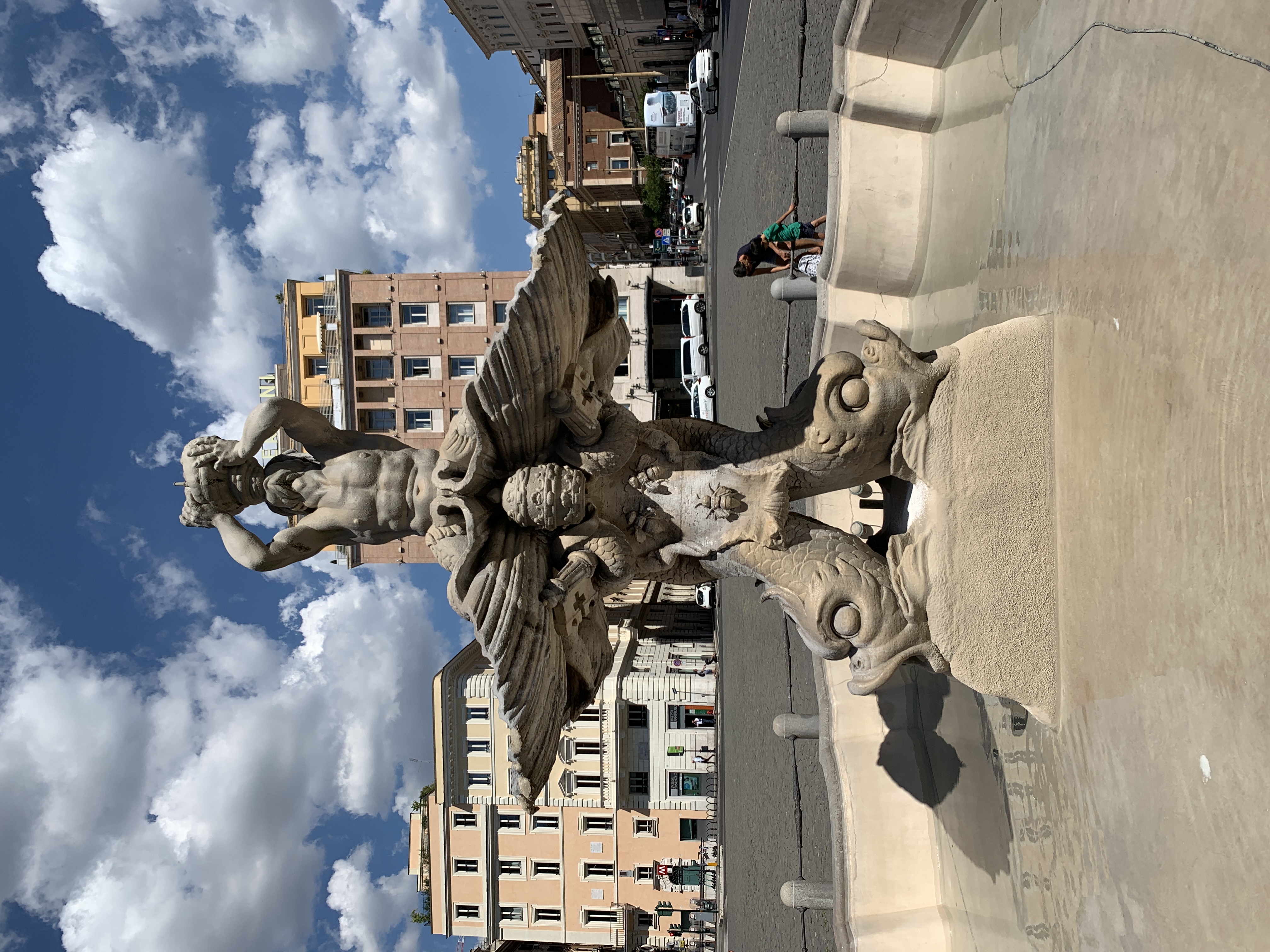
Triton Fountain
- � The Triton Fountain is the work of Gian Lorenzo Bernini, commissioned by Pope Urban VIII Barberini.
- The fountain was created as a result of the new aqueduct of Acqua Paola developed in the 1610s, which allowed for further fountains to be built around the city.
- Bernini designed the Triton Fountain in 1642-43, contributing to the cultural life of the area.
- The iron railings that surround the fountain were added in the 19th century due to increasing vehicle traffic in the square.
- The fountain has gone through various conservation and restoration efforts, the latest of which was completed in 2013.
- The Triton Fountain, entirely carved from travertine, depicts four dolphins supporting a large shell from which Triton, the sea god, rises.
- It symbolically highlights the triumph of the Barberini family.

© Wikimedia Commons
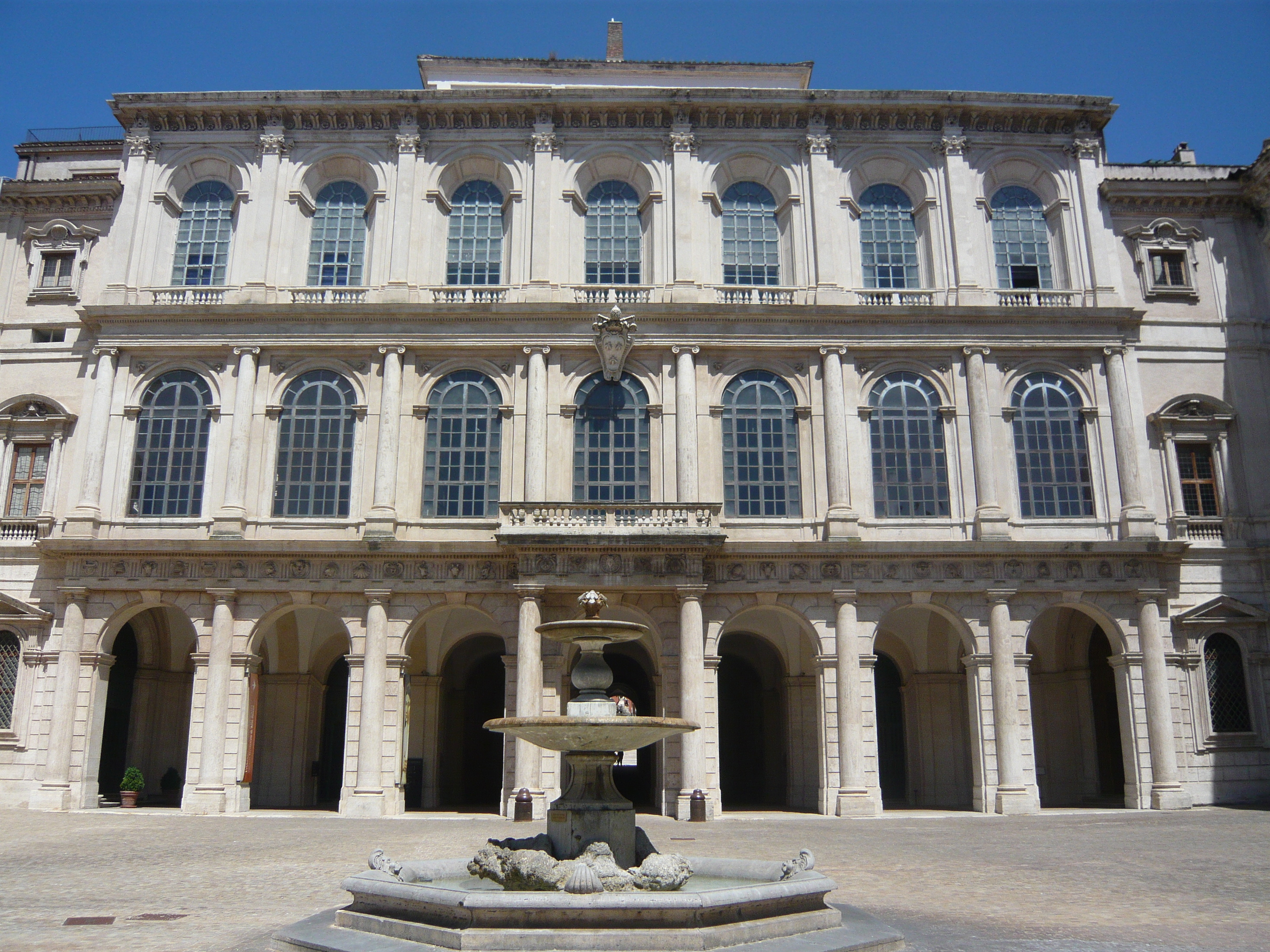
Palazzo Barberini
- Palazzo Barberini, constructed between 1625-1633, houses part of the Galleria Nazionale d'Arte Antica and the Italian Institute of Numismatics.
- It contains numerous significant artworks from artists such as Filippo Lippi, Raffaello, Tiziano, Tintoretto, El Greco, Holbein, Caravaggio, Guido Reni, and Guercino.
- The palace was once a major source of inspiration for the Barberini Palace in Potsdam, Germany in the 18th century.
- The palace has a long history of hosting opera, with various productions performed there throughout the 17th century.
- Its design incorporated both a city palace and a suburban villa, complete with vast gardens and expansive views.
- The state purchased the building from the Barberini heirs in 1949 and it underwent a large restoration project with the aim of becoming a comprehensive national gallery.
© Wikimedia Commons
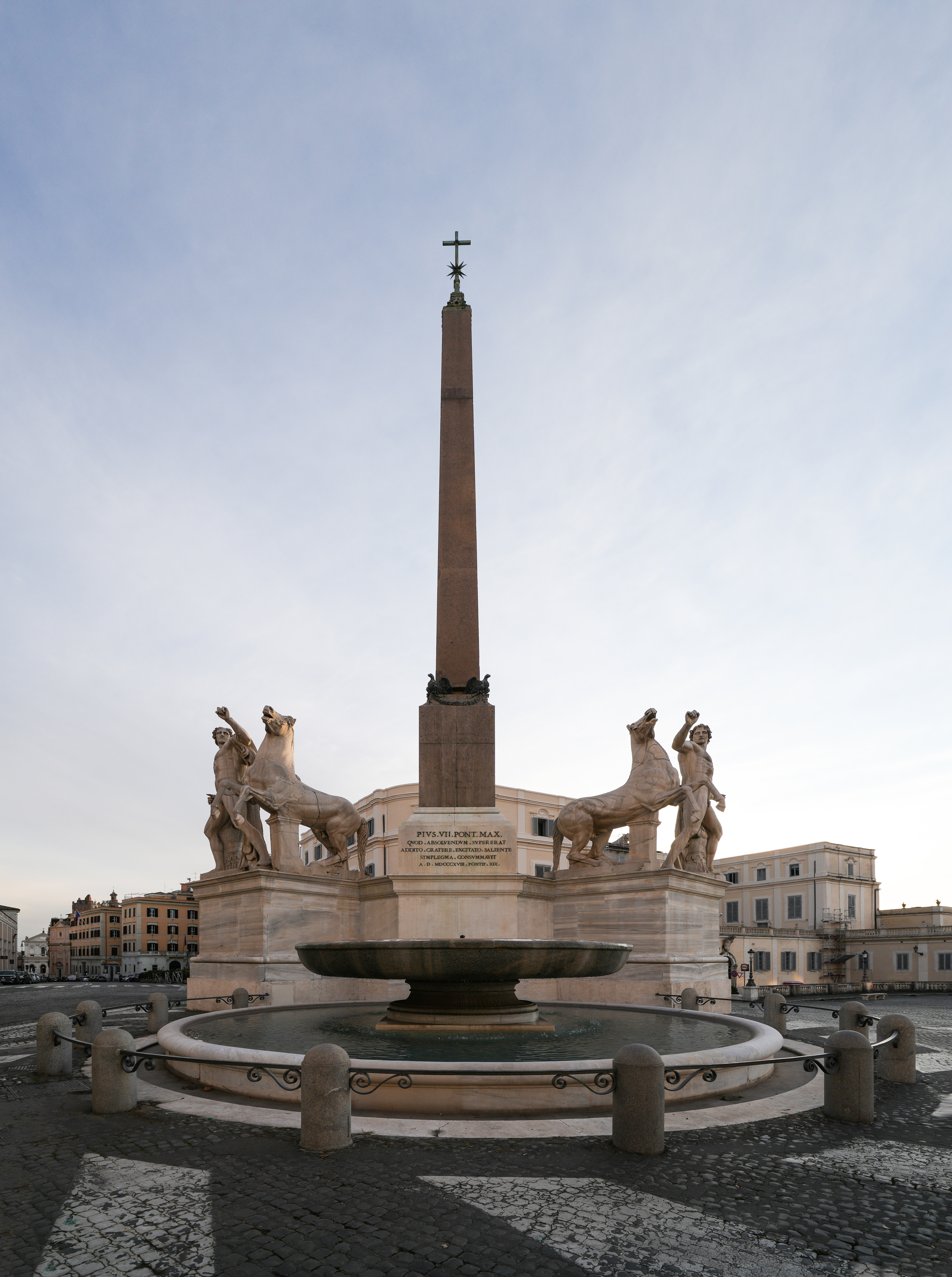
Fontana dei Dioscuri
- The Fontana dei Dioscuri was completed in 1587 following the restoration of the ancient Alexandrian aqueduct, renamed "Acqua Felice".
- The works for a secondary underground branch of the aqueduct were initiated to ensure water supply to the Viminale and Quirinale hills.
- Domenico Fontana was entrusted with the task to create the fountain in front of the summer residence of the Pope, which was still under construction at the time.
- The fountain was composed of a four-lobed basin, with a pillar supporting a basin from which water fell, all placed at the bottom of the imposing marble group of the Dioscuri In the second half of the 17th century Pope Alexander VII thought about relocating the fountain, but the idea was never realized.
- In 1782, the entire square underwent a reconstruction project, in which a new position for the fountain was also arranged; the statue was eventually replaced with a circular granite basin.
© Wikimedia Commons
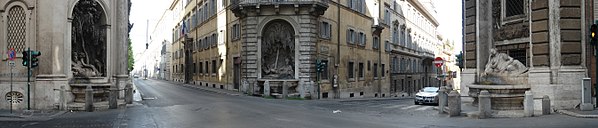
Quattro Fontane
- Quattro Fontane is an intersection in Rome featuring four fountains, giving the intersection its name as well as the name to the related street and the Church of San Carlo at the Quattro Fontane.
- The four fountains were built between 1588 and 1593, designed in rectangular niches of varying sizes and carved from travertine stone. From the intersection, it is possible to see the Obelisco Esquilino at Santa Maria Maggiore, the Obelisco Sallustiano at Trinità dei Monti, the Obelisco del Quirinale, and the michelangiolesca inner facade of Porta Pia.
- Each fountain is unique, with two representing bearded male figures as allegories of the Tiber and Arno rivers, and two feminine figures representing Diana and Juno.
- The two male figures symbolize Rome and Florence, while Diana and Juno represent Loyalty and Strength respectively.
- The fountains were privately funded, two by Muzio Mattei and two by Monsignor Grimani and Giacomo Gridenzoni.
© Wikimedia Commons
Quirinal Palace
- The Quirinal Palace is the official residence of the President of the Italian Republic.
- Construction of the palace began in 1574 at the initiative of Pope Gregory XIII.
- Many important artists, including Pietro da Cortona, Domenico Fontana, Ferdinando Fuga, and Carlo Maderno, participated in its construction and design.
- The palace initially housed popes, later becoming an Italian royal residence in 1870 until 1946.
- The palace covers an area of 110,500 m2, making it one of the largest palaces in Europe and one of the largest state leader residences in the world.
- The Quirinal Palace houses several artistic collections, including tapestries, paintings, statues, old carriages, clocks, furniture, and porcelains.
Day 1 - Afternoon à Rome
4 Points of interest - Duration : 2h00 - Distance : 1.2 km - Walking : 0h15
© Wikimedia Commons
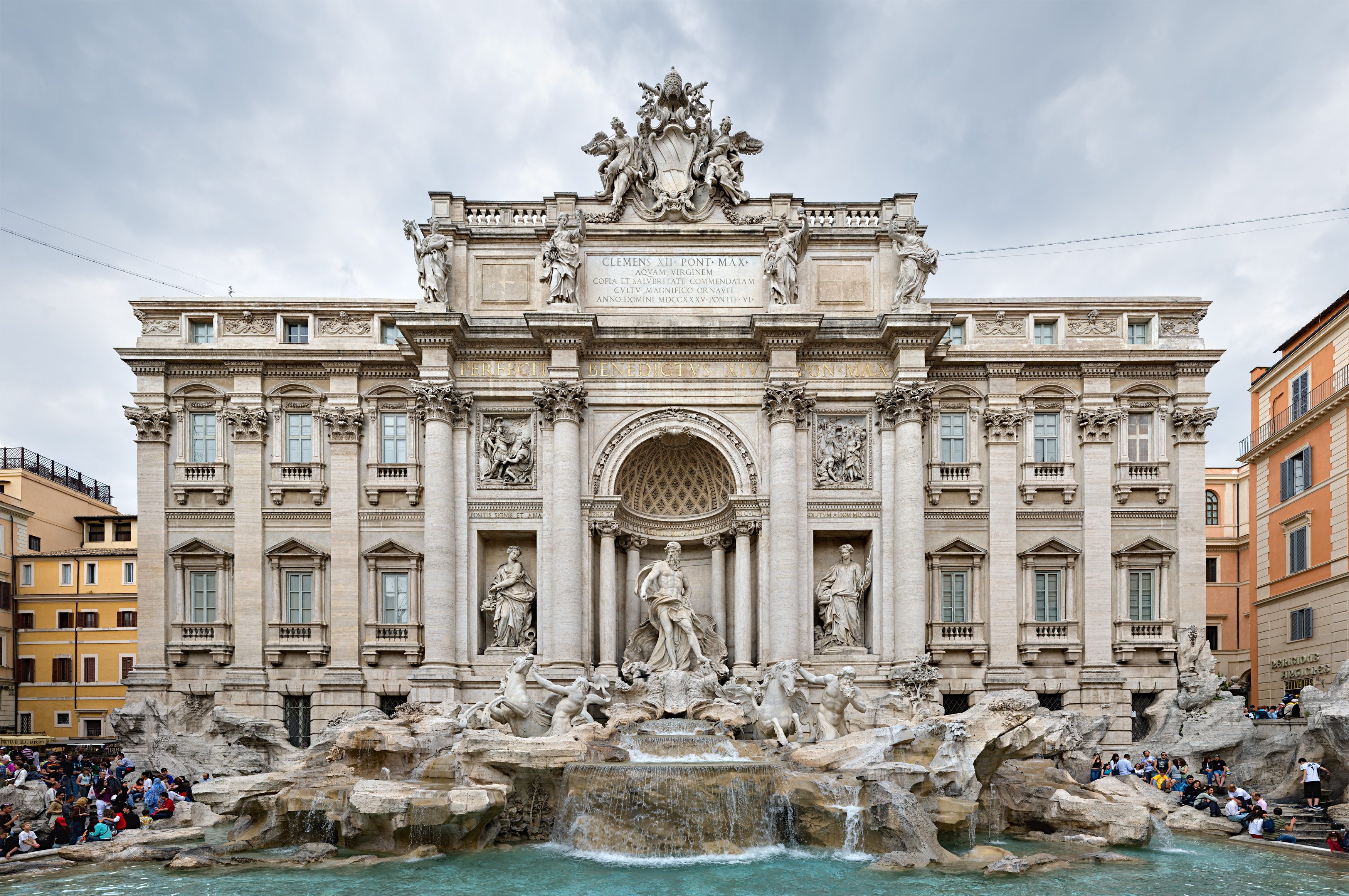
Trevi Fountain
- The construction of the fountain took place between 1732 and 1762, being designed by architect Nicola Salvi, although, more artists such as Pietro Bracci, Filippo della Valle and Giovanni Pannini contributed to its creation.
- The fountain is made of travertine and marble, with a width of 49.15 meters and a height of 26.30 meters.
- The Trevi Fountain is known for its impressive array of sculptures and its triumphal arch.
- There is a tradition of throwing coins into the fountain, which is believed to ensure a return to Rome and, depending on the number of coins thrown, may bring romance or marriage.
- The collection of coins thrown into the fountain is used for charitable purposes and for the maintenance of cultural heritage.

© Wikimedia Commons
Fontana della Barcaccia
- La Fontana della Barcaccia is a fountain in Rome designed in the shape of a boat.
- The fountain was created by Pietro Bernini, assisted by his son, Gian Lorenzo in 1629.
- Its unique design was a solution to overcoming water pressure issues from the Vergine aqueduct at that location, creating a spectacle where water flows over the sides of the boat into the surrounding basin.
- The design was potentially inspired by the sight of a dry-docked boat left by the flooding of the Tiber River in 1598.
- It could also refer to a type of transport boat used in ancient Rome.
- The fountain has suffered two acts of vandalism, one in 2007 and another in 2015, which have significantly damaged the monument.
- Several restoration efforts have been attempted over the years, to preserve and restore the fountain's integrity.
- The most recent restoration was in 2013-2014, which was funded by a private donation of 209,960 euros.
© Wikimedia Commons
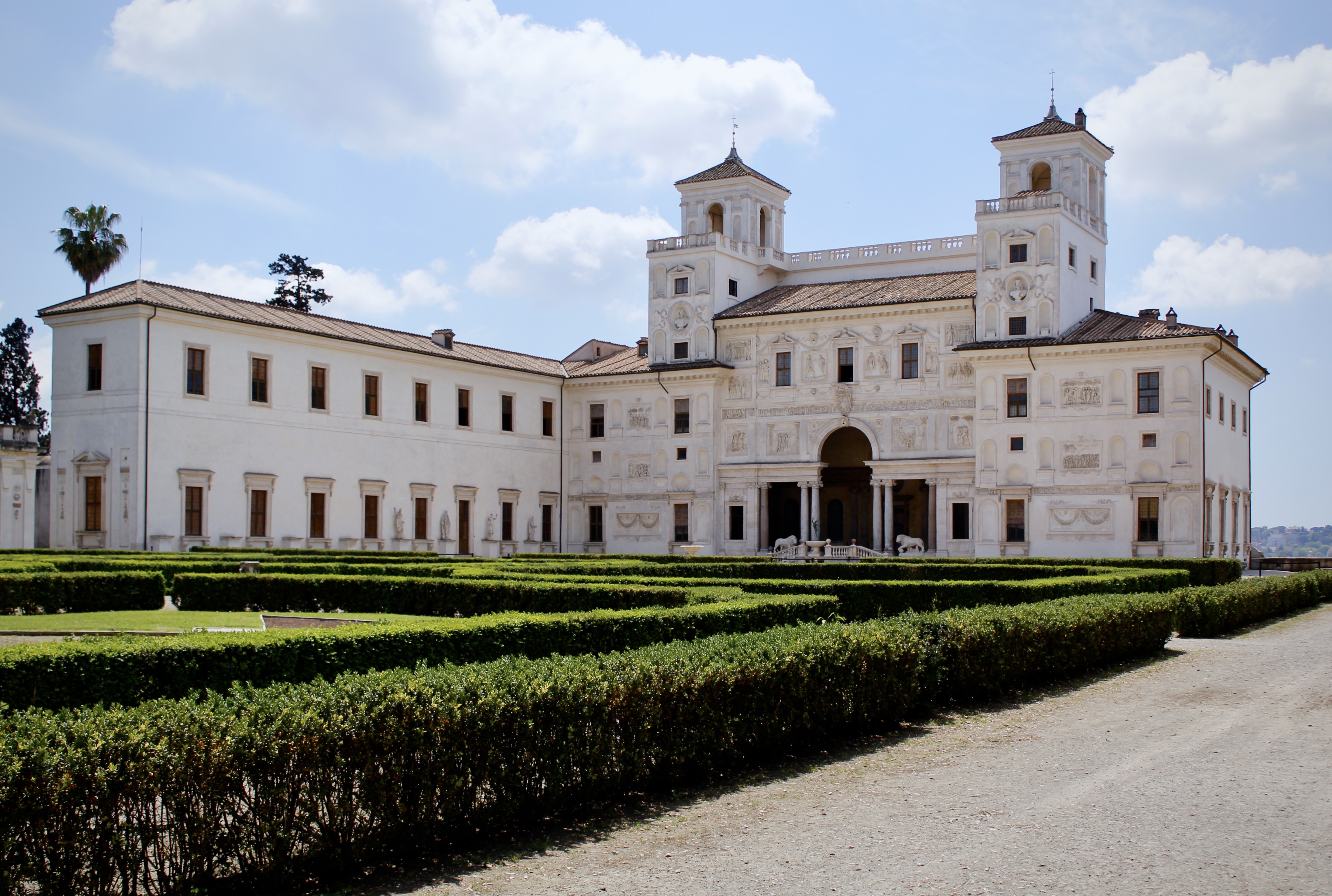
Villa Medici
- Villa Medici is an architectural complex that has been home to the French Academy in Rome since 1803.
- The villa has been a hub of cultural activities, hosting important art exhibits and cultural events and contributing to Rome's cultural landscape.
- Villa Medici was bought by Cardinal Ferdinando de' Medici in 1576, who completed the unfinished expansion works started earlier.
- The villa features a large garden, largely maintaining its 16th-century appearance, is rich in pine, cypress, and oak, but also rare plants, and decorated with sculptures. Renowned mathematician and engineer Camillo Agrippa adorned the space with various basins and fountains.
- The gardens feature a masonry aviary with a fresco depicting the first European representation of a turkey.
© Wikimedia Commons
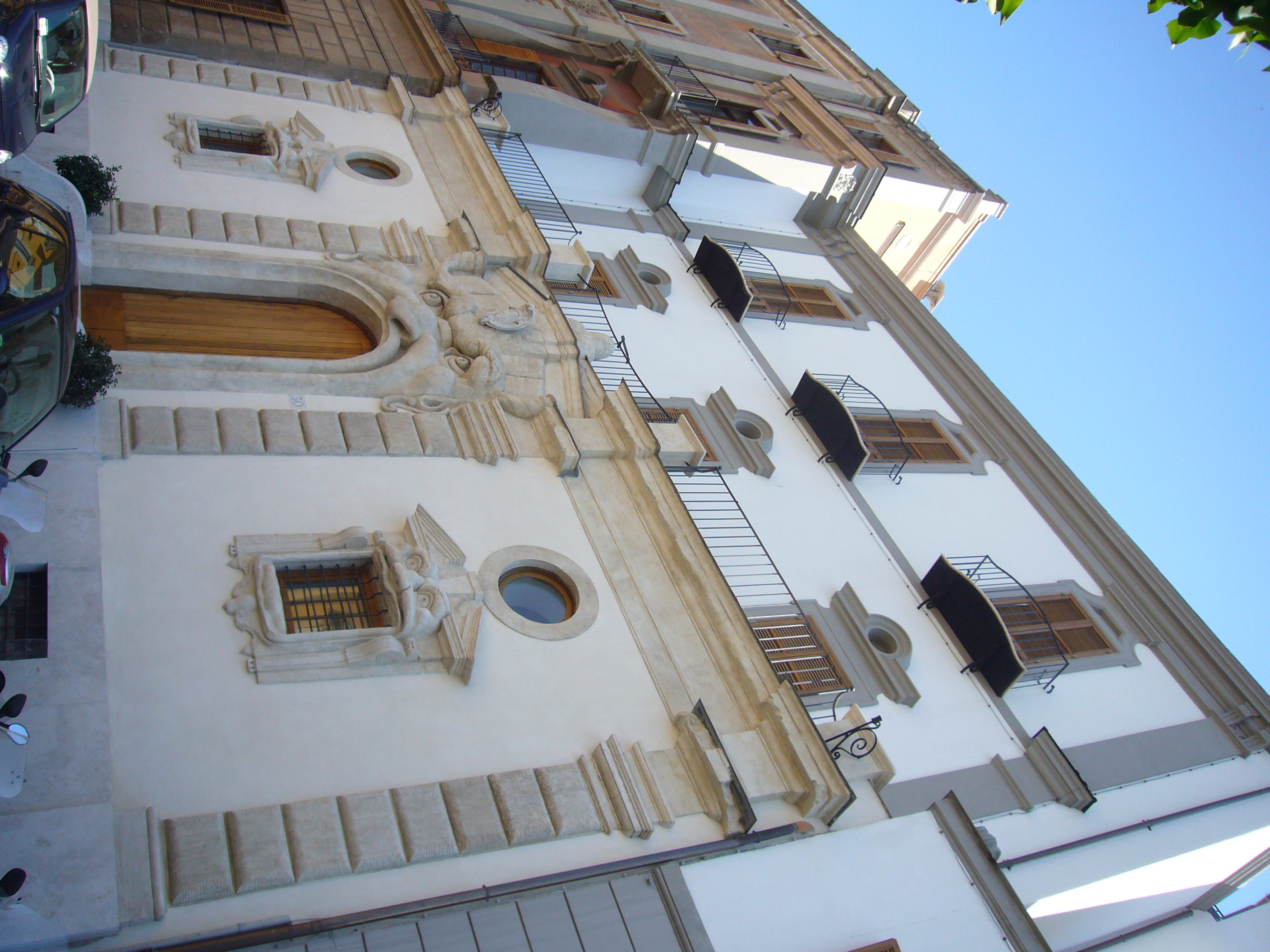
Bibliotheca Hertziana – Max Planck Institute of Art History
- The Bibliotheca Hertziana is a research institute of the Max Planck Society that specialises in the history of art.⏰ Founded in 1913, the institute is due to a legacy left by Jewish patron Henriette Hertz, aimed at studying Italian art from the post-antique period, with a special focus on the Renaissance and Baroque periods.
- Over time, the research themes were expanded to include the history of Italian art in a global context, the history of art of southern Italy, and the history of cinema.
- The current directors are Tanja Michalsky and Tristan Weddigen.
- The specialized library is an important documentation center in the world on Italian art, with more than 300,000 volumes collected, and a photo library with over 800,000 photographs.
- The library underwent several expansions in the first half of the 20th century and was completely restored in 2012.
- The restoration work included significant renovations and expansions of the building, which was originally Palazzo Zuccari, assigned to architect Silvio Galizia and later, through an international competition, architect Juan Navarro Baldeweg.
Day 2 - Rome
10 POIs to discoverDay 2 - Morning à Rome
5 Points of interest - Duration : 3h15 - Distance : 3.5 km - Walking : 0h46
© Wikimedia Commons
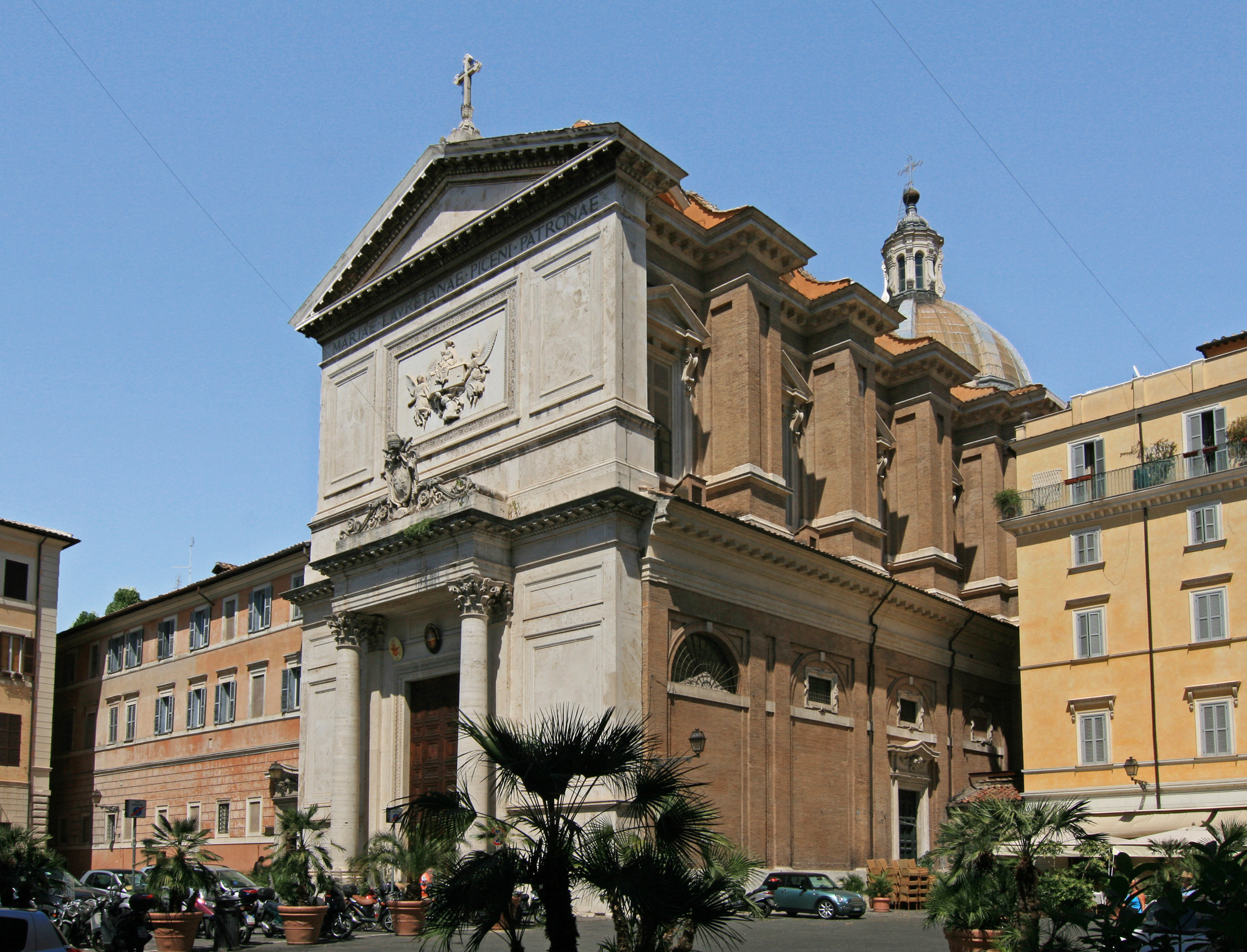
San Salvatore in Lauro
- The church is the seat of the diaconia of the Marches living in Rome.
- It began its construction in the 16th century and was completed in the 19th century.
- The church is of Roman rite and is dedicated to Jesus the Savior.
- The baroque and neoclassical architecture features a façade with a procer and a sculpture depicting the Holy House of Nazareth.
- The church houses two pipe organs, one built by Girolamo Priori and the other by Filippo Tronci.


© Wikimedia Commons
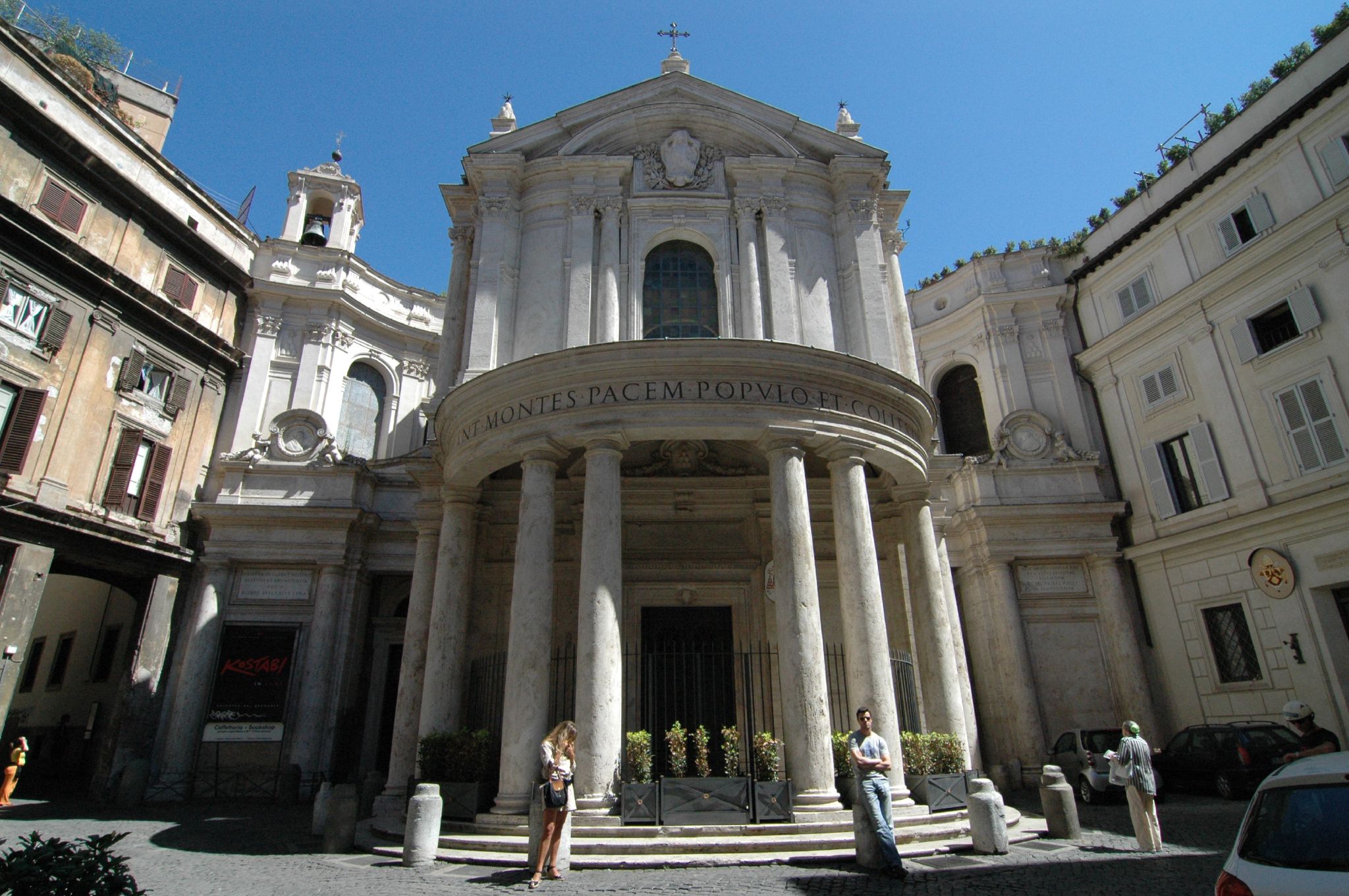
Santa Maria della Pace
- It is a Roman Catholic Church of Roman rite in the Diocese of Rome, with the title of Santa Maria della Pace.
- It was founded in the 15th century and renovated by Pietro da Cortona in 1656-1657.
- Its facade is an outstanding example of Roman Baroque architecture.
- Several notable chapels, including the Chigi Chapel with frescoes by Raphael Sanzio and the Cesi Chapel designed by Antonio da Sangallo the Younger.
- The Bramante cloister, built by Donato Bramante, is an outstanding example of 16th-century Renaissance.
- In the church is an antique 19th-century organ.
© Wikimedia Commons
Four Rivers Fountain
- The fountain features an Egyptian obelisk topped by four colossal figures personifying the rivers Nile, Rio de la Plata, Danube and Ganges.
- It was commissioned by Pope Innocent X and is interpreted as a symbol of the triumph of the Church on the four continents.
- Bernini initially imagined the fountain differently, but eventually opted for marble and modified the dimensions to support the obelisk.
- The costs of the fountain were so high that the pope levied a tax on bread to finance it, which generated discontent in Rome.
- A miniature replica of the fountain is located in the Royal Palace in Madrid.
© Wikimedia Commons
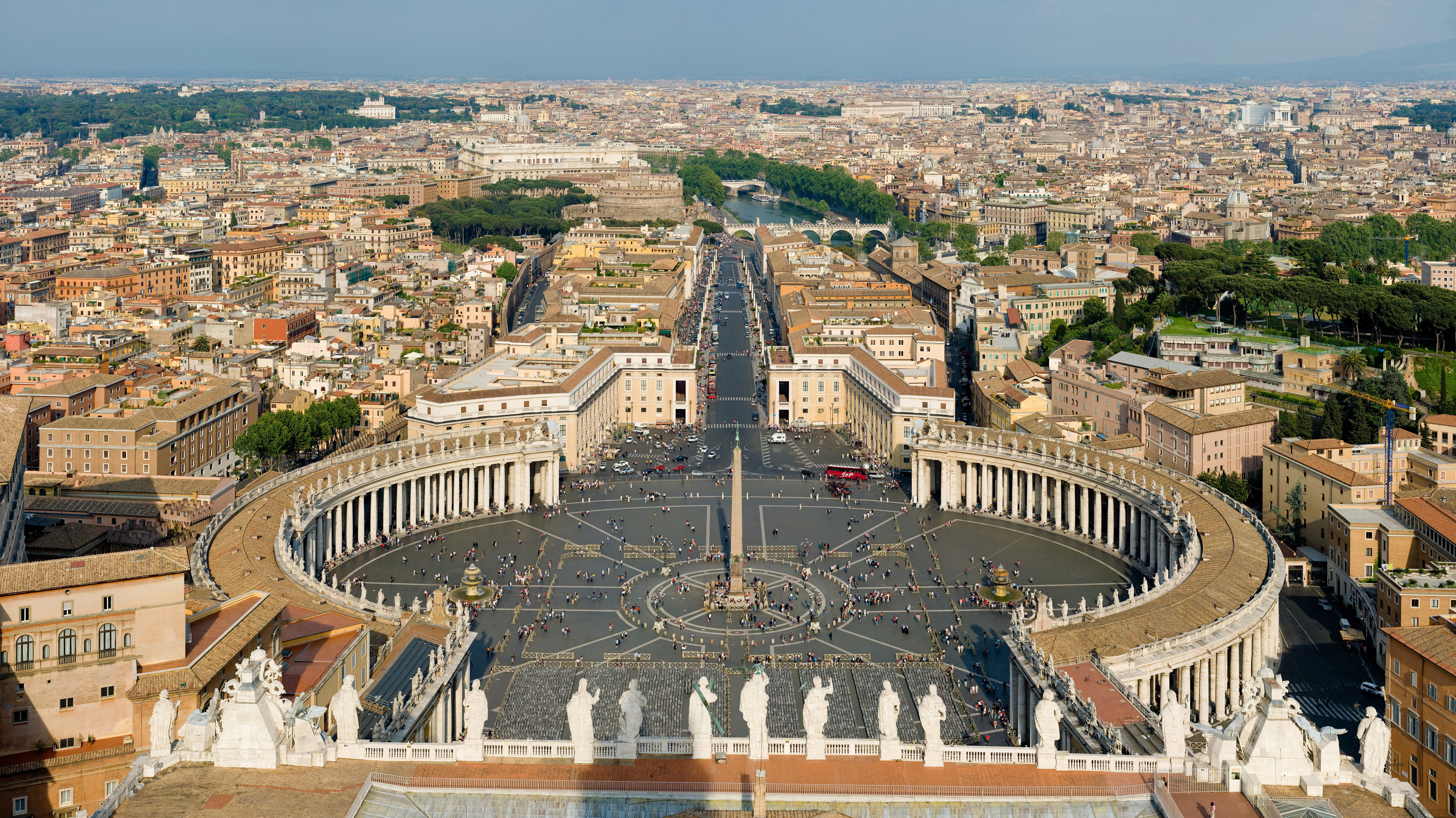
Saint Peter's Square
- It is a baroque style square with two parts, one in the shape of a trapezoid in front of the facade of the basilica and the other in the shape of an oval with an Egyptian obelisk in the center.
- These areas are unified by four colonnades with 284 columns and 88 pilasters.
- The square was built on the former location of Nero's Circus and the Vatican necropolis.
- In the 4th century the Constantinian basilica of St.
- Peter was erected on this site.
- During the 16th and 17th centuries several interventions were made in the square, including the removal of the Egyptian obelisk and the construction of the basilica's façade.
- The architect Bernini drew up several projects for the square, which eventually led to the creation of a wide oval piazza with colonnades and architraves.
- The square became a monumental and representative space in the 17th century, reflecting the importance of the basilica as a center of Christianity.
© Wikimedia Commons
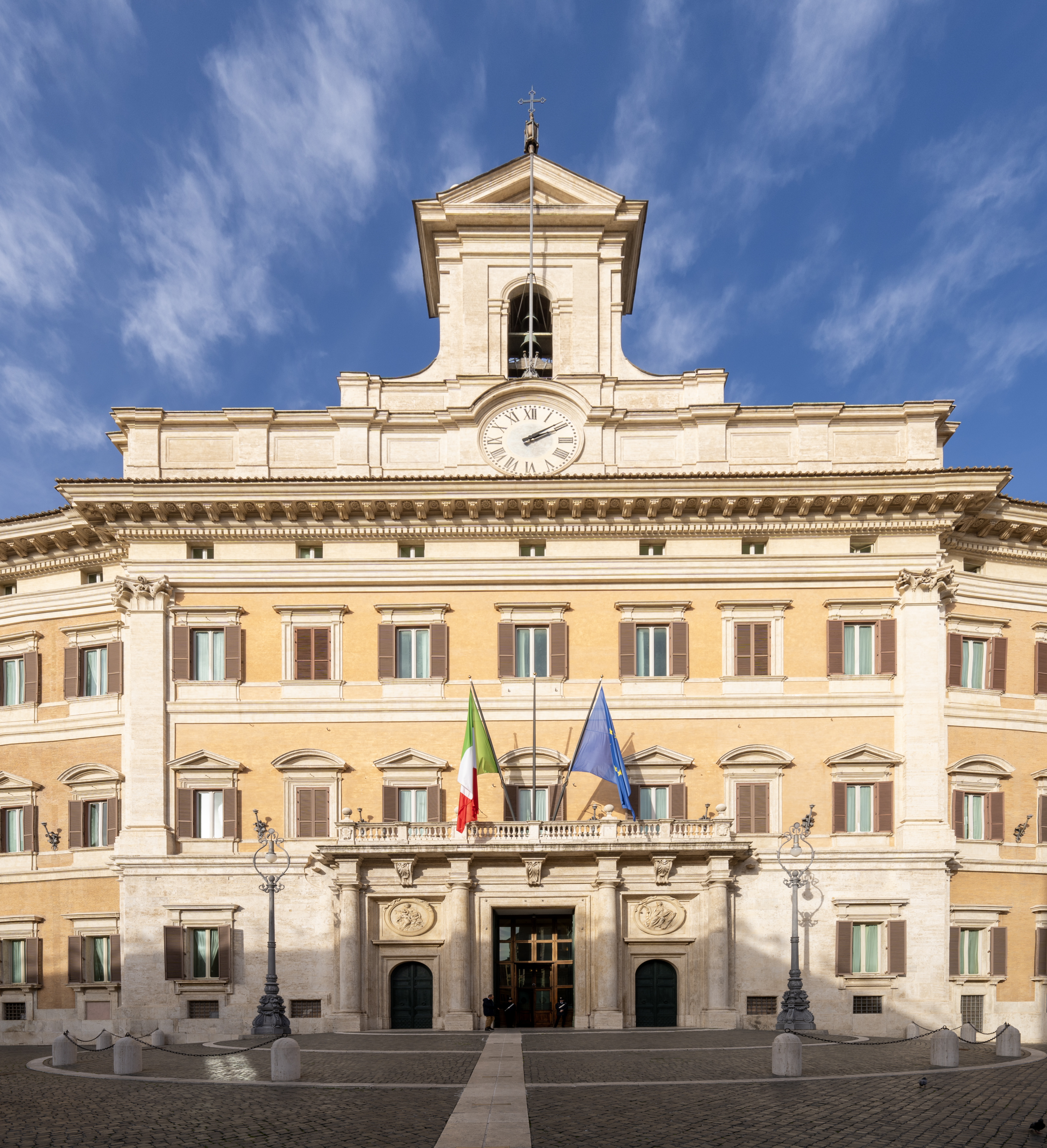
Palazzo Montecitorio
- The Montecitorio Palace is currently the seat of the Italian Chamber of Deputies.
- The original building was designed by Gian Lorenzo Bernini for Cardinal Ludovico Ludovisi and then modified by Carlo Fontana.
- In 1696, the Apostolic Curia was installed there, making the palace the center of the judicial and administrative life of the papal government.
- The building was rebuilt in the early 20th century by the architect Ernesto Basile, a representative of Italian Art Nouveau.
- The debating chamber contains many Art Nouveau-style decorations, including a large bronze panel representing "The glorification of the dynasty of the House of Savoy".
- The Obelisk of the Horologium of Augustus, known as the Obelisk of Montecitorio, was installed in front of the palace by Pope Pius VI in 1789.
Day 2 - Afternoon à Rome
5 Points of interest - Duration : 3h00 - Distance : 2.3 km - Walking : 0h30
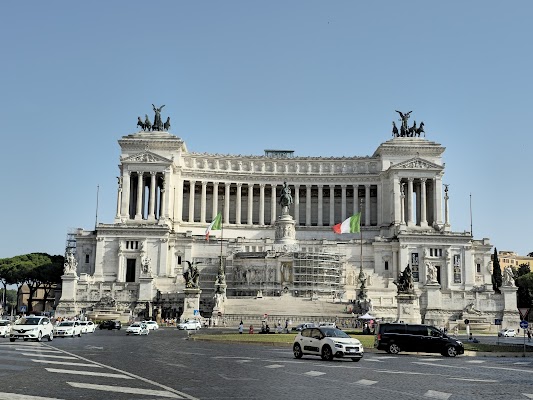
Altare della Patria
- Built with white Botticino marble, the monument is notable for its majestic staircases, Corinthian columns and statues of Victory with quadrigas.
- The structure is 35 meters wide and 40 meters high, reaching 61 meters including the quadriga and the wings of the goddesses.
- At the base of the monument is the Museum of the Unification of Italy.
- On the monument is a tomb to the unknown soldier with an "eternal flame", honoring a young deserter from the Austro-Hungarian army who joined the Italian army and went missing in action during World War I.
- The monument has been the subject of controversy due to the destruction of a part of the historic Capitoline Hill during its construction and its imposing size.
© Wikimedia Commons
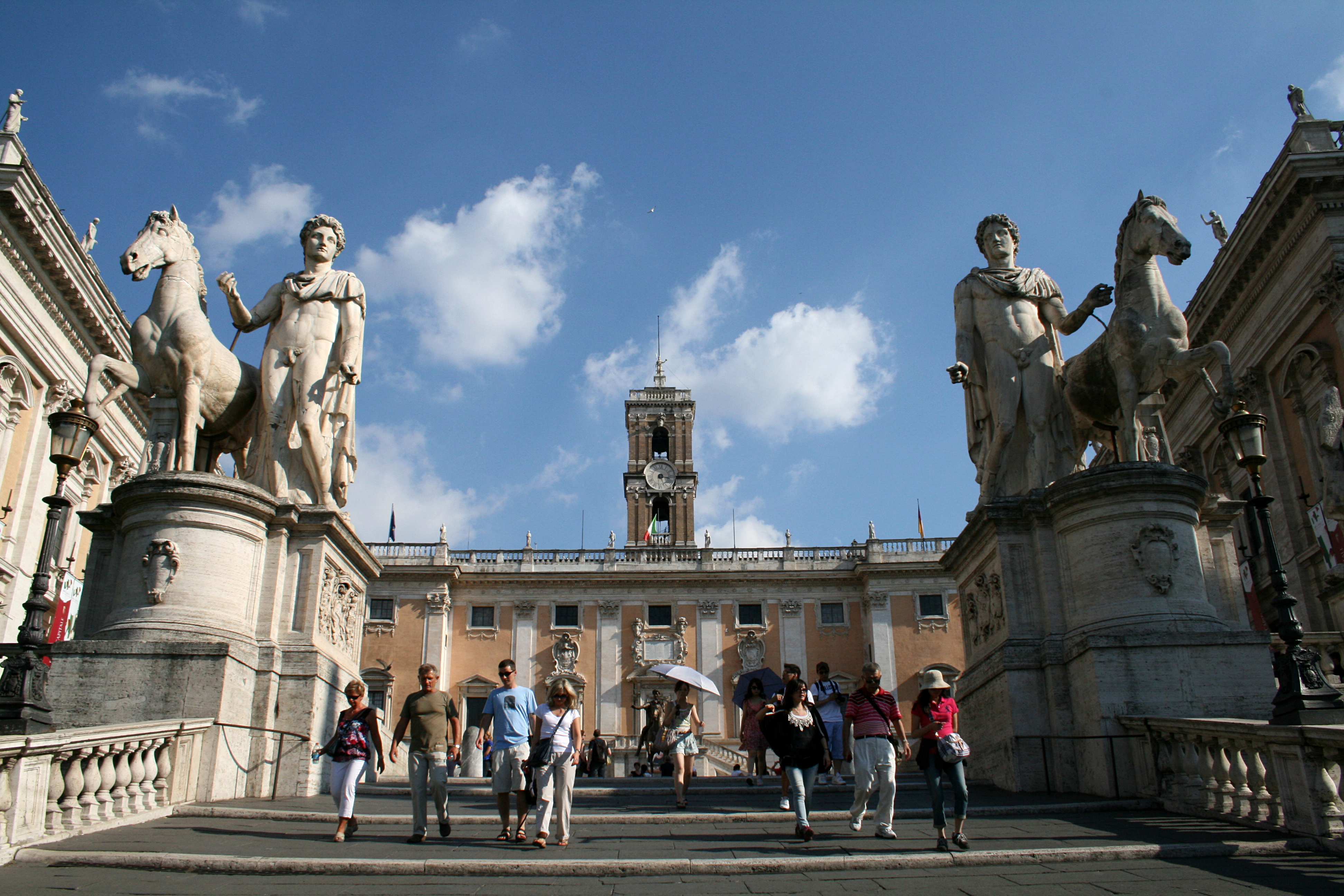
Piazza del Campidoglio
- Initially, the area was abandoned in the Middle Ages and was known as "monte Caprino." In the 12th century, it became the seat of the Town Hall, and in the 16th century, Pope Paul III commissioned Michelangelo to renovate the square.
- The statue classical Mark Aurelius' bowman adorns the square.
- Giacomo Della Porta continued the work following Michelangelo's original plan, and statues and fountains were added.
- The Palazzo Senatorio now houses Rome's City Hall, and the Capitoline Museums are located in the other two palaces in the square.
© Wikimedia Commons
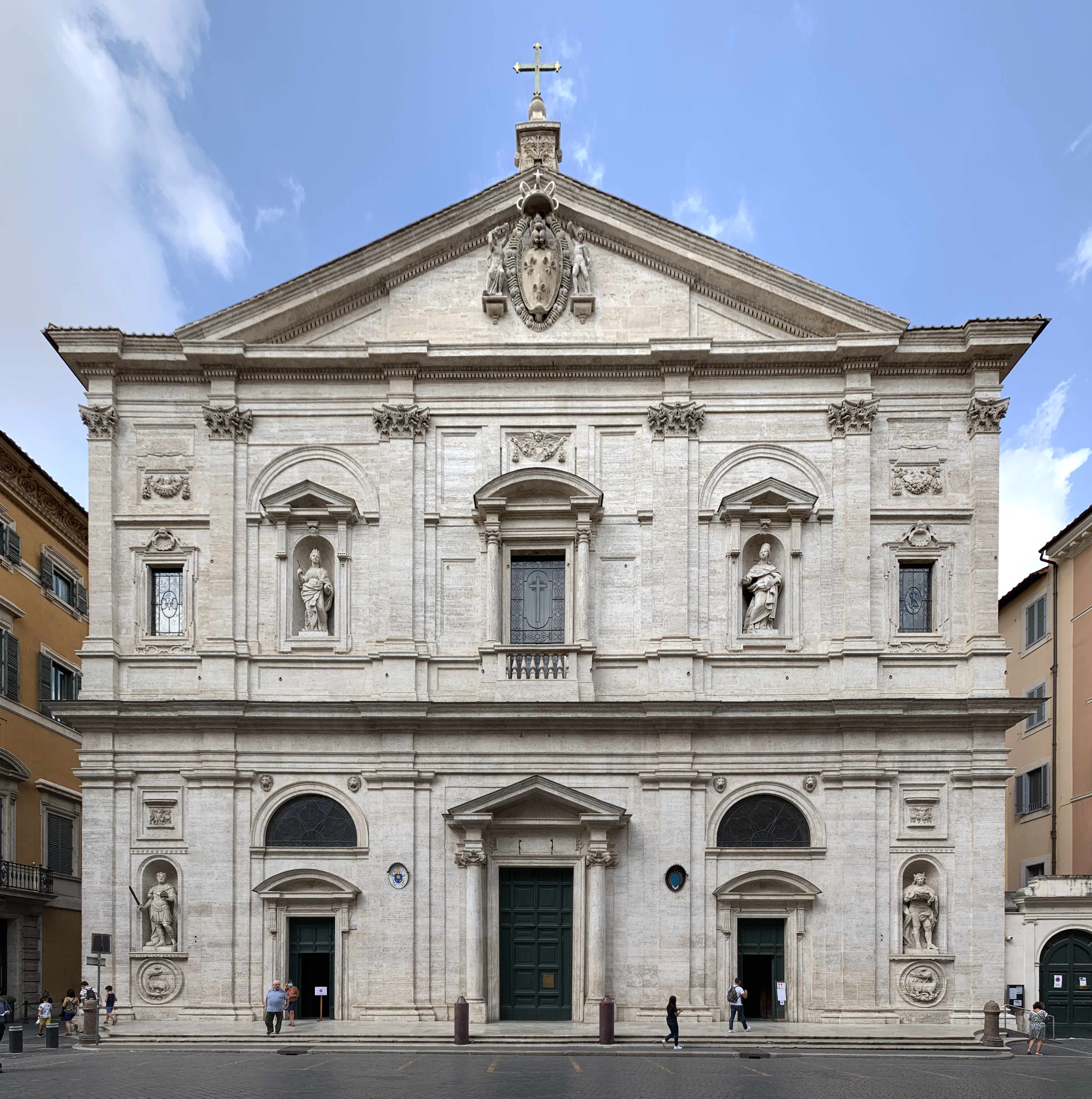
San Luigi dei Francesi Church
- Built between 1518 and 1589, the church is an example of Renaissance architecture.
- Its facade and interior are infused with French elements, including commemorative statues and frescoes.
- The church is dedicated to the Virgin Mary, Saint Dionysius Areopagite and Saint Louis, King of France.
- Several prelates and members of the French community in Rome are buried in this church.
- In one of its chapels, the Contarelli Chapel, there are famous canvases by Caravaggio depicting St.
© Wikimedia Commons
Church of the Gesù
- The Church of the Gesù was built in 1568 for the Society of Jesus and is considered the mother church of this order.
- The building is emblematic of Jesuit art and is one of the most remarkable architectural manifestations of the Counter-Reformation movement.
- The Society of Jesus, founded in 1540 by Pope Paul III, aimed to fight against the Protestant Reformation. The beginning of construction only started in 1568 and was financed by Cardinal Alessandro Farnese.
- The central fresco of the vault, painted by Giovanni Battista Gaulli between 1672 and 1683, represents the Triumph of the Name of Jesus, remaining a flagship example of baroque trompe-l'oeil painting.
- The architecture of this church has been replicated many times, and is sometimes considered the prototype of a new style: the Jesuit style.
© Wikimedia Commons
Column of Marcus Aurelius
- The column of Marcus Aurelius is a monument erected between 176 and 192 to celebrate the victories of Emperor Marcus Aurelius over the Marcoman Germans and the Sarmatians.
- The column is covered in marble reliefs and measures approximately 29.6 meters.
- Its pedestal is around 12 meters high.
- The execution of the column coincides with that of the eight sculpted panels that adorn the Arc of Constantine today.
- The scenes presented on the column are often considered to be ordered chronologically, although there is a proposition for a non-chronological arrangement.
- The Emperor is often depicted in these relief scenes.
- The style is considered cruder than that of Trajan's Column.
- The column was restored in 1589 by Pope Sixtus V and Domenico Fontana.
- During this restoration, the original bas-reliefs were replaced by an erroneous dedication to Antoninus Pius.
Practical details for visiting Rome
Where to stay
For a well-optimized 48-hour stay, choose a central neighborhood that limits travel time: the Historic Center (near the Pantheon and the Trevi Fountain) is ideal for being within walking distance of most sites. The Quirinal district is convenient for the early stops of the itinerary, while Prati offers direct access to St. Peter's Square and quiet streets for sleeping. The types of accommodation recommended range from charming small hotels and family guesthouses to rental apartments for more privacy. For budgets, expect average prices: budget hotels and private rooms can start around a low range, while charming hotels in the center are mid- to high-range. If you want higher comfort without sacrificing location, look for 4-star hotels in the Historic Center or Prati. Consider checking the proximity to a subway station or a bus stop if you prefer to limit walking. Finally, book early in high season: central location is a criterion that quickly pushes up prices.
Getting around
Rome is best explored on foot for the areas covered in this itinerary: the distances between Barcaccia Fountain, the Pantheon, the Trevi and St. Peter's Square are often short and walking lets you stumble upon unexpected side streets. For longer trips, take advantage of the metro network (limited lines but fast) and the buses that serve the main routes. Taxis and ride-hailing are practical in the evening or if you have time constraints. Cycling is possible but watch out for cobblestones and dense traffic; prefer electric bikes for more comfort. Buy a transport pass if you plan to take several buses or the metro: it remains economical. Finally, prepare to walk a lot each day and wear comfortable shoes. To save time, combine walking with a bus leg when sites are farther apart, and use transport apps to know lines and real-time schedules. Practical tip: avoid peak bus hours if possible.
What to pack
Pack light but smart. Comfortable walking shoes are essential: the historic center has a lot of cobblestones and stairs. Bring a light jacket for evenings, and a windbreaker if you come in spring or autumn. In summer, bring a hat, sunglasses and a reusable water bottle: days can be hot and fountain water is drinkable to refill your bottle. For winter, a warm coat and thermal layers will be useful. Don't forget a small city backpack to carry map, phone, guide and a few purchases. For accessories, bring an adapter if necessary, and a portable charger: photos and navigation drain the battery quickly. Respect the dress code of churches (shoulders and knees covered) by having a scarf or shawl handy in your bag. Finally, bring a small first-aid kit and blister plasters: walking all day can fatigue your feet quickly.
Advance reservations
Some visits and experiences deserve to be booked before you arrive to save time and avoid queues. Book priority tickets for museums or temporary exhibitions around the Capitol or the Pantheon if they offer limited access. If you plan to visit interiors of heavily frequented churches, check for guided tour time slots to avoid peak hours. For popular restaurants near the Trevi Fountain, Piazza Navona and the Vatican, a dinner-time reservation avoids long waits. If you want to attend a show, a concert or a solemn Mass at the basilica, book your seats in advance. Also consider booking your accommodation early, especially in high season, as central options fill up quickly. Finally, for private tours (local guides) or thematic tours, advance booking is recommended to optimize your time. These reservations will allow you to spend your two days walking and savoring, rather than queuing.
Extras not to miss
In addition to the main itinerary, a few detours enrich the experience: wandering through the lanes around Piazza Navona, discovering lesser-known small churches and viewpoints over the city from terraces or stairs. For a playful approach to the city, consider Coddy's urban escape games which offer investigations on foot and let you rediscover neighborhoods from a new angle. Local markets, like the one near Campo de' Fiori, are worth a detour for the atmosphere and fresh products. Don’t miss panoramic views that are less touristy from hills or rooftops of boutique hotels that welcome visitors. If you have some time in the evening, look for a small sacred music concert in a church: the acoustics and atmosphere are often remarkable. Finally, let yourself be carried by the impressions of the moment: an unexpected entrance into a courtyard, an antique shop, or a bench in a square can become memorable souvenirs. Walk, discovery and urban games are the watchwords to complete these 48 hours.
Local delights
Roman cuisine is simple, tasty and perfect for breaks between visits. Try cacio e pepe, the iconic pasta dish seasoned with pecorino and pepper, and carbonara prepared without cream according to tradition. The supplì, fried rice balls stuffed with mozzarella, are perfect snacks for walking. For breakfast, a strong espresso and a cornetto at a local bakery set the mood. Markets like Campo de' Fiori offer fresh produce, cheeses and charcuterie to enjoy on the go. Also try porchetta at a sandwich shop for a quick and tasty meal. For dessert, artisanal gelato is a must: favor shops with long lines, a mark of quality. For drinks, besides coffee, try a glass of local wine or a Spritz in the late afternoon. Finally, look for family-run trattorias for sincere meals and often less touristy than the restaurants near the major squares.
When to visit Rome and how much it costs
Best seasons
Rome can be visited almost year-round, but each season has its specifics. Spring (April–May) and autumn (September–October) often offer the best compromise between pleasant weather, clear skies and light conducive to photography. Summer is hot and very touristy: long days are ideal for staying out late in the city, but be prepared for heat and crowds. Winter is quieter and can be pleasant for those who enjoy museums with fewer crowds and lower accommodation prices; just plan for warm clothes. On events, the liturgical calendar and some local celebrations can modify the city’s mood: sometimes more solemn, sometimes livelier. For a 48-hour stay focused on the historic heart, prefer periods when temperatures allow comfortable walking and crowds are not at their peak. In short: spring and autumn for the best overall experience, summer for vibe and sunshine, winter for calm and often lower prices. Plan according to your priorities.
Crowds
Tourist crowds in Rome vary greatly by season and site. Places like the Trevi Fountain, the Pantheon and St. Peter's Square consistently attract people, especially around midday and late afternoon. To avoid the crowds, opt for a morning visit to Barcaccia Fountain and Trevi very early, or plan the Pantheon early in the morning. High season (summer and school holidays) sees maximum crowds, with queues and packed squares. Quieter periods (winter outside major holidays) allow enjoying monuments with less waiting and a calmer experience. Over two days, schedule your most popular visits outside peak hours: early mornings or late afternoons. Remember that even in less busy periods, sites near the Vatican and the Colosseum remain popular; time management and prioritization are essential to fully enjoy. Finally, weekdays may be less crowded than weekends for places frequented by locals.
Estimated budget
Economical budget: Plan a tight budget if you want to limit your expenses. Opt for affordable accommodations or hostels with private rooms, eat at taverns or street stalls (supplì, panini), and favor walking for getting around. Budget for meals around an economical per-person amount, and use public transport by single ride or day pass. Exterior visits and free-entry churches can form the core of the program.
Medium budget: Allows you to combine comfort and flexibility. Choose a 3-star hotel or a well-located bed and breakfast in the center, alternate trattorias and neighborhood restaurants, take a few taxis or ride-hailing to save time, and book one or two guided tours. This budget also covers a few souvenirs and a daily gelato, not counting.
Comfort budget: For a more relaxed stay, opt for a central 4-star hotel, dine in well-rated restaurants, book private guided tours or skip-the-line museum entries, and frequently use taxis or private services. This level offers more flexibility and fewer compromises on the timing of visits.
Frequently asked questions about your stay in Rome
Conclusion and final tips
Two days in Rome are enough to grasp the essence and feel the city, without pretending to exhaust it. This itinerary, from the Barcaccia Fountain to St. Peter's Square, will guide you through famous squares, art-filled churches and monuments that tell centuries of history. Allow yourself some time for a coffee, a gelato break, and a few unexpected detours: these are often the unscripted moments that stay in memory.
Keep in mind the priorities: walk when possible, book high-traffic passages if needed, and take the time to enter a church or a museum that attracts you. Enjoy the neighborhoods chosen for their atmosphere and proximity to the sites. If you want to add a playful touch, consider Coddy's urban escape games which give another dimension to discovery. Finally, travel light, plan comfortable shoes and let your curiosity guide your steps. You may return later to deepen, but these 48 hours will already give you a great story to tell.
Want more adventure?
Discover our urban escape games to transform your visit into an interactive adventure!


