Sébastien Balieu

Team motivation grows when each person understands the value of their work, has room to act and feels recognized by the group. It cannot be decreed through an energetic speech or an isolated activity: it draws on a clear framework, relationships built on trust and situations in which colleagues can genuinely succeed together.
For an organization, the challenge is not to maintain a constantly enthusiastic mood. A team can go through a demanding period while remaining engaged if it knows where it is going, if efforts are distributed fairly and if difficulties can be addressed without fear. Conversely, a pleasant atmosphere does not sustainably compensate for unclear priorities, insufficient resources or opaque decisions.
Motivating a team therefore means creating the conditions that make people want to contribute, share useful information, ask for help and honor their commitments. The strongest levers lie in everyday management practices, but also in collective moments that bring those practices to life. An activity outside the usual setting can be relevant when it extends a concrete goal, rather than pretending to solve all everyday problems on its own.
Providing Direction That Really Helps People Act
An objective mobilizes people when it answers a simple question: why does this work matter now? Team members need to connect their tasks to an expected result, a customer need, a service mission or an observable improvement. An instruction framed only as an emergency may trigger an immediate effort, but it quickly drains available energy if no one knows what takes priority or what can wait.
Clarity does not mean that everything must be fixed. In many professions, priorities change with requests, incidents or new information. What motivates people then is knowing how decisions will be made, who can make them and what information needs to be escalated. A team loses momentum when it constantly has to guess what its manager expects or redo work because shared criteria were missing.
Useful direction is built through conversation. Present the context, explain the limits, then ask what could hinder execution. This last step is often overlooked. Yet the people doing the work sometimes see practical constraints before they become delays or frustrations. Listening to these signals does not mean giving up the decision: it makes it possible to make a more workable decision.
Avoiding Goals That Discourage People
A goal can be discouraging even when it looks ambitious and attractive on paper. This happens when it largely depends on factors the team cannot control, conflicts with another request or is announced without suitable resources. Asking for better quality while reducing the available time, without deciding what should be simplified elsewhere, sends a contradictory message.
Also avoid turning every metric into a judgment of people. Metrics are used to understand a situation and guide action. When used as monitoring tools, they encourage information withholding, excessive caution or the search for someone to blame rather than a solution. A motivating discussion focuses on what will help the group move forward, not only on what was not achieved.
Combining Autonomy with a Shared Framework
Autonomy is a powerful driver because it recognizes competence. It does not mean leaving employees alone with an unclear workload. It means allowing them to choose a method, organize a work sequence, suggest a solution or make a decision at their level, while knowing the limits within which that decision is valid.
A manager can support this autonomy by replacing certain systematic approvals with clear reference points. What must be decided by the team? What requires escalation? When should someone raise an alert? These rules reduce waiting and prevent the most cautious colleagues from carrying a disproportionate mental burden. They also help new arrivals find their place without constantly having to request permission.
It is useful to distinguish the need for control from the need for information. A team leader needs to know what is progressing, what is becoming more difficult and what requires arbitration. They do not necessarily need to choose every detail of how the work is done. Follow-up focused on obstacles and pending decisions provides more space than follow-up requiring every action to be justified.
Autonomy must remain fair. Assigning interesting subjects to the same profiles because they work faster may increase short-term performance but weaken the engagement of the rest of the group. Sharing learning opportunities, rotating certain roles and supporting less experienced people strengthens collective capacity. Motivation also draws on the prospect of progress.
Making Recognition Precise and Credible
Recognition is not a polite formula handed out at regular intervals. It is credible when it describes a real contribution and its effect. Thanking a colleague for clarifying a complex file, pointing out that a team member made cooperation with another department easier or highlighting the calm shown in a tense situation gives recognition meaning. The person concerned knows what is valued and can repeat it.
Recognition should not target only visible results. In many teams, an essential part of the work involves preventing a problem, passing on knowledge, reviewing a deliverable, welcoming a new colleague or making a meeting more effective. These actions may be discreet, but they determine the quality of the group. Making them visible prevents only the most vocal person from being seen as a contributor.
Be careful, however, not to use recognition to bypass a structural difficulty. Congratulating a team for its dedication while it has long been compensating for a lack of resources can create resentment. Gratitude is necessary, but it does not replace either a fair distribution of workload or an honest discussion about resources. Employees quickly spot the gap between words and decisions.
Creating Feedback That Helps People Progress
Useful feedback is not limited to a general assessment. It describes a situation, an action and its effect, then opens a discussion about what comes next. This approach makes it possible to discuss a gap without reducing someone to that gap. It is particularly important when someone encounters a difficulty: receiving precise, solution-oriented feedback gives more to work with than simply being told to do better.
Feedback must flow in several directions. A team feels more valued when it can also express what helps it, what slows it down and what it expects from its management. Asking for an opinion without following up is counterproductive. Even when a suggestion cannot be accepted, explaining the choice and the constraints shows that the input was considered.
Strengthening Belonging Through Concrete Cooperation
A sense of belonging does not arise solely from stated values or shared vocabulary. It develops when colleagues see that they can rely on one another. A team becomes more united when it learns to share important information, distribute roles according to needs and address disagreements without allowing them to take root.
Coordination time can support this dynamic if it has a clear purpose. A group check-in is useful for identifying a dependency, making a decision or removing an obstacle. It becomes burdensome when it repeats information everyone could access another way. Protecting focused work time is also a sign of respect. Motivation declines when meetings pile up without improving cooperation.
Disagreements are not necessarily a sign of demotivation. They may reveal different expertise, a poorly understood priority or a decision that deserves to be reconsidered. The role of the collective framework is to allow debate about facts, consequences and options without letting the discussion become personal. A team that knows how to name a tension is more likely to resolve it than a team that pretends not to see it.
Hybrid or distributed teams must pay particular attention to informal exchanges. Some information circulates spontaneously between people in the same place, while other information remains out of reach. Simple practices, such as recording decisions and providing space for questions, reduce this imbalance. The goal is not to impose constant communication, but to ensure that everyone can access the information needed to contribute.
Using a Group Activity Without Treating It as a Miracle Cure
A shared experience can get a team moving again when daily work leaves little room for different types of interaction. It makes it possible to observe skills that are less visible in regular meetings: the ability to listen, connect clues, distribute roles spontaneously, encourage a colleague or reconsider an idea. These observations are valuable only if they are received modestly: a game does not measure all professional skills, but it can open an interesting conversation about ways of cooperating.
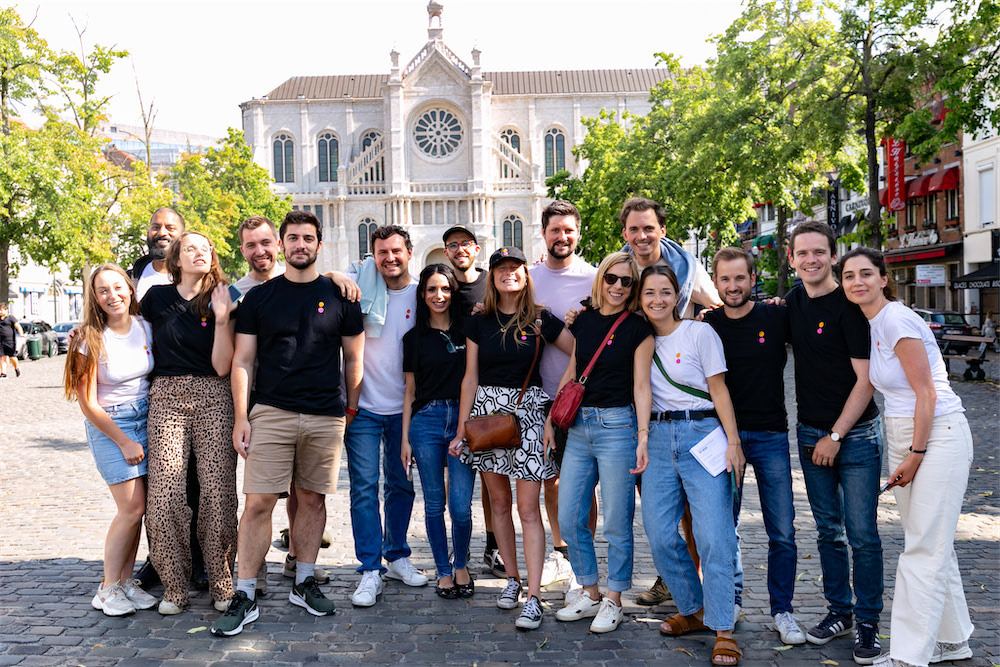
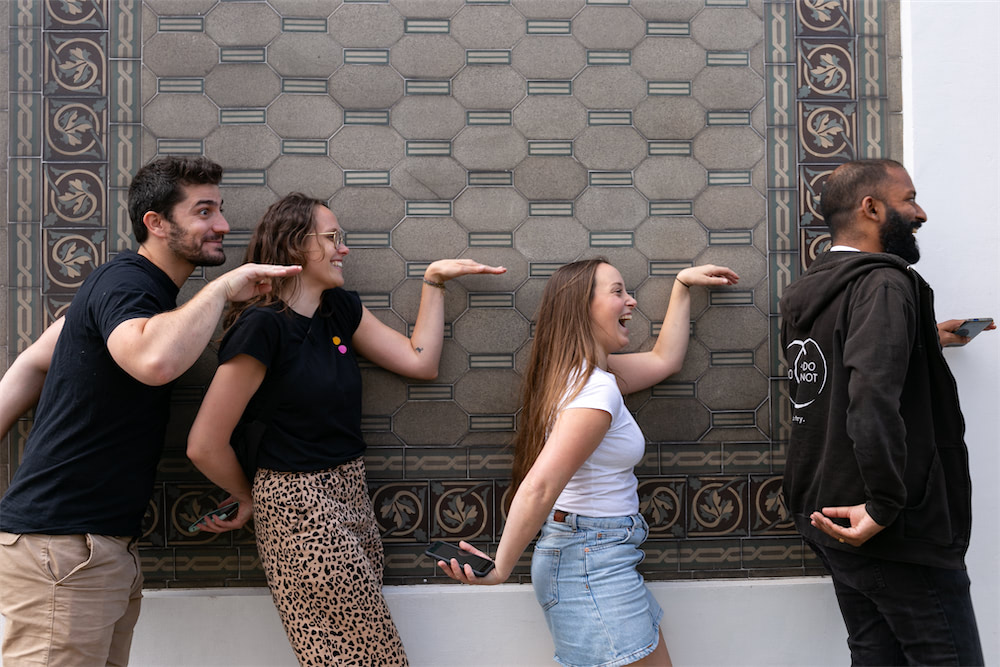
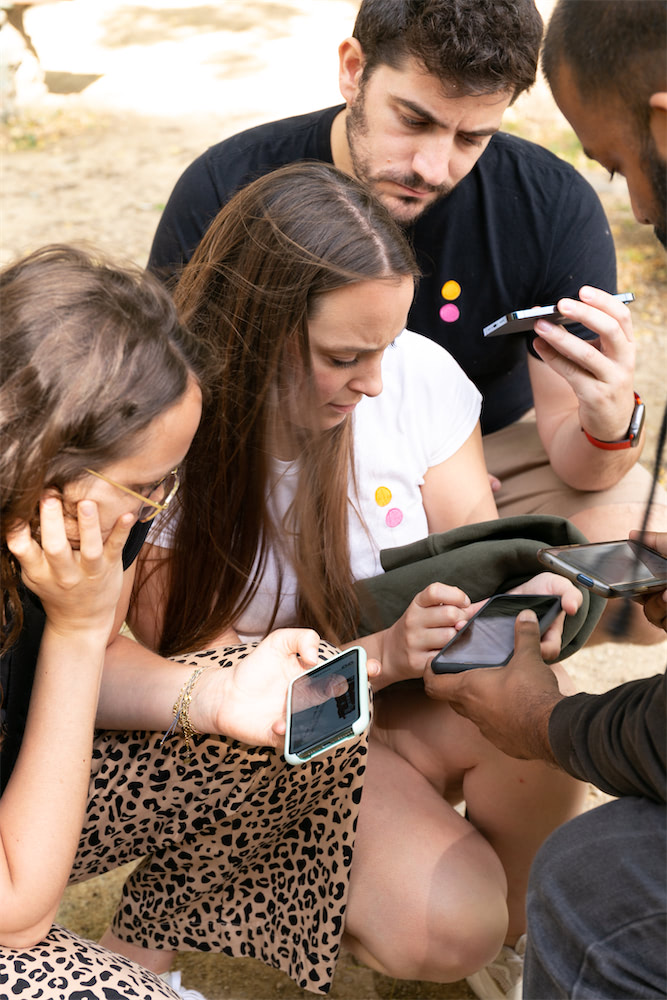
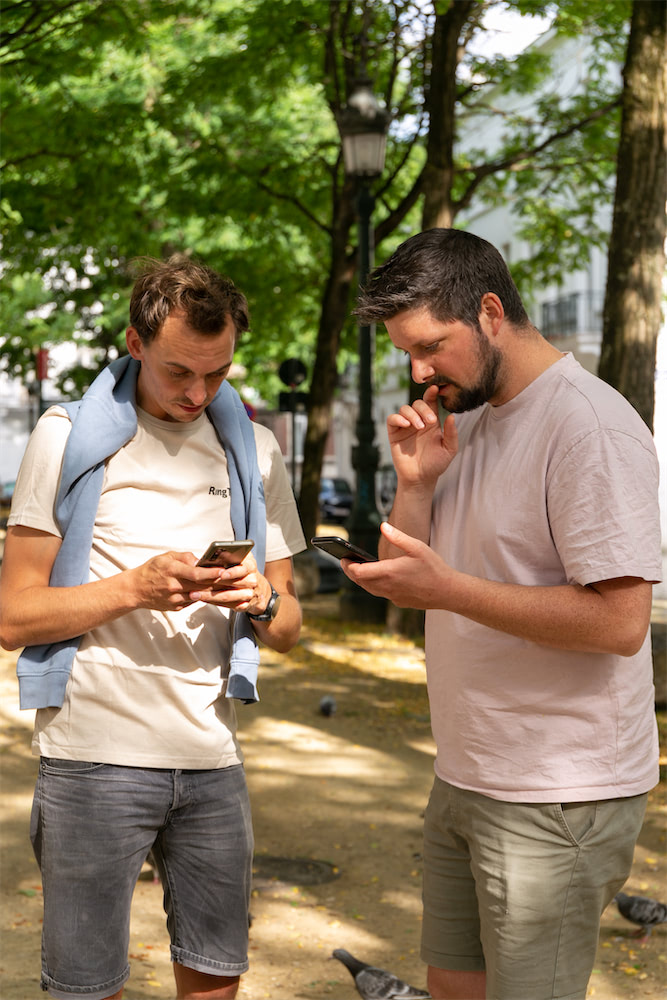
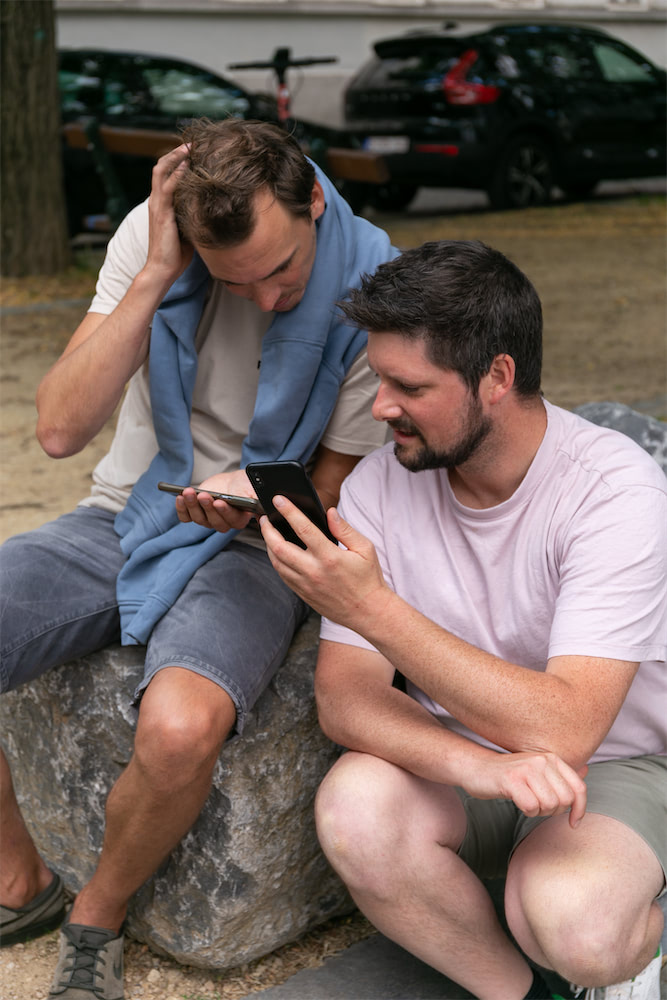
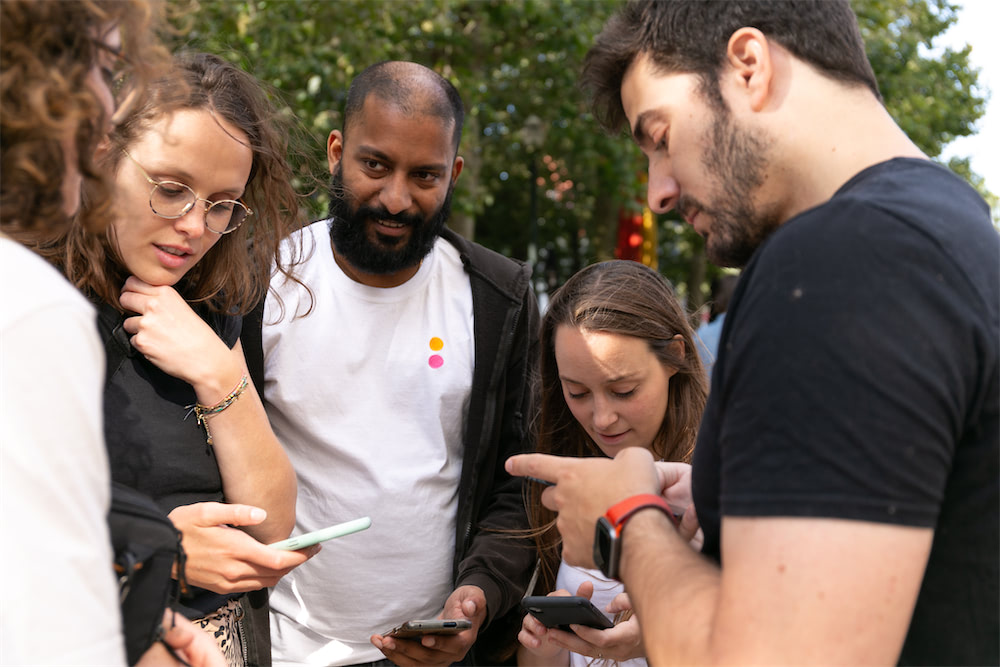
An urban exploration challenge offers a concrete setting for this experience. Participants must communicate, make choices using the available information and move forward together in an environment different from the office. On the challenges we have organized, the actual measured duration is 118 minutes across 265 challenges. This format gives a group time to organize itself and experience several stages of cooperation without turning the outing into a day that is difficult to fit into a busy schedule.
The right choice depends on the intention. If you want to welcome new colleagues, choose an activity that encourages interaction between people who know little about one another. If a team is coming out of a tense period, avoid overly marked competition and prefer a shared objective. If the goal is to work on decision-making, plan time afterward to discuss how choices were made. The activity should not be chosen for its appearance, but for the conversation it makes possible.
To organize an experience combining play, discovery and cooperation, discover how urban escape games can strengthen company culture. The value lies not in imposing values on an outing, but in creating a situation where the expected behaviors can be experienced and then discussed honestly.
Preparing the Group Moment
A successful activity begins before the meeting. Explain the reason for the choice, the expected level of effort, the practical information and everyone's role. An outing that seems simple to organize can exclude some people if mobility, availability or comfort constraints are not taken into account. Asking about needs in advance prevents cohesion from becoming an obligation.
Group composition also deserves attention. Allowing existing affinities to re-form can sometimes feel reassuring, but it limits new interactions. Mixing certain profiles can create useful connections between professions or functions that rarely cross paths. However, avoid forming a group as a forced repair exercise: placing people in conflict together without a framework or support risks increasing the tension.
The level of challenge is another important point. An activity that is too easy gives the group little to work with. An activity that is too obscure or competitive can cause some people to withdraw. A challenge featuring varied missions makes it easier for everyone to contribute in their own way. In the experiences we have organized, challenges average 25 missions: this diversity helps teams alternate between observation, reflection, orientation and coordination.
Turning the Experience into Daily Improvement
Debriefing gives a team-building activity its lasting value. Without it, participants may have a good time, which is not insignificant, but the connection with work will remain implicit. A short, well-prepared discussion helps bring out what the team observed: how were ideas heard? When did the group lose time? What helped it find a shared direction again?
Avoid drawing definitive conclusions about personalities. Saying that someone is naturally suited to lead because they spoke up during the game is reductive. Prefer wording linked to situations: in this context, a particular initiative helped the group; at a certain point, information could have been shared more effectively. This precision makes the discussion fairer and easier to apply elsewhere.
The discussion should lead to a modest but observable change in daily work. This might involve clarifying how to start a project, better distributing speaking time, making obstacles visible or setting aside time to help one another. The key is for the team to choose a practice it can genuinely influence. A long list of general intentions is often forgotten.
Follow-up later makes it possible to check whether the agreement holds in reality. Ask what has changed, what remains difficult and what needs to be adjusted. This step shows that the activity was not an imposed break, but a foundation for improving working conditions. It also builds trust: employees see that their observations can lead to concrete change.
Looking After Morale Without Hiding the Causes of Fatigue
Motivation is linked to morale, but it is not limited to it. A team can be supportive and appreciate its colleagues while being exhausted by an excessive workload or a succession of changes. In that case, offering only a social moment may seem out of touch. The right question is not only how to lift morale, but also what in the organization of work is wearing it down over time.
Identify signals that deserve discussion: withdrawal from exchanges, unusual irritability, less mutual support, repeated errors, difficulty prioritizing or the feeling that everything is urgent. These signs do not allow an individual diagnosis, but they invite an examination of the work framework. A tactful conversation can reveal a need for clarification, a poorly managed dependency or an unbalanced distribution of work.
Collective actions can then play a preventive role if they provide a safe space to reconnect and talk about cooperation. They do not replace appropriate support measures when someone is struggling. To explore this link between team activities and quality of working life, read how team-building activities support employees' mental health and morale.
Adapting Your Approach to the Team's Reality
There is no universal lever because motivation depends on the situation experienced by the group. A recently formed team often needs relational reference points and operating rules. An experienced team may need to regain decision-making capacity after a period of burdensome procedures. A rapidly growing team may need to work on knowledge transfer before seeking to strengthen team spirit.
Start by listening before choosing a response. Individual interviews, a well-structured group discussion or observation of recurring difficulties can reveal what is really missing. If the problem is an unpredictable workload, a team outing will be appreciated but will not address the source. If the problem is that colleagues from different departments do not know one another well, an activity designed to foster cooperation may instead be a relevant lever.
Outdoor activities are particularly suitable when you want to change usual interactions without isolating the group in a room. They nevertheless require careful preparation regarding practical conditions and accessibility. You can read what outdoor team buildings bring to team cohesion to determine whether this format suits your context.
Our experience shows that collective formats can accommodate groups of varying sizes. We have organized 2290 challenges, with a median group size of 32 people. This observation never removes the need to adapt supervision, team composition and the day's objective to your organization: a large group does not have the same information-flow needs as a small collective.
Making Motivation a Shared Responsibility
The manager has a particular responsibility because they define a significant part of the framework, priorities and quality of exchanges. Yet team motivation cannot rest solely on their presence or energy. Each member contributes to the collective atmosphere through how they share information, give feedback, take others' constraints into account and ask for help at the right time.
This shared responsibility does not mean that everyone has the same power. Someone affected by a decision or lacking resources cannot be held responsible for everything. Rather, it means that cooperation rules belong to the group, while structural decisions must be assumed by those able to make them. This distinction prevents teams from being blamed for problems they cannot solve alone.
A credible approach therefore combines daily actions and key moments: understandable goals, supported autonomy, precise recognition, genuine listening and opportunities to cooperate differently. If you want to clarify the value of a collective moment within this approach, discover why your company needs team building. The best activity is the one that fits into a working environment where people can then apply what they learned together.
“My colleagues and I are very satisfied with the escape game organized with our students in the streets of Namur. We received very positive feedback from them!” Hénallux
Lasting motivation does not depend on a spectacular promise. It is built when colleagues see that their work has meaning, that their input is taken seriously and that cooperation makes difficulties more manageable. A well-chosen shared experience can make these mechanisms visible. The practices that follow give them a lasting place.