




Bezoek Leiden in 2 dags
11 must-see POIs, geoptimaliseerde routes en anekdotes.
Twee dagen in Leiden: wandelingen, geschiedenis en grachten
Begin uw weekend in Leiden rustig en bij de bibliotheek die de wandeling opent: de Bibliotheca Thysiana zet u meteen in het hart van een discreet maar indrukwekkend intellectueel en architectonisch erfgoed. Terwijl u de straten volgt, zult u merken dat Leiden net zo gewaardeerd wordt om zijn grachten als om de rijkdom van zijn universitaire en religieuze geschiedenis. Het is een stad die je te voet of op de fiets ontdekt, waarbij je de tijd neemt om façades en verborgen doorgangen hun verhaal te laten vertellen.
De eerste dag voert je langs belangrijke instellingen en kerken naar intiemere hoekjes, terwijl de tweede dag de nadruk legt op bruggen, markten en hofjes waar het lokale leven zich ontvouwt. Maak uzelf klaar voor momenten van rust in hofjes, adembenemende uitzichten vanaf bruggen zoals de Sint Jansbrug, en stops voor kerken die verschillende architectonische periodes belichamen.
Ik heb deze route zo ontworpen dat u Leiden voelt in plaats van het simpelweg te doorkruisen: het tempo is bewust rustig, met suggesties om te eten, uit te rusten en te genieten van de details die deze stad uniek maken. U vindt ook praktische tips over accommodatie, vervoer en wat het beste van tevoren te reserveren is om verrassingen tijdens het weekend te voorkomen.
In de loop van de twee dagen is de lijst met bezienswaardigheden — van de Bibliotheca Thysiana tot het charmante Hofje Meermansburg — samengesteld voor een evenwicht tussen cultuur, architectuur en flaneren. Zorg voor comfortabele schoenen, nieuwsgierigheid en een beetje trek: Leiden laat zich langzaam proeven.
Kaart laden...
Je gaat de mooiste bezienswaardigheden van Leiden bezoeken

Samenvatting per dag
Dag 1 (ochtend): Begin bij de Bibliotheca Thysiana voor een rustige onderdompeling, waarna u langs het Brouchovenhof en de Pieterskerk wandelt. Ga verder naar de Hooglandse Kerk, een imposant kerkgebouw dat een mooi uitzicht biedt over de daken, en speur naar de locatie van de Rechtbank Den Haag, zetel in Leiden volgens de route, voordat u gaat lunchen. De middag is gereserveerd voor de Lutherse Evangelische Kerk, een plek die de eerste dag afsluit met een meer intieme noot.
Dag 2 (ochtend): Begin bij het Stadhuis van Leiden, steek vervolgens de Sint Jansbrug over om de reflecties en het leven rondom de bruggen te bewonderen. Stop bij de Hartebrugkerk en bezoek vervolgens de Marekerk, een van de best gelegen kerken nabij het centrum. Eindig uw route bij het rustige Hofje Meermansburg, ideaal voor een laatste pauze in een historisch hofje. Deze samenvatting legt de nadruk op lopen en fietsen: de meeste etappes liggen dicht bij elkaar en zijn ontworpen voor een ontspannen tempo.
Dag 1 - Leiden
5 POIs te ontdekkenDag 1 - Ochtend à Leiden
5 Bezienswaardigheden - Duur : 4h00 - Afstand : 1.8 km - Wandelen : 0h24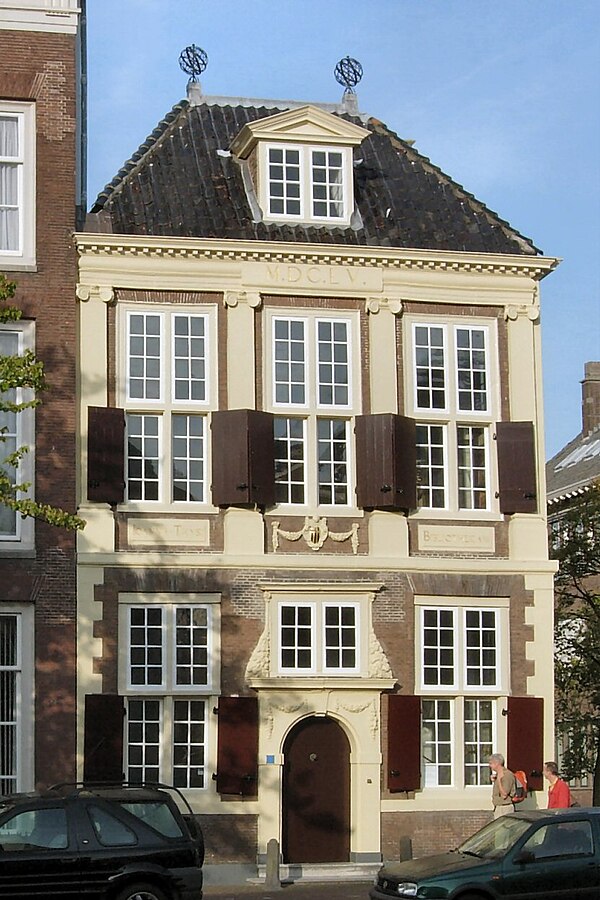
© Wikimedia Commons
Bibliotheca Thysiana
- De collectie bestaat voornamelijk uit 2500 boeken en talrijke pamfletten uit de nalatenschap van de 17e-eeuwse geleerde Johannes Thysius.
- De bibliotheek is gevestigd in een speciaal ontworpen gebouw uit 1655, dat het Nederlandse classicisme vertegenwoordigt en het enige gebouw uit de 17e eeuw is dat nog steeds dienst doet als bibliotheek.
- Hoewel het een onafhankelijk instituut is, zijn de materialen van de Bibliotheca Thysiana toegankelijk via de universiteitsbibliotheek op slechts een paar honderd meter afstand.
- De bibliotheek is uniek vanwege de Swedenborgiana-collectie, een bijzonderheid omdat deze boeken na de dood van Thysius werden verworven.
- De Bibliotheca Thysiana herbergt ook een van de 14 overgebleven boekenwielen ter wereld, een interessant historisch artefact.

© Wikimedia Commons
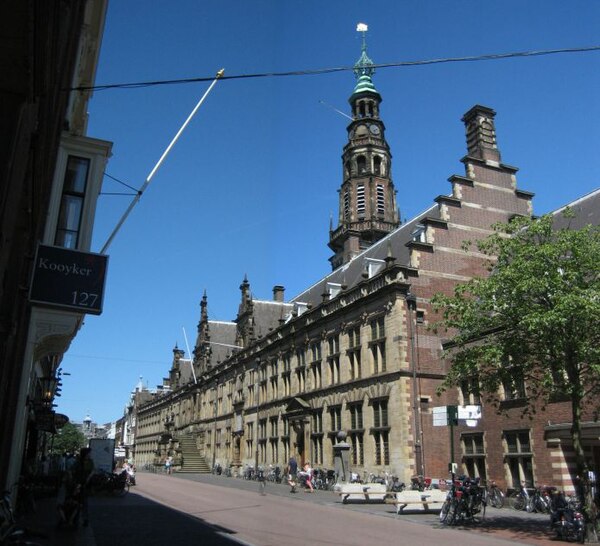
Stadhuis van Leiden
- De oorspronkelijke bouw van de gevel dateert uit 1597 en werd in 1940 herbouwd na een brand in 1929.
- Het gebouw is oorspronkelijk ontworpen door Lieven de Key in 1597 en later herbouwd door Cornelis Jouke Blaauw in 1940.
- Het heeft de status van rijksmonument met monumentnummers 24647 en 519571.
- Het Stadhuis dient als locatie voor bruiloften en gemeenschapsbijeenkomsten in Leiden en ligt tussen de Breestraat en de Vismarkt.
- Een brand in 1929 veroorzaakte aanzienlijke schade, wat leidde tot een reconstructie van de gevel en een daaropvolgende restauratie van de toren en het carillon.
Rechtbank Den Haag zittingsplaats leiden
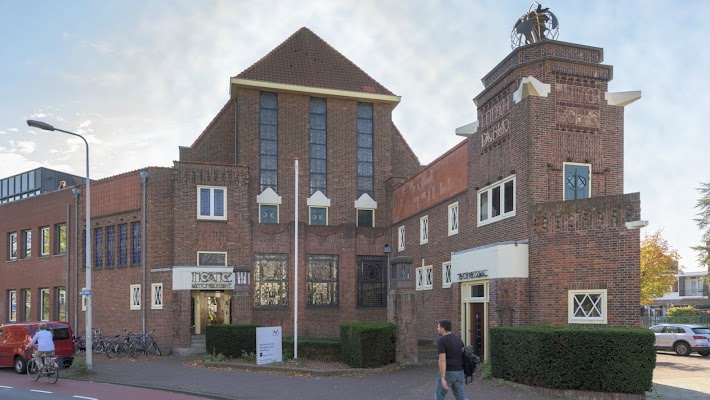
- Arrondissementsrechtbank Den Haag, voorheen 's-Gravenhage, is een van de elf rechtbanken in Nederland.
- De rechtbank is opgericht op 1 oktober 1838 en is verantwoordelijk voor het noordelijke deel van Zuid-Holland, vergelijkbaar met de regionale politie-eenheid Den Haag.
- De rechtbank houdt zitting op drie locaties: Den Haag, Gouda en Leiden.
- Delft en Alphen aan den Rijn zijn in 2013 gesloten.
- Het arrondissement is verdeeld in drie regio's: Den Haag, Gouda en Leiden, die elk meerdere gemeenten omvatten.
- Bepaalde zaken, voornamelijk de kantonzaken, worden behandeld op de betreffende zittingslocaties in Leiden en Gouda, die voor sommige van dit soort zaken ook dienst doen als loket.
© Wikimedia Commons
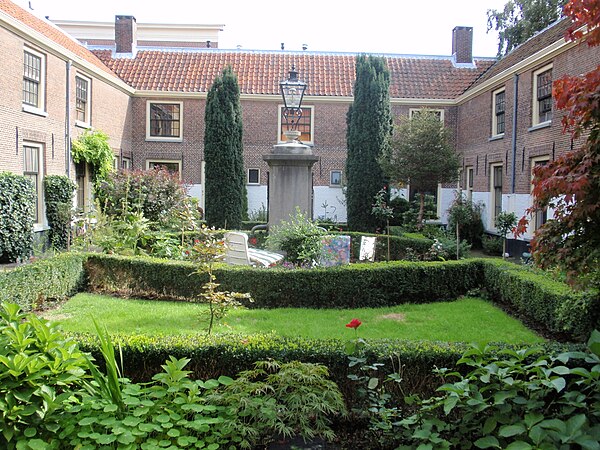
Brouchovenhof
- Het Brouchovenhofje werd in 1631 gebouwd door Jacob van Brouchoven op verzoek van zijn zus, de weduwe Anna van Baersdorp van Brouchoven, vlakbij het Sionshofje.
- Gedetailleerde architectonische elementen zoals familie-initialen, familiewapens en motieven sieren de gevel van het Van Brouchovenhof en getuigen van harmonie en vakmanschap.
- Het hofje, ontworpen door stadsarchitect Arent van 's-Gravensande, bestond uit zestien huizen voor oudere calvinisten, met voorrang voor familieleden van de oprichter.
- De regentenzaal boven de poort was versierd met portretten van Jan Anthonisz. van Ravesteyn, die om veiligheidsredenen in 1892 werden vervangen.
- De integratie van de regentenzaal en de toegangspoort op straatniveau is een karakteristiek kenmerk van de Van Brouchovenhof en beïnvloedde de bouwstijl in de hele Republiek.
© Wikimedia Commons
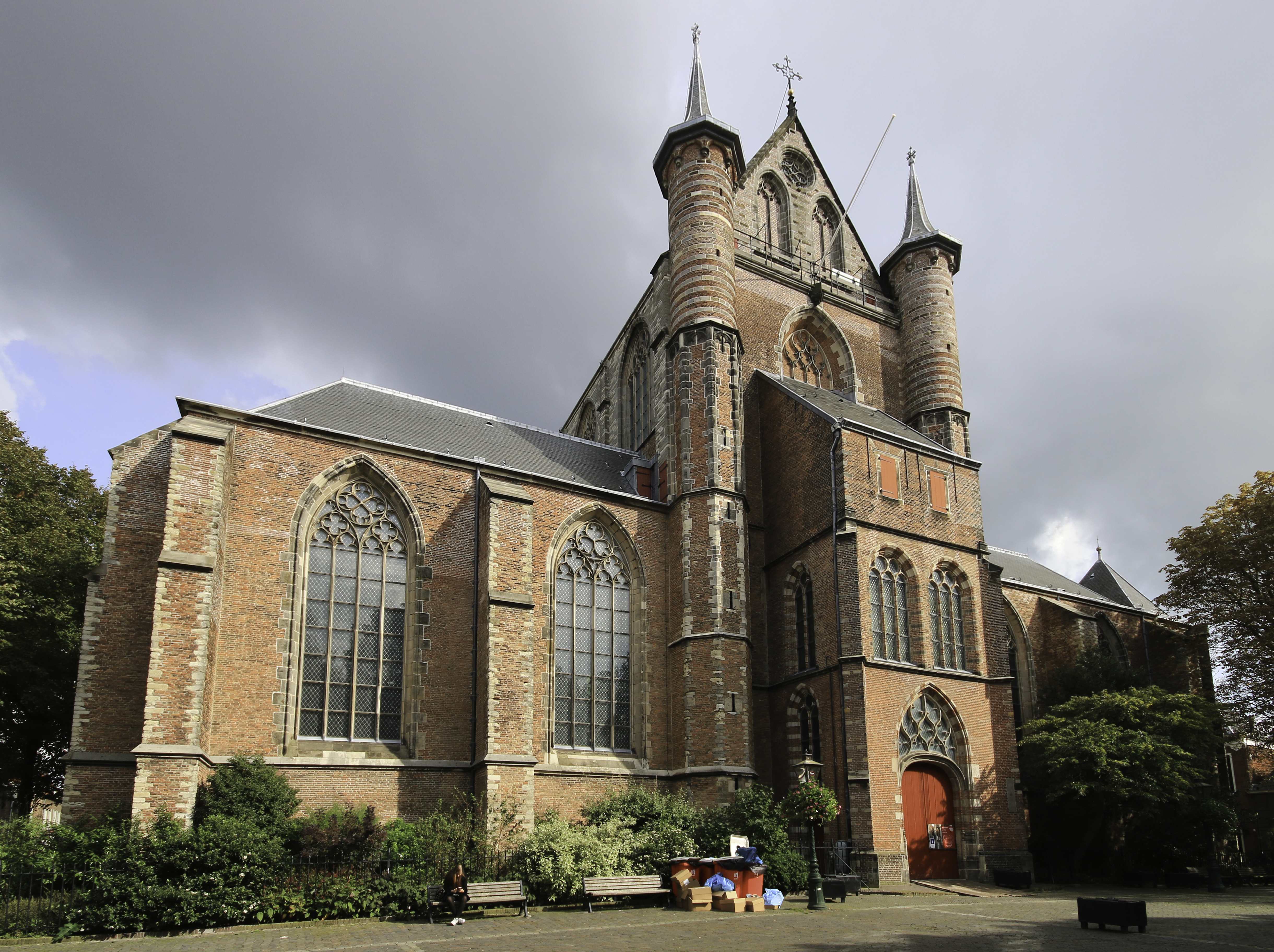
Pieterskerk
- De Pieterskerk, ook bekend als Sint-Pieterskerk, is een laatgotische kerk gewijd aan Sint-Pieter.
- Het is beroemd als de kerk van de Pilgrim Fathers, waar John Robinson, een belangrijke figuur onder hen, werd begraven.
- De bouw van het huidige gebouw duurde ongeveer 180 jaar, vanaf 1390, en verving een eerdere kapel uit 1121.
- Verschillende belangrijke Leidse persoonlijkheden, waaronder de schilder Jan Steen en de hoogleraar Herman Boerhaave, liggen in de kerk begraven.
- De kerk, die ooit een katholiek godshuis was, werd in 1971 ontwijd en vervolgens beheerd door een stichting.
- Sindsdien wordt het verhuurd voor verschillende evenementen en activiteiten.
- Tussen 2001 en 2010 werd een omvangrijk restauratieproject uitgevoerd, deels gefinancierd door de overheid.
- In de Pieterskerk zijn verschillende evenementen gehouden, waaronder een bekend concert van de koorgroep Libera, dat in 2007 op televisie werd uitgezonden.
- Vóór 1811 werden in de Pieterskerk veel prominenten begraven, zoals de theoloog Jacobus Arminius, Jan Steen, Joannes de Laet en John Robinson, de voorganger van de Pilgrim Fathers.
Dag 2 - Leiden
6 POIs te ontdekkenDag 2 - Ochtend à Leiden
5 Bezienswaardigheden - Duur : 3h00 - Afstand : 1.5 km - Wandelen : 0h19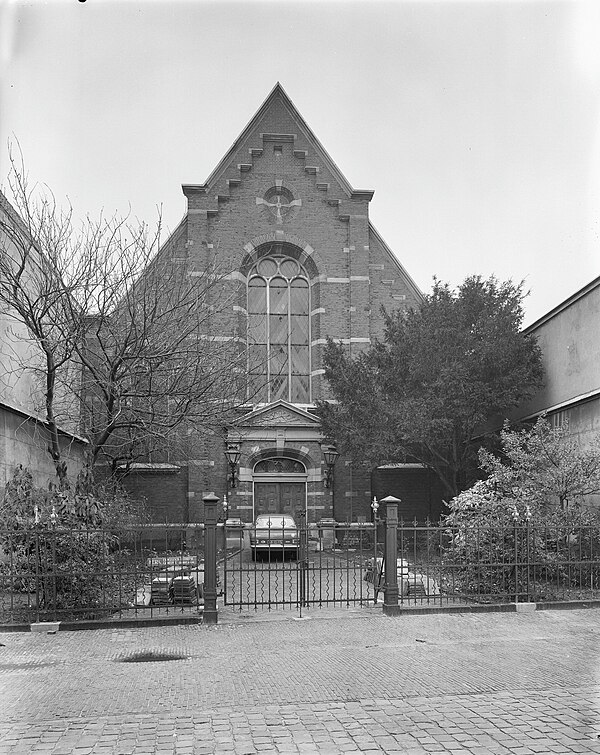
© Wikimedia Commons
Lutherse Kerk
- Oorspronkelijk gebouwd als een verborgen kerk achter huizen aan de Hooglandse Kerkgracht om geen aandacht te trekken, groeide de kerk in de loop der jaren door een groeiende lutherse gemeente.
- De kerk werd tot de sluiting in 2018 actief gebruikt voor lutherse diensten.
- In de loop der tijd stuitte het op weerstand en kocht het zelfs naburige huizen om klachten tegen te gaan. De lutherse gemeente had historische banden met Leidse studenten en er werd een uniek boek bijgehouden met lutheranen in de stad en hun bijdragen.
- Het interieur van de kerk was sober, maar versierd met Lutherse symbolen, schilderijen en geschenken zoals een in leer gebonden Bijbel en glas-in-loodramen.
- Het orgel in de kerk, dat oorspronkelijk uit 1672 stamt, is in de loop der eeuwen meerdere keren gerenoveerd en uitgebreid en is een belangrijk stuk muziekgeschiedenis.
© Wikimedia Commons
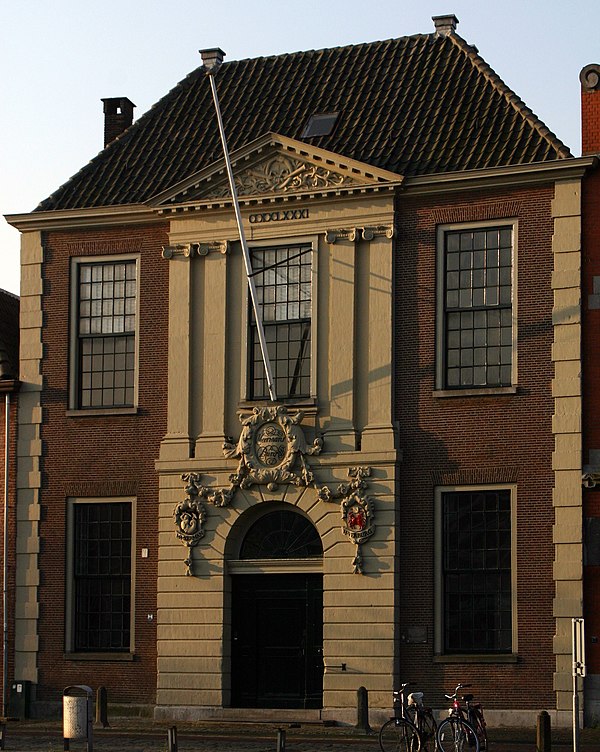
Meermansburg
- Eerder stond hier in de Middeleeuwen het Nazarethklooster, dat later werd vervangen door 63 kleine, geschakelde arbeiderswoningen en de bijnaam "Mierennest" kreeg vanwege de hoge bevolkingsdichtheid.
- Maerten Meerman en Helena Verburgh kochten het terrein van de stad Leiden en besloten een boerderij te bouwen uitsluitend voor "eerbare, sobere weduwen of vrouwen van goede naam, die ten minste ouder zijn dan veertig jaar en kinderloos zijn"." Stadsmeestertimmerman Anthony van Breetvelt ontwierp de eerste elf huizen, gevolgd door Jacobus Roman, die het poortgebouw met de regentenkamer ontwierp en de overige huizen voltooide.
- Het echtpaar legde een prachtige 17e-eeuwse stadstuin aan, die later werd verbouwd tot boomgaard.
- Hij werd later opnieuw aangelegd door de Franse tuinontwerper Emerry na een orkaan in 1717.
- Boven de poort van de binnenplaats is een grote cartouche met de namen Meerman en Verburgh, met aan weerszijden de familiewapens.
© Wikimedia Commons
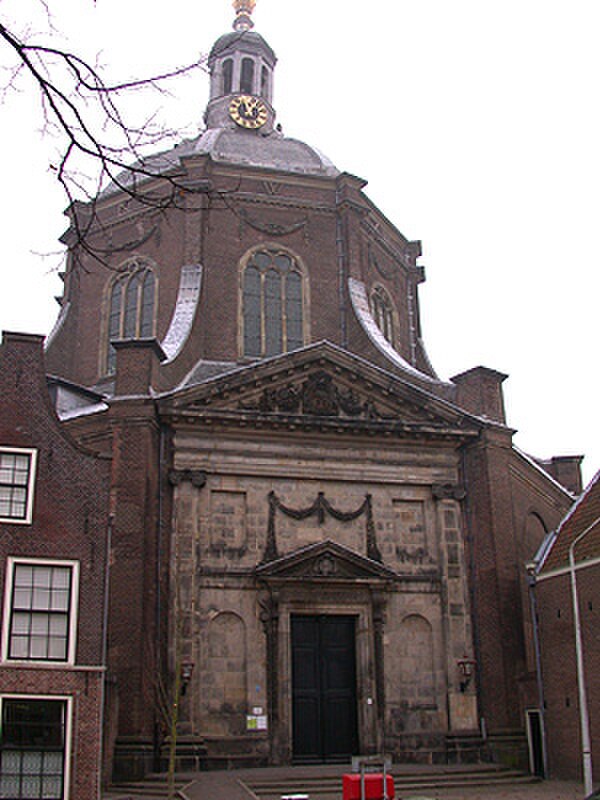
Marekerk
- De Marekerk is een protestantse kerk uit de 17e eeuw.
- De kerk werd gebouwd tussen 1639 en 1650 onder leiding van architect Jacob van Campen in de klassieke Nederlandse bouwstijl, met een zandstenen gevel en een achthoekige vorm met een imposante koepel.
- Het orgel, ontworpen door Pieter de Swart in 1560, stond oorspronkelijk in de Sint-Petruskerk in Leiden voordat het in 1733 naar de Marekerk werd verplaatst.
- De Marekerk is de eerste kerk die na de Reformatie in Leiden werd gebouwd en de preekstoel is kenmerkend voor protestantse kerken, geïnspireerd op de Nieuwe Kerk in Haarlem.
© Wikimedia Commons
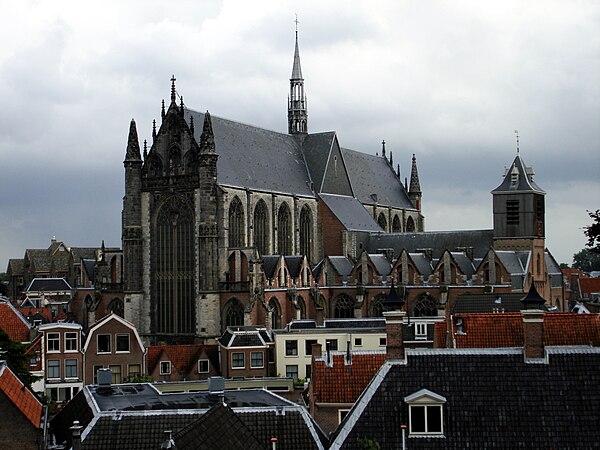
Hooglandse Kerk
- De Hooglandse Kerk is een gotische kerk in Leiden, Nederland, die voornamelijk gewijd is aan Sint Pancras en momenteel dienst doet als protestantse kerk in Nederland.
- De bouw van de kerk begon in de 14e eeuw, waarbij verschillende fasen bijdroegen aan de huidige gotische architectuur.
- Verschillende fasen droegen bij aan de huidige gotische architectuur.
- In de loop der tijd veranderde het uiterlijk van de kerk doordat er in de 16e en 17e eeuw kleine huizen aan de muren werden toegevoegd, wat gevolgen had voor de externe structuur.
- In de 19e en 20e eeuw werd de Hooglandse Kerk gerenoveerd als gevolg van schade door explosies en de behoefte aan onderhoud, wat leidde tot onregelmatige restauratiewerkzaamheden tot de officiële heropening in 1979.
- Momenteel is de kerk nog steeds actief en worden er diensten en evenementen gehouden en dient het als locatie voor conferenties en concerten.
© Wikimedia Commons
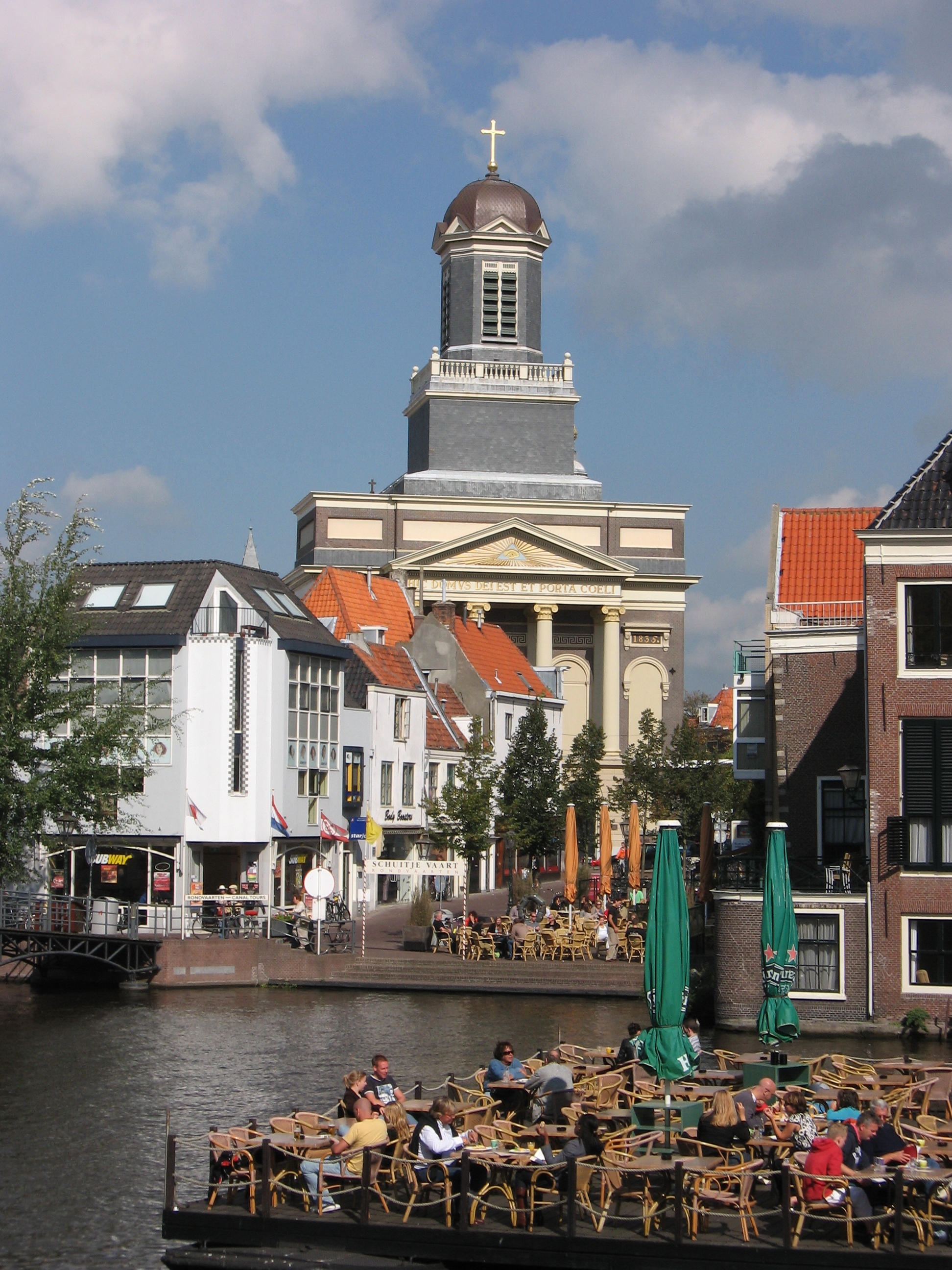
Hartebrugkerk
- Gebouwd in 1836 door architect Theo Molkenboer in neoklassieke stijl, heeft het de status van rijksmonument.
- De naam "Hartebrugkerk" komt van de nabijheid van de gelijknamige brug en is in de volksmond bekend als de Coeliekerk.
- Door de protestantse overheersing beleden de katholieken in Nederland hun geloof altijd in schuilkerken, tot de invoering van de godsdienstvrijheid leidde tot de bouw van deze katholieke kerk in Leiden.
- De buitenkant van de kerk vertoont neoklassieke invloeden met Ionische zuilen, een timpaan met een 'alziend oog' en een Latijnse inscriptie boven de ingang.
- Een orgel uit 1877 verving het tijdelijke orgel uit een schuilkerk en verdere restauraties vonden plaats in 1903, 1981 en 1985.
- In de Hartebrugkerk vinden tegenwoordig kooruitvoeringen plaats, vaak met gregoriaanse gezangen, en binnen staan talloze reliëfs, beelden en een aantal religieuze kunstwerken.
Dag 2 - Middag à Leiden
1 Bezienswaardigheden - Duur : 0h45 - Afstand : 0 km - Wandelen : 0h00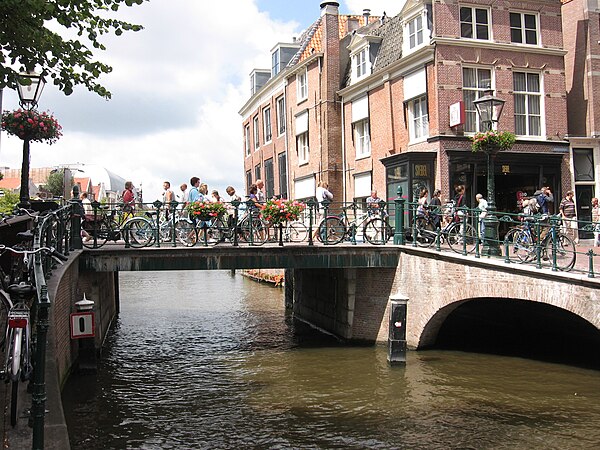
© Wikimedia Commons
Sint Jansbrug
- De brug overspant de Oude Rijn, verbindt de Donkersteeg en de Hoogstraat en staat vlak voor het punt waar de Oude en Nieuwe Rijn samenkomen.
- De brug dateert uit 1914 en verving in zijn huidige vorm een eerder bouwwerk uit het einde van de 12e eeuw.
- In 1968 aangewezen als rijksmonument en opgenomen in het monumentenregister met identificatienummer 25669.
- De brug dient als weg en vormt een verbinding tussen de Donkersteeg en de Hoogstraat in Leiden.Bijzonderheden zijn een breedte van 6,90 meter, een doorvaarthoogte van 3,54/5,75 meter en een doorvaartbreedte van 1,12/1,69 meter.
Praktische details voor een bezoek aan Leiden
Wat mee te nemen
De essentie voor twee dagen in Leiden: goede wandelschoenen, een lichte regenjas of windjack en een compacte tas voor uw dagelijkse spullen. De grachten en het plaveisel maken de straten soms vochtig, dus antislip schoenen zijn een echte meerwaarde. Neem ook een kleine paraplu mee als u buiten het natte seizoen reist.
Pas afhankelijk van het seizoen uw uitrusting aan: in de zomer volstaan een hoed en zonnebrandcrème bij zonnige dagen; in lente en herfst zijn lagen handig om temperatuurvariaties aan te kunnen. In de winter houdt een warme jas, handschoenen en een sjaal u comfortabel, vooral tijdens avondwandelingen langs de grachten.
Overige onmisbaarheden: een externe batterij voor uw telefoon, een herbruikbare waterfles en, als u meerdere monumenten wilt bezoeken, een kleine map om tickets en bevestigingen in te bewaren. Denk eraan kaarten of offline navigatie-app mee te nemen voor het geval de verbinding beperkt is.
Wanneer Leiden bezoeken en hoeveel het kost
Beste seizoenen
De ideale periode hangt af van wat je zoekt: de lente brengt milde temperaturen en bloeiende perkjes die de grachten verlichten, terwijl de zomer lange dagen biedt die zich lenen voor boottochten en terrassen. De herfst kleurt de bomen langs de kades en geeft een meer intieme sfeer, en de winter, hoewel frisser, kan rustige straten en een rustige sfeer brengen.
Praktische punten: in het hoogseizoen mag je meer toeristen verwachten en is het nodig om sommige restaurants te reserveren; in het laagseizoen profiteer je van lagere verblijfprijzen en meer rust. Evenementen van de universiteit kunnen sommige weekends extra druk maken.
Samengevat zijn lente en zomer ideaal voor het licht en buitenactiviteiten, terwijl de herfst betovert door zijn tinten en de winter door zijn kalmte. Kies afhankelijk van jouw smaak voor drukte of rust en pas je reserveringen dienovereenkomstig aan.
Drukte
Tijdens de werkdagen en het laagseizoen is Leiden rustiger, ideaal om de hofjes en musea te verkennen zonder haast. Weekends zijn van nature drukker, vooral nabij de bekendste plekken en rondom de kades. De zomermaanden trekken een groter toeristisch publiek aan, wat zich uit in de restaurants en boottochten.
Om de drukte te vermijden: vertrek vroeg in de ochtend naar populaire sites zoals de Bibliotheca Thysiana of geef de voorkeur aan late namiddag voor wandelingen langs de grachten. De kleine straatjes die grenzen aan de hoofdassen zijn vaak minder druk en bieden een meer lokale ervaring.
Als je op totale rust uit bent, plan dan je bezoek buiten de schoolvakanties en grote weekends. Toch behoudt Leiden zelfs tijdens drukke periodes een intieme sfeer dankzij zijn grootte en de vele hoekjes om te verkennen.
Geschat budget
<h3>Budget economisch</h3><p>Voor twee dagen, reken ongeveer €60–100 per nacht voor goedkope accommodatie, kies eenvoudige maaltijden (broodjes, bakkerijen) en wandel zoveel mogelijk. Voorzie ook een klein budget voor musea of boottochten (als je die doet). Tip: kies lunchvormige maaltijden en vermijd toeristische restaurants om geld te besparen.</p>
<h3>Budget gemiddeld</h3><p>Door te kiezen voor een drie-sterrenhotel of een mooi appartement, prijzen rond €100–180 per nacht, kun je jezelf wat diners in een restaurant permitteren, een boottocht en een betaalde toegangsprijs per persoon tot een museum. Dit budget laat ruimte voor een koffie op het terras en een lokaal souvenir.</p>
<h3>Budget comfort</h3><p>Voor een ontspannend verblijf met charmant hotel, wat nettere diners en begeleide activiteiten, reken op €180+ per nacht. Hiermee kun je reserveringen maken in gerenommeerde restaurants, privé-bezoeken of culinaire ervaringen en het kopen van lokaal handwerk als souvenir.</p>
Veelgestelde vragen over uw verblijf in Leiden
Laatste indrukken
In twee dagen in Leiden raak je een stad aan waar geschiedenis en het dagelijkse leven langs de grachten natuurlijk samenvloeien. Tussen bibliotheken, kerken en kleine hofjes maakt de balans tussen grote monumenten en intieme plekken elke omweg rijk aan ontdekkingen. Reserveer tijd om te slenteren zonder doel: vaak is het juist in die momenten dat de stad haar mooiste herinneringen prijsgeeft.
Onthoud om wandelen en geniet- pauzes te combineren, om wat reserveringen te plannen voor avonden of populaire activiteiten, en om je ogen open te houden voor de hofjes die langs de route verscholen liggen. Als je op zoek bent naar een meer speelse ervaring, zal de stedelijke escape game van Coddy een andere en gedenkwaardige twist aan je bezoek geven.
Neem de eenvoud mee van de momenten langs het water, de schoonheid van de gevels en het rustige zijn van de binnenplaatsen. Leiden ontdek je met vertraging en nieuwsgierigheid — je vertrekt waarschijnlijk met de wens om terug te komen om je favoriete plekjes verder te verkennen.
Wil je meer avontuur?
Ontdek onze stedelijke escape games om je bezoek om te toveren tot een interactief avontuur!
