

You will visit the most beautiful points of interest in Eindhoven
Two days in Eindhoven: design, light and urban walks
If you're heading to Eindhoven for a weekend, expect a city that breathes design, innovation and a calm energy. Starting at the Philips Museum plunges you immediately into the industrial history turned into a cultural experience; from there, the city reveals itself on foot, by bike, or by taking the time to listen to a concert at the Frits Philips Music Center.
Over these two days, the itinerary plays with contrasts: modern buildings like the Blob, sacred interiors like the Chapel of the Resurrection, and tranquil villas tucked away from the tourist routes. You alternate museum visits, coffee breaks and moments of contemplation in churches with a strong character.
I offer a pace that takes into account the walking time between sites and leaves room for unexpected discoveries. The days are balanced: slightly busier mornings, relaxed afternoons to enjoy the places at your own pace. The approach remains simple and practical, ideal for a first visit or a short, restorative stay.
Throughout the guide I give you concrete tips on where to stay, how to get around and what to book before arriving. Take this guide as a flexible road map: leave room for the unexpected, there’s always a cafe or an interesting street to discover between each stop.
Practical 2-day summary
Day 1 — Morning: start at the Philips Museum for an introduction to local history, then head to the Frits Philips Music Center if a concert or guided tour is planned. Take a break to visit the St. Catherine’s Church and the Paterskerk, two places that offer a soothing contrast to the urban buzz. Do not miss the De Laak villa which illustrates more intimate residential architecture. Afternoon: finish the day with the Chapel of the Resurrection and a stroll around the Blob.
Day 2 — Morning: revisit the sites you want to see again, or explore the Philips Museum and the Frits Philips Music Center in more depth if there are exhibitions or rehearsals that interest you. The atmosphere of the churches and villas benefits from being savored calmly. Afternoon: back to the Chapel of the Resurrection for a moment of calm, then finish the walk at the Blob for a few photos in the changing light. This plan leaves room for a relaxed lunch and tasty stops.
Day 1
7 stops
Morning
-
1
Philips Museum
Museums · 1h30
- The Philips Museum is housed in Philips' first light bulb factory.
- The museum explores the history of Philips, starting from the end of the 19th century, when it manufactured carbon filament lamps. Many designs of Louis Kalff, including the logo and corporate style, as well as medical equipment starting in 1918, such as X-ray equipment, CT equipment and MRI scanners, are exhibited in the museum.
- The Museum also showcases various types of lamps such as incandescent, fluorescent, sodium, energy-saving and LED lamps, and consumer electronics such as radios, televisions, shavers and various kitchen appliances.
- In 1993, Frits Philips officially opened the Philips factory from 1891 and simultaneously opened a gallery where the Stichting Lichteffecten in Painting and Sculpture can exhibit its art collection.
- Also narrated in the museum is the history of company manager Jan Zwartendijk, who helped thousands of Jews escape from Lithuania during World War II.
© Wikimedia Commons
Coddy games passing through
-
2
Muziekcentrum Frits Philips
Theatres and entertainments · 45 min
- Muziekgebouw Eindhoven was originally named Muziekcentrum Frits Philips.
- The venue was opened in 1992 by Queen Beatrix. The building was first named after Frits Philips, the son of one of the founders of Philips.
- The name was changed to Muziekgebouw Frits Philips Eindhoven around 2010 after a renovation.
- Since 2013, it has been the home base of Philzuid, a symphony orchestra born from the merger of Het Brabants Orkest and the Limburgs Symfonie Orkest.
- The programming includes a wide range of genres, from classical music, jazz, pop and world music to concerts for very young audiences.
© Wikimedia Commons
Coddy games passing through
-
3
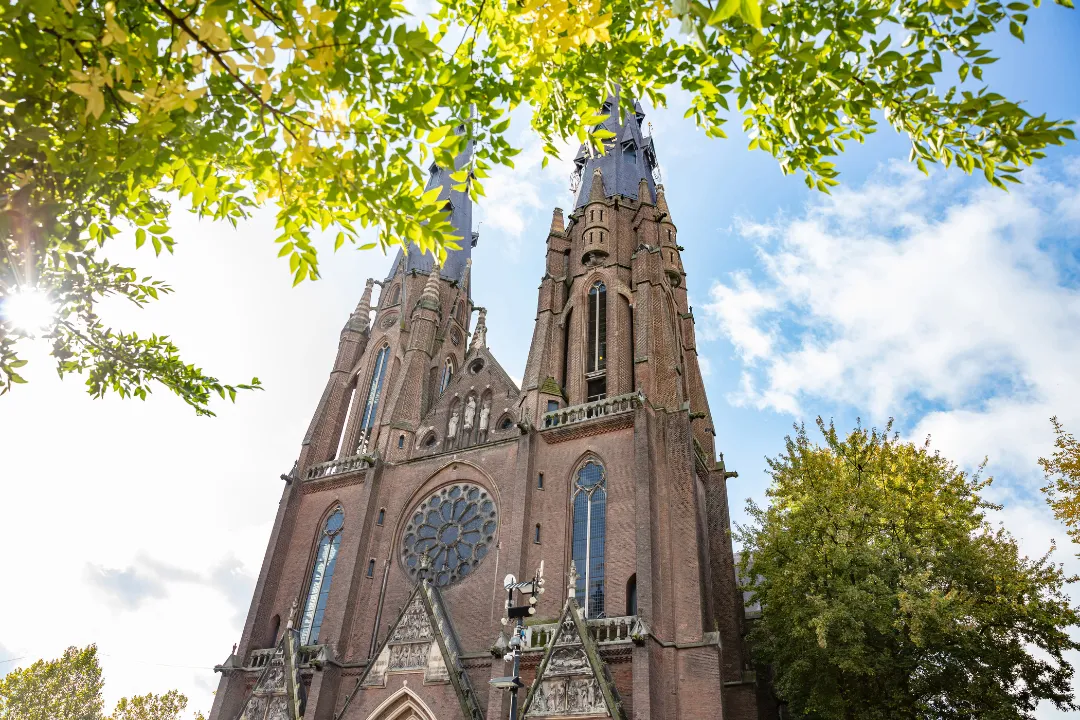
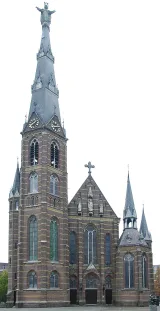
Paterskerk
Religion · 30 min
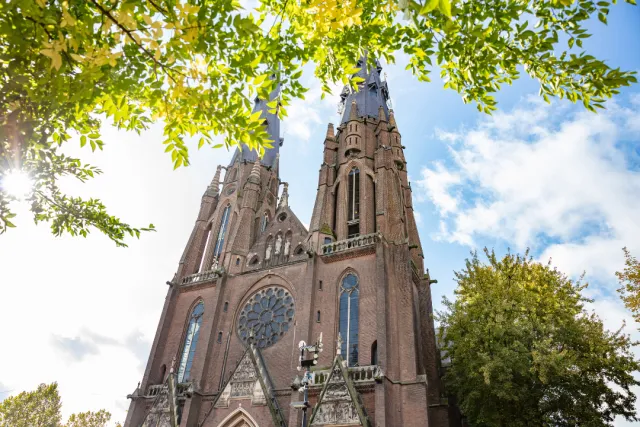
- The De Augustijnenkerk, also known as the Paterskerk and R.K.
- Heilig Hartkerk, was built for the Augustinian fathers in the late 19th century.
- The church is built in a neo-Gothic style, featuring three naves in cross style, and a hexagonal tower that rises to 66 meters.
- A prominent feature of the church is the Sacred Heart statue on the spire crafted by sculptor Jean Geelen.
- Known colloquially as 'Jesus Daredevil', it stands four meters high, weighs 800 kilos, and is made of wood and copper.
- Above the church door are statues of the patron saints of the Order of Augustine; Augustine (middle), his mother Monica (left), and Nicolas of Tolentino (right).
- The interrior is executed in clean masonry, with stained glass windows in the transept facades by artists Daan Wildschut and Charles Eyck.
- The church was constructed on the grounds of a former canal due to swampy underground, which required 1400 poles for its foundation instead of the budgeted 1140.
- The building was completed in 1898.
© Wikimedia Commons
Coddy games passing through
-
4
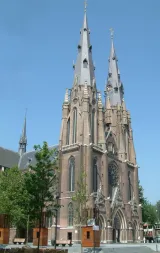
St. Catherine's Church
Religion · 30 min
- The Catharinakerk is a Roman Catholic church dedicated to Saint Catherine of Alexandria.
- The neo-Gothic building was designed by the architect Pierre Cuypers and is considered an early highlight of his career.
- The construction of the current church began in 1861 and was completed in 1867, at a cost of 279,000 Dutch guilder.
- The carillon was donated in 1966 by employees of Philips and was cast by Bell Foundry Eijsbouts in Asten.
- The church suffered significant damage during bombing raids in 1942 and 1944, but was restored after the war.
- The church has two organs, one of which is one of the largest in the Netherlands with 5723 pipes.
© Wikimedia Commons
Coddy games passing through
-
5
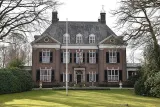
De Laak (villa)
Historic architecture · 45 min
- Villa De Laak is a residential building built in 1907, commissioned by Anton Philips and designed by Johan Wilhelm Hanrath.
- The villa is built in the around 1800 style and includes a carriage house, orangery, coachman's house, gardener's house, butler/driver's house, and a garden designed by Leonard Springer.
- The villa was also used as a residence for high guests of Philips, and for high foreign visitors to the municipality of Eindhoven.
- The villa and its various buildings form an architectural whole in a sober, neoclassical style, made of brick.
- The main building is characterized by strict symmetry, a high slate-covered hipped roof, brick pilasters, and some garlands and other stone decorations.
- The building is not open to the public but can be seen well from the Parklaan and Nachtegaallaan.
- In August 2015, it was revealed that a painting by a student of Rembrandt had been stolen from the villa in March 2014.
- The painting was a portrait of Rembrandt's son, Titus.
© Wikimedia Commons
Coddy games passing through


Afternoon
-
6
Chapel of the Resurrection
Religion · 30 min
- The De Verrijzeniskapel is also known as the Augustijnenkapel and Studentenkapel. It originally served the expanding secondary school and boarding school, the Augustinianum, connected to the Augustinian Monastery Mariënhage.
- The chapel was part of a building designed by Paul Bellot, possibly in collaboration with Pierre Cuypers Jr.
- In 1959, the chapel was taken over by the newly established Technical University of Eindhoven for lectures and exams.
- Currently, it is still used by the Student Church, but also hosts cultural events.
- The structure is an example of brick expressionism and is classified as a rijksmonument (national monument).
© Wikimedia Commons
Coddy games passing through
-
7
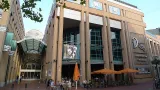
Blob
45 min
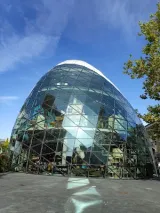
- "De Blob," a futuristic building on 18 Septemberplein in Eindhoven, designed by Italian architect Massimiliano Fuksas, stands out with its unconventional design compared to the traditional surroundings. The name "Blob" stands for Binary Large Object, symbolizing a data cluster in the computer world and representing a unique building with irregular shapes in architecture. The Blob serves as the entrance to the Admirant shopping center and includes a lunchroom offering views of 18 Septemberplein and the Philips light tower on the other side. The 25-meter-high Blob has become an integral part of Eindhoven's skyline, blending "old Eindhoven" represented by the Philips light tower with the modern architecture of "new Eindhoven." The Blob has evolved into a popular meeting place for both locals and visitors, fostering a sense of community in Eindhoven. Beneath the 18 Septemberplein, a fietstunnel (bicycle tunnel) connects the Blob with another building called the Bubble, designed by a different architect.
- The tunnel leads to an underground bicycle parking facility for 1700 bikes. Eindhoven distinguishes itself as a design city with the innovative structures and advanced technology present on 18 Septemberplein, showcasing a commitment to design and modern architecture.
Coddy games passing through
Day 2
7 stops
Morning
-
8
Philips Museum
Museums · 1h30
- The Philips Museum is housed in Philips' first light bulb factory.
- The museum explores the history of Philips, starting from the end of the 19th century, when it manufactured carbon filament lamps. Many designs of Louis Kalff, including the logo and corporate style, as well as medical equipment starting in 1918, such as X-ray equipment, CT equipment and MRI scanners, are exhibited in the museum.
- The Museum also showcases various types of lamps such as incandescent, fluorescent, sodium, energy-saving and LED lamps, and consumer electronics such as radios, televisions, shavers and various kitchen appliances.
- In 1993, Frits Philips officially opened the Philips factory from 1891 and simultaneously opened a gallery where the Stichting Lichteffecten in Painting and Sculpture can exhibit its art collection.
- Also narrated in the museum is the history of company manager Jan Zwartendijk, who helped thousands of Jews escape from Lithuania during World War II.
© Wikimedia Commons
Coddy games passing through
-
9
Muziekcentrum Frits Philips
Theatres and entertainments · 45 min
- Muziekgebouw Eindhoven was originally named Muziekcentrum Frits Philips.
- The venue was opened in 1992 by Queen Beatrix. The building was first named after Frits Philips, the son of one of the founders of Philips.
- The name was changed to Muziekgebouw Frits Philips Eindhoven around 2010 after a renovation.
- Since 2013, it has been the home base of Philzuid, a symphony orchestra born from the merger of Het Brabants Orkest and the Limburgs Symfonie Orkest.
- The programming includes a wide range of genres, from classical music, jazz, pop and world music to concerts for very young audiences.
© Wikimedia Commons
Coddy games passing through
-
10
Paterskerk
Religion · 30 min
- The De Augustijnenkerk, also known as the Paterskerk and R.K.
- Heilig Hartkerk, was built for the Augustinian fathers in the late 19th century.
- The church is built in a neo-Gothic style, featuring three naves in cross style, and a hexagonal tower that rises to 66 meters.
- A prominent feature of the church is the Sacred Heart statue on the spire crafted by sculptor Jean Geelen.
- Known colloquially as 'Jesus Daredevil', it stands four meters high, weighs 800 kilos, and is made of wood and copper.
- Above the church door are statues of the patron saints of the Order of Augustine; Augustine (middle), his mother Monica (left), and Nicolas of Tolentino (right).
- The interrior is executed in clean masonry, with stained glass windows in the transept facades by artists Daan Wildschut and Charles Eyck.
- The church was constructed on the grounds of a former canal due to swampy underground, which required 1400 poles for its foundation instead of the budgeted 1140.
- The building was completed in 1898.
© Wikimedia Commons
Coddy games passing through
-
11
St. Catherine's Church
Religion · 30 min
- The Catharinakerk is a Roman Catholic church dedicated to Saint Catherine of Alexandria.
- The neo-Gothic building was designed by the architect Pierre Cuypers and is considered an early highlight of his career.
- The construction of the current church began in 1861 and was completed in 1867, at a cost of 279,000 Dutch guilder.
- The carillon was donated in 1966 by employees of Philips and was cast by Bell Foundry Eijsbouts in Asten.
- The church suffered significant damage during bombing raids in 1942 and 1944, but was restored after the war.
- The church has two organs, one of which is one of the largest in the Netherlands with 5723 pipes.
© Wikimedia Commons
Coddy games passing through
-
12
De Laak (villa)
Historic architecture · 45 min
- Villa De Laak is a residential building built in 1907, commissioned by Anton Philips and designed by Johan Wilhelm Hanrath.
- The villa is built in the around 1800 style and includes a carriage house, orangery, coachman's house, gardener's house, butler/driver's house, and a garden designed by Leonard Springer.
- The villa was also used as a residence for high guests of Philips, and for high foreign visitors to the municipality of Eindhoven.
- The villa and its various buildings form an architectural whole in a sober, neoclassical style, made of brick.
- The main building is characterized by strict symmetry, a high slate-covered hipped roof, brick pilasters, and some garlands and other stone decorations.
- The building is not open to the public but can be seen well from the Parklaan and Nachtegaallaan.
- In August 2015, it was revealed that a painting by a student of Rembrandt had been stolen from the villa in March 2014.
- The painting was a portrait of Rembrandt's son, Titus.
© Wikimedia Commons
Coddy games passing through
Afternoon
-
13
Chapel of the Resurrection
Religion · 30 min
- The De Verrijzeniskapel is also known as the Augustijnenkapel and Studentenkapel. It originally served the expanding secondary school and boarding school, the Augustinianum, connected to the Augustinian Monastery Mariënhage.
- The chapel was part of a building designed by Paul Bellot, possibly in collaboration with Pierre Cuypers Jr.
- In 1959, the chapel was taken over by the newly established Technical University of Eindhoven for lectures and exams.
- Currently, it is still used by the Student Church, but also hosts cultural events.
- The structure is an example of brick expressionism and is classified as a rijksmonument (national monument).
© Wikimedia Commons
Coddy games passing through
-
14
Blob
45 min
- "De Blob," a futuristic building on 18 Septemberplein in Eindhoven, designed by Italian architect Massimiliano Fuksas, stands out with its unconventional design compared to the traditional surroundings. The name "Blob" stands for Binary Large Object, symbolizing a data cluster in the computer world and representing a unique building with irregular shapes in architecture. The Blob serves as the entrance to the Admirant shopping center and includes a lunchroom offering views of 18 Septemberplein and the Philips light tower on the other side. The 25-meter-high Blob has become an integral part of Eindhoven's skyline, blending "old Eindhoven" represented by the Philips light tower with the modern architecture of "new Eindhoven." The Blob has evolved into a popular meeting place for both locals and visitors, fostering a sense of community in Eindhoven. Beneath the 18 Septemberplein, a fietstunnel (bicycle tunnel) connects the Blob with another building called the Bubble, designed by a different architect.
- The tunnel leads to an underground bicycle parking facility for 1700 bikes. Eindhoven distinguishes itself as a design city with the innovative structures and advanced technology present on 18 Septemberplein, showcasing a commitment to design and modern architecture.
Coddy games passing through
Practical details for visiting Eindhoven
Where to stay
For a weekend in Eindhoven, aim for the city center or the requalified industrial district of Strijp-S to be close to museums, music venues and many cafes. The center offers easy access to the listed sites and the train station, while Strijp-S attracts with its creative vibe and boutique hotels. Look for accommodation that prioritizes walking or bike rental to save time.
Types of accommodations: friendly hostels for tight budgets, practical 3-star hotels and design hotels more comfortable for a polished experience. Expect modern and well-located options; most establishments offer breakfast and reliable Wi-Fi. In peak season, book in advance for the best-rated properties.
Indicative budget per night: for an economical stay, consider hostels or small hotels; for mid-range comfort, target 3-star hotels; for more space and style, choose a design hotel or a city-center suite. Whatever you choose, favor proximity to the sites to maximize your time on site. Proximity, comfort and style are the criteria to prioritize.
Getting around
Eindhoven is very walkable if you stay central: many sites are close to one another. The bus network covers the metro area for longer journeys; check local lines and mobility apps for timetables. There is no local subway network, so buses and cycling are the main solutions.
Cycling is an excellent option: the city is bike-friendly with clear routes and parking opportunities. Renting a bike for a day saves time between Strijp-S, the museum and residential areas like De Laak. If you prefer not to pedal, taxi or ride-hailing trips remain convenient for late returns after a concert.
Practical tips: bring comfortable walking shoes, a transit app or the local map to identify stops, and a lock if you rent a bike. Walking, taking the bus and cycling are the three complementary ways to explore the city efficiently.
What to bring
The contents of your suitcase will depend on the season, but a few essentials stay useful all year round: comfortable walking shoes, a lightweight waterproof jacket, and a small day bag. If you plan to attend a concert at the Frits Philips Music Center, think of an outfit suited to the venue and a light layer for the sometimes chilly rooms.
For spring and autumn, bring layers: a sweater, a windbreaker and a compact umbrella. In summer, breathable clothing, a cap and sunscreen are recommended for daytime strolls; in winter, a warm jacket, a hat and gloves will be appreciated. Don’t forget your power bank and a digital copy of your reservations.
In short: comfortable shoes, layered clothing, rain protection and a power bank. Add a slightly dressier outfit if you’re planning an evening at a concert or a meal at a nicer restaurant.
Advance reservations
Some steps are worth booking to avoid disappointments. Start by checking and booking tickets for the Philips Museum if it offers limited access or temporary exhibitions. Likewise, for the Frits Philips Music Center, book your seats for a concert or performance in advance — evenings can fill up depending on the program.
For meals, reserve a table if you want to dine at a popular downtown restaurant, especially Friday and Saturday evenings. If you're planning a special experience (gourmet dinner, private guided tour), a reservation is essential. Finally, for playful activities like urban escape games, it's advisable to reserve slots: Coddy's urban escape games are among the attractive options and can sell out quickly.
In short: museum, concerts, restaurants and escape games are the items to book first. Booking will let you organize the days without stress and fully enjoy the places.
Must-see extras
Besides the main itinerary, the city offers hidden gems to discover at your leisure: wander through the Strijp-S district for its renovated industrial vibe, explore local design boutiques, or seek out independent galleries. A stroll along residential streets reveals calm villas and gardens, perfect for those who love domestic architecture.
For a fun experience, try Coddy's urban escape games — a playful way to tour the city by solving puzzles. If you're a fan of contemporary art, look into small temporary galleries or exhibitions outside the big institutions. Finally, treat yourself to a break in a local café to observe daily life and capture the real vibe of the city.
Highlights: Strijp-S, urban escapes, galleries and architectural strolls. These extras enrich your stay without derailing the original itinerary.
Local delights
Eindhoven's culinary scene is varied, blending traditional snacks, local breweries and creative restaurants. For a quick break, sample popular Dutch specialties in cafés and stalls: bitterballen or a stroopwafel with coffee always hits the spot between two visits. Cheese and a selection of local beers also deserve a try.
For more structured meals, look for restaurants that highlight seasonal produce and contemporary cuisine. Local markets are perfect places to discover fresh produce, pastries and street food stalls; they provide a great opportunity to taste authentic flavors in the middle of the day.
Tip: pair a lunch in a modern dining space at Strijp-S with a coffee break in the city center to capture the culinary diversity. Snacks, cheeses, local beers and markets make up the essentials not to miss.
When to visit Eindhoven and how much it costs
Best seasons
The best times to visit are spring and autumn: the weather is generally mild and the days remain pleasant for strolling. Autumn has the advantage of hosting design-related events that attract an audience interested in creativity and innovation, enriching the city’s cultural offering. Spring will greet you with a city waking up, ideal for enjoying terraces and parks.
Summer is convenient for long days and outdoor activities, but it’s also the period when some sites can be busier. Winter is quieter and allows for serene visits, provided you can accept shorter days and some possible weather. Choose the season according to your priority: events, calm or sunshine.
In short, spring and autumn offer the best balance between pleasant weather and reasonable crowds, with a rich cultural program for those who want to explore it.
Crowds
Eindhoven doesn't have the tourist pressure of big metropolises, but crowds vary by season and events. Weekends are naturally busier, and major events draw national and international audiences. If you want to avoid the crowds, plan visits during the week or early in the morning to enjoy museums and churches in a calmer atmosphere.
Places like the Philips Museum and the Frits Philips Music Center can be busier during temporary exhibitions or concerts; modern urban sites like the Blob are popular photo spots in the late afternoon. For a quieter experience, explore residential neighborhoods and small galleries outside peak hours.
In short: target weekday mornings for fewer people, avoid highly sought-after evenings if you prefer calm, and book in advance for the most in-demand moments. Mornings, weekdays and reservations are your allies against crowds.
Estimated budget
- Budget travel
- Budget friendly: For a tight trip, count on hostels or small budget hotels, simple meals (street food, cafés) and transport by bus or on foot. Plan around 60-90 € per day for economical accommodation, cheap meals, limited entry fees and travel. Look for affordable lunches and avoid large paid venues if budget is tight. Consider a prepaid bus card or walking to reduce costs.
- Mid-range budget
- Medium budget: Aiming for mid-range comfort, choose a 3-star hotel, one or two meals at a mid-range restaurant and a few paid entries (museums, activities). Expect about 120-180 € per day for accommodation, meals and visits. This budget allows you to enjoy a good restaurant once, tickets for a standard concert, and a few extras like a day-long bike rental.
- Comfort budget
- Comfort budget: For a more polished stay, opt for a design hotel, dinners in well-regarded restaurants, and guided activities or premium tickets. Plan 220 € and up per day depending on the level of service (suite, gourmet dinner, concert seats). This level offers great flexibility and more personalized experiences, with less compromise on comfort and timing of visits.
Frequently asked questions about your stay in Eindhoven
Ready for your weekend in Eindhoven?
These two days offer a comfortable blend of museums, contemporary architecture, and moments of calm in churches and villas. Starting at the Philips Museum and ending your afternoons near the Blob gives you a coherent reading of the city, between industrial heritage and modernity. I hope this itinerary helps you enjoy the essentials without rushing.
Allow yourself the freedom to improvise: a coffee, a gallery, or a park can transform a well-planned day into a pleasant surprise. Remember to book what must be booked, bring comfortable shoes, and, above all, keep a pace that suits you. Eindhoven lends itself to relaxed discoveries and inspiring strolls.
Enjoy your stay: whether you’re here for design, music, or simply to wander, the city offers an experience that is both accessible and rich in small discoveries. Enjoy every pause and take time to appreciate the contrasts between public spaces and more intimate corners.