Sébastien Balieu
Are you organising a school trip in France and wondering how many adult supervisors to plan for? French national education rules vary depending on the pupils’ age group, their number and the type of trip.
In nursery and primary school, French regulations set minimum ratios. In middle and high school, the headteacher determines the supervision required.
Here are the applicable rules, the exceptions to know about and some examples to help you plan your trip without getting lost in the official regulations.
Which regulations apply to school trips in France?
The key reference is the circular of 16 July 2024, published in Official Bulletin No. 30 on 25 July 2024.
It replaces the circular of 13 June 2023 and applies to school trips and journeys organised by public primary schools, middle schools and high schools.
It distinguishes, in particular, between trips without overnight stays and school journeys, which include one or more overnight stays.
One important clarification: the ratios below apply to activities other than physical and sporting activities (PSA). Skiing, swimming and certain outdoor activities are subject to specific rules.
Table of supervision ratios for school trips in France
Here are the minimum ratios set out in the circular of 16 July 2024, excluding the nearby-trip exceptions described below.
Age group and type of trip | Minimum supervision | Above the threshold |
|---|---|---|
Nursery school, with or without an overnight stay | 2 adults for up to 16 pupils, including at least 1 teacher | +1 adult for every 8 pupils |
Primary school, without an overnight stay | 2 adults for up to 30 pupils, including at least 1 teacher | +1 adult for every 15 pupils |
Primary school, with an overnight stay | 2 adults for up to 24 pupils, including at least 1 teacher | +1 adult for every 12 pupils |
Middle school | No national numerical ratio | Number set by the headteacher |
High school | No national numerical ratio | Number set by the headteacher |
Thresholds are calculated based on all pupils taking part in the trip, treated as a single class. In practice, any part of a group counts: as soon as a threshold is exceeded, even by one pupil, plan for one more adult.
These figures are regulatory minimums, not necessarily the most suitable level of supervision for your plans. A trip into a city centre, involving lots of travel and several groups, may warrant more adults.
Nursery school: how many adult supervisors should you plan for?
For a nursery school trip, you would normally need at least two adults, including one teacher, for a group of up to 16 pupils.
Above that number, one additional adult is needed for every 8 pupils.
Number of pupils | Minimum number of adults |
|---|---|
1 to 16 | 2 |
17 to 24 | 3 |
25 to 32 | 4 |
33 to 40 | 5 |
For example, a class of 26 pupils in their final year of nursery school going on a day trip to a museum needs at least four adults.
The exception for nearby trips
The 2024 circular allows greater flexibility for certain short trips.
In nursery school, the teacher may go with just one other adult, even if the class has more than 16 pupils, provided all of the following conditions are met:
The journey is made on foot or in a coach specially hired for the trip.
The destination is close to the school.
The total duration does not exceed half a school day.
For groups of more than 24 pupils, the presence of an additional adult is still recommended.
This exception for nursery school is one of the rules that changed in 2024. The 2023 circular required the usual ratios, even for short trips close to the school.
Primary school: the rules from Year 1 to Year 6
For a trip without an overnight stay, the minimum supervision is two adults, including one teacher, for up to 30 pupils.
Above 30 pupils, one adult must be added for every 15 pupils.
Number of pupils | Minimum number of adults |
|---|---|
1 to 30 | 2 |
31 to 45 | 3 |
46 to 60 | 4 |
61 to 75 | 5 |
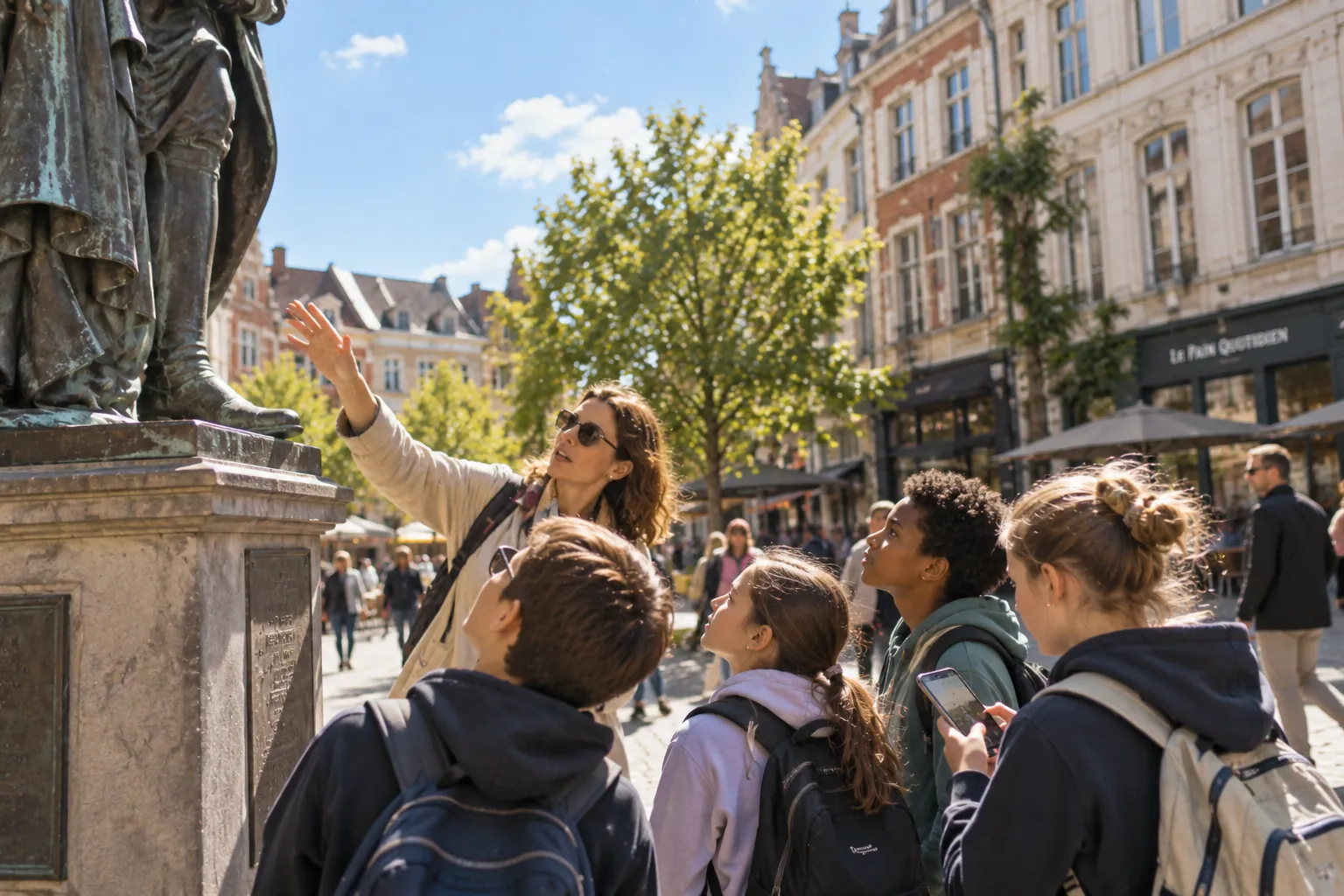
A class of 28 Year 6 pupils visiting a city’s historic centre must therefore plan for at least two adults.
If two classes combine for the same trip, with a total of 52 pupils, four adults are required.
Can a teacher go on a trip alone with their class?
Yes, in one specific case.
In primary school, a teacher may supervise their class alone on a compulsory nearby trip, on foot or in a coach specially hired for the trip, provided the total duration does not exceed half a school day.
This option should not be extended to all trips. The usual ratios apply to a full-day visit or one involving more complex travel.
In all cases, the headteacher must authorise the trip and assess its safety arrangements.
Middle and high school: no national ratio is imposed
Unlike in primary school, there is no national numerical supervision ratio for ordinary school trips in middle and high school.
The circular of 16 July 2024 gives the headteacher responsibility for determining the number of adult supervisors required.
They must take into account, in particular, the pupils’ age and number, the duration of the trip, the travel involved, and any difficulties or risks along the route.
It is therefore not accurate to claim that regulations require one adult for every 30 middle school pupils, or that two adults per class are mandatory in high school.
For example, suppose 60 middle school pupils are taking part in a city tour. The headteacher must assess whether three, four or more adults are needed, depending on the route, traffic, arrangements for keeping groups together and planned activities.
When preparing your proposal, it is more useful to suggest a clear plan than simply state a number of adult supervisors. Explain who will supervise the pupils, how the journey will be organised and what to do if a problem arises.
Special cases to know about
A trip with an overnight stay
In primary school, the thresholds are stricter for school journeys.
Two adults are required for up to 24 pupils, then one additional adult for every 12 pupils.
In nursery school, the thresholds remain the same as in the general table.
In primary school, a person trained in first aid must be present at the accommodation, including overnight, if no member of the host organisation has this qualification. In middle and high school, this qualification is recommended for the supervision team.
A trip combining nursery and primary school pupils
If your trip includes nursery and primary school pupils, the nursery school ratios apply to the whole group.
For example, a group of 35 pupils including children in their final year of nursery school and Year 1 pupils would normally need five adults.
A joint trip for Year 6 and Year 7 pupils
Cycle 3 includes Years 4, 5 and 6, and Year 7.
For a trip without an overnight stay involving primary and middle school pupils in this context, the primary school supervision ratios apply.
Physical and sporting activities
Trips involving skiing, climbing, road cycling or water sports may require additional supervision and approved instructors.
So do not apply the ratios for a cultural visit directly to a ski day or cycling trip.
Refer to circular No. 2017-116 of 6 October 2017 and, for swimming, the specific provisions currently in force.
Who can be counted as an adult supervisor?
In primary school, the team must include at least one teacher. Other adults may include teachers, school staff, ATSEM (nursery school assistants), parents or volunteers.
Adults must be authorised in writing by the headteacher. For some staff, including ATSEM, authorisation from their employer is also required.
Note two important points:
Special needs assistants (AESH) are not counted towards the general supervision ratio. Their role is to support the pupil or pupils they are assigned to, not to supervise the whole class.
Volunteers on civic service schemes are not counted as required adult supervisors either. They may take part in the trip, but cannot be responsible for supervising a group of pupils.
These ratios also apply during transport, and the coach driver is never counted as an adult supervisor.
So before asking another parent to join, check which people can actually be included in your supervision team.
For more information about their role, responsibilities and the required authorisations, also consult the Éduscol guide to school trips.
How do you supervise pupils split into teams in a city?
A guided visit with the whole group and a treasure hunt in small teams do not present exactly the same challenges.
When pupils follow different routes, meeting the minimum ratio alone is not enough to ensure appropriate supervision.
The 2024 circular allows teachers to temporarily entrust the supervision of groups of pupils to other adults. Two essential conditions must be met: the teacher must always know where their pupils are and be able to get to them very quickly if an incident occurs.
The teacher must also give supervisors the instructions they need to keep the group safe.
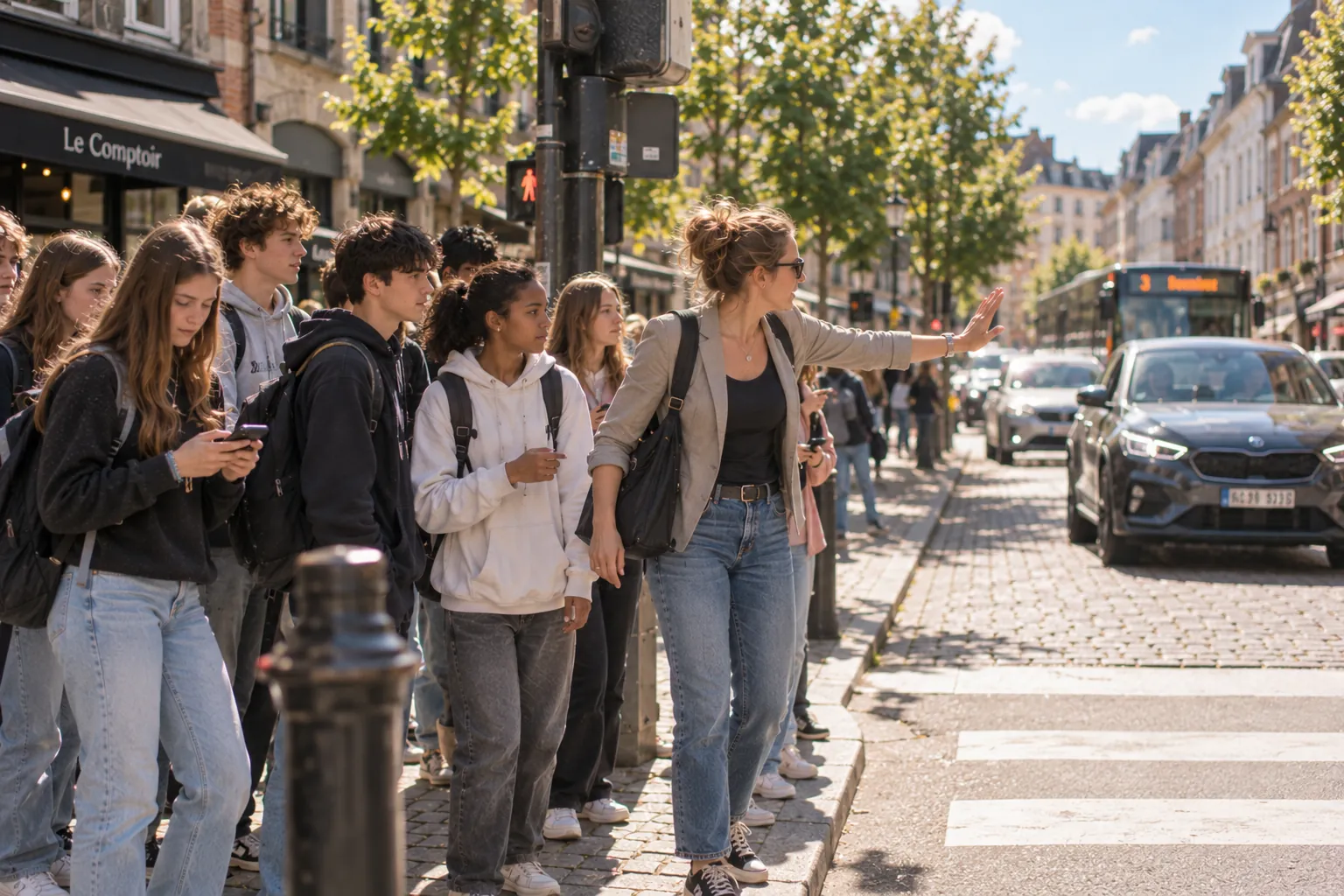
Before a trip into a city, plan how each team will be supervised, set the boundaries of the permitted area, arrange a means of communication and meeting points, and establish what to do if a pupil encounters a problem.
Pupils’ age matters greatly. An arrangement that might work for independent high school students may not be suitable for primary school pupils.
The trip leader and school management are responsible for approving the supervision arrangements, taking the regulations and the risks along the route into account.
Example: an urban escape game with Coddy
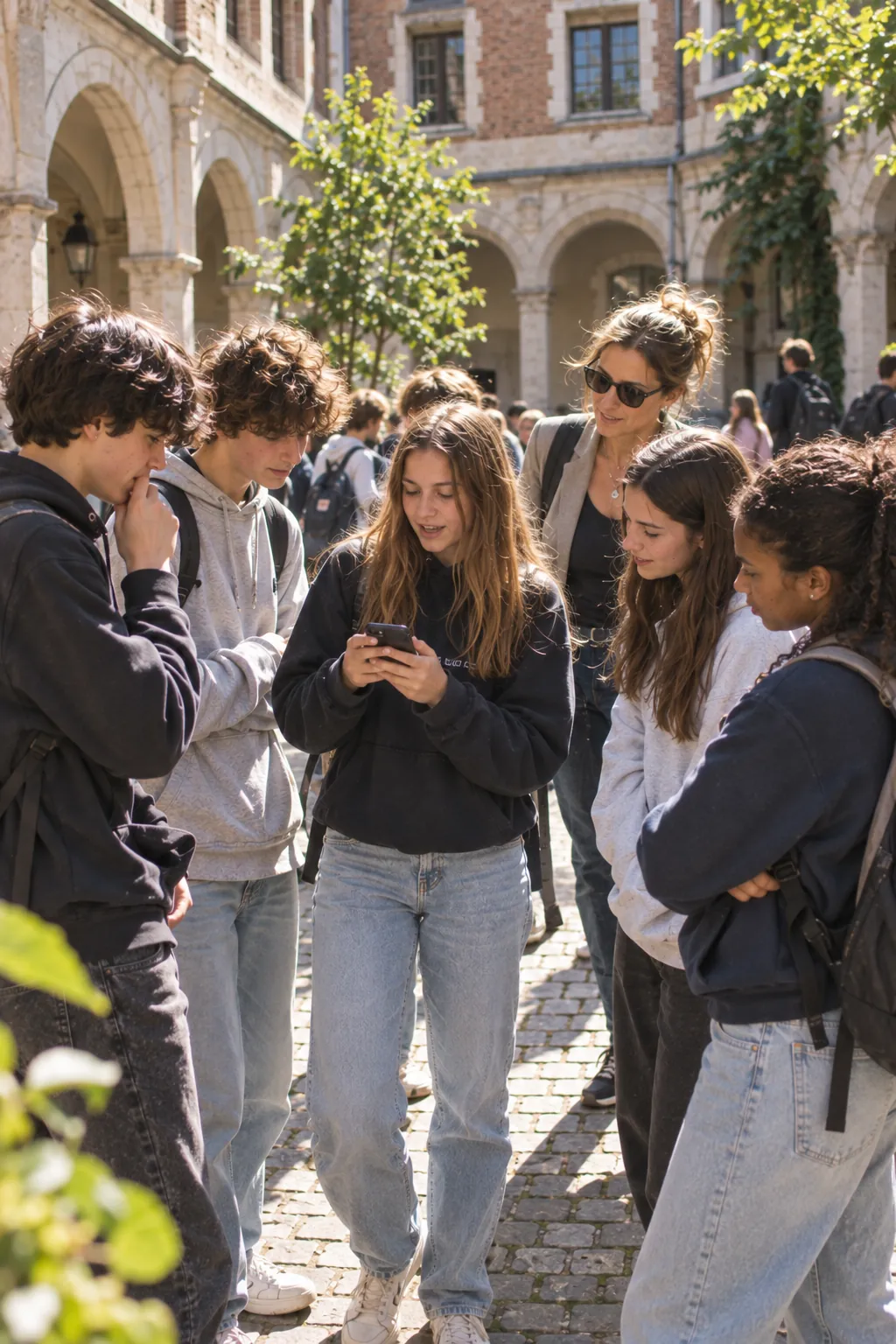
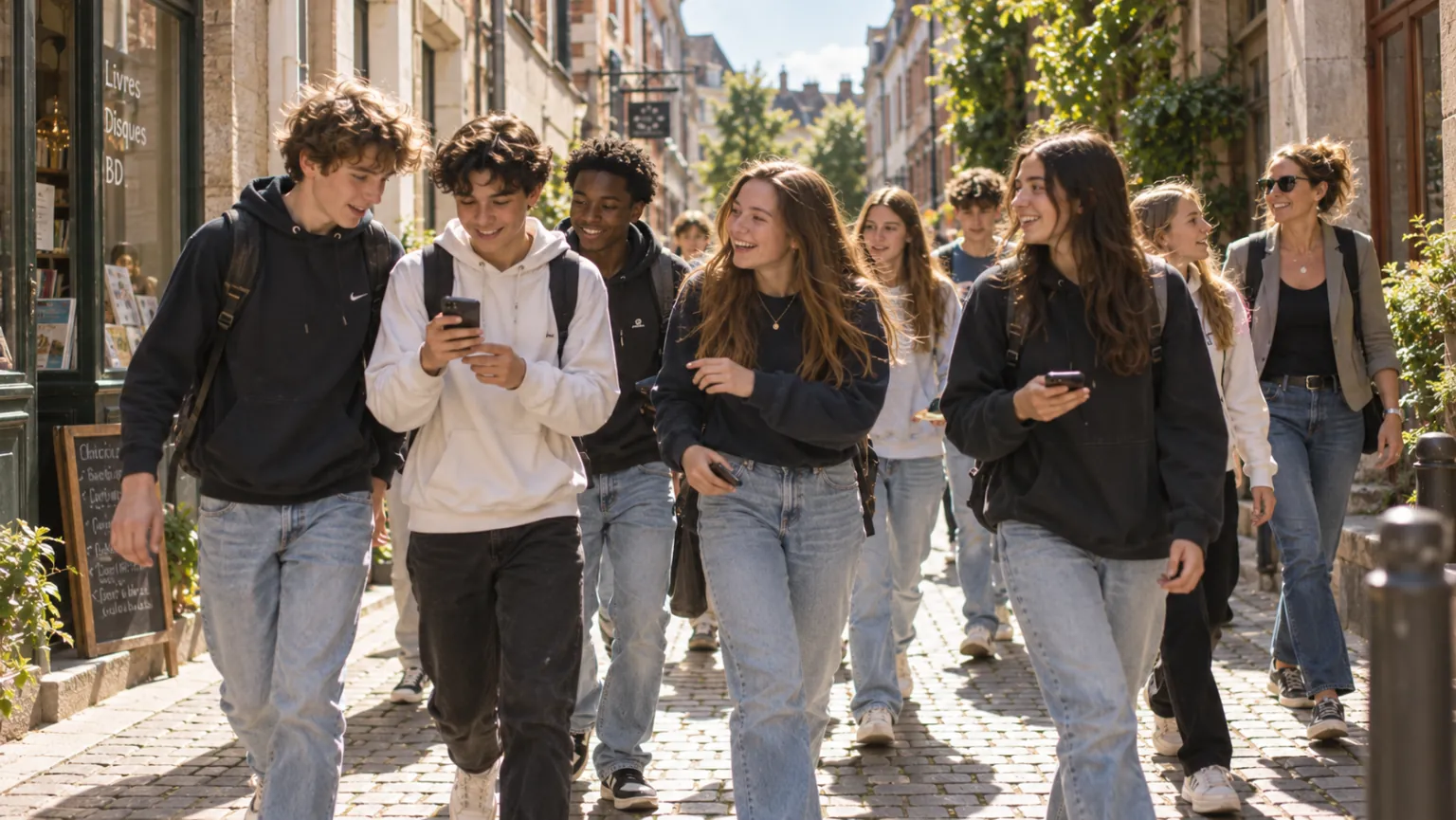
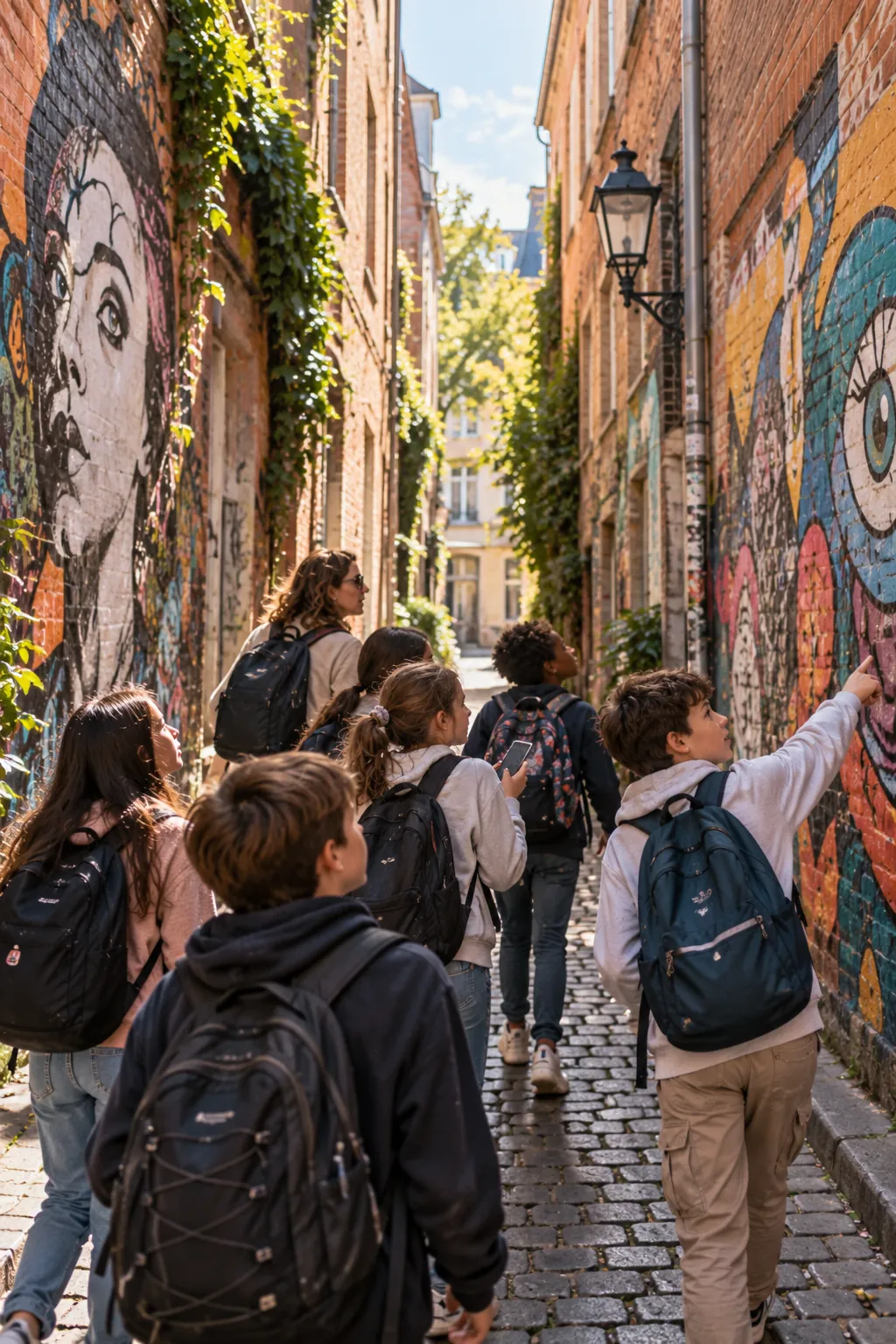
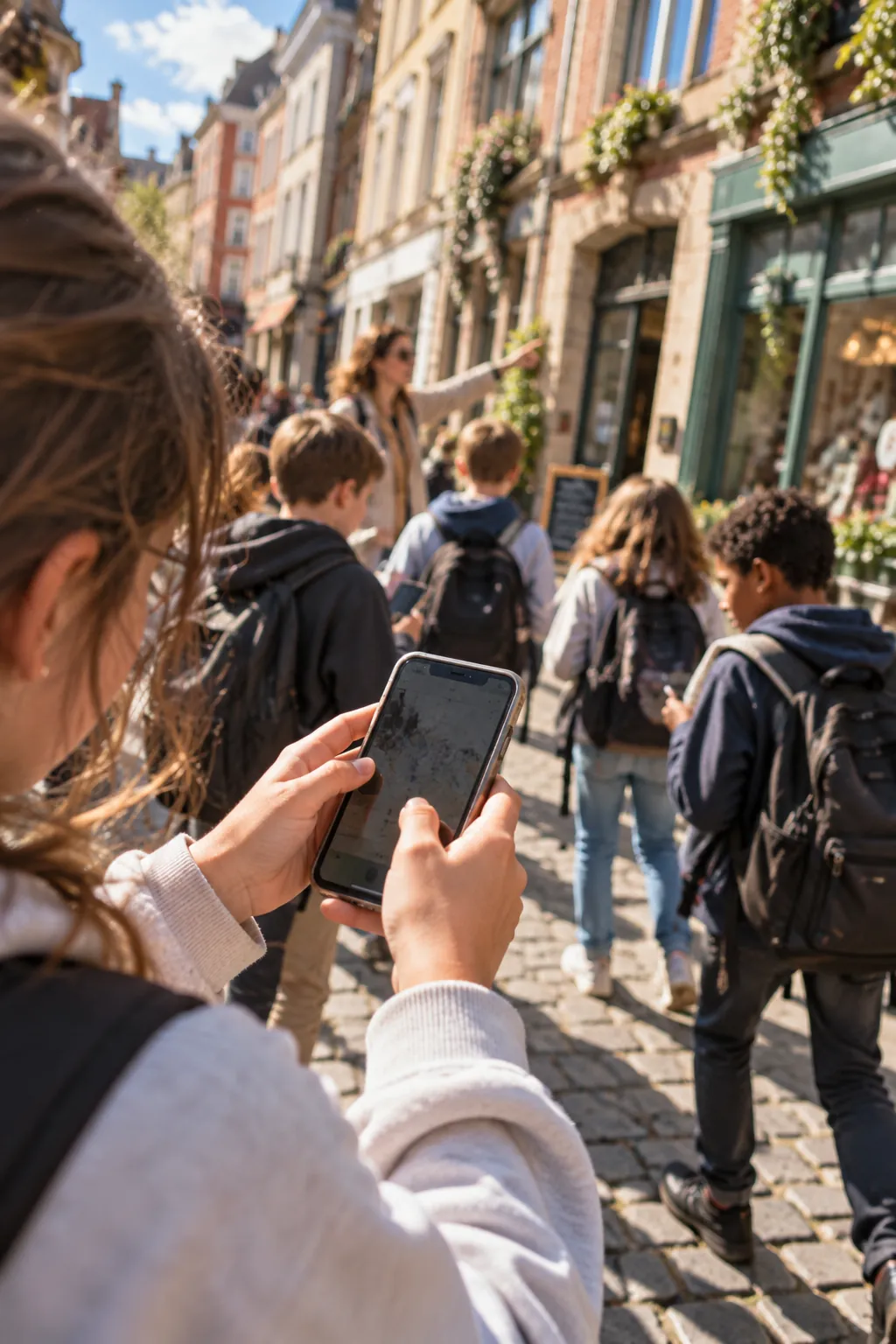
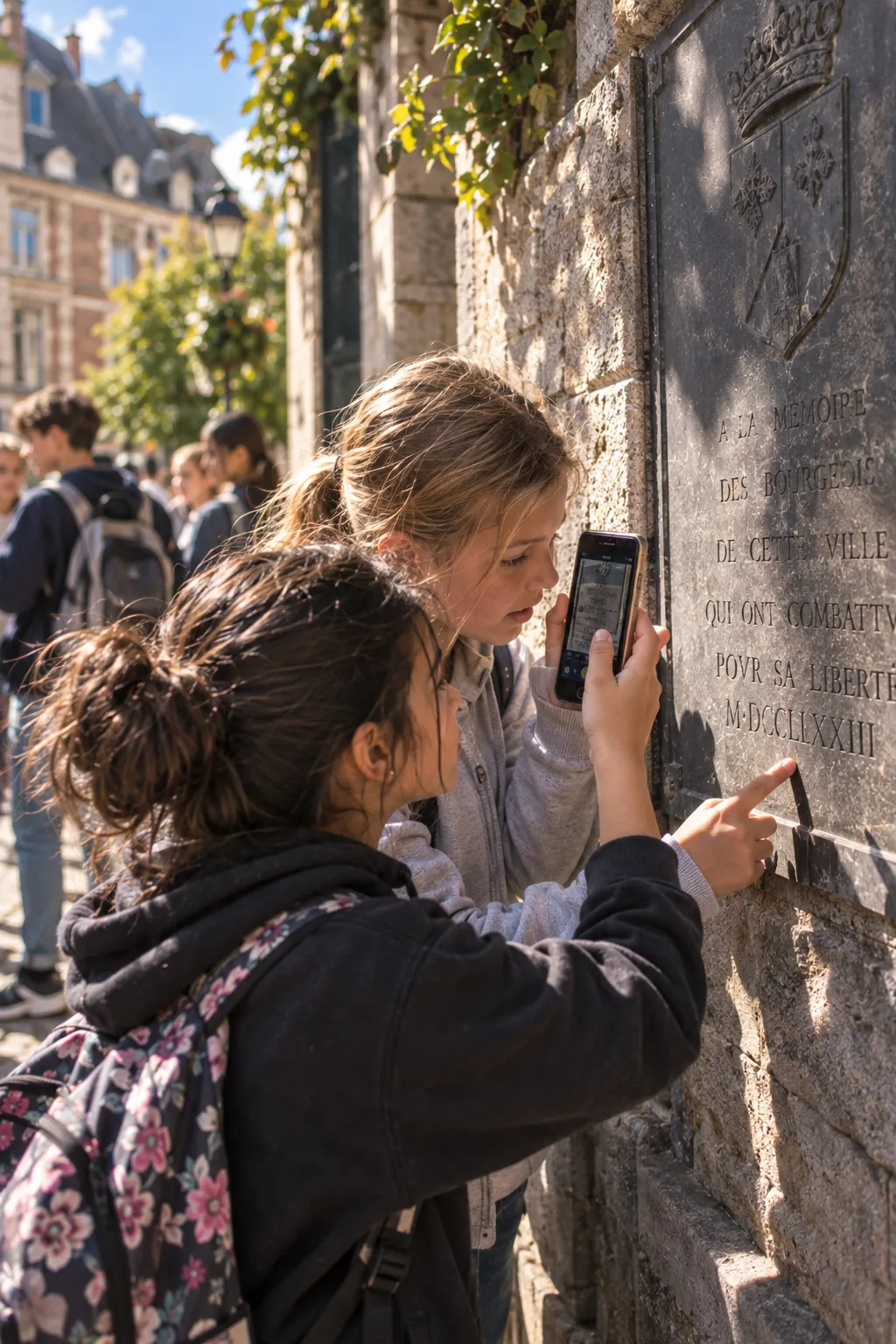
At Coddy, school trips take the form of exploration games in the city. Pupils move around in teams, usually of five or six, and solve puzzles using their smartphones.
Each team follows its own route. This avoids moving the whole class to the same place, but requires careful planning for supervision.
To make organisation easier, teachers have access to a web-based dashboard. They can view each team’s location and progress in real time, and send messages to one team or to all teams.
This tracking helps with coordination. It does not replace the required adult presence or the duty to supervise: a team’s GPS location alone cannot guarantee the safety of every pupil.
Adult supervisors can take part in the game for free, form their own team or use organiser mode. Naturally, their participation must be compatible with their supervision responsibilities.
You can find detailed answers to the questions “Can I track my pupils throughout the game?” and “Do pupils stay together?” in our school FAQ.
If you are considering this type of trip for your class, you can request a free Coddy demo to try out the game and dashboard before booking. A quote can then be prepared based on your city and group size.
Check your arrangements before setting off
When planning your trip, remember above all that the supervision ratio is a minimum, not an automatic guarantee of safety.
The planned group size must take into account the pupils who will actually be present, the adults authorised to supervise them and the demands of the route. Also plan for the possibility that a supervisor may have to drop out.
Finally, make sure all adults know the instructions and that everyone knows which group they are supervising and what to do if an incident occurs.
Clear arrangements, approved before setting off, help pupils enjoy the trip and allow teachers to focus on its educational value.
Frequently asked questions
In elementary school, two adults, at least one of whom must be a teacher, are legally sufficient for a day trip with 30 pupils, excluding physical and sports activities and situations requiring enhanced supervision. In preschool, four adults are normally required. In middle and high school, the number depends on the headteacher’s assessment.