Sébastien Balieu

You would like to organise a school outing with your class, but you have a few questions before discussing it with your school leadership. How many chaperones should you plan for? Is parental consent required? Does the school’s insurance cover off-site activities?
In French-speaking Belgium, the rules are not the same as in France. For a day trip, the Wallonia-Brussels Federation does not set a general supervision ratio that applies to all schools. Organisation depends in particular on the school leadership, the organising authority and the conditions of the outing.
Here are the points to check when preparing your activity, whether it's a cultural visit, a treasure hunt or a day exploring a city.
Which regulations apply to school outings in Belgium?
In the Wallonia-Brussels Federation (FWB), you first need to distinguish between two situations: one-day school outings, such as a museum visit, and overnight educational trips, such as outdoor education or ski trips.
Circular No. 6289 of 3 August 2017 concerns overnight educational trips and replaced several previous circulars relating to off-site activities and residential trips, including Circular No. 5777 of 2016.
In mainstream pre-primary and primary education, the rules on overnight trips are now set out in the annual circular on the organisation of the school year, including Circular No. 9754 of 24 June 2026 for the 2026–2027 school year. Other provisions may apply to special education or certain education networks.
These texts should not be used to automatically apply the supervision ratios for overnight trips to a day outing.
What about outings without an overnight stay?
For day outings, there is no general framework setting a specific number of chaperones per pupil for all French-speaking schools.
This does not mean that a school can organise an activity without rules. Supervising pupils, ensuring safe travel and organising the activity remain essential.
Before deciding on your supervision arrangements, check your school's internal regulations (ROI) and any instructions from your school leadership, education network or organising authority (PO).
How many chaperones are needed for a school outing?
This is often the first question school leadership asks.
For an outing without an overnight stay in Belgian French-speaking education, the number of chaperones must be determined according to the circumstances of the activity, under the responsibility of the school's competent authorities.
Several factors should be considered:
Pupils' ages. A Year 3 primary class is not as independent as a group of Year 12 pupils.
Number of pupils. The larger the group, the more organisation is needed for travelling and regrouping.
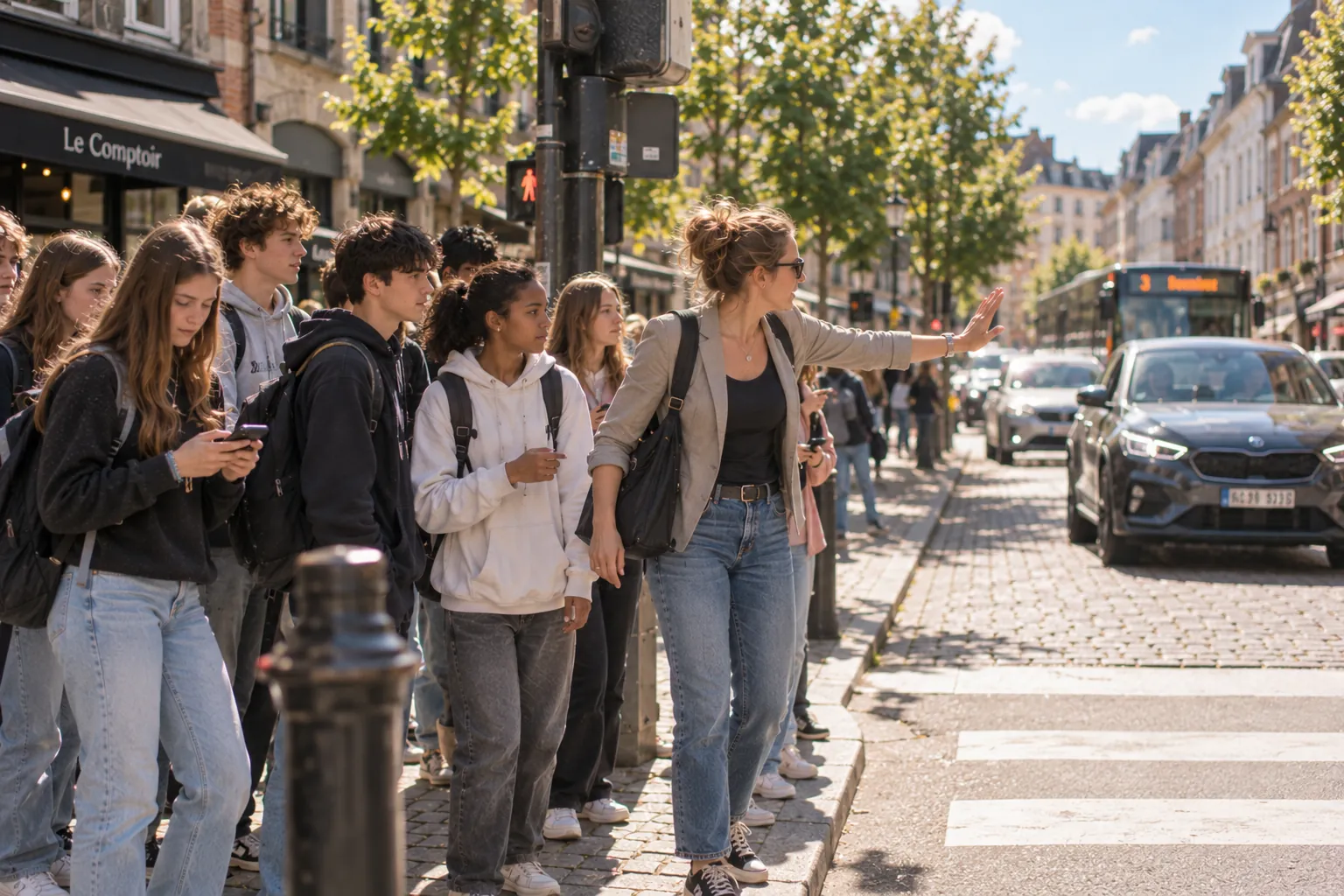
Location. An activity in an enclosed space presents different challenges from a route through the streets of Brussels, Namur or Liège.
Travel arrangements. Public transport, road crossings and changes of location need to be planned in advance.
How the activity is organised. A whole-class guided visit and a treasure hunt involving several teams require different supervision arrangements.
Specific needs. Some pupils may need individual support.
Example: a class of 26 pupils on an outing
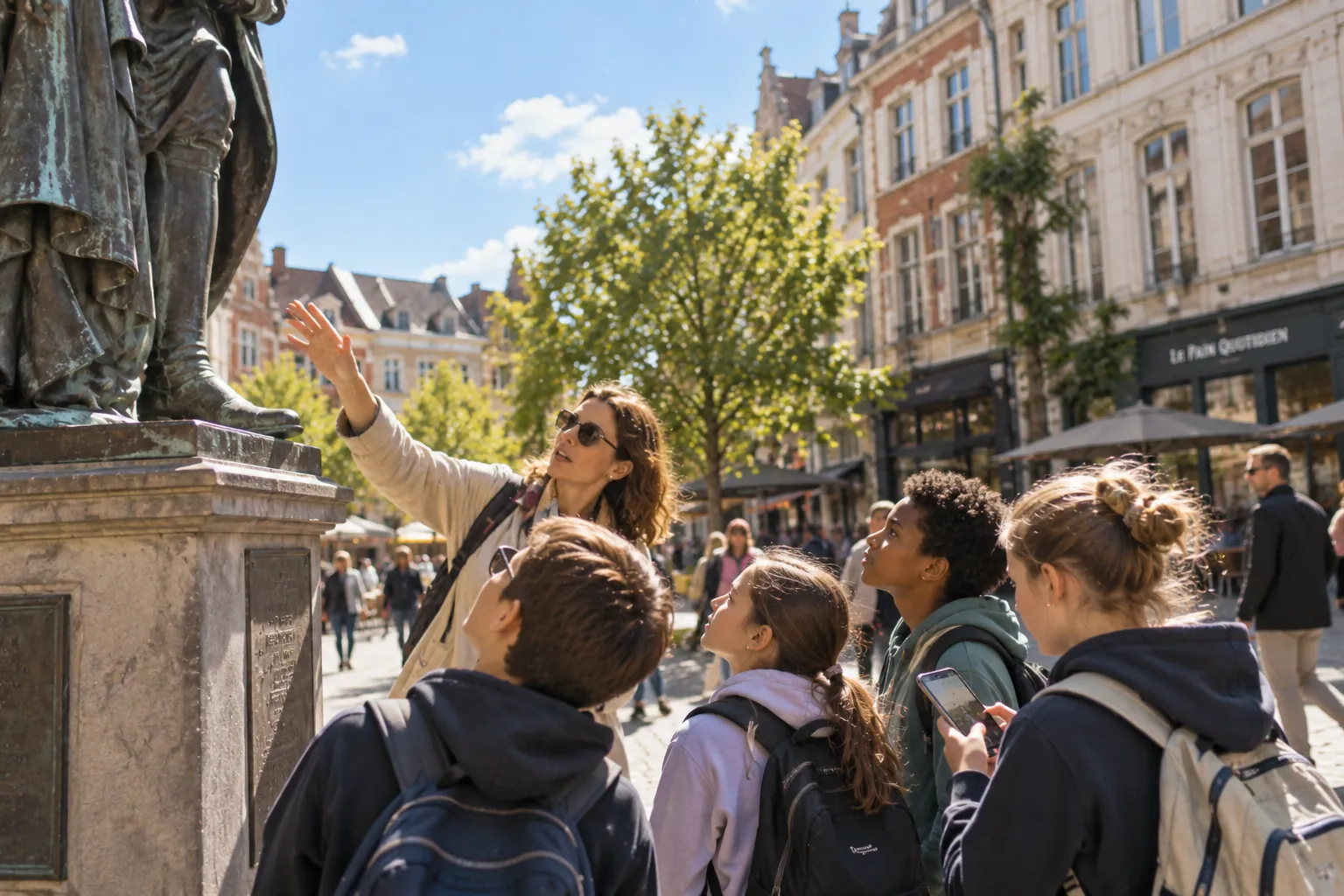
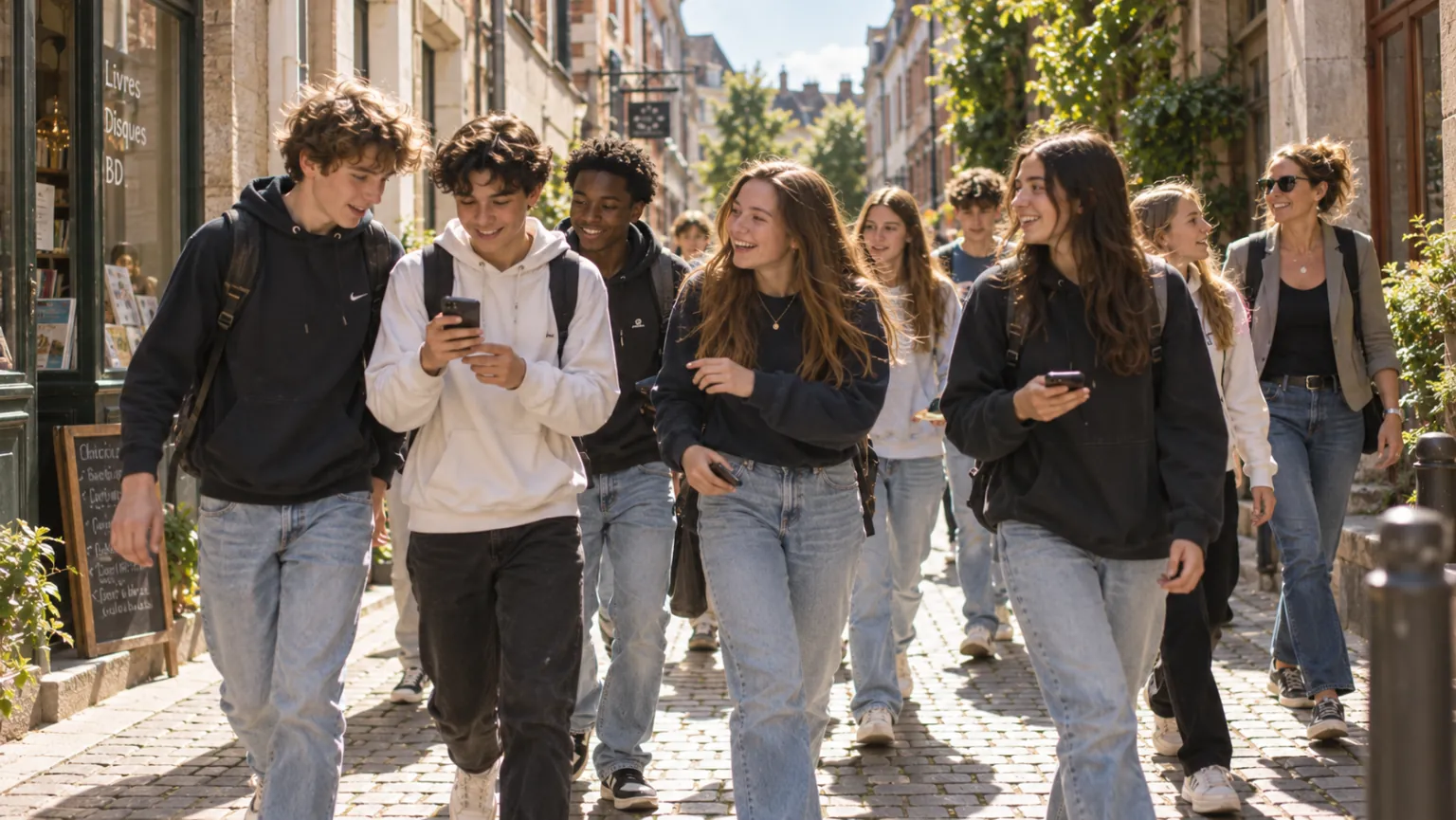
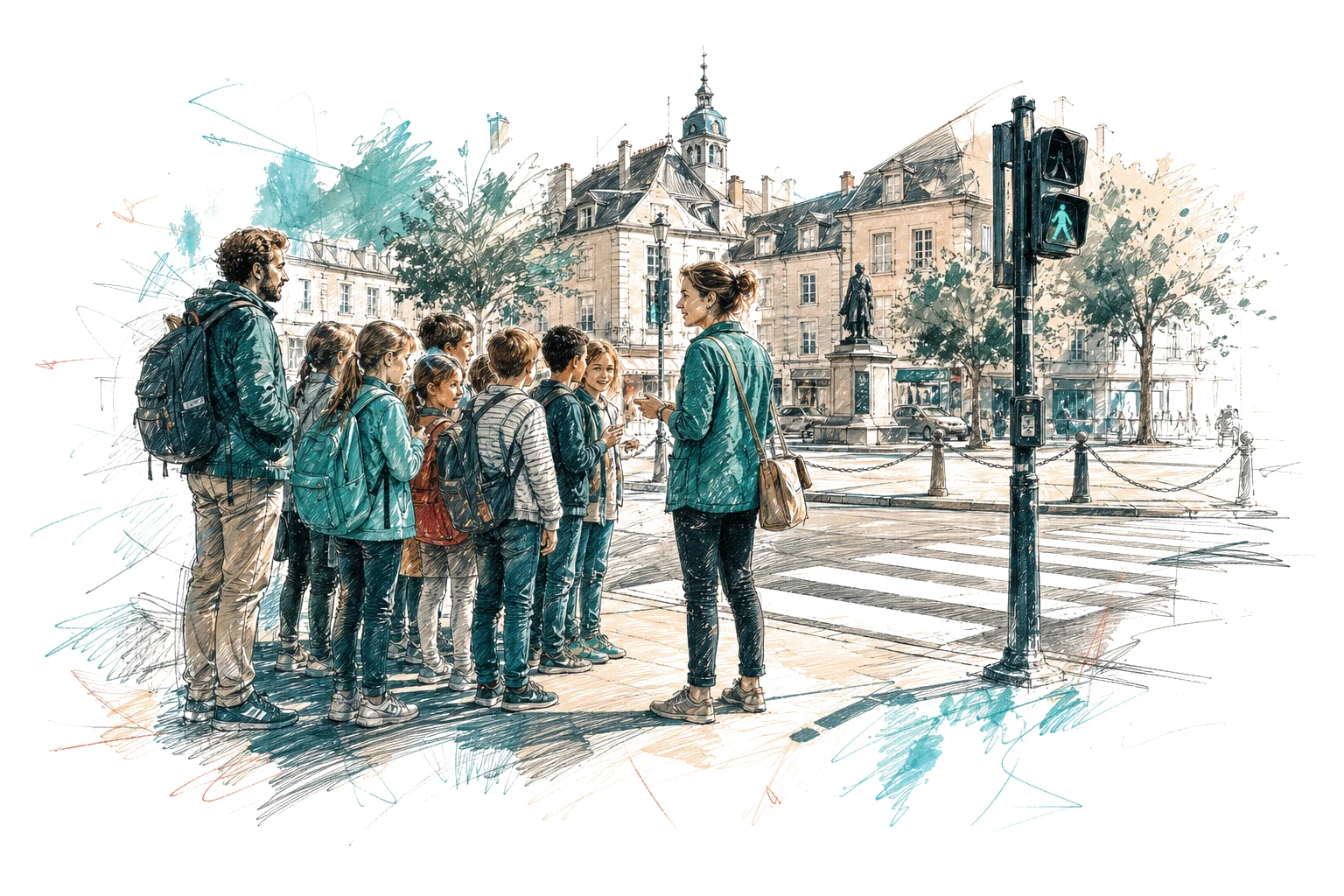
Imagine a class of 26 secondary school pupils who want to explore the centre of Namur.
For a guided tour, the class can stay together with their teacher and the designated chaperones.
For a treasure hunt, the 26 pupils could form five teams and follow different routes.
In the second case, you need to plan how the groups will be supervised, how they will communicate and whether adults can intervene quickly.
The number of chaperones will depend on the arrangements chosen and their approval by school leadership. It would be misleading to claim that one ratio is sufficient in both situations.
Our advice: Before deciding how many adults are needed, present the route, how pupils will be divided into groups and the supervision arrangements to your school leadership.
Is parental consent required?
For a day outing, it is important to distinguish between informing parents, obtaining their consent where applicable and getting approval from school leadership.
School approval
An outing organised during school hours must be approved in accordance with the school's procedures.
For an ordinary outing without an overnight stay, do not automatically apply the administrative procedures intended for overnight educational trips.
Your school leadership can tell you which documents are required and what approval process to follow.
Parental consent
The circulars on overnight trips do not allow us to conclude that separate parental consent is systematically required for every day outing.
Practical arrangements depend in particular on the school's internal regulations and instructions.
Some schools collect general consent at the start of the school year for off-site educational activities. Others ask for written consent for each outing.
Specific consent is particularly advisable when an activity runs beyond the usual hours, involves unusual travel arrangements or has special requirements.
In all cases, parents must receive the information they need to understand the arrangements for the day.
What information should you share with families?
Your letter or message can specify the date, departure and return times, location, programme, travel arrangements, equipment needed and any fees.
Include the school's contact details and any specific instructions.
For an outing that requires written consent under the school's rules, use the form approved by your school leadership.
Does school insurance cover outings?
Before setting off, you should check the insurance arrangements for any off-site activity.
In Belgium, schools generally have two types of coverage:
Public liability insurance may provide cover, subject to the policy terms, when an insured person is held liable for damage caused to a third party.
Personal accident insurance may cover certain costs resulting from an accident involving a pupil, even if no fault is established, subject to the policy limits.
Outings recognised as school activities are generally covered by the school's insurance policies, but you should not assume that every activity, participant and type of damage is automatically covered.
Before setting off, check with your school leadership that:
The outing is recognised as a school activity.
The route and planned activities are covered by the policy.
Parents or volunteer chaperones have appropriate coverage.
You know what procedure to follow in the event of an accident.
Any specific checks required for the transport arrangements have been made.
Using an external provider does not exempt the school from checking its own coverage and obligations.
If in doubt, your school leadership or organising authority can ask the insurer for written confirmation.
Can a parent chaperone a school outing?
Yes, parents can help supervise an outing if the school authorises them to do so.
Their presence is often valuable, particularly for younger groups or activities that require pupils to be split into teams.
However, a parent chaperone is not simply an extra visitor. They need to understand the responsibilities assigned to them and follow the instructions of the education team.
What can they be asked to do?
Depending on the activity and the approved arrangements, a parent may help supervise a group, accompany pupils as they travel, check attendance, remind pupils of the rules or report any problems.
However, being a parent does not automatically give them the authority of a teacher. Pedagogical decisions and overall responsibility for organising the outing remain within the framework set by the school.
A parent's participation must therefore be planned and approved, not improvised on the morning of the outing.
How should you brief chaperones?
A ten-minute briefing before setting off is enough to clarify the essentials.
Explain the route and permitted areas, assign the groups to be supervised, identify meeting points and share the contact details of the people in charge.
Also explain what to do if a pupil is injured, wanders off or fails to follow instructions.
Finally, make sure every chaperone has a charged phone and knows how to contact the teacher in charge.
How do you prepare an outing proposal for school leadership?
A clear proposal makes it easier to get your project approved. It also helps identify potential problems before they arise on the day.
For a day outing, here is a simple structure you can adapt to your school's procedures.
Item | Information to include |
|---|---|
Activity | Name, location and organiser |
Learning objectives | Skills being developed and links to learning |
Participants | Classes, year groups and pupil numbers |
Supervision | Adults attending and their assigned roles |
Schedule | Departure, activity, breaks and return |
Transport | Mode of transport and route |
Safety | Supervision, communications and emergency procedures |
Budget | Activity costs, transport, family contributions and compliance with applicable limits |
Documents | Information for parents and any consent required by the school |
How much can parents be asked to contribute?
In the Wallonia-Brussels Federation, free schooling does not prevent a school from asking for a financial contribution towards certain cultural or sports activities.
However, certain conditions apply. Costs must reflect the actual cost of the activity, be clearly communicated and form part of the organising authority's educational project or the school's project.
An annual cap applies in pre-primary education. For the 2026–2027 school year, it is set at €56.94 per pupil for all one-day cultural and sports activities, including transport.
This applies to all activities in this category organised during the school year, not to each outing individually.
In primary education, fees for cultural and sports activities are also subject to transparency and actual-cost billing rules, but the €56.94 cap specific to pre-primary education does not apply.
So before booking a paid activity, check with your school leadership what budget is still available and how much families can be asked to contribute.
For applicable provisions, see Circular No. 9692 of 26 March 2026 on free schooling.
How do you explain the educational value?
A school outing should not be presented solely as a recreational activity.
To convince your school leadership, start with the intended learning outcomes.
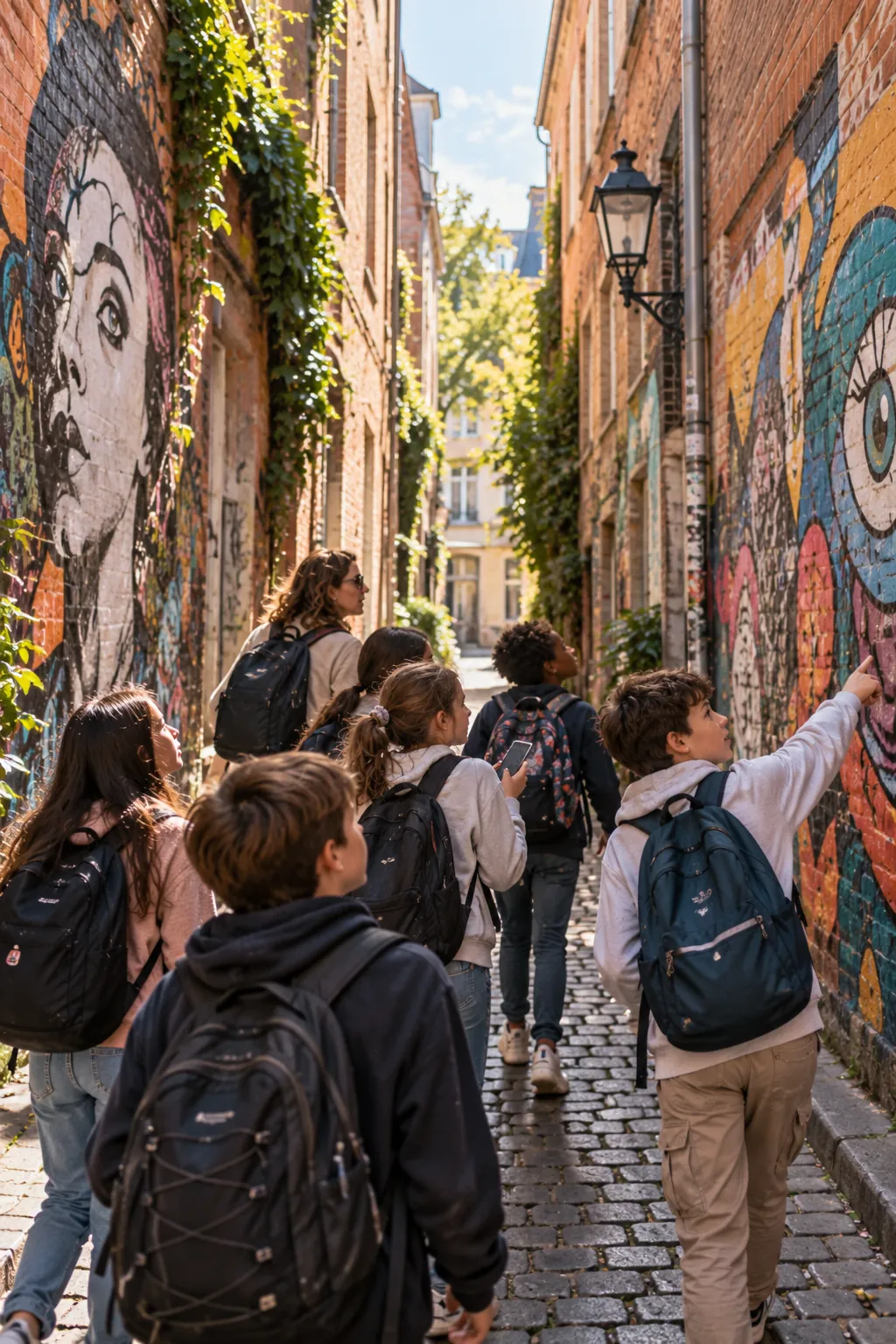
For example, an outing in a city can help pupils develop their observation of local heritage, document-reading, navigation, collaboration or problem-solving skills.
Explain what pupils will actually do and how you will build on the activity in class.
Preparing for the outing beforehand and reflecting on the learning afterwards make the project more coherent.
Planning for the unexpected
Also plan what will happen if a chaperone drops out, a pupil is unable to take part or the weather makes the activity difficult.
The aim is not to put together an endless administrative file, but to show that the important decisions have been made before setting off.
Organising a school outing in a city with Coddy
An educational outing in a city can also take the form of an urban escape game.
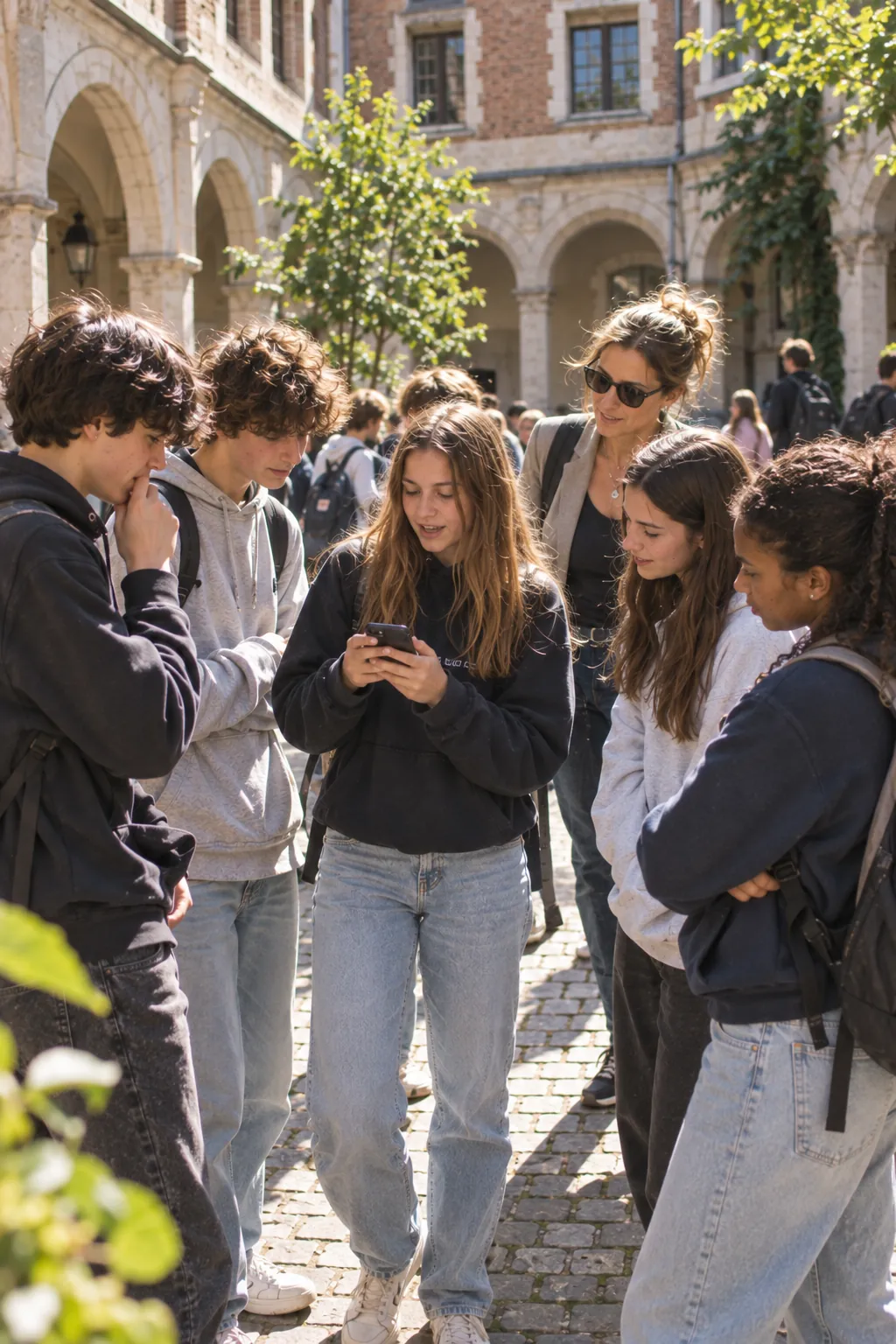
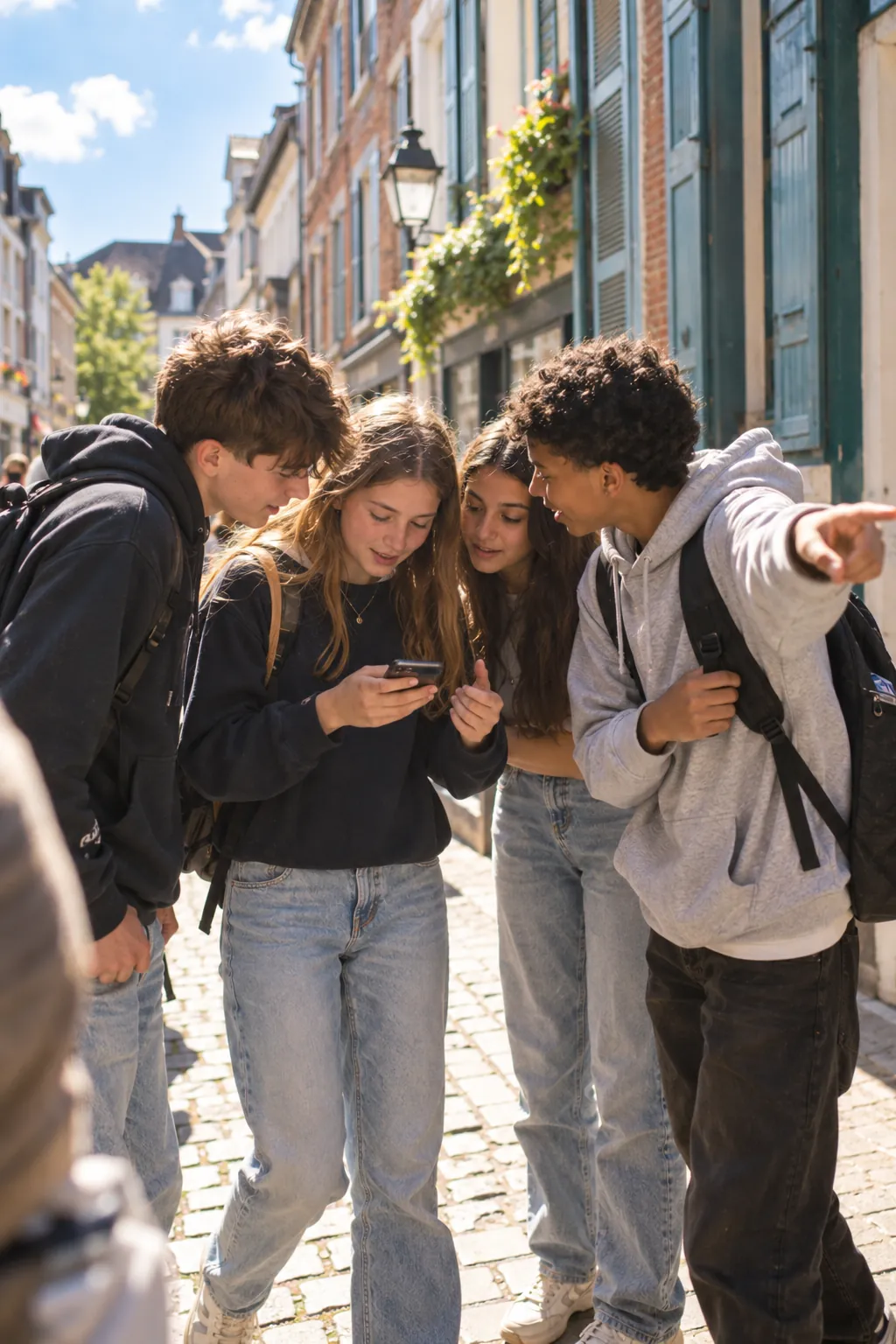
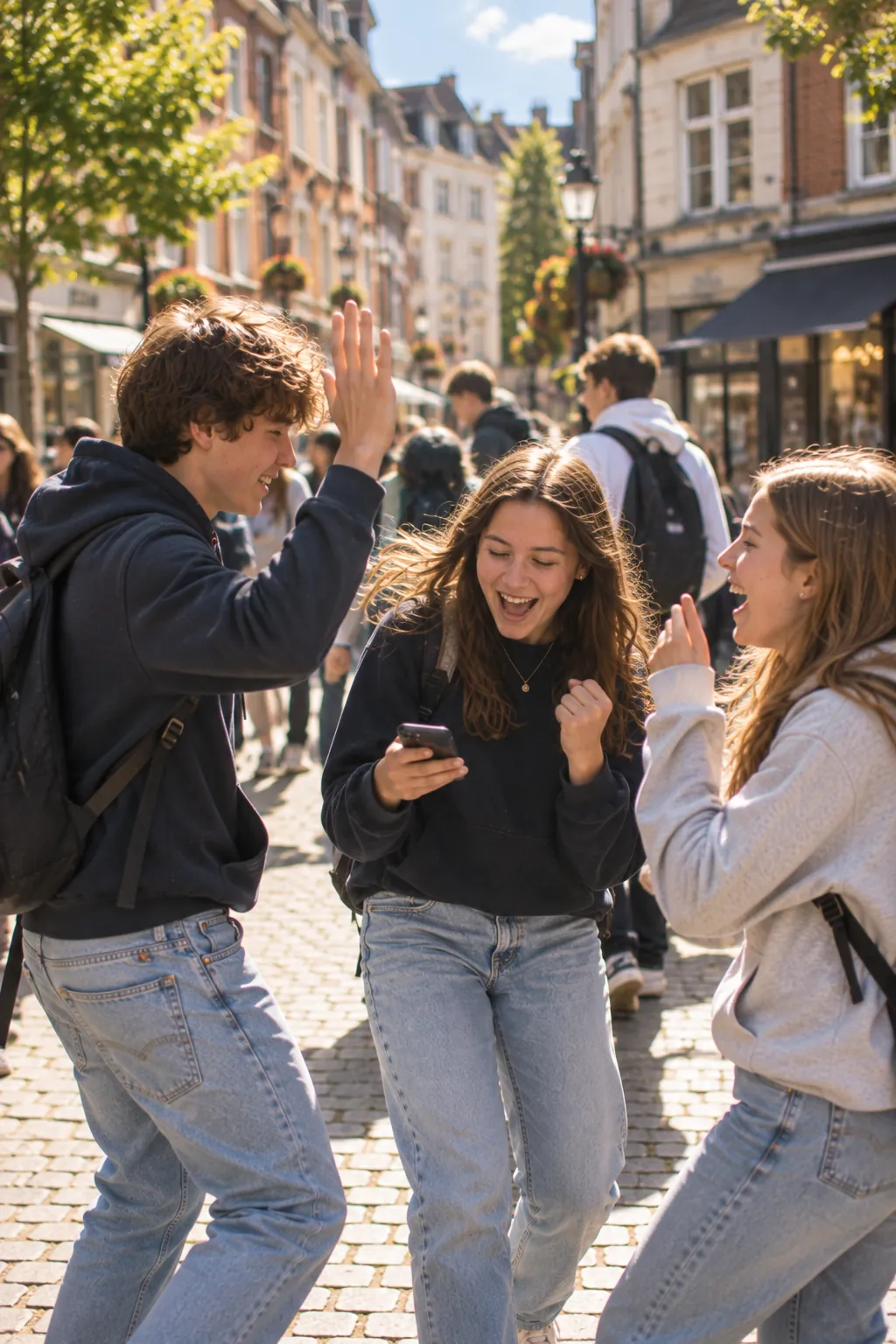
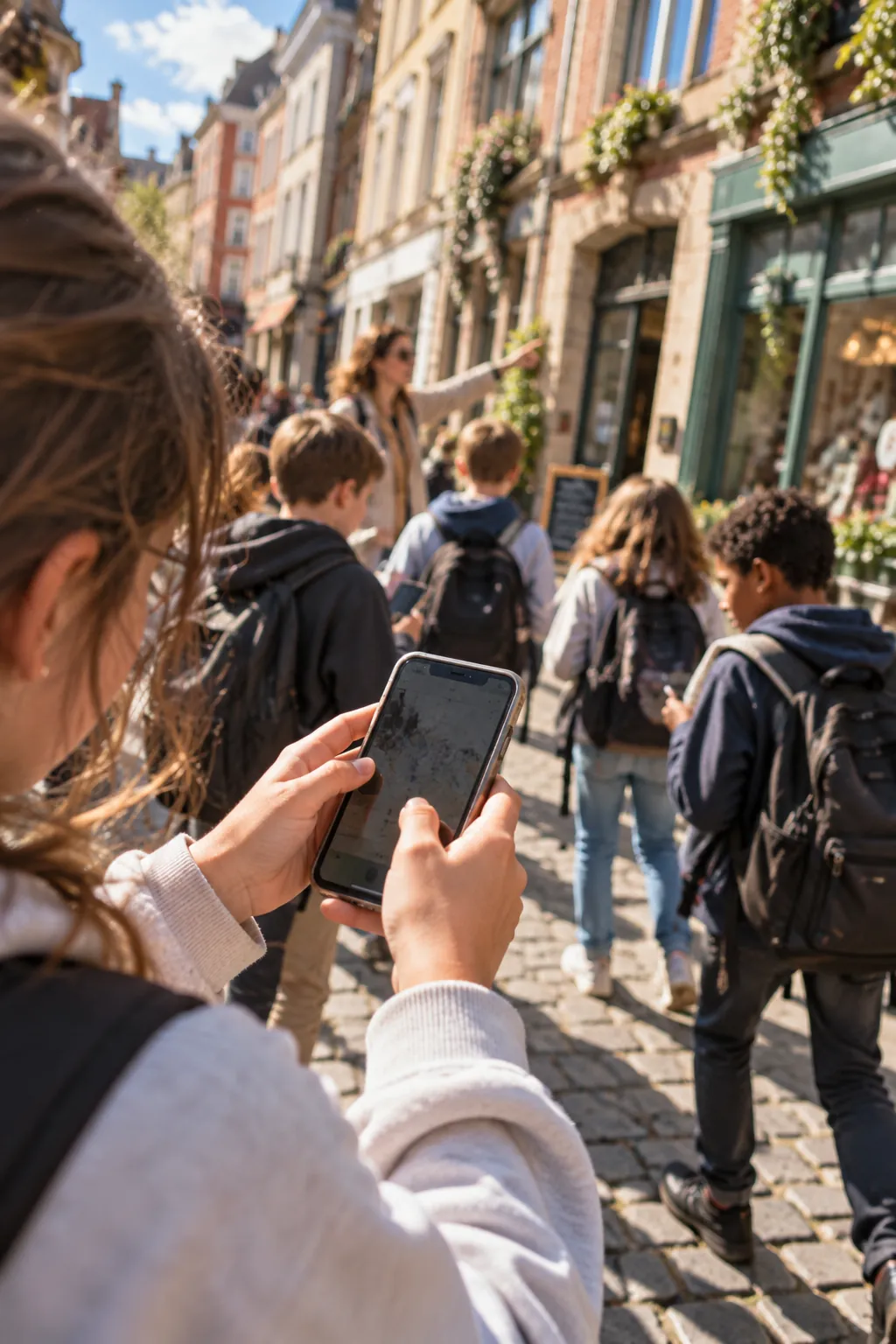
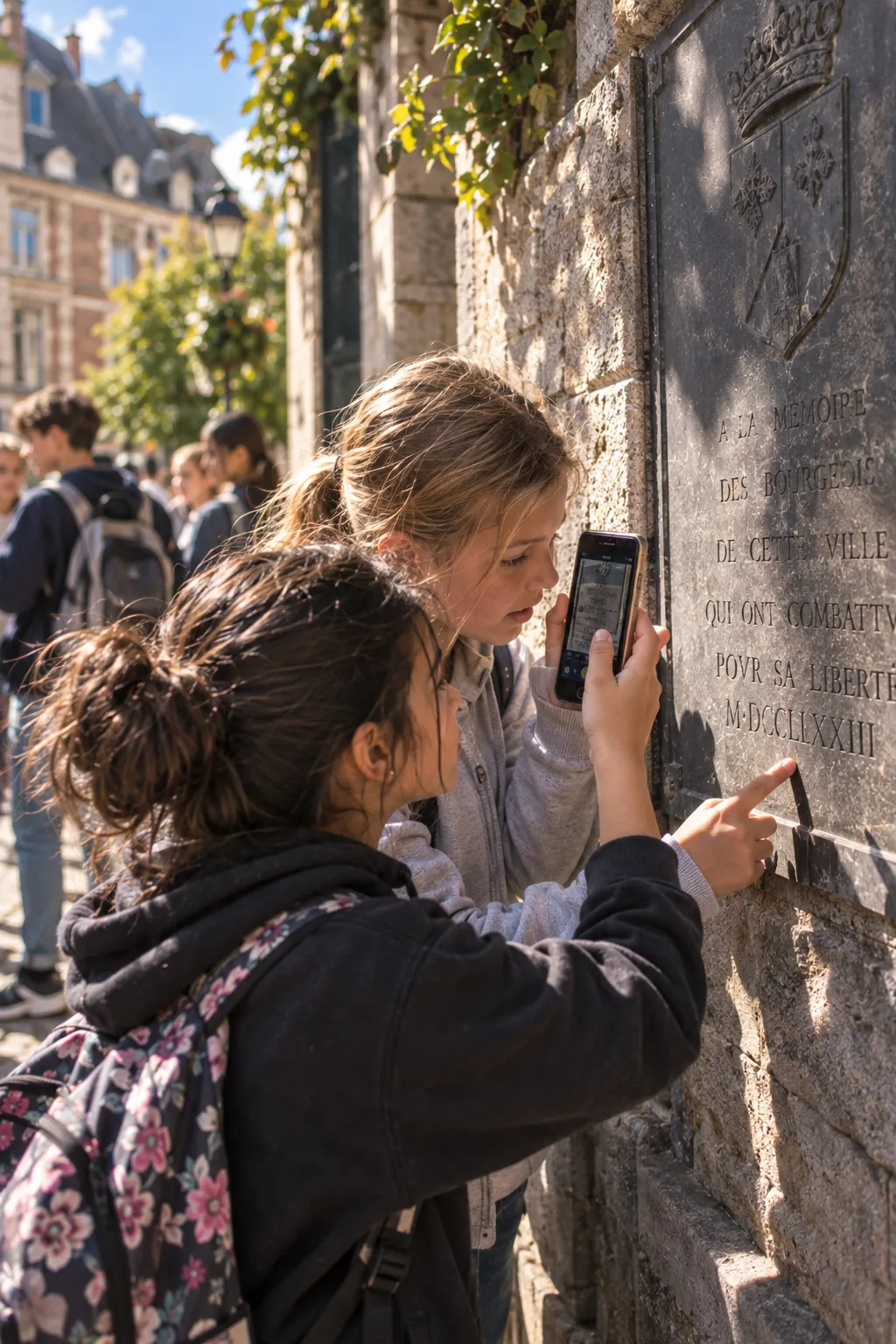
With Coddy, pupils explore the city in small teams. They use a mobile app to find their way and solve puzzles based on observation, logic and collaboration.
Teams can follow different routes, so the whole class does not need to go to the same place at the same time.
Live monitoring for teachers
The organiser has access to a dashboard via a web browser.
They can see each team's location and progress on a map and send a message to one team or to all participants.
This makes it easier to coordinate the outing, particularly when several groups are taking part at the same time.
It does not replace in-person supervision. GPS tracking applies to the teams' devices and does not guarantee the location or safety of each individual pupil.
Supervision arrangements must therefore always be suited to the participants' ages and approved by the school.
Chaperones can take part too
With Coddy, teachers and chaperones can play for free with the PRO and PREMIUM packages.
They can form their own team, stay in organiser mode or combine the two, as long as this is compatible with the responsibilities assigned to them.
This gives teachers several options for organising the day according to their pupils' age and level of independence.
Find out more in our FAQ on school outings, particularly the questions “Can I track my pupils throughout the game?” and “Can chaperones and teachers play?”.
Try the activity before proposing it to your school
To help you prepare your proposal, Coddy offers a free demonstration of its app and dashboard.
This lets you see how the game works, check whether it is right for your class and present a practical proposal to your school leadership.
In your message, specify that you would like to try the school demo. A quote can then be prepared based on the number of pupils, the city and the package you choose.
Before setting off: final checks
Organising a school outing in French-speaking Belgium mainly requires careful preparation and coordination with school leadership.
Contrary to some common assumptions, there is no general regulatory table setting the same number of chaperones for every day outing.
You therefore need to work out your supervision arrangements based on the activity's actual needs, your school's rules and the risks involved in the route.
Once you have checked the necessary authorisations, informed parents, confirmed insurance, approved the budget and assigned roles, you will have a solid foundation for organising an outing that benefits your pupils.
Regulatory sources and useful resources
Wallonia-Brussels Federation, Circular No. 6289 of 3 August 2017, on the organisation of overnight educational trips.
Wallonia-Brussels Federation, Circular No. 9754 of 24 June 2026, on the organisation of mainstream pre-primary and primary education for 2026–2027.
Wallonia-Brussels Federation, Circular No. 9692 of 26 March 2026, on free schooling in mainstream and special pre-primary and primary education.
ChanGements pour l'égalité, “What the law says”, an analysis of responsibilities and supervision standards.
Enseignement.be, the official education portal of the Wallonia-Brussels Federation.
The information in this article applies to schools under the Wallonia-Brussels Federation. It does not automatically apply to Dutch-language education, which comes under the Flemish Community.
Frequently asked questions
In French-speaking Belgian education, there is no general supervision ratio set for all day trips. The number of accompanying adults must be appropriate to the students’ age and number, the travel involved and the risks of the activity, in accordance with the instructions of the school and its responsible authorities.