




Visitez Anvers en 2 jours
20 POIs incontournables, parcours optimisés et anecdotes.
Itinéraire de 2 jours à Anvers : balade concentrée et authentique
Anvers se découvre à pas mesurés, sans précipitation : la ville a ce mélange de patrimoine, de scène culturelle et d'énergie urbaine que l'on savoure en deux jours bien remplis. Cet itinéraire vous guide du matin du premier jour, au départ de la Statue de Rubens, jusqu'à la fin de votre escapade au Cabinet des estampes. On reste centré sur l'expérience — flâneries, arrêts gourmands et lieux qui donnent à la ville son caractère.
Vous alternerez entre monuments, espaces verts, grands axes commerçants et surprises architecturales. Le parcours est pensé pour limiter les trajets inutiles et pour vous permettre de véritablement sentir le rythme d'Anvers : les ambiances de quartiers, les façades qui attirent le regard, et les petites pauses dans des cafés qui font la différence. Quelques arrêts représentent des incontournables tandis que d'autres sont des points tranquilles pour respirer entre deux découvertes.
Je vous propose un tempo souple : matinées concentrées sur les repères majeurs, après-midis plus légers où l'on peut improviser. Le plan couvre 17 points d'intérêt sur deux jours, assez pour avoir une vision complète sans courir. En prime, des conseils pratiques sur où dormir, comment se déplacer, quoi emporter et quoi réserver à l'avance vous aideront à préparer un voyage serein.
Que vous veniez pour l'architecture, le shopping, la scène théâtrale ou simplement pour goûter l'ambiance locale, ce guide met l'accent sur l'authenticité du moment. Gardez de la place dans votre planning pour les découvertes imprévues : Anvers récompense souvent les détours. Bonne préparation, et bonne balade !
Chargement de la carte...
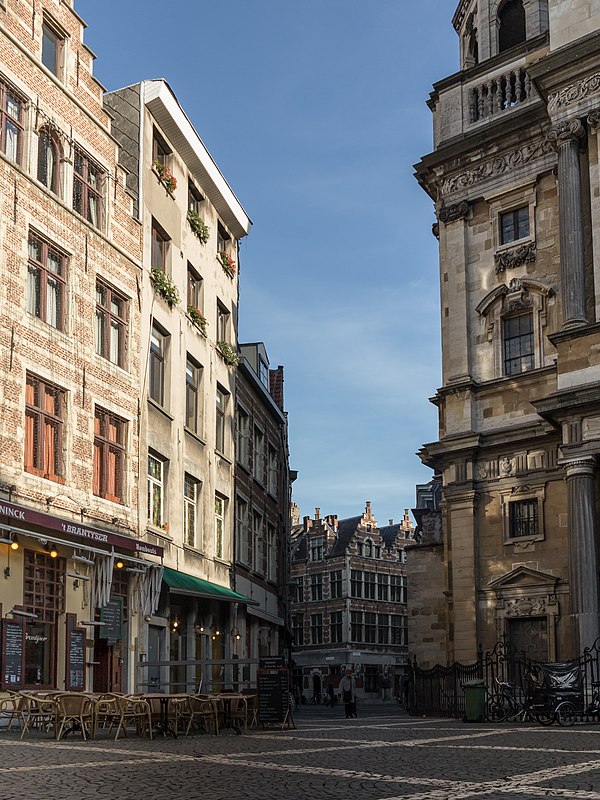
Vous allez visiter les plus beaux points d'intérêt de Anvers

Résumé jour par jour
Jour 1 — Matin : Commencez à la Statue de Rubens et prenez le temps d'ouvrir vos sens à l'ambiance du centre. Marchez vers la Cathédrale Notre-Dame puis la Place Henri-Conscience avant d'atteindre l'Eglise Saint-Charles-Borromée et la Bourse de commerce. Chaque arrêt est pensé pour être proche du précédent et facile à couvrir à pied.
Jour 1 — Après-midi : Rejoignez la Gare Centrale d'Anvers, un lieu à voir pour son atmosphère, puis passez un après-midi plus calme au Zoo d'Anvers, idéal pour se détendre et varier les plaisirs après la matinée de marche.
Jour 2 — Matin : Plongez dans la vie culturelle : Théâtre Bourla, Jardin botanique, Théâtre Municipal, puis la Maison de Rubens et une pause à la Salle des fêtes. L'enchaînement favorise l'immersion dans le secteur culturel et patrimonial.
Jour 2 — Après-midi : Terminez par la fameuse Meir et le Palais du Meir, remontez vers la Grand Place, poussez jusqu'au Hansa Huis et concluez au Cabinet des estampes. Une belle finale entre shopping, architecture et collections.
Jour 1 - Anvers
10 POIs à découvrirJour 1 - Matin à Anvers
5 Points d'intérêt - Durée : 4h30 - Distance : 3.1 km - Marche : 0h40
© Wikimedia Commons
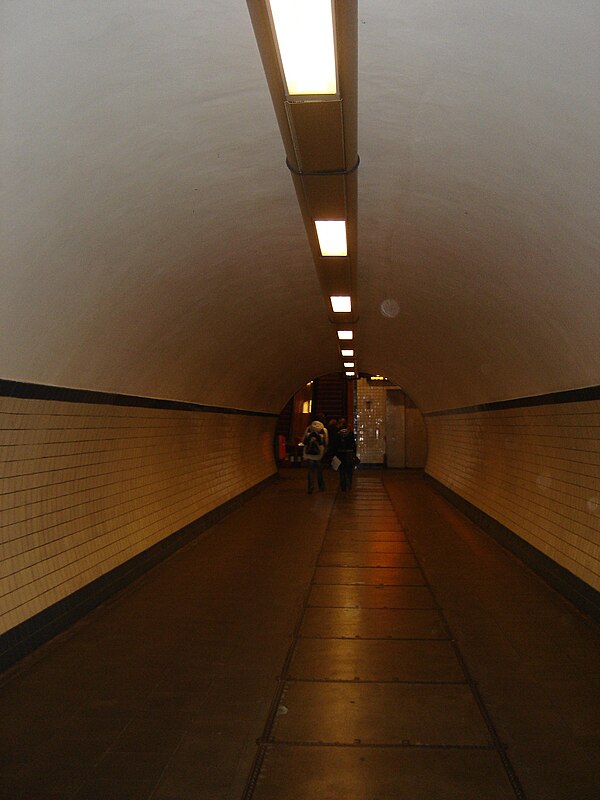
Tunnel Sainte-Anne
- � Le Tunnel Saint-Anne fut inauguré en 1933 et permet de traverser l'Escaut à pied ou à vélo.
- Il s'étend sur une longueur de 572m à une profondeur de 32m.⬇ Sur la rive droite comme sur la rive gauche, vous pouvez descendre dans le tunnel via les authentiques escaliers mécaniques en bois qui, à l’époque de l’ouverture, furent absolument uniques.
- Le tunnel et les ascenseurs ont été conçus pour transporter une ambulance et/ou un véhicule de police en cas d'urgence dans le Waaslandtunnel.


© Wikimedia Commons
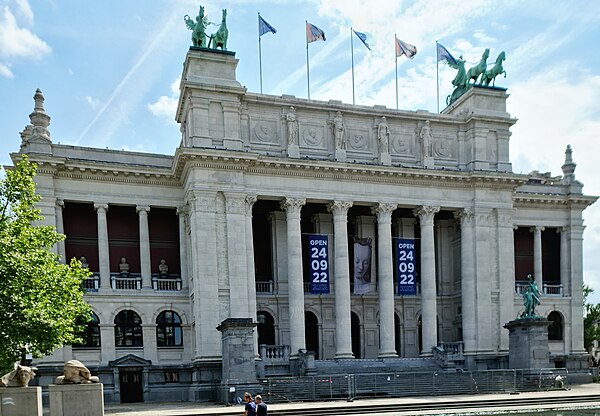
Musée royal des Beaux-Arts
- Ce bâtiment terminé en 1894 héberge le musée fondé en 1810 qui conserve une collection de peintures, sculptures et dessins du XIVe au XXe siècle.
- La collection a commencé avec les œuvres détenues par la Guilde de Saint-Luc.
- En 1823, le roi Guillaume Ier des Pays-Bas a fait don de trois peintures, dont une œuvre précoce de Titien. Un legs important de Florent van Ertborn, ancien maire d'Anvers, a ajouté 141 œuvres à la collection en 1840.
- Parmi les artistes exposés au musée figurent Jan van Eyck, Jean Fouquet, Rogier van der Weyden, Hans Memling, Peter Paul Rubens, et bien d'autres.
© Wikimedia Commons
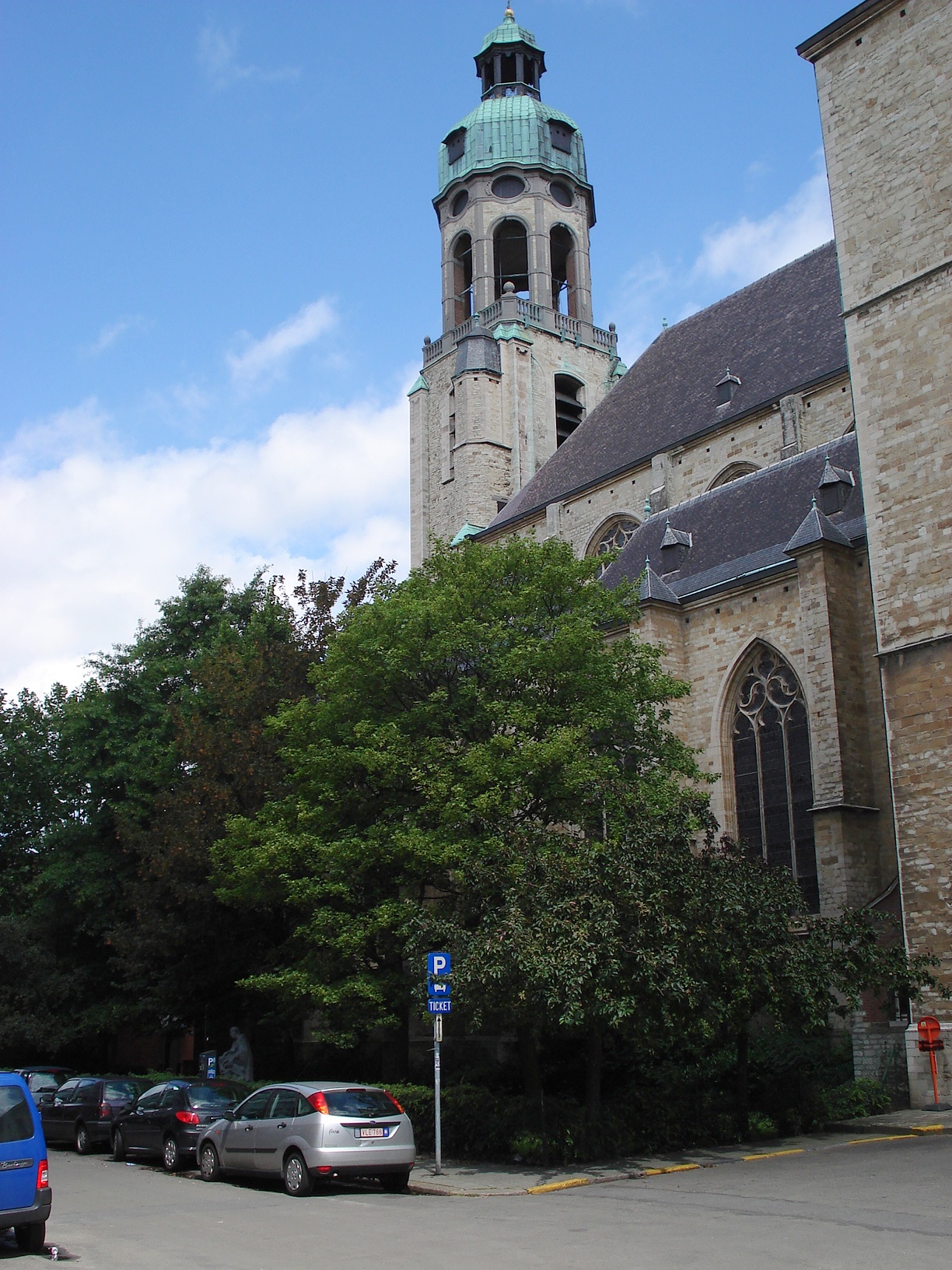
Église Saint-André
- La Sint-Andrieskerk est également connue sous le nom de la "paroisse de la misère".
- Sa construction a commencé au début du XVIe siècle par les frères augustins.
- Depuis 2007, une partie de l'église a été aménagée et ouverte comme musée de l'église.
- Le musée de l'église contient plusieurs œuvres d'art importantes d'Anvers, dont le maître-autel baroque de 1729 et la chaire de vérité de 1821.⏳ Le musée de l'église est ouvert d'avril à octobre.
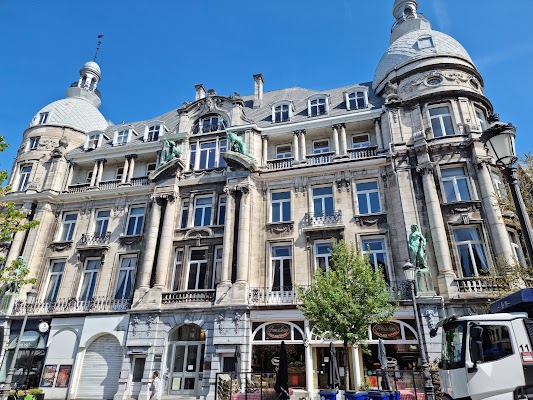
Hansa Huis
- Le complexe architectural a été construit en trois phases entre 1897 et 1903.
- Le Hansahuis est l'un des sommets de la carrière de l'architecte Joseph Hertogs, qui a laissé une marque significative sur l'architecture d'Anvers au tournant du XXe siècle.
- Les détails architecturaux comprennent des façades en pierre naturelle, des sculptures en bronze, des éléments décoratifs, des fenêtres arquées et des détails élaborés sur les portails et les balcons.
- Le programme iconographique du Hansahuis souligne les liens économiques entre Anvers et l'Allemagne, avec des sculptures représentant le commerce, la navigation et les rivières des deux pays.
- En fait, c'est Wilhelm Arnold von Mallinckrodt, un homme d'affaires allemand, qui a commandé la construction.
- C'était un membre influent de la communauté allemande d'Anvers au début des années 1900.
© Wikimedia Commons
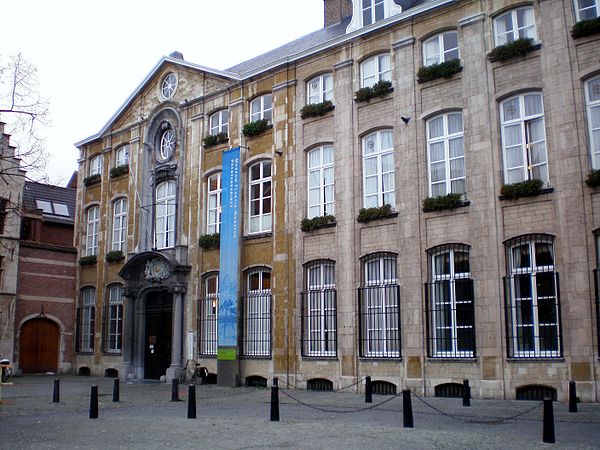
Cabinet des estampes
- Le Cabinet municipal des estampes est à la fois un musée et un cabinet d'estampes.
- Il a été fondé en 1938, en collaboration avec le musée Plantin-Moretus.
- Sa collection se concentre sur les œuvres d'artistes anversois du seizième au dix-huitième siècle.
- Un espace est également réservé aux œuvres graphiques d'artistes contemporains.
Jour 1 - Après-midi à Anvers
5 Points d'intérêt - Durée : 3h15 - Distance : 1.3 km - Marche : 0h17
© Wikimedia Commons
Eglise Saint-Charles-Borromée
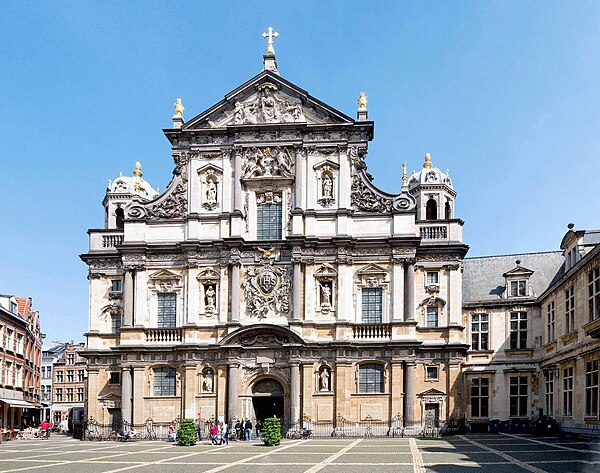
- L'église est de style baroque, sa construction s’est achevée en 1621.
- Son artiste peintre et décorateur principal était Pierre-Paul Rubens assisté de Antoine Van Dyck.
- Les fameux 39 caissons ont été détruits par une incendie en 1718 et plusieurs tableaux ont été volés ou confisqués.
- La beauté et la richesse de cette église servaient à présenter Anvers comme une métropole influente et riche dans la période conflictuelle entre protestantisme et catholicisme.

Bourse de commerce
- L'Handelsbeurs a servi de bourse des valeurs de 1531 à 1997.
- Le bâtiment original a servi de modèle pour des bourses similaires à Londres, Rotterdam, Amsterdam et Lille.
- Après un incendie en 1583, elle a été immédiatement reconstruite selon les mêmes plans.
- Après un second incendie en 1858, elle a été reconstruite en 1872 dans un style néo-gothique.
- La bourse d'Anvers a été supprimée en 1997 et reprise par la bourse de Bruxelles.
- Plusieurs tentatives de rénovation et de réaffectation du bâtiment ont été entreprises depuis, y compris un projet pour le transformer en hôtel.
- Le bâtiment a finalement été rouvert en 2019 comme salle d'événement et d'exposition après presque 20 ans de vacance et 3 ans de travaux de restauration.

© Wikimedia Commons
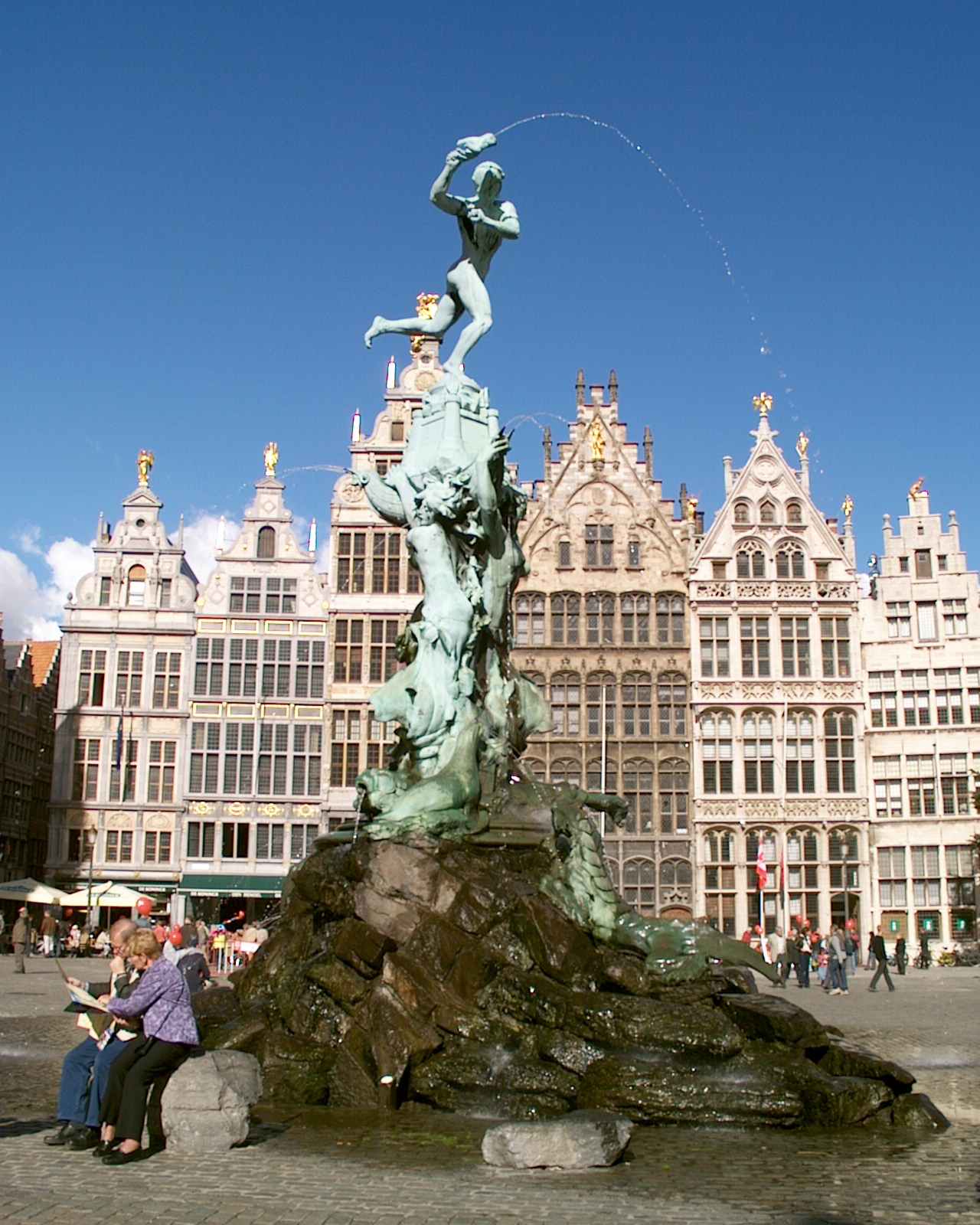
Fontaine de Brabo
- Juste en face de l'hôtel de ville sur la Grand-Place, la fontaine de Brabo raconte la légende de la naissance d’Anvers.
- On y voit la statue du soldat romain, Silvius Brabo, qui aurait tué le géant qui terrorisait les marins, Reus Druon Antigone.
- Pour lui rendre la monnaie de sa pièce, Brabo aurait coupé et jeté ses mains dans l’Escaut comme Antigone l’avait fait jusque-là à tous ceux qui refusaient de payer le droit de passage sur le fleuve.
- De là viendrait le nom d’Antwerpen, “Hand werpen”, une légende racontée dans un poème du 19 ème siècle.
- Une autre légende affirme que Antwerpen viendrait plutôt de “aan het werpen” qui désigne la jetée du port.
© Wikimedia Commons
Place Henri-Conscience
- Le nom de la place, attribué depuis 1883, rend hommage à l'écrivain flamand du XIXe siècle Hendrik Conscience, dont une statue est érigée ici.
- Beaucoup considèrent qu'il est celui qui "aurait appris à lire à son peuple".
- Le place abrite aussi l'imposante église baroque Sint-Carolus Borromeuskerk, une ancienne église jésuite.
- Les bâtiments environnants datent en partie du XVIIe siècle et sont caractérisés par une architecture baroque, un style favorisé par les Jésuites pour attirer les gens à l'église.
- La place abrite aussi la Bibliothèque du Patrimoine Hendrik Conscience.

© Wikimedia Commons
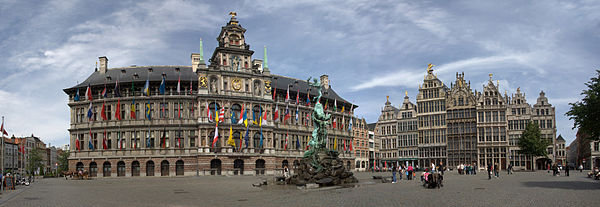
Grand Place
- La "Grote Markt" est un ancien forum grand place au 16ème siècle.
- On y trouve l'hôtel de ville, construit en 1564 dans le style Renaissance.
- Parmi les autres bâtiments remarquables figurent les maisons des guildes (métiers).
- On y trouve aussi la fontaine de Brabo, une légende locale.
- En 1994, un tilleul a été planté en tant qu'arbre de la paix pour commémorer le 50ème anniversaire de la libération d'Anvers (1944).
- La place accueille divers événements tout au long de l'année, tels que l'arrivée de Sinterklaas (Saint-Nicolas), la Fête de la Flandre le 11 juillet, le Bollekesfeest, un marché aux puces et la Rubensmarkt.
Jour 2 - Anvers
10 POIs à découvrirJour 2 - Matin à Anvers
5 Points d'intérêt - Durée : 4h45 - Distance : 2.2 km - Marche : 0h29
© Wikimedia Commons
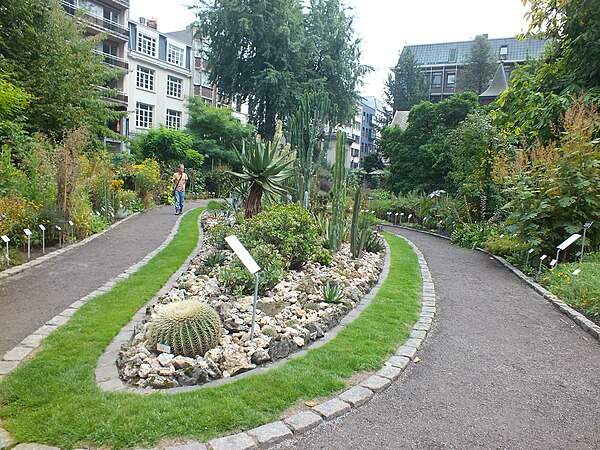
Jardin botanique
- Le Plantentuin, également appelé Den Botaniek, a été créé en 1825 pour soutenir les cours de pathologie externe à l'École de médecine.
- Une statue de Peeter van Coudenberghe, un pharmacien anversois du 16e siècle qui préfigurait ce jardin botanique avec son jardin d'herbes, y a été érigée.
- Le jardin abrite une collection de 2000 plantes, y compris des cactus et d'autres plantes exotiques dans la serre.
- On y trouve également un étang et un bassin des grenouilles.
- Le jardin est accessible gratuitement de 8h à 20h en été et de 8h à 17h30 en hiver.
© Wikimedia Commons
Gare Centrale d'Anvers
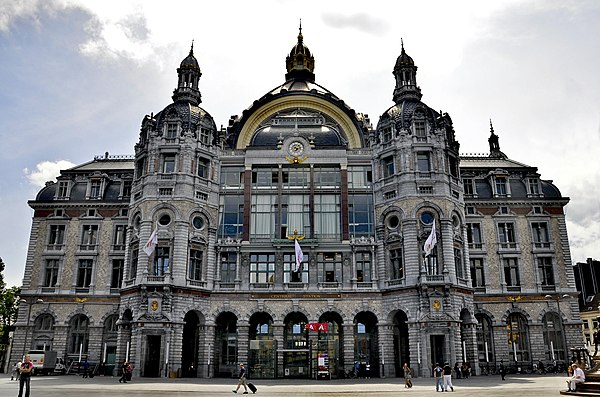
- De style éclectique, cette gare majistrale a été inaugurée en 1836.
- Elle dispose aujourd'hui de 14 voies.
- Pendant la Seconde Guerre mondiale, la gare a subi des dommages importants causés par les V-2, mais la structure du bâtiment est restée intacte.
- La gare a gagné de nombreux prix : parmi les plus belles du monde (Newsweek), la plus belle d'Europe (StedenTripper.com), LA plus belle gare du monde (Mashable).
- Plopsa Station Anvers, un parc d'attractions intérieur, est situé dans la gare depuis 2017.
© Wikimedia Commons
Zoo d'Anvers
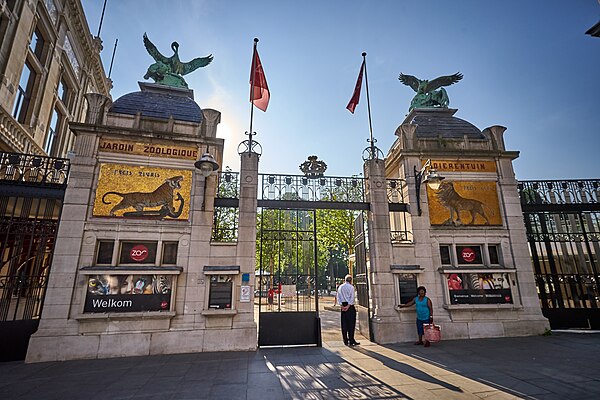
- Ce zoo, ouvert 1843, est le plus ancien de Belgique et l'un des plus anciens au monde.
- Il abrite environ 425 espèces différentes, principalement des espèces exotiques provenant de l'ancien Congo belge.
- Il a subi des périodes difficiles pendant les deux guerres mondiales, avec des pertes significatives d'animaux et de bâtiments.
- Pendant la Première Guerre mondiale, une salle de cinéma a été créée dans le zoo pour éviter la faillite.
- Après chaque guerre, des efforts ont été déployés pour reconstruire le zoo et augmenter le nombre d'animaux.
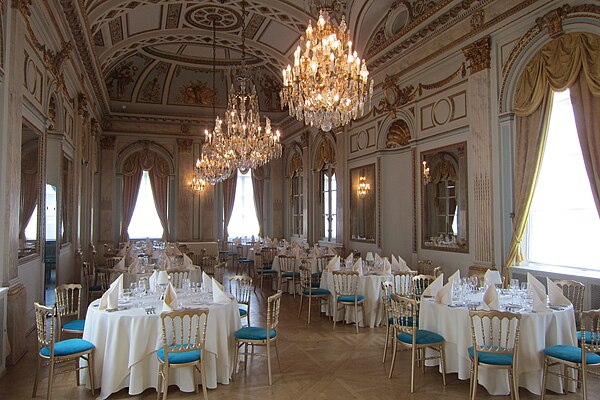
Salle des fêtes
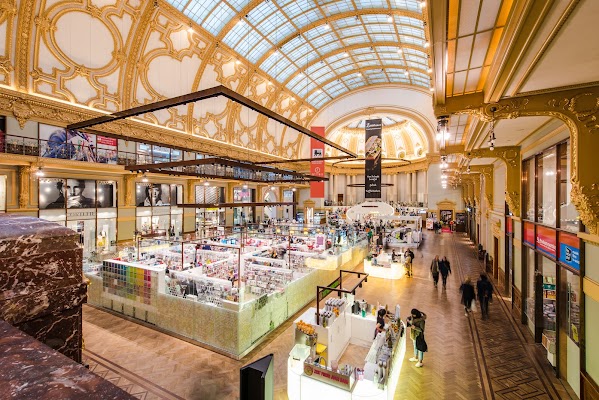
- La célèbre Stadsfeestzaal qui accueille aujourd’hui plus de 6,5 millions de personnes par an dans ses commerces, a en fait connu une histoire très mouvementée.
- Après 8 ans de construction en 1908, il a servi de salle de banquet et d’exposition avant de vivre un incendie qui a pratiquement tout détruit.
- Lors de sa restauration, des os de baleine ont même été trouvés dans la cave.
- Ce bâtiment bien connu des anversois a servi ensuite pour d’innombrables expositions, foires, bals, fêtes scolaires et visites de Sinterklaas.
© Wikimedia Commons
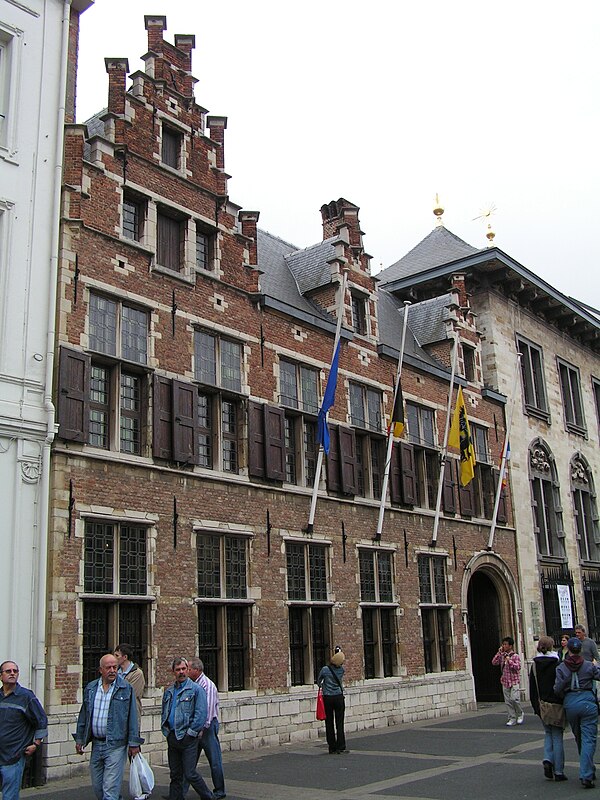
Maison de Rubens
- La Rubenshuis est la résidence urbaine de l'artiste Peter Paul Rubens (1577-1640).
- En plus de sa maison, Rubens y a également construit un grand atelier où ses élèves ont peint environ 25 000 œuvres.
- Après une restauration, la Rubenshuis a été ouverte au public en tant que musée en 1946.
- Le musée expose une collection de haut niveau comprenant des œuvres de Rubens, de ses élèves et de ses contemporains.
- Derrière la maison-musée se trouve un magnifique jardin.
- En 2023, la Rubenshuis a été fermée pour quatre ans de restauration pour améliorer le confort des visiteurs et des oeuvres qui y sont hébergées.
Jour 2 - Après-midi à Anvers
5 Points d'intérêt - Durée : 3h45 - Distance : 1.9 km - Marche : 0h25
© Wikimedia Commons
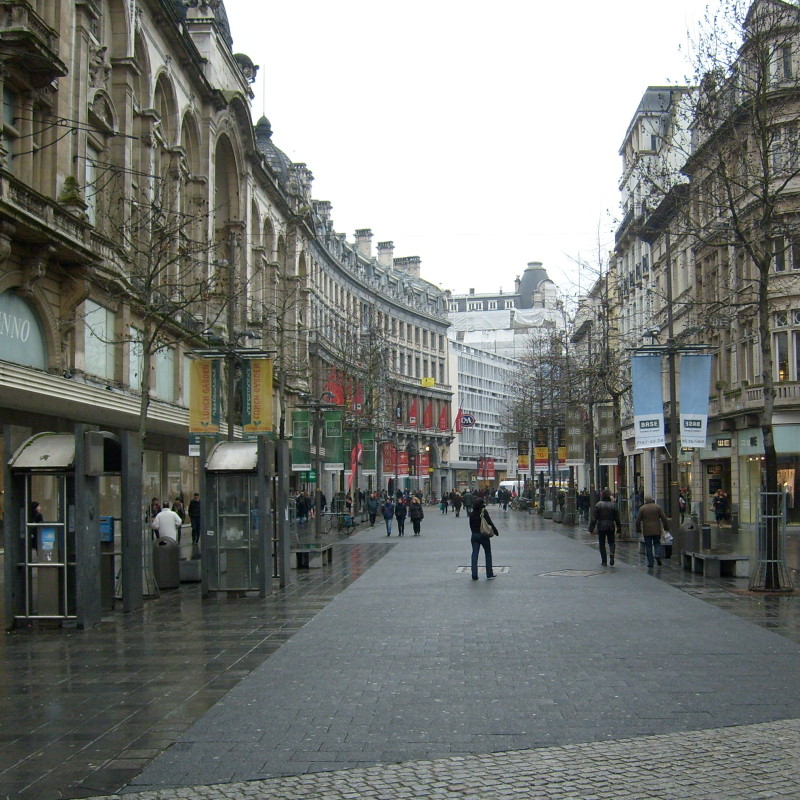
Meir
- Historiquement, la Meir était une étendue d'eau stagnante au 13ème siècle, appelée "Meere".
- Au fil du temps, elle est devenue une rue aristocratique importante avec de nombreux bâtiments de prestige, dont le Palais Royal.
- Aujourd'hui, c'est une des principales rues commerçantes d'Anvers, accueillant de grandes chaînes de magasins.

© Wikimedia Commons
Palais du Meir
- Le Palais Royal sur le Meir a été construit en 1764.
- Au fil du temps, il a été la propriété de Napoléon Bonaparte, Guillaume I des Pays-Bas.
- Après la révolution belge de 1830, le palais est passé aux mains des autorités belges et a été le centre des festivités de l'arrivée du roi Léopold I.
- Après avoir été longtemps une résidence impériale et royale, le roi Baudouin a donné le palais "au peuple" en 1969 pour une utilisation culturelle.
- Le palais est actuellement utilisé comme musée.
© Wikimedia Commons
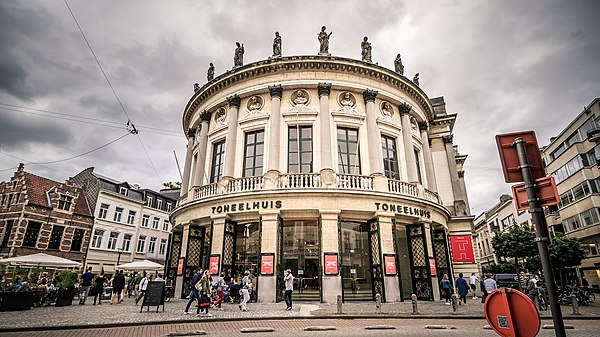
Théâtre Bourla
- Le théâtre Bourla (ou Bourlaschouwburg) a été construit dans un style néoclassique par l'architecte Pierre Bruno Bourla en 1834.
- Il a été inauguré sous le nom de Grand Théâtre ou Théâtre Royal Français.
- En 1865, des rénovations ont augmenté la capacité du théâtre de 1300 à 2000 places.
- Aujourd'hui, le théâtre accueille le Toneelhuis, une fusion de 2 compagnies anversoises.
- Le théâtre possède une machinerie de scène en bois datant de 1834, unique en Belgique et rare en Europe.
© Wikimedia Commons
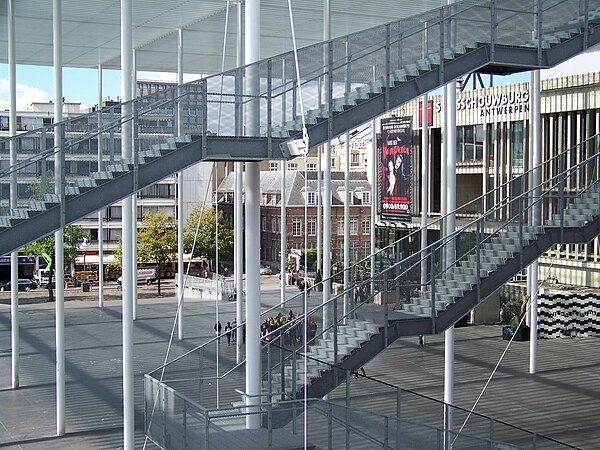
Théâtre Municipal
- Le théâtre a été construit à la suite d'un incendie en 1958 qui a entraîné la fermeture de plusieurs théâtres et l'introduction de normes de sécurité plus strictes.
- Le bâtiment moderniste a mis en service à partir de 1980.
- La salle a été rénovée dans les années 90, augmentant sa capacité de 800 à 2060 places.
- La rénovation a entraîné une augmentation significative du nombre de visiteurs annuels, passant de 10 000 à 200 000.
- En 2022, il a été officiellement annoncé que le théâtre serait détruit en raison de problèmes de pourriture du béton, de coûts d'entretien élevés et du non-respect des normes de sécurité modernes.
- Des comédies musicales populaires telles que Mamma Mia!, Les Misérables et The Sound of Music y ont été jouées.
© Wikimedia Commons
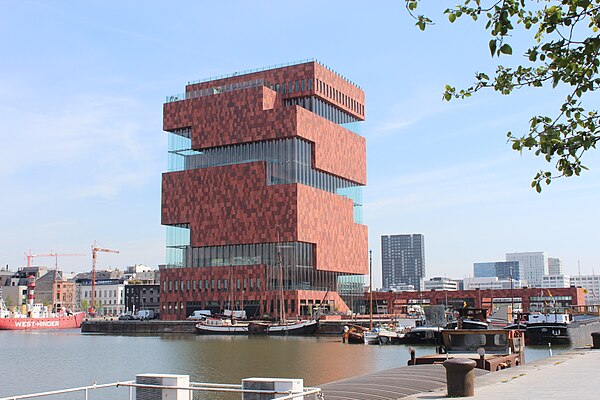
Museum aan de Stroom
- Le musée a été inauguré le 14 mai 2011 et possède 8 salles d'exposition et une collection d'environ 500 000 objets.
- Les expositions mettent en évidence les liens entre Anvers et le reste du monde, avec un accent particulier sur l'histoire, l'art et la culture de la ville portuaire.
- Les collections du MAS comprennent des œuvres d'art, des traditions culturelles et l'histoire de la ville et du port d'Anvers, ainsi que des objets maritimes liés à la navigation et au commerce outre-mer.
- Le toit-terrasse panoramique est accessible gratuitement jusqu'à tard dans la soirée.
- Le "Dead Skull", une grande mosaïque est visible sur le sol devant le MAS.
Détails pratiques pour visiter Anvers
Où séjourner
Pour profiter pleinement du circuit, visez un hébergement central. Les quartiers autour du centre historique et de la gare offrent l'avantage d'un accès facile aux principaux sites et aux transports. Privilégiez des adresses proches de la Meir si vous souhaitez être au cœur de l'animation commerciale, ou un peu plus près du théâtre si vous comptez voir un spectacle.
Types d'hébergement : petits hôtels de caractère, maisons d'hôtes et quelques chaînes bien situées cohabitent dans ces zones. Pour une expérience plus calme, regardez du côté des quartiers résidentiels limitrophes qui restent à distance de marche des principaux lieux. Les prix moyens varient selon la saison : en période plus calme vous trouverez des offres attractives, tandis qu'en haute saison les tarifs grimpent.
Conseils pratiques : réservez un hébergement avec accès facile aux transports et un bon petit-déjeuner si vous aimez partir tôt. Vérifiez aussi la possibilité de consigne pour les bagages le jour de départ et la proximité des cafés et restaurants pour vos pauses. Si vous voyagez en groupe ou en famille, un appartement peut offrir un meilleur rapport qualité/prix et plus de flexibilité.
Se déplacer
Anvers se parcourt très bien à pied dans le centre : beaucoup des sites de cet itinéraire sont proches les uns des autres, ce qui fait de la marche un excellent choix pour sentir la ville. Pour des trajets plus longs, la ville dispose d'options de transport en commun pratiques et régulières.
Bus et tram desservent bien les quartiers principaux. La gare centrale est un hub utile si vous arrivez ou partez en train, et constitue un point de repère facile. La location de vélo est aussi une bonne option : elle vous permet de gagner du temps entre certains points tout en restant connectés à l'atmosphère urbaine.
Astuce : combinez marche et transports selon vos envies. Pour une journée chargée, alternez marche et tram pour conserver de l'énergie. Prévoyez des chaussures confortables : le centre mélange pavés et trottoirs variés. Enfin, vérifiez les applications locales ou les sites officiels pour les horaires en temps réel et les tickets, afin d'éviter les files et optimiser vos déplacements.
Quoi emporter
Le contenu de votre valise dépendra de la saison, mais quelques indispensables restent constants. Prévoyez des chaussures confortables pour la marche, une veste imperméable légère en cas de pluie et un sac à dos compact pour transporter vos essentiels lors des visites.
Pour les visites culturelles, emportez une petite bouteille d'eau, un carnet ou une application de notes pour vos impressions, et une batterie externe pour votre téléphone si vous comptez utiliser des cartes ou prendre beaucoup de photos. Pensez à des vêtements modulables : couches légères pour les journées changeantes et un vêtement plus chaud pour le soir.
Si vous venez au printemps ou en automne, incluez un pull chaud et un coupe-vent ; l'été demande des tenues respirantes et un chapeau pour les après-midis ensoleillés. N'oubliez pas les adaptateurs éventuels pour vos chargeurs et une carte ou une copie de vos réservations. Un petit parapluie peut s'avérer utile et ne prend pas de place.
Réservations à l'avance
Pour voyager sereinement, organisez certains éléments à l'avance. Réservez votre hébergement et, si vous avez des dates et horaires précis, les billets pour les théâtres et spectacles afin d'obtenir de meilleures places. Les musées et attractions populaires peuvent proposer des créneaux à réserver : c'est pratique pour éviter les files et structurer vos journées.
Restaurants : si vous souhaitez dîner dans des adresses prisées ou pendant le week-end, pensez à réserver une table, surtout pour les soirs où la vie locale s'anime. Pour les visites guidées ou des expériences particulières (visites à thème, tours privés), une réservation préalable garantit disponibilité et tranquillité d'esprit.
Autres conseils : vérifiez les horaires de la gare centrale si votre arrivée ou départ dépend du train et pensez à réserver vos billets longue distance en avance. Enfin, conservez copies numériques et papier de vos réservations et billets : elles facilitent les changements de programme de dernière minute.
Extras à ne pas manquer
Au-delà de l'itinéraire principal, quelques activités complètent parfaitement votre découverte. Flânez dans des ruelles moins fréquentées pour sentir l'ambiance locale, et repérez des cafés et librairies pour des pauses inspirantes. Explorez les petites galeries ou ateliers qui ponctuent certains quartiers si vous aimez l'art contemporain.
Activités recommandées : participez à une visite guidée thématique pour creuser un aspect précis de la ville, ou organisez une pause dans un jardin secret pour souffler. Pour les curieux de jeux urbains, testez les escape games urbains de Coddy : ce format vous fait parcourir la ville de manière ludique et interactive, idéal pour une après-midi différente.
Si vous avez un peu de temps supplémentaire, poussez jusqu'à des marchés locaux ou des événements ponctuels : ils offrent souvent un aperçu authentique du quotidien et des produits de la région. Ces extras apportent de la variété et transforment un simple itinéraire en une expérience personnelle et mémorable.
Délices locaux
La gastronomie d'Anvers se découvre dans ses petites adresses autant que dans ses restaurants. Cherchez des pâtisseries et cafés pour le matin, des bistrots pour le déjeuner et des lieux conviviaux pour le dîner. Les snacks de rue et les spécialités locales se dégustent lors des pauses entre deux visites.
Expériences à privilégier : une pause gourmande dans un café traditionnel, un goûter dans une pâtisserie locale et un dîner dans un bistrot qui met en valeur des produits de saison. N'hésitez pas à goûter aux boissons locales proposées dans les bars et brasseries indépendantes pour varier les plaisirs.
Marchés et produits : si vous tombez sur un marché, c'est l'occasion de découvrir des fromages, pains et autres produits artisanaux. Pour une expérience conviviale, partagez des petites assiettes et découvrez des accords mets-boissons dans des adresses choisies par des locaux.
Quand partir à Anvers et combien ça coûte
Meilleures saisons
Anvers se visite agréablement à plusieurs moments de l'année. Le printemps et l'automne offrent souvent des journées agréables et des ambiances de ville moins étouffantes, avec des couleurs changeantes et des terrasses qui reprennent vie. L'été propose des journées plus longues et davantage d'animations en plein air, idéal si vous aimez les terrasses et les soirées extérieures, mais attendez-vous à plus d'affluence.
En hiver, la ville gagne en calme et en intimité : les musées, théâtres et cafés sont de bons refuges. Prenez en compte que certaines attractions ou événements saisonniers peuvent influencer votre choix de dates. Selon vos priorités — moins de monde, météo douce ou vie nocturne animée — choisissez la période qui correspond le mieux à votre style de voyage.
Globalement, privilégiez les saisons où vous aimez l'équilibre entre météo agréable et affluence modérée. Chaque saison a ses atouts : jardins au printemps, soirées d'été, marchés d'hiver et couleurs d'automne.
Affluence
Les niveaux d'affluence varient selon la saison et les week-ends. Les périodes de vacances et les mois d'été voient généralement plus de visiteurs, ce qui peut allonger les files et rendre certains lieux plus fréquentés. Si vous préférez une expérience plus calme, planifiez vos visites en semaine et en dehors des vacances scolaires.
Les points les plus populaires de l'itinéraire peuvent être plus animés en journée ; pour les éviter, commencez tôt le matin ou choisissez les heures de fin d'après-midi pour les découvrir avec moins de monde. Les après-midis au zoo ou dans des espaces verts sont souvent plus détendus que les heures de pointe touristiques.
Astuce : réservez en avance les entrées ou les spectacles susceptibles d'être complets. En étant flexible sur les horaires et en privilégiant les créneaux moins courus, vous bénéficierez d'une visite plus tranquille et plus personnelle.
Budget estimatif
Budget économique : Prévoyez un budget serré en choisissant une auberge de jeunesse ou un petit hôtel en périphérie, en privilégiant la marche et les transports publics pour vos déplacements. Comptez sur des repas dans des cafés, snacks et marchés. En économisant sur les extras et en réservant les billets à l'avance, vous pouvez limiter les coûts tout en couvrant l'essentiel des 2 jours.
Budget moyen : Avec un budget moyen, choisissez un hôtel bien situé dans le centre, combinez repas dans de bons bistrots et quelques restaurants soignés, et accordez-vous une ou deux visites payantes ou un spectacle. Prévoyez des billets coupe-file lorsque cela s'avère utile et un peu de marge pour des expériences supplémentaires comme une visite guidée thématique.
Budget confort : Si vous recherchez plus de confort, optez pour un hôtel de charme ou un établissement 4 étoiles central, dînez dans des restaurants recommandés, assistez à un spectacle et réservez des visites privées. Ce niveau permet de voyager sans compromis, avec des réservations anticipées et des options flexibles de transport et d'activités.
Questions fréquentes sur votre séjour à Anvers
Conclusion et derniers conseils
En deux jours, Anvers révèle beaucoup de ses facettes si vous combinez rythme soutenu et pauses bien choisies. Cet itinéraire propose un équilibre entre sites incontournables, moments de détente et immersion dans la vie locale. Gardez la liberté d'écarter une étape si un lieu vous inspire particulièrement : la ville bénéficie toujours aux curieux qui prennent le temps de regarder autour d'eux.
Pensez à laisser une marge pour les découvertes imprévues et les petites adresses repérées au fil des marches : elles sont souvent les plus mémorables. Réservez l'essentiel à l'avance si vous avez des impératifs, mais conservez une part d'improvisation pour profiter pleinement de l'ambiance. Je vous souhaite une belle balade, des rencontres agréables et des pauses gourmandes qui rythmeront agréablement ces deux jours à Anvers.
Envie de plus d'aventure ?
Découvrez nos jeux d'évasion urbains pour transformer votre visite en aventure interactive !


